
Flight Deck Lighting Options for Stunning Night Ambiance
You’ll transform your flight deck into a sophisticated operational environment by leveraging LED lighting systems that blend tactical precision with visual sophistication. These omni-directional fixtures deliver instant full-spectrum illumination across 360°, consuming 75% less power than conventional alternatives while maintaining 100,000-hour lifespans. With adjustable beam spreads, NVG-compatible dimming, and customizable intensity levels, you’re creating both safety-critical infrastructure and aesthetic excellence. The strategic integration of deck edge lights and strobe systems guarantees mission readiness while elevating nighttime presence—discover how these advanced specifications transform your tactical environment.
Understanding Flight Deck Lighting Systems
Because modern aircraft demand precise visibility across multiple operational environments, you’ll find that flight deck lighting technology integrates several specialized components working in concert. Navigation lights guide orientation through red port and green starboard LEDs, while beacon lights activate rotating flashes during engine operation. Strobe lights deliver high-intensity white illumination at wingtips for enhanced low-light visibility.
Your cockpit benefits from interior lighting systems—instrument panels, reading lights, and overhead fixtures—all leveraging LED efficiency. Dimming controls adapt brightness to ambient conditions, ensuring crew comfort without compromising safety. The flight deck lighting architecture also incorporates robust wiring, circuit protection, and NVG compatibility for tactical operations.
These systems prioritize fail-safe redundancy and meet FAA/SAE standards, guaranteeing accurate color differentiation and prompt visibility for every critical flight operation.
LED Flight Deck Lights for Modern Naval Operations
As naval operations increasingly demand reliability in the harshest maritime environments, LED flight deck lights have become the standard choice for modern carrier and expeditionary platforms. You’ll find these fixtures deliver up to 100,000 hours of operational life while consuming considerably less power than traditional lighting—a vital LED benefit for sustained naval applications. Their instant illumination guarantees mission-critical readiness without warm-up delays. IP66 sealing and stainless steel 316 construction withstand saltwater corrosion and extreme vibration, meeting MIL STD 901D and STANAG 1445 standards. NVG-friendly dimming capabilities support tactical operations, while non-slip finishes enhance deck safety. You can customize optical colors and integrate multiple light types—wash, flood, and status—across diverse platforms, from permanent vessels to deployable runways.

【Bright & Safe】With 24pcs 3W powerful high intensity LED light chips. give out 120° super flood lighting range, provide a brighter illumination, attracts fish better than white light, does not disturb the fish, and is more conducive to observing buoy, helpful for your night fishing or other night activities

★ LED Marine Boat Lights parameters: DC 12V; Rated Wattage: 1.5 Watt per light; IP68 Waterproof; Lumen Maintenance Percentage>95%; Operation Temperature: -45℉+175℉; Size: Standard 3/4 Inch LED Miniature Round; More Than 100000 Hours Life.

【Bright & Safe】With 6pcs 3W powerful high intensity LED light chips. single-row 60° flood beam in reflective cups provide a brighter illumination of 1,800LM, 5800K bright white light & broader view, increasing safety for your night fishing, night hunting, night ride or any other night activities
Deck Edge Light Features and Specifications
Deck edge lights represent a critical safety infrastructure component, combining tactical functionality with practical visibility requirements across modern flight deck operations. You’ll find these light specifications engineered for precision: omni-directional green or amber LEDs delivering 15 candela peak intensity with 360° azimuth coverage and 90° elevation beam width. The compact 22mm profile and 200mm diameter stainless steel 316 housing resist corrosion while maintaining a non-slip finish. You control illumination through continuous 8V-18V dimming via PWM or DC methods, adapting seamlessly to ambient conditions. IP66 marine-rated construction withstands 6900 kN/m² vertical loads, ensuring reliability during demanding naval operations. NVG-compatible output and STANAG 1445 compliance support both retrofit and new installations across harsh offshore environments.


Super Bright Blue Light: Adopted 42pcs 3w blue led chips directly, 126w 1250lm each light. Concentrated spot beam illuminates to further distance, allowing you to see the front and rear cars clearly in bad weather such as night or heavy fog, light up your night fishing, night ride or any other night activities

【Super Bright Blue Light】 Adopted 24pcs 3w blue led chips directly, 72w 935lm each light. Concentrated spot beam illuminates to further distance, allowing you to see the front and rear cars clearly in bad weather such as night or heavy fog, light up your night fishing, night ride or any other night activities
Omni-Directional Lighting for Complete Visibility
While deck edge lights establish perimeter boundaries, omni-directional lighting systems elevate your operational capability by delivering complete 360° horizontal visibility across the entire flight deck environment. You’ll benefit from omni directional advantages including adjustable vertical beam spreads from 8° to 90°, accommodating diverse operational requirements. Modern lighting configurations offer three intensity levels—5,000 ECD for daytime, 1,500 ECD for twilight, and 300 ECD for night operations—ensuring ideal visibility regardless of conditions. You can deploy these systems in battery-powered LED variants with solar charging options, providing flexible installation on existing surfaces. Their compact 22mm flush-deck profile enables seamless integration while maintaining ICAO Annex 14 and FAA compliance, delivering both aesthetic refinement and operational excellence for your flight deck environment.
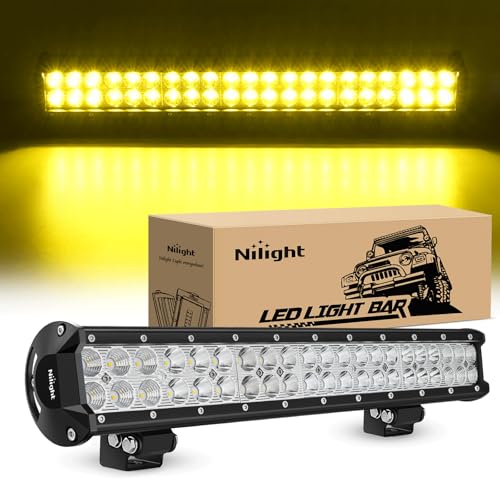
Super Bright Blue Light: Adopted 42pcs 3w yellow led chips directly, 126w 7100lm each light. Concentrated spot beam illuminates to further distance, allowing you to see the front and rear cars clearly in bad weather such as night or heavy fog, light up your night fishing, night ride or any other night activities

Blue Super Bright combo beam: Adopted 40pcs 3w led chips, appropriate combination of spot beam and flood beam for wide spread and further distance illumination, allowing you to see the front and rear cars clearly in bad weather such as night or heavy fog, light up your night fishing, night ride or any other night activities

【Bright & Safe】With 18pcs 3W powerful high intensity LED light chips. single-row 60° flood beam in reflective cups provide a brighter illumination, attracts fish better than white light, does not disturb the fish, and is more conducive to observing buoy, helpful for your night fishing or other night activities
Line-Up Lights for Precise Runway Centerline Marking
Guiding your aircraft with pixel-perfect precision, runway centerline lights represent the gold standard for instrument approach operations, embedding directional clarity directly into the pavement surface. You’ll benefit from their 50-foot spacing intervals, which maintain consistent runway lighting throughout your approach. The strategic color-coding system—white, alternating white-red, then solid red—communicates your remaining runway distance intuitively. These fixtures sit flush within the pavement, requiring exacting 2.5-degree alignment tolerances.
Your precision guidance system performs efficiently under instrument meteorological conditions and low-visibility scenarios, supporting Category II and III approaches. High-intensity illumination cuts through adverse weather, while integration with airport lighting controls enables adaptive brightness. You’re experiencing aviation’s most sophisticated runway lighting technology, meticulously maintained to FAA and ICAO standards for unwavering operational reliability.


Dimming Controls and Adaptive Brightness Technology
Once you’ve locked onto the runway centerline with precision guidance, you’ll need intelligent control over your lighting brightness to adapt across varying flight phases and atmospheric conditions. PWM technology delivers seamless dimming applications that minimize electromagnetic interference—essential for long cable runs in modern cockpits. You’ll appreciate solid-state controllers managing mixed LED and incandescent systems simultaneously, drawing under 1 amp at full brightness while maintaining efficiency above 70%.
Your brightness management becomes intuitive through potentiometer-based controls, offering continuous adjustment from complete darkness to full illumination. Multi-channel remote dimming units let you independently control lighting zones with configurable slopes and fixed maximum outputs. These compact, FAA-approved systems operate reliably across -40°C to 55°C, ensuring consistent performance regardless of atmospheric conditions during night operations.
Installation Considerations for Retrofit Applications
When retrofitting flight deck lighting into an existing aircraft, you’ll need to systematically evaluate your electrical architecture before any physical modifications begin. Your installation challenges start with voltage compatibility—verify whether your system runs 12VDC or 28VDC and confirm amperage won’t exceed circuit breaker ratings. Lighting placement demands careful assessment of existing panel cutouts and available depth behind instruments. You’ll likely need wiring upgrades and connector adaptations to integrate seamlessly with current harnesses. Weight considerations matter; every addition affects aircraft performance metrics. Ascertain proper shielding prevents EMI interference with avionics. Finally, document everything meticulously. FAA or EASA certification requirements, potentially including a Supplemental Type Certificate, demand thorough installation records and certified mechanic sign-off before your stunning night ambiance becomes operational.
Military Standards Compliance and Performance Requirements
Because you’re shifting from civilian certification to military applications, you’ll encounter MIL-STD-3009—a rigorous framework that transforms flight deck lighting from aesthetic consideration into operational necessity. This military lighting standard compliance demands spectral emission testing, ensuring your fixtures emit only NVIS-compatible wavelengths that preserve night vision performance without glare or blooming.
You’ll verify photometric requirements through laboratory testing, confirming luminance levels meet operational specs while maintaining daylight legibility. Color coordinate validation guarantees NVIS-approved hues—Green A, Green B, or White—perform consistently across your deck.
Field testing under operational conditions validates practical performance in darkness. You’ll document all compliance certifications meticulously, understanding that standard compliance isn’t merely regulatory—it’s foundational to stealth operations and crew safety during nocturnal missions.
Comparing Traditional and LED Lighting Solutions
As you evaluate flight deck lighting systems, you’ll reveal that LEDs and traditional incandescent fixtures represent fundamentally different technological paradigms—each with distinct operational tradeoffs that’ll reshape your maintenance schedules, fuel consumption, and mission reliability.
LED advantages dominate across critical metrics. You’ll experience 75% energy reduction, 50-fold lifespan extension, and superior color saturation—particularly valuable during low-visibility conditions. LEDs maintain full brightness instantly without warm-up delays, perform reliably at low voltages, and generate minimal heat.
Traditional drawbacks become apparent operationally. Incandescent systems consume excessive power, demand frequent replacements every 1,000 hours, and dissipate substantial waste heat. They struggle during brownout scenarios and create unnecessary cooling demands.
Your decision hinges on lifecycle economics versus upfront costs—LED installation expenses offset through reduced maintenance, fuel savings, and enhanced flight deck performance.

【High Bright &More Safe】Bright warm white LED deck lighting brings an impressive starry effect, making you feel sweet and comfortable in your house. Adding the black protective shell for embedded installation on the floor/stone stairs will make the LED deck lights kit safer.

Advanced Aesthetic Option: Textured matte oil rubbed bronze casing, selectable color temperatures, elevate your home's aesthetic

✔ Lightweight and small light body but utility for low voltage uses, functioning as stair step light, courtesy light, companion way light, wall indicator for marine, boat, ship, yacht, cabin, deck, etc.
Enhancing Safety and Visibility During Night Operations
While LED efficiency gains reduce your operational costs, night operations demand a parallel focus on visibility systems that protect both your flight crew and ground personnel. You’ll enhance safety through NVG-compatible lighting that amplifies situational awareness during low-light conditions. Implement standardized NVG protocols and maintain equipment every 180 days for maximum performance.
Your visibility strategy requires strategic light placement: activate landing and taxi lights during darkness movements, but disable strobes at hold lines to prevent pilot blindness. Adjust cabin illumination to match exterior conditions, creating seamless environmental shift. Position anti-collision lights operationally unless precipitation creates hazards. These safety enhancements work synergistically, ensuring your night vision capabilities function at peak efficiency while maintaining regulatory compliance and protecting your crew’s visual acuity.