How to Remove Deck Boards With Hidden Fasteners
You’ll need to identify your fastener type first—whether it’s Trex Hideaway plugs, TigerClaw prongs, or under-mount clips—then locate and remove surface screws using a sharp screwdriver and penetrating oil for stuck fasteners. Apply controlled pressure with a crowbar, working methodically to minimize board damage. Lift vertically with a two-person operation to guarantee clean separation. Inspect joists for rot and damage before cleaning with oxygen bleach and sanding rough spots. Each system demands specific extraction techniques that’ll become clear as you progress.
Understanding Hidden Fastener Types
When you’re planning to remove deck boards, you’ll need to comprehend the hidden fastener system holding them in place. Several types of fasteners exist, each requiring different removal approaches.
Hidden clips screw directly to joists beneath boards and slide out after removal. Hidden screws drive into board sides, requiring you to locate them along edges—particularly effective on narrower boards like 5/4 x 4 dimensions. Biscuit-style fasteners and nail-style hidden fasteners offer alternative concealed mechanisms without surface exposure.
The screw and plug system uses color-matched wood plugs covering screw heads, demanding you drill out plugs before accessing fasteners. For optimal results during removal, fasteners should be spaced consistently across all joists, typically with joist spacing not exceeding 16 inches on center, which helps you identify their locations systematically. Similar to outdoor shade structures that require adjustable ventilation for optimal performance, your deck’s underlying support system benefits from strategically spaced fasteners that maintain structural integrity. Understanding your deck’s specific installation techniques guarantees you remove boards efficiently without causing damage to the underlying structure or remaining boards.
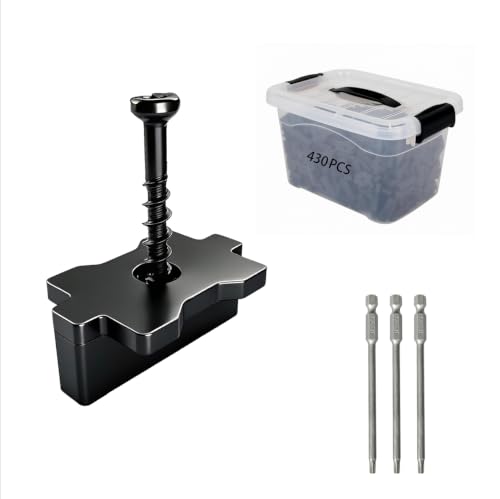
【Anti rust coating】: Our star hole screws are coated with three layers of anti rust coating, which has high corrosion resistance and is suitable for external and internal projects. It provides reliable anti rust and anti-corrosion protection while reducing friction during use, ensuring smooth installation and long-lasting performance.

Efficient Design: This deck hidden fastener tool compatible with Trex hidden fasteners, Installing the hidden fasteners have become more convenient and efficient. A must have and value for money tool that simplifies the installation process and greatly improves deck installation efficiency, installing decks like a pro
Locating Surface Screws on Your Deck
Now that you’ve identified your deck’s hidden fastener system, you’ll need to locate the surface screws that secure boards at specific structural points. You’ll find screws concentrated at perimeter boards, stairs, railings, and changes where structural integrity demands visible fastening. Examine these areas in bright natural light, using a flashlight to cast shadows across the board surface. Run your hand along edges to feel for dimples or indentations marking screw locations. Look for discoloration, slight color variations, or light reflection off screw heads. Check for consistent screw placement patterns, typically spaced every 16 inches. A magnet can help detect metal fasteners in hard-to-see areas. Proper surface preparation, including thorough cleaning and sanding, will make screw heads more visible and easier to locate before removal. For maximum durability and code compliance, ensure your deck’s foundational attachment uses joist hanger placement and secure fastening methods as recommended by structural engineers. Understanding screw placement and screw reliability at these critical points guarantees you remove boards safely without damaging underlying structure.
Removing Surface Screws Safely
How do you safely remove surface screws without damaging the board or fastener? Start with screw extraction techniques designed to minimize harm. Use a sharp, appropriately sized screwdriver bit that fits tightly into the screw head to reduce slippage. Apply steady, even pressure while turning slowly to avoid stripping. If the screw resists, employ vice grips or locking pliers once you’ve achieved slight looseness.
Your damage prevention strategies should include setting power tools to low speeds for controlled removal. For stuck or rusted fasteners, apply penetrating oil before attempting extraction. If the head becomes stripped, switch to a screw extractor kit or reverse-threaded drill bit. Always begin with manual tools before progressing to power equipment, preserving board integrity throughout the removal process. When working with metal fasteners like those found in aluminum outdoor structures, remember that rust and corrosion resistance varies depending on the material composition and environmental exposure. Consider using a protective piece of wood beneath your pry bar to prevent damage to adjacent boards during the extraction process.

Heavy-Duty Cr-Mo with Lifetime Support: Forged from premium Chromium Molybdenum steel with a Manganese Phosphate coating for superior corrosion resistance and professional-grade durability

UPGRADE – BUILT FOR IMPACT DRIVERS: Engineered with advanced Impact Grade Extractor Heads and CHHS hardened steel for powerful extractions.

🎁13Pcs Extractor & 4Pcs Accessories: Screw extractor set contains 1/8", 5/32", 3/16", 7/32", 1/4", 9/32", 5/16," 11/32", 13/32", 3/8", 7/16", 15/32", 1/2 "and 3/8" - 1/4" hex adapter, 3/8" - 1/2" impact adapter, 3/8" universal joint and 3/8" drive extension bar. It almost meets various usage requirements at the same time.
Preparing Your Tools for Board Removal
Before you begin removing deck boards, you’ll need to gather and prepare the right tools for the job. Inspect all drill bits and screwdriver heads for wear to prevent stripping fasteners during removal. Confirm your driver bits match the specific fastener types in your hidden fastening system. Verify compatibility and adjust tools like the Kreg Deck Jig for accurate angles before starting work. Stock replacement bits and heads for quick swaps during removal. Prioritize tool maintenance by cleaning and lubricating moving parts to enhance performance. Consider ergonomic designs like the Deck Demon for efficient board removal with minimal joist damage. For stripped or damaged screw heads that won’t turn, you may need specialized screw extraction tools to successfully remove the fasteners without causing additional damage. Using galvanized or stainless steel fasteners ensures your deck hardware resists rust and maintains durability throughout the removal process. Organize your tools by task category—fastener removal, board prying, and surface screw removal—using tool belts or portable boxes for immediate accessibility. Keep power tools charged and extension cords readily available throughout your workspace.

★ Diverse Sizes - 10+4 pieces Extractor Screw Extractor Set. Working sizes - 19/64",1/4",3/16",2*5/32",2*1/8". Spiral screw extractors include 2*1#, 2*2#, 3#, 4#, 5#. Impact drive for all kinds of job applications.
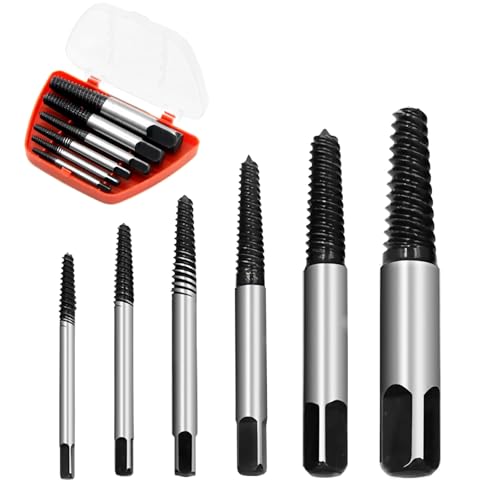
High Quality: The screw extractor is made of high-hardness CR-MO steel. The spiral groove is designed to embed itself deeper into the metal as the tool is turned, so as the resistance of the fastener increases, the grip of the extractor also increases.
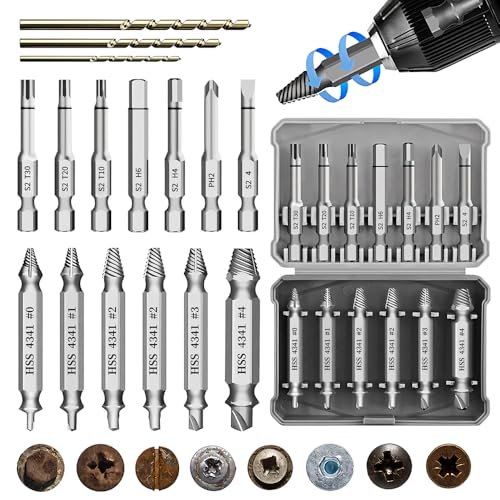
VERSATILE SET FOR ALL DRILLS : This 16-piece screw extractor set includes 6 double-headed extractors (#0, #1, #2, #2, #3, #4) and 7 common screwdriver bits (T30, T20, T10, H6, H4, PH2, SL4), 3 PCS Twist Drill Bit compatible with screws and bolts from 3-12mm. Ideal for removing broken, damaged, rusty, or painted-over screws, making it perfect for DIY projects and home repairs.
Loosening the First Deck Board
Start by visually inspecting your target board for damage, warping, or existing cracks that’ll complicate removal and affect your technique. Identify adjacent boards and verify the fastener type—clips, screws, or hybrid systems. Assess accessibility and determine whether border or fascia boards need removal.
Apply gentle, controlled pressure using a crowbar or specialized decking removal tool positioned at the board’s edge. Work methodically along the length, using narrow pry bars to minimize contact and damage. Incorporate incremental lifting rather than forceful movements to prevent cracking.
Monitor for resistance points indicating remaining fasteners. Remove all clips from one adjacent board to allow target board movement while keeping the other side secured. Use efficient loosening methods by lifting both boards higher than the border, then sliding hidden fastener clips away for clearance. Maintain steady tension throughout your board removal techniques. As you work, be mindful that pressure-treated wood shrinkage may have naturally closed gaps between boards over time, potentially affecting how easily fasteners release. After removal, consider applying clear deck sealers to any newly exposed wood surfaces to protect against moisture and UV damage while maintaining the natural appearance.
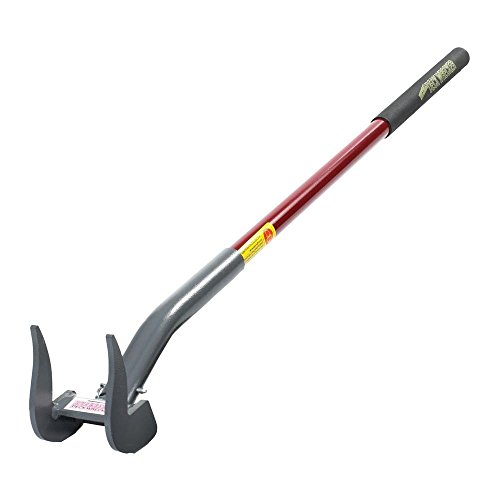
WORK SMARTER, NOT HARDER: Introducing the Duckbill Deck Wrecker – the ultimate tool designed for effortless and efficient deck board removal. Say goodbye to a sore back and experience the ease and efficiency the Deck Wrecker brings to your project.

Powerful Demolition Made Easy – The GreenTek Hardwood Floor Remover is built to save you time and effort. Demo bar strong design removes entire hardwood planks, deck boards, and pallets in one smooth motion, making demolition faster and easier.

Quick Teardown: This lever-style pallet buster uses a curved pointed tip to slip into board gaps for fast removal. You save time and effort while helping reduce board breakage for better reuse
Accessing Hidden Fasteners Beneath the Boards
Once you’ve loosened the adjacent board, you’ll gain access to the hidden fasteners secured within the grooves or slots along your target board’s edges. Understanding hidden fastener challenges is vital for efficient removal. Most systems employ clips, prongs, or bolts attached to the side or bottom edge of your board.
Your fastener removal techniques depend on the specific system. For Trex Hideaway, remove plugs first to access underlying screws. TigerClaw systems require accessing prongs after removing the board’s center section. Ipe Clip fasteners are screwed through the side groove and become accessible once you lift the board section away. Under-mount systems require careful attention to protect joist tops from moisture exposure during board removal.
After exposing fasteners, use a screwdriver or drill to remove screws, pliers for clips, and a hammer for stubborn prongs. Inspect each fastener for damage before deciding whether to reuse or replace it. Ensure your deck structure maintains proper structural proportions similar to how architectural elements like pergolas are designed for aesthetic and functional harmony.
Extracting Hidden Bolts and Screws
With the fasteners now exposed, you’ll need to extract them to fully remove the board. For fastener removal with spinning screw heads, apply low-pressure hand removal using suitable drivers to catch threads. If that fails, drill around the screw head with a 5/16″ carbide-tipped hole saw to create a gripping recess. For cortex screws, use coarse-headed wood screws to back plugs off the reverse threads. Apply substantial downward pressure while pulling to overcome friction. Cortex fasteners require patient extraction techniques—avoid forceful yanking that damages boards. Before beginning any fastener removal work, assess your entire deck for hazards such as electrical lines, broken lumber, and pest nests to ensure safe working conditions. For hidden bolts, once cut through with a grinder, use pry bars to lift boards free. Consider that 316 stainless steel fasteners are commonly used in hidden fastener systems and may require specialized extraction approaches due to their corrosion resistance properties. These extraction techniques preserve your decking’s integrity while removing stubborn fasteners efficiently.
Lifting and Removing Loosened Deck Boards
After you’ve extracted all fasteners, you’re ready to lift and remove the loosened board. Use straight vertical lifting to guarantee each fastener separates cleanly from its attachment point. This approach prevents bending or cracking the board, which is essential if you’re planning reinstallation.
Employ a two-person removal operation to reduce tilting and maintain proper angle control throughout extraction. Keep the board positioned to avoid re-engagement with fastener tabs or clips during the lifting process. Proper surface preparation and sanding of exposed areas underneath will ensure better adhesion if you’re refinishing the deck afterward.
Understanding your deck’s installation techniques helps you anticipate resistance points. Following manufacturer recommendations for fastening will guide you in identifying the specific attachment points unique to your composite deck system. Once the board lifts freely without obstruction, verify complete separation before setting it aside. Inspect adjacent boards for collateral damage, guaranteeing your deck design remains intact.
Inspecting the Underlying Joists and Substructure
Now that you’ve removed the deck boards, you’ll have direct access to the structural elements that support your entire deck. Conduct a thorough joist inspection by walking underneath the structure for an ideal vantage point. Look for sagging, cracks, splits, or wood rot—especially where joists meet the ledger or beam. Check joist hangers for missing or incorrect fasteners; every hole requires the proper nail type and length. Verify that hangers are fully engaged with the ledgerboard, not partially positioned outside the structural support zone. Examine all fasteners for rust and corrosion, replacing any deteriorated hardware with hot-dipped galvanized or stainless steel alternatives. Assess substructure integrity by testing for excessive deflection and confirming posts remain plumb. Ensure your joists are properly sized and spaced according to local building codes, as undersized or incorrectly spaced joists can compromise the entire deck’s structural integrity. Posts supporting the deck structure should also extend to appropriate footing depth to prevent shifting and ensure long-term stability. Identify any necessary repairs before reinstalling boards.
Cleaning and Preparing for Board Reinstallation
Once you’ve confirmed your joists and substructure are sound, you’ll need to prepare the deck surface before reinstalling boards. Start with thorough deck cleaning by sweeping away loose debris, then applying an oxygen bleach-based cleaner with a pump sprayer. Let it sit 5-15 minutes, scrub stubborn spots gently, and rinse completely. Apply a brightener to neutralize alkaline residues and restore wood color, which guarantees even stain absorption.
For surface preparation, sand rough spots and mill glaze using 80-grit sandpaper to create a smooth, uniform substrate. Remove factory stamps and address any residual dirt. Allow the deck to dry completely—typically 24-48 hours—before reinstalling boards. Proper drying prevents moisture problems and guarantees ideal adhesion for any finishing products you’ll apply afterward. For mildew or stubborn spots that persist after initial cleaning, a baking soda paste can be applied carefully to avoid damaging the wood. To protect your newly prepared surface from mildew and stains during this drying period, consider inspecting for damage and monitoring weather conditions carefully.