How to Properly Attach Deck Boards for a Lasting Finish
You’ll secure lasting deck boards by selecting corrosion-resistant screws with face screwing or hidden fasteners, depending on your aesthetic preference. Manage moisture through proper slope and under-deck drainage to prevent cupping. Maintain consistent spacing—1/8″ to 1/4″ for composites, adjusting for climate conditions. Position boards with the best face upward and pith side down. Use starter clips at each joist and mark screw locations 20mm from edges. These fundamentals guarantee decades of performance, though mastering advanced techniques will elevate your installation further.
Choosing Between Face Screwing and Hidden Fastener Systems
When attaching deck boards, you’ll face a fundamental choice: face screwing or hidden fastener systems.
Face screwing drives screws directly through deck boards into joists, offering maximum holding strength and affordability. You’ll appreciate its straightforward installation and ease of future repairs. However, visible screw heads remain on your deck surface. For face screwing applications, countersink screw heads flush with the board surface to create a cleaner appearance and reduce snagging hazards.
Hidden fasteners use clips or brackets that attach boards from the side, concealing all hardware. This method creates a seamless, clean appearance and prevents snagging hazards. It’s ideal for composite and PVC boards that expand and contract seasonally. Popular options like TigerClaw TC-G Clips and similar hidden fastener systems are specifically engineered for grooved decking boards to ensure secure attachments while maintaining a professional appearance.
Your decision depends on your materials and priorities. Choose face screwing for pressure-treated wood and budget-conscious builds. Select hidden fasteners for aesthetic-focused projects using grooved composite or premium decking. Consider installation complexity and your timeline—hidden fasteners require specialized tools but deliver superior visual results.

【What You Will Get】50 x Hidden Fasteners Nylon Clips. Each fastener is equipped with a metal countersunk square slotted screw, sufficient quantity can meet your use and replacement needs, provide you a clean and neat deck appearance.
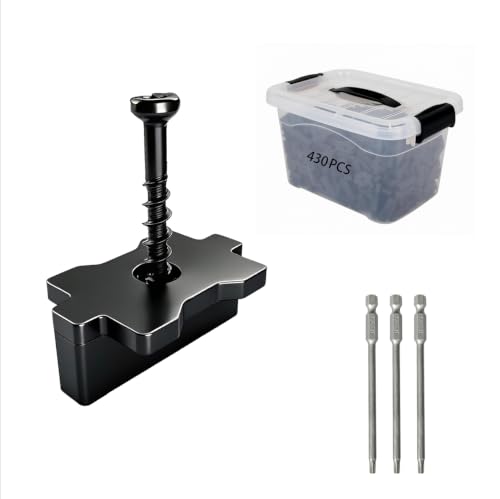
【Anti rust coating】: Our star hole screws are coated with three layers of anti rust coating, which has high corrosion resistance and is suitable for external and internal projects. It provides reliable anti rust and anti-corrosion protection while reducing friction during use, ensuring smooth installation and long-lasting performance.

Ideal for securing and stabilizing a nominal 4" x 4" post to a wood post or surface
Understanding Moisture Management and Board Cupping
Because moisture infiltration causes deck board cupping and structural decay, you’ll need to implement extensive moisture management strategies throughout your deck’s design and construction. Start by establishing proper slope—at least 2 percent grade—to direct water away from board surfaces. Install under-deck drainage systems above joists to prevent water contact with fasteners and wood. Use deck joist tape to create barriers between treated lumber and metal hangers, eliminating copper leaching corrosion.
Space boards appropriately to allow precipitation drainage, and consider rubber flanges to channel water toward deck edges. Below-deck areas require gravel, landscape fabric, and vegetation clearing to control ground moisture.
Your deck maintenance practices should include twice-yearly cleaning with mild detergent and regular inspections of drainage systems. Wood decks need recoating every few years to maintain waterproof protection and prevent cupping damage. For additional shade and aesthetic appeal near deck areas, consider incorporating fast-growing vines on nearby pergolas to reduce heat exposure and complement your outdoor space. For long-term protection during off-seasons, consider using shrink wrap and a heat gun to seal and protect any stored deck components or furniture from moisture exposure and weather damage.
Planning Your Spacing and Layout Strategy
Before you’ll need to establish proper joist spacing and layout measurements that match your deck’s design and material specifications. Standard 16-inch on-center spacing works for most horizontal installations, but you’ll adjust to 12 inches on center for diagonal layouts. If you’re using premium composite or thicker wooden boards, you might extend spacing to 24 inches on center—always verify your material manufacturer’s requirements. For high-traffic areas and stairs, closer joist spacing of 8 to 12 inches on center ensures your deck can safely support heavier loads.
Take all measurements from joist center to joist center for accuracy. Calculate your board width plus gap spacing, then divide this total into your deck’s length to determine your final board layout. Pressure-treated boards typically require minimal initial spacing since natural shrinkage during drying creates adequate gaps over time, while kiln-dried materials need deliberate upfront spacing to accommodate moisture movement. Complex designs like curved sections require custom spacing considerations and layout adjustments. Square configurations follow standard guidelines, while non-standard shapes demand individualized joist grids. This planning prevents gaps and guarantees professional results.
Determining the Correct Installation Sequence
Proper installation sequence guarantees your deck boards lay flat, maintain consistent spacing, and create a structurally sound finished surface. You’ll begin by fastening the rim joist with corrosion-resistant composite screws spaced every 16 inches along the outside edge of your first board. Next, install border boards around the entire perimeter to frame the deck properly. Position starter boards against the house to establish alignment for subsequent rows. This foundational setup guarantees all remaining boards follow the correct trajectory. You’ll then progress inward, installing interior boards row by row using hidden fastener systems. Finally, complete installation by securing the last board to the rim joist. For optimal stability, place two screws per joist to ensure your deck maintains structural integrity. To ensure your finished deck withstands the elements, prepare all surfaces with thorough cleaning and preparation before any finish applications. This methodical approach prevents alignment issues and guarantees your deck maintains structural integrity throughout its lifespan.

BUILT FOR COMPOSITE DECKING: These composite deck screws fasten composite and wood decking securely, with a dual-thread design that pulls boards tight and eliminates the plastic fiber mushrooming common with composite boards.

Designed for Composite Materials: Specially formulated composite decking screws are excellently designed and specifically engineered for composite/PVC and wood decking applications, ensuring optimal performance for home renovation and general household use in both indoor and outdoor projects

BUILT FOR COMPOSITE DECKING: These composite deck screws fasten composite and wood decking securely, with a dual-thread design that pulls boards tight and eliminates the plastic fiber mushrooming common with composites. That translates to a solid,
Orienting Boards for Optimal Grain Direction
While grain direction—the orientation of growth rings in wood—seems like it should matter for deck board performance, the reality is more nuanced than most installation guides suggest. You’ll find no scientific consensus on whether bark side up or down prevents cupping more effectively. Instead, focus on practical grain orientation strategies: place the best face upward for appearance and safety, position the pith side down to reduce splitting risk, and install wane or bark defects facing downward to eliminate trip hazards.
Your cupping prevention techniques should prioritize ventilation and drainage over grain direction. Guarantee proper airflow underneath your deck and maintain consistent board spacing for expansion and contraction. When selecting boards, consider using pressure-treated lumber that has been treated with preservatives to enhance your deck’s resistance to moisture and decay. Environmental factors—direct sunlight exposure, moisture levels, and shading—ultimately matter far more than grain orientation for long-term durability. Just as proper ventilation and drainage are essential for protecting outdoor wood structures, these same principles apply to preventing moisture-related damage that can compromise your deck’s integrity over time.
Positioning Your First Board for Perfect Alignment
Your first board serves as the foundation for your entire deck’s alignment, so you’ll want to start the installation against the house and work outward. Position ripped boards against the house rather than along the deck perimeter for superior aesthetics. Use starter clips at each joist location to secure your initial board, ensuring it sits snugly against the house before proceeding. Apply alignment techniques by measuring from the starter board to your deck frame edge at multiple points along the deck’s length. This starter board positioning prevents cumulative spacing errors across subsequent installations. Before securing fasteners, verify that your board runs parallel to the frame edge. Make any necessary adjustments at board ends if slight deviations occur during placement. Ensure your deck’s substructure uses pressure-treated lumber to provide a stable and durable foundation for proper board attachment. A properly attached deck requires that your ledger board connection to the house rim joist be secure and level to support the weight distribution of deck boards and users.
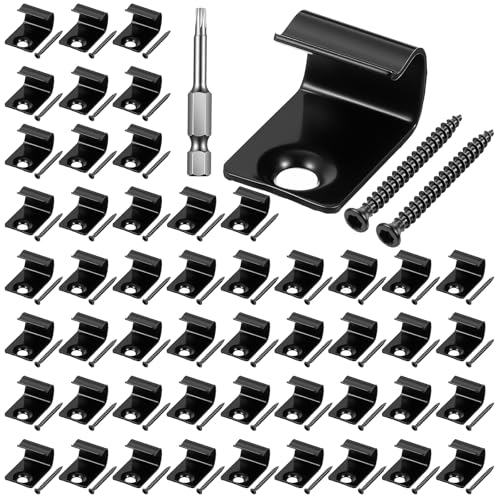
Durable Stainless Steel Material: Starter deck clips are constructed from high-quality 304 stainless steel, which offers strong resistance to corrosion and rust. This ensures the clips maintain their integrity and appearance even under prolonged outdoor exposure. The robust material provides reliable fastening and long-term performance, making these hidden fasteners suitable for various weather conditions and contributing to the durability of your deck structure.
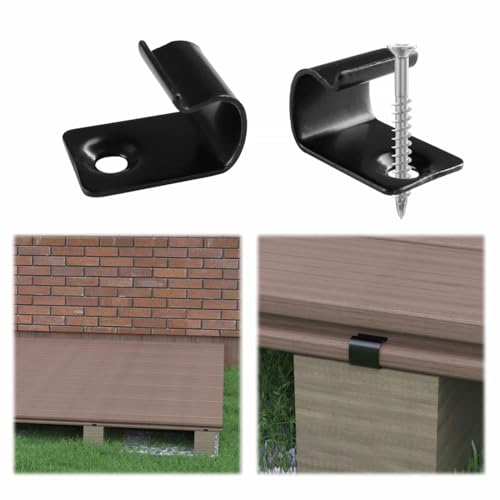
Application: Muzata deck starter clip is specially designed to install perimeter composite decking boards, which makes it easier to install composite deck boards with grooved edges while maintaining a clean deck appearance without any drill marks.

COMPLETE KIT: Hidden fasteners for composite decking with 120 preloaded nylon deck clips, 410 -grade stainless steel screws, 6 starter clips & 1 square drive bit; covers up to 48 sq. ft. with 12" on-center joist spacing.
Mastering Screw Placement and Alignment Techniques
Once you’ve positioned your starter board and confirmed its alignment with the deck frame, you’re ready to focus on fastening it securely. Begin by marking your screw locations approximately 20mm from the board’s edge, directly over each joist centerline. Use a mason’s line strung along the joist to guarantee consistent screw alignment across the deck’s length.
Before driving screws, drill pilot holes matching the screw shank diameter minus the threads. This critical step reduces splitting risk, particularly in hardwood. Position screws 20mm from edges to prevent splitting while maintaining secure fastening. Selecting corrosion-resistant screws specifically designed for pressure-treated wood will enhance your deck’s longevity and prevent rust staining.
Install two screws per joist, making sure they penetrate 1.5 inches into the joist below. Drive screws slowly and steadily to prevent heat buildup and distortion. For optimal results, use square-drive screws which provide superior torque control and reduce the risk of cam-out during installation. This methodical approach produces professional results and even pressure distribution across your deck board.

PREMIUM 305 STAINLESS STEEL – #8 x 2-1/2" fence and deck screws built from 305-grade stainless for superior corrosion resistance; ideal for outdoor, marine, and wet-environment projects that need long-lasting rust protection.

Brown hue to complement your decking finish

Screw Dimensions: Length of 3 inches with a #8 screw size, suitable for various wood construction and deck building projects
Straightening Curved Boards Before Fastening
Even with careful board selection, you’ll inevitably encounter some warping, cupping, or twisting during installation. Your curved board assessment should determine the severity before proceeding with temporary straightening methods.
For minor to moderate warping, you can flip boards so the curve faces downward, allowing natural flattening under weight and foot traffic. Secure boards tightly to joists to maximize this effect.
Clamps and weights provide effective temporary straightening when applied at the board’s center and ends. Leave them in place overnight for best results. Similarly, use a metal angle and pry bar to lever boards into position, then cinch them with specialized clamps. These techniques work best on light to moderate warping, similar to how thermal expansion allowances are critical in polycarbonate panel installation to prevent material stress.
Proper joist spacing and levelness ensures that boards will flatten more effectively during installation, reducing the need for extensive straightening methods. Severe twisting or bowing won’t respond well to straightening—replace these boards instead.
Maintaining Consistent Spacing Throughout Installation
Proper spacing between deck boards is critical to your installation’s long-term performance because it accommodates wood movement from moisture and temperature fluctuations. You’ll maintain consistency by using reliable spacing tools like sixteen penny nails, spacer blocks, or pencils positioned between boards during fastening. Perform gap verification at both ends of each board to prevent mid-deck curves and guarantee uniform gaps throughout your layout. Start board placement 1/8 inch from siding to allow proper drainage and movement. Store boards in cool, dry conditions before installation to prevent premature expansion. Verify spacing regularly as you progress, checking that your gaps remain even and your joists stay level and aligned for peak deck performance. Remember that composite decks typically require 1/8″ to 1/4″ gaps maintained with spacers, while wood decking should have no more than 1/8″ spacing when saturated, expanding to approximately 1/4″ as the wood shrinks over time. For high-moisture environments like docks, increase width-to-width gaps to 3/8 inches to ensure adequate drainage and airflow.

Deck Spacers: You will receive 6 orange deck spacers. Their vibrant color makes them easy to identify during installation, and the clear size markings on the surface ensure smooth installation of new decking boards.

PRECISE 1/4 IN. DECK BOARD SPACING TOOL FOR UNIFORM GAPS: Deck spacer tools maintain consistent 1/4 in. spacing between boards during installation, creating a clean, professional appearance and ensuring structural spacing performance.

【Product Size】This steel deck spacing tool is 9.25 inches(23.5cm) in length and is used for wood and composite decking. HOTUFELG's sets the correct gap between deck boards according to manufacturer specifications,making Keeping the grounds neat and attractive.