What Size Screws Should You Use for Deck Boards?
You’ll need #8 gauge screws for 5/4″ deck boards and #10 gauge for thicker lumber like 2x6s. Choose 2½” screws for standard boards and 3″ for deeper joists, ensuring at least 1″ penetration into the joist. Use stainless steel for coastal environments and bronze-coated options elsewhere. Pre-drill hardwood to prevent splitting. Following proper gauge and length specifications protects your deck’s structural integrity and weather resistance for years to come.
Understanding Deck Screw Gauges
When you’re planning a deck project, selecting the right screw gauge is fundamental to guaranteeing structural integrity and longevity. You’ll encounter two primary sizes in residential construction: #8 and #10 gauges. The #8 gauge measures 0.164 inches in diameter, while #10 gauges measure 0.190 inches—roughly 16% thicker. This seemingly small difference carries significant screw gauge consequences for your deck fastening tips.
You’ll want to match gauge selection to your board thickness. Standard 5/4″ deck boards work well with #8 screws, whereas thicker materials like 2×6 lumber demand #10 screws. Higher gauge numbers indicate thicker fasteners, directly correlating with increased holding power and strength. Understanding this relationship guarantees you’re not over-fastening lightweight boards or under-fastening dense hardwoods. For outdoor applications, consider using galvanized steel screws designed to resist corrosion and rust over time. Your screw selection should also align with local building codes to ensure compliance with deck construction standards.
Choosing the Right Screw Length
Once you’ve selected the proper gauge, you’ll need to match it with the correct length to achieve adequate penetration into your joists. For standard 5/4″ deck boards, you’ll want 2½” screws, while 2x4s and 2x6s require 3″ fasteners. The industry standard demands at least 1-inch penetration into the joist beneath your deck boards to guarantee deck stability and prevent loosening over time.
Your screw length choice directly impacts structural integrity. Proper penetration resists weather and moisture exposure, reducing wood rot risk. Composite decking requires screws at least twice the board thickness, while PVC typically needs only 30mm to 40mm lengths. Screws should be countersunk flush or slightly below the deck surface to prevent safety hazards and aesthetic issues. Starting with pilot holes at board ends helps prevent splitting and ensures your fasteners are positioned correctly before driving them fully into the joists.
The general rule multiplies board thickness by three to calculate ideal screw length. This approach guarantees secure fastening and protects your investment against warping and structural failure.

Designed with a bugle head, multi-purpose thread and sharp point, exterior wood-to-wood fastening projects become quick, easy, and seamless.

SUPERIOR ANTI-RUST COATING: Tan coated exterior wood screws 2-1/2 inch through 1500 hours salt spray test against erosion and rust. These deck screws for exterior can be exposed to the sun, humidity, rain and snow condition for a long time

【SELF-TAPPING DESIGN + AGGRESSIVE THREAD】: No pre-drilling required, these exterior deck screws feature a sharp self-tapping point and coarse thread for rapid hole starting, increasing power and preventing wood splitting. Ideal for treated deck, fence, and other outdoor wood constructions.
Softwood Decking Requirements
Because softwood materials like treated cedar and pressure-treated lumber are more prone to splitting than hardwoods, you’ll need fasteners specifically engineered for their unique characteristics. #10 gauge screws are the industry standard for softwood decking, offering superior holding power while minimizing the wood damage that softer fibers experience during installation.
You’ll benefit from anti-split threads and Type-17 point designs that pierce softwood easily without excessive force. Material compatibility matters greatly—bronze-coated or stainless steel options resist corrosion from treated lumber‘s chemical treatments. The flat bugle head design prevents surface dimpling common in soft woods.
Proper screw placement and consistent torque settings prevent thread stripping. To ensure your fasteners remain in optimal condition for future deck projects, consider cleaning and storing your installation tools with mineral spirits or solvent as appropriate for the materials used. Consider #10×2-1/2″ specifications with star or square drive heads for improved torque control during installation on your deck boards. For a fastener-free aesthetic, hidden fastening systems like those used in premium decking installations offer an alternative that eliminates visible screw heads while maintaining structural integrity.

BUILT FOR COMPOSITE DECKING: These composite deck screws fasten composite and wood decking securely, with a dual-thread design that pulls boards tight and eliminates the plastic fiber mushrooming common with composite boards.
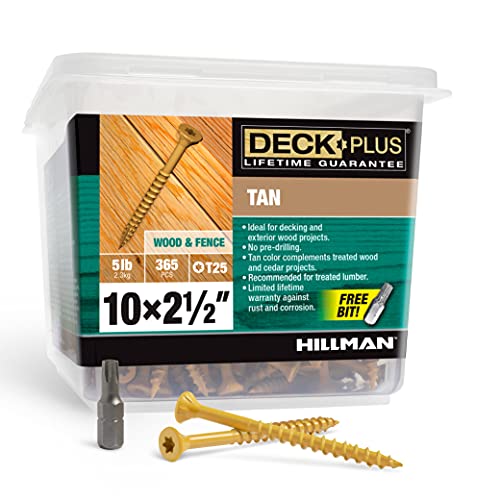
Self-Drilling Point: Together, coarse screw threads and a self-drilling point design eliminate the need for a pilot hole

Premium Quality: Crafted from durable steel and coated with a Brown exterior epoxy finish for superior rust resistance.
Hardwood Decking Specifications
Hardwood decking demands a fundamentally different fastening approach than softwood, primarily because the wood’s density creates splitting risks that you’ll need to actively prevent through pre-drilling. You’ll drill 1/8″ pilot holes at 45-degree angles where the tongue meets the face, creating a slight v-groove. This installation challenge requires precision to maintain hardwood durability throughout your deck’s lifespan.
For the face screw and plug method, you’ll countersink 3/8″ holes before inserting stainless steel screws into pilot holes. After fastening, you’ll insert matching wood plugs with waterproof adhesive, flush them with a chisel, and sand smooth. Stainless steel provides essential rust and corrosion resistance that protects your deck investment from moisture damage over time.
You must space fasteners at least 3/4″ from edges and ends, installing two screws per attachment point. Lubricate fasteners before driving them to prevent over-penetration and guarantee proper installation. Proper local building codes should be consulted to ensure your fastening specifications meet all safety and compliance requirements for your deck project.

Defeat Rust for Good with 304 Stainless Steel - Tired of rusty screws ruining your project's look and strength? Get screws that stand the test of time. Crafted from premium 304 stainless steel, these construction screws resist corrosion in wet, coastal, and high-moisture environments, delivering lasting performance where ordinary screws fail.
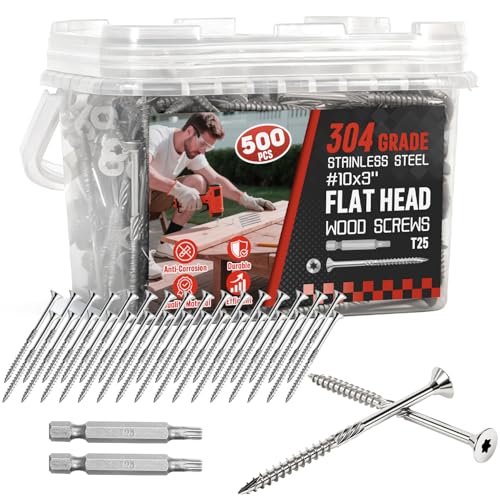
Defeat Rust for Good with 304 Stainless Steel - Tired of rusty screws ruining your project's look and strength? Get screws that stand the test of time. Crafted from premium 304 stainless steel, these construction screws resist corrosion in wet, coastal, and high-moisture environments, delivering lasting performance where ordinary screws fail.
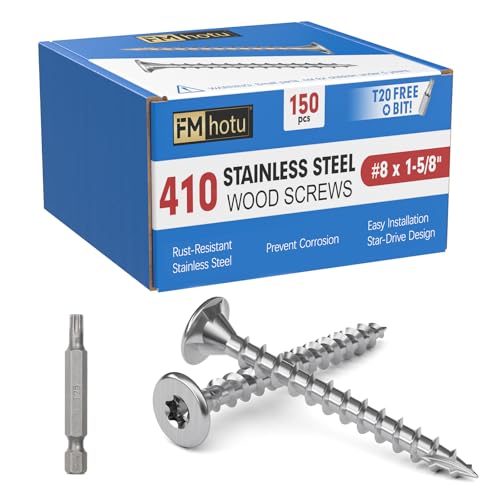
Premium Stainless Steel Construction: Crafted from 410 stainless steel, a top-grade alloy renowned for its exceptional strength and durability. Outperforming 304 stainless steel, these screws boast superior load-bearing capabilities, ensuring longevity even in challenging outdoor environments.
Material and Metal Type Considerations
The precision you’ve applied to hardwood installation must extend to your fastener selection, since the wrong metal type will undermine all that careful work. You’ll want stainless steel advantages—particularly 316 grade—for coastal or high-humidity environments where corrosion resistance directly impacts longevity. Hardwood’s density demands hardened steel or stainless steel screws that penetrate effectively without shearing. Carbon steel alternatives require reliable coatings meeting ASTM A153 standards, but they won’t match stainless steel’s durability. Your environmental conditions dictate your choice: coastal regions absolutely require 316 stainless for saltwater exposure, while inland dry climates allow 304 stainless or quality-coated carbon steel. Temperature fluctuations and salt spray exposure accelerate degradation, making stainless steel your most practical investment for hardwood decking that performs reliably. Similar to how paint provides lasting protection in harsh weather conditions, premium stainless steel fasteners ensure your deck maintains structural integrity over time. For cedar specifically, 316 stainless steel edge screws are recommended to prevent tannin staining and ensure long-term durability.

BUILT TO LAST WITH 316 GRADE STAINLESS STEEL - These stainless steel wood screws are made from premium 316 Marine Grade Stainless Steel for superior strength. No more rust on your timber projects! Ideal for long-lasting performance in decking, fencing, and all types of outdoor woodwork. This steel prevents ugly rust streaks and stains on outdoor timber, keeping your structures looking clean, polished, and professional season after season.
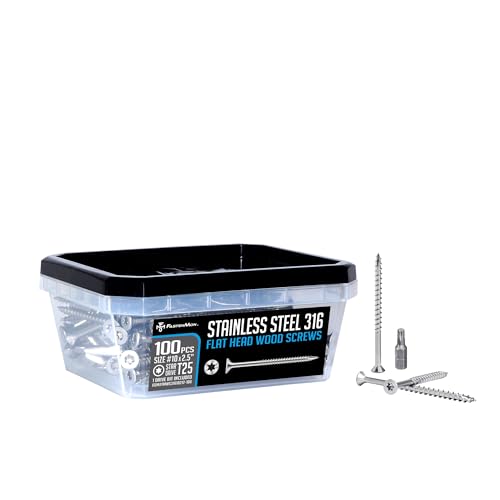
PACKAGE CONTENT: Each package contains 100 pieces of #10 x 2.5 inch stainless steel wood screws, weighing approximately 1.2 pounds, and includes a T25 star drive bit for easy installation.

【Package Contents】:Each package contains 100 #10 x 3-inch 316 stainless steel flat-head wood screws and one T25 Torx screwdriver bit.
Board and Joist Thickness Guidelines
Once you’ve selected your fastener material, matching screw length to board and joist dimensions becomes your next critical decision. Your board thickness directly determines minimum screw length—the industry rule of thumb multiplies board thickness by three. For example, 5/4″ deck boards need 2½” screws, while 1½” boards require 3″ screws.
Joist thickness equally matters. Standard 2×6 joists pair well with 2½” screws, but 2×8 or 2×10 joists demand 3″ screws. Larger 2×12 joists may need 3½” screws depending on your board thickness.
Always guarantee at least 1″ penetration into the joist itself. This minimum penetration depth prevents pull-out and secures your boards properly. Calculate total material thickness above the joist, then select screws accordingly. For residential applications, standard 5.5″ wide boards are most common and should be paired with appropriately sized fasteners for optimal performance. Using stainless steel screws exclusively protects against rust and corrosion, ensuring your fasteners remain secure throughout the deck’s lifespan.
Drive and Head Style Options
Square drive screws offer superior drive type advantages, providing enhanced bit engagement and considerably reducing cam-out risk during installation. This makes them ideal for professional contractors tackling demanding projects. Phillips head screws remain more affordable and widely available, though they’re prone to slippage during high-torque applications.
Head style differences matter considerably too. Bugle head designs distribute pressure evenly across deck boards, minimizing surface damage and wood crushing. Trim head screws feature smaller profiles, making them excellent for premium decks where aesthetics take priority. To ensure your fasteners work effectively with structural components like posts, which must be spaced no more than 6 to 8 feet apart according to code requirements, select screws that provide reliable holding power. Proper fastener selection should complement your building code compliance requirements to ensure your deck railing and structural components meet all local regulations. Choose based on your project’s durability requirements and visual priorities.

PREMIUM 305 STAINLESS STEEL – #8 x 2-1/2" fence and deck screws built from 305-grade stainless for superior corrosion resistance; ideal for outdoor, marine, and wet-environment projects that need long-lasting rust protection.

Brown hue to complement your decking finish

PREMIUM 305 STAINLESS STEEL – #8 x 1-1/4" fence and deck screws built from 305-grade stainless for superior corrosion resistance; ideal for outdoor, marine, and wet-environment projects that need long-lasting rust protection.
Penetration Depth and Security Standards
While drive type and head style determine how you’ll install your fasteners, penetration depth ultimately determines whether your deck will remain secure. You need at least 1 inch of penetration into the joist to prevent loose boards over time. The NDS 2015 standard requires minimum penetration of 4D (four times the screw diameter), excluding the tapered tip. Penetrations between 4D and 8D require applying penetration factors to your connection strength calculations, reducing your lateral design load values proportionally. You’ll achieve full connection strength only when penetration reaches 8D. For standard deck boards, 2.5-inch screws typically provide adequate penetration. Longer screws reduce pullout risk, though overdriving weakens connections. Using deck screws with appropriate coatings or stainless steel helps ensure durability and corrosion resistance while maintaining holding power without wood damage. Always consult manufacturer specifications for your specific application.
Local Building Codes and Regulations
Because deck safety depends on proper fastener installation, you’ll need to understand the local building codes that govern your project. Most jurisdictions reference the International Residential Code (IRC) for deck codes and compliance requirements. You’ll typically find that IRC R507.7 mandates at least two No. 8 wood screws or 8d threaded nails per supporting member for deck boards. Your local building department may impose additional requirements, particularly in high-wind or seismic zones. You should verify spacing, diameter, and length specifications before purchasing fasteners. Many jurisdictions require permits and inspections to confirm compliance. Non-compliant installations may force you to remove and replace fasteners, delaying your project. Contact your local building department early to clarify specific compliance requirements for your deck construction. The ledger board attachment to your shed must also meet IRC standards to ensure proper door clearance and structural integrity. For newly installed deck boards, ensure proper surface preparation and appropriate weather conditions are met before applying any protective finishes to maintain long-term deck integrity.
Installation Best Practices for Optimal Results
Proper installation technique determines whether your deck will perform safely and look professional for years to come. You’ll achieve ideal results by maintaining consistent screw spacing and correct installation orientation. Drive screws at 90 degrees to the board face using a drill or impact driver, countersinking heads flush with the surface. Position fasteners at least 1 inch from board ends to prevent splitting, and pre-drill holes when spacing is tighter. Hold boards slightly above the previous one at joints, then drive your first screw one joist over before securing the joint itself—this pulls boards tightly together. Use sharp bits and apply consistent pressure to avoid stripping. For boards with grooved edges, consider using hidden fastening systems like EverClip or CONCEALoc to achieve a seamless appearance. Finally, inspect all screw heads after installation and tighten any loose fasteners before completing your deck.