How Long Does Cabot Deck Stain Take to Dry?
You’ll reach light foot traffic readiness in 4–6 hours with Cabot deck stain, though full curing for furniture and heavy use takes 24–72 hours. Water-based formulations dry faster (1–6 hours), while oil-based variants require 6–24 hours. Temperature between 50–80°F and humidity at 40–60% optimize drying. Avoid application below 50°F or if rain’s expected within 24 hours. Several critical factors greatly influence your actual drying timeline.
Typical Drying Times for Cabot Deck Stain
Before you plan your deck project, you’ll want to know that Cabot deck stain typically reaches light foot traffic readiness in 4–6 hours, though full curing for furniture placement and heavy use extends to 24–72 hours. Water-based formulations dry faster, often within 1–6 hours before rain exposure, while oil-based variants require 6–24 hours minimum. Application thickness greatly impacts drying duration; over-application extends cure times considerably. Wood moisture content below 15% guarantees ideal results, particularly for semi-solid oil-based stains requiring 3–5 days of dry weather pre-application. Surface preparation matters too—allowing wood 24–48 hours to dry after washing accelerates proper drying. Ensuring the deck is completely dry before staining is essential, as moisture prevents the stain from adhering evenly to the wood surface. To achieve even coverage and professional results, use proper application tools like brushes, rollers, or sprayers during installation. Monitor environmental conditions closely, as inadequate drying may leave surfaces wet or tacky.
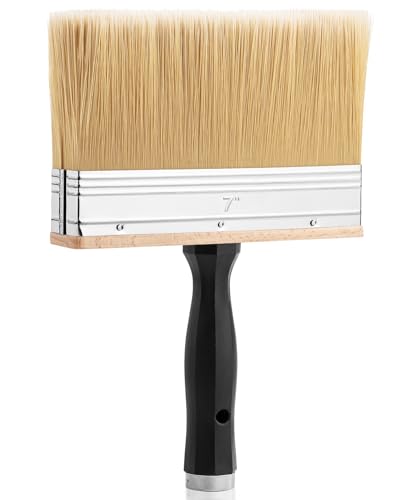
Bates deck stain brush features a wide 7-inch brush head, perfect for covering large surfaces quickly and efficiently.

Bates deck stain brush set includes 2 high-quality brushes designed specifically for staining decks and other large wood surfaces.

Bates deck stain brush features a 7.5-inch width for expansive and even application, ideal for efficiently staining decks, fences, and other large wooden areas.
How Weather and Temperature Affect Drying
While application thickness and surface preparation establish the foundation for proper curing, environmental factors ultimately determine whether your deck stain dries evenly and fully. Temperature extremes greatly impact drying performance—ideal conditions range from 50–80°F (10–27°C). Below 50°F, drying time doubles or more, and you shouldn’t apply stain if temperatures will drop below 50°F within 48 hours. Above 80°F, the stain dries too quickly, causing lap marks. Humidity effects are equally critical; maintain 40–60% humidity for best results. Above 70%, drying slows markedly and may cause tackiness. Direct sunlight accelerates drying unevenly, while shade requires longer cure times. Wind aids evaporation but can create uneven application. Rain within 24 hours ruins the finish entirely. Proper material selection helps mitigate some environmental challenges by choosing stain types suited to your climate exposure. Protecting surrounding areas from environmental exposure during the drying process, similar to protecting plants and furniture, ensures optimal stain performance and prevents contamination.
Surface Preparation and Application Best Practices
Proper surface preparation directly determines whether your Cabot deck stain adheres correctly and dries evenly across the entire project. You’ll want to perform a water absorption test first—if water beads, sand the surface to remove mill glaze. Surface cleaning using Cabot cleaner eliminates dirt, grime, and previous finishes that interfere with stain penetration. Check for loose fibers with tape; sand with 80-100 grit sandpaper if needed, always following wood grain direction. To restore the wood’s natural pH balance and improve stain adhesion, apply a wood brightener after cleaning.
For stain application, use natural bristle brushes for oil-based products or polyester for water-based formulas. Apply stain to one to three boards simultaneously, maintaining a wet edge to prevent lap marks. Heavily coat open end grain first, then work systematically across the surface. This methodical approach guarantees uniform color absorption and ideal drying performance. Allowing sufficient drying and curing typically takes 24 to 48 hours depending on weather conditions before your deck is ready for use.

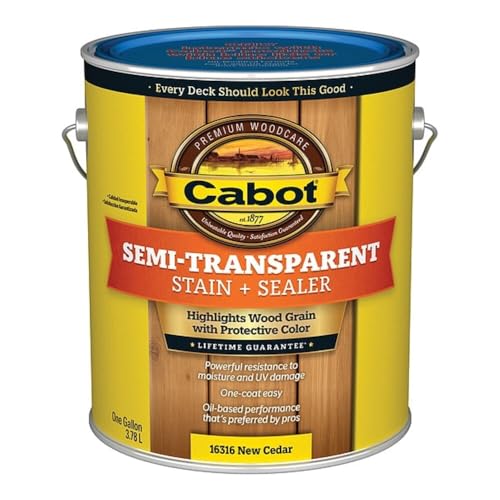
OIL-BASED WOOD STAIN - Cabot Semi-Transparent Stain + Wood Sealer is formulated to provide long lasting beauty and wood protection. The wood sealant highlights the grain of your wood with protective color.

A translucent oil finish that protects and beautifies wood's natural appearance
Drying Time Differences Between Cabot Stain Types
Because different Cabot stain formulations cure at varying rates, you’ll need to match your product choice to your project timeline and environmental conditions. Water-based stains like Aquadeck dry fastest—typically within 4-6 hours—making them ideal for quick turnarounds. Semi-solid stain and sealer combinations require 24-48 hours, offering single-coat convenience. Oil-based options demand several days for full curing, delivering superior moisture resistance but extended wait times.
Your application techniques must align with each stain type’s requirements. Water-based formulations need temperatures between 50°F-80°F and no rain for 24 hours post-application. Oil-based stains demand temperatures above 50°F and dry conditions. Semi-solid products applied under covered areas extend drying considerably. To achieve a uniform finish and prevent surface irregularities, maintain a wet edge while applying stain to avoid lap marks. Over-application of stain can lead to extended drying times and surface failure including peeling and cracking, so applying thin, even coats is essential for proper drying. Understanding these stain types’ distinct characteristics guarantees excellent results and proper project scheduling.

Maximum-pigmented formula to withstand heavy foot traffic
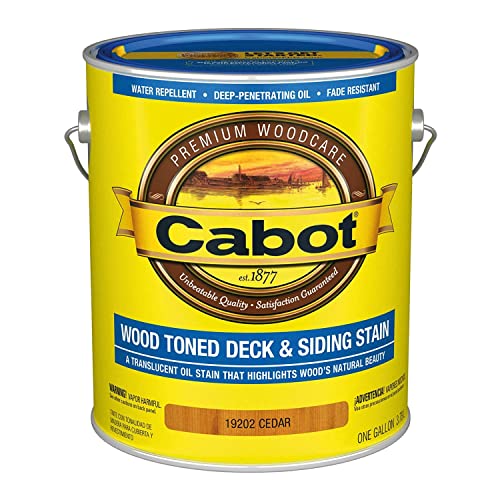
PROTECT WOOD - Cabot Wood Toned Stain + Sealer is specially formulated with a unique blend of resin and oil to provide a superior natural finish for bare wood. It’s a wood protector against the sun and weather elements.

OIL-BASED WOOD STAIN - Cabot Semi-Solid Stain + Wood Sealer is formulated to provide long lasting beauty and wood protection. The wood protector hides some wood grain to form a stronger weather barrier.
Post-Application Care During the Curing Period
Once you’ve applied your Cabot deck stain, the real work begins—protecting that freshly coated surface during its vulnerable curing window. Your curing precautions directly impact final results. Restrict foot traffic for 24 hours and keep furniture off for 48 hours. Don’t allow pets on the deck until fully cured. For maintenance tips, avoid water and cleaning solutions during the first 24 hours—no pressure washing or harsh chemicals until curing completes. After 24 hours, gently remove debris with a soft broom. Blot any spills immediately using a dry cloth. Monitor weather conditions closely; high humidity extends curing time, and shade areas cure slower than sun-exposed sections. Consider using outdoor-rated protective methods similar to those employed when installing deck accessories to shield the stain from environmental exposure during the critical curing phase. These maintenance tips guarantee peak stain performance and longevity.
Environmental Factors That Impact Drying Speed
While you’ve diligently maintained your deck during the critical curing period, the timeline for Cabot deck stain to dry ultimately hinges on environmental conditions beyond your control. Humidity levels dramatically influence drying speed—above 70% humidity extends dry times to 12-24 hours, while low humidity accelerates drying to 1-4 hours. Temperature consistency between 50°F and 80°F establishes ideal 4-6 hour dry times; cooler temperatures double drying periods, whereas excessive heat causes uneven finishes. Airflow expedites moisture evaporation, whereas sheltered areas trap humidity and extend timelines. Rain conditions present critical risks—precipitation within 6-24 hours post-application can wash off stain or cause adhesion failure. Proper deck preparation and cleaning before staining removes contaminants that interfere with the drying process and final finish quality. Maintaining moisture content below 15% on your deck surface before application ensures optimal stain adhesion and prevents peeling or uneven finishes. You’ll achieve predictable results by monitoring these interconnected variables.