
How to Stain a Deck for the First Time: Beginner’s Guide
You’ll start by inspecting your deck’s structural components for damage, then thoroughly clean the surface with a sodium percarbonate-based cleaner. Sand the deck using proper grit progression to remove old finishes and imperfections. Next, protect surrounding areas and verify the wood’s readiness with a water droplet test. Finally, apply stain along the grain using appropriate tools, maintaining wet edges for seamless coverage. The complete process requires careful attention to weather conditions and drying times for ideal results.
Preparation and Inspection
Before you apply any stain to your deck, you’ll need to thoroughly inspect and prepare the surface. Start with a detailed inspection checklist to assess your deck’s condition. Check structural components like beams, joists, and the ledger board for cracks, rot, or warping. Examine the decking surface for soft spots, splintering, and loose fasteners. Test railings and stairs for stability, confirming all connections are secure.
Inspect foundation footings for erosion, cracking, or settling issues. Evaluate all hardware, tightening loose bolts and replacing corroded connectors. Address any structural concerns before proceeding—staining won’t fix underlying damage. Once you’ve verified structural integrity, clean the deck thoroughly, removing debris, algae, and moss. Power washing removes dirt, mold, old stain, and other contaminants that interfere with stain adhesion and longevity. Allow the deck to dry fully before proceeding with sanding to ensure optimal stain absorption. Sand the surface to create a smooth, receptive base for stain application. This preparation guarantees better stain adhesion and a professional finish.
Surface Cleaning and Preparation
Once you’ve confirmed your deck’s structural soundness, you’re ready to clean and prepare the surface for staining. Start by sweeping all leaves, dirt, and debris using a stiff-bristle broom, working in the direction of the wood grain. Clear gaps between boards to prevent trapped moisture.
For cleaner selection, use a sodium percarbonate-based cleaner designed for wood surfaces. Apply it liberally with a roller or sprayer, working in small sections while keeping the area wet. Allow the cleaner to sit for 15–20 minutes, then scrub thoroughly with a synthetic-bristle brush to remove dirt, mold, and graying. Avoid using overly stiff bristles that can damage the wood fibers.
Rinse completely with a garden hose or pressure washer at 1200–1400 psi, maintaining 8–12 inches distance. Apply wood brightener to neutralize alkaline residue and restore pH balance. For weathered decks with peeling stain, consider sanding or power washing to remove old finish before applying new stain. Allow your deck to dry thoroughly for 24–48 hours before staining—essential deck maintenance, as opening the wood’s pores ensures better stain absorption.

Oxygen-Powered Stain Removal:Break down tough stains like wine, coffee, grass, sweat, and blood with our powerful sodium percarbonate formula. Acts as a laundry booster that helps whiten whites, brighten colors, and lift deep-set stains with the natural power of oxygen.

Oxygen-Powered Stain Removal:Break down tough stains like wine, coffee, grass, sweat, and blood with our powerful sodium percarbonate formula. Acts as a laundry booster that helps whiten whites, brighten colors, and lift deep-set stains with the natural power of oxygen.

100% PURE Uncoated Sodium Percarbonate, an excellent multi-purpose cleaning and bleaching agent for many tasks around your home. Uncoated Sodium Percarbonate is the best type for mixing, DIY, and cleaning around the home.
Sanding and Surface Smoothing
After your deck’s fully dried, sanding becomes the critical next step to remove old finishes, stains, and surface imperfections while creating the smooth texture necessary for even stain absorption.
Select appropriate sanding tools based on your deck’s layout. Belt sanders handle large flat surfaces efficiently, while orbital sanders work best on edges and corners. Detail sanders reach tight spots effectively. For cracks and seams between boards, an oscillating multi-tool with a diamond blade is particularly effective at accessing areas that standard sanders cannot reach.
Follow proper grit progression to achieve professional results. Start with coarse grit (40–60) for material removal, progress to medium grit (80–100) to smooth marks, then finish with fine grit (120–150). Always sand along the wood grain using long, overlapping strokes with consistent pressure. Proper sanding technique ensures the wood grain opens appropriately for optimal stain adhesion.
Change sandpaper frequently to maintain abrasiveness. Remove all sanding dust with a vacuum or tack cloth before staining.

Multiple Grit Options: Includes 8 pcs 3x21 sanding belts, providing 4 different grits: 80, 120, 150 and 240 grit, 2 belts each, suitable for various sanding needs from coarse shaping to fine polishing

Belt Sander Paper PRO:Sanding belts are crafted with selected premium open coat aluminum oxide grain, feature excellent abrasion resistance, anti-static and anti-clogging. No such "A lot of fall out of the grits and fiber" occurred in normal use

Variable speed dial powers the belt anywhere from 1080 to 1800 feet per minute
Pre-Staining Protection and Setup
With your deck sanded smooth and dust removed, you’re ready to prepare the work area and verify that conditions favor successful stain application. Begin by removing all furniture, potted plants, and barbecue equipment from the deck surface to guarantee complete deck coverage. Cover windows, siding, and nearby plants with plastic or cardboard to prevent stain runoff damage. Drive any protruding nails flush or below the surface to prevent catching stain pads. Prepare deck railings and spindles separately before applying stain to horizontal surfaces. Check the weather forecast—you’ll need minimum 24 hours of sunny, dry conditions ahead. Finally, perform the water droplet test on your boards. If water absorbs within two minutes, you’re ready to proceed with staining. For older wood that appears grey or weathered, consider applying a wood brightener before staining to restore its natural appearance and ensure optimal stain penetration. Allow the deck to dry completely for about 24 hours after any pre-staining treatments before beginning the staining process.

RESTORES THE NATURAL BEAUTY OF WOOD - DEFY Wood Brightener cleans and restores weathered wood surfaces to make them look new again
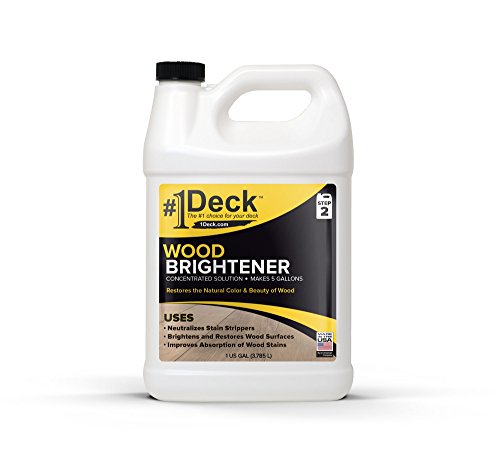
Restores wood's natural color and beauty

BRIGHTENS & RESTORES WOOD COLOR - Restore-A-Deck Wood Brightener helps restore the natural appearance of weathered exterior wood after cleaning or stripping by improving wood tone and reducing darkened wood fibers.
Application Techniques and Drying
Choosing the right application tool sets the foundation for a professional-looking finish, as each method offers distinct advantages depending on your deck’s layout and your skill level. Brushes provide precise control for detailed areas, while rollers and lambswool applicators cover broad surfaces efficiently. Sprayers work well for vertical elements but require back-brushing for uniform coverage.
Apply stain along the wood grain using long, smooth strokes. Work on 2–4 boards at a time, maintaining a wet edge to prevent lap marks. Coat open end-grain heavily first, then blend wet stain into wet stain for seamless shifts.
Temperature and humidity critically affect results. Keep conditions between 50–90°F and guarantee 24 hours of dry weather post-application. Using back-brushing techniques helps work the stain deeper into the wood for improved durability and a more even finish. Stirring the stain well before application ensures pigments remain evenly mixed throughout your project. Most stain types cure within 48 hours. Consult your product’s Technical Data Sheet for specific coat requirements.

Bates deck stain brush features a 7.5-inch width for expansive and even application, ideal for efficiently staining decks, fences, and other large wooden areas.

Bates deck stain brush set includes 2 high-quality brushes designed specifically for staining decks and other large wood surfaces.

Ultimate Deck Stain brush Kit: Comes with 7" deck stain brush with long handle, 3" small paint brush. Together they are perfect for various staining projects, big or small. Large deck stain brush features with 6" width for expansive and even application, long handle for fast, efficient coverage of exterior decking