How to Prep Your Weathered Deck for a Fresh Stain
You’ll sweep away debris, apply wood-safe cleaner, and scrub with a synthetic brush before rinsing thoroughly. Next, use chemical stripper to remove old coatings, then sand progressively from 60–80 grit to 100–120 grit for smoothness. Apply wood brightener while wet to neutralize pH levels. Wait at least 48 hours until moisture content drops below 15%, ensuring humidity stays between 40–70%. These steps prepare your weathered deck for ideal stain absorption and durability.
Cleaning the Deck Surface
Before you apply any stain, you’ll need to thoroughly clean your deck surface to guarantee proper adhesion and uniform coverage. Start with sweeping using stiff-bristled cleaning tools to remove all leaves, dirt, and debris from the entire surface, including corners and board gaps. Next, apply a wood-safe cleaner liberally with a roller or pump sprayer, letting it dwell for 15–20 minutes while misting periodically to prevent drying. Scrub the deck thoroughly with a synthetic-bristle brush, agitating deeply into the wood grain to loosen embedded grime and mold. For stubborn mildew and stains, consider using oxygenated cleaners or natural alternatives that effectively penetrate the wood without causing damage. Finally, rinse completely with a garden hose or pressure washer at 1200–1400 psi, maintaining 8–12 inches distance and spraying with the grain. After rinsing, apply a brightening solution while the deck is still wet to open up the wood’s pores for better stain absorption. This systematic deck maintenance approach removes all residue, preparing your surface for ideal stain absorption.

CLEANS ALGAE, MOLD, MILDEW & MOSS STAINS: The 30 SECONDS Outdoor Cleaner rapidly cleans stains caused by algae, mold, mildew and moss on siding, decks, patios, brick, fences and driveways around your home

DECK AND PATIO WASH: Home Armor Deck & Patio Wash lifts stains from dirt and grime to keep decks and patios looking great over their lifespan.

CLEANS STAINS CAUSED BY ORGANIC GROWTH: 30 SECONDS Outdoor Cleaner rapid cleans stains caused by algae, mold, mildew and moss
Removing Old Finish and Peeling Stain
Most deck surfaces benefit from removing old stain before applying a fresh finish, especially if you’re dealing with substantial weathering, cracking, blistering, or significant color fading. You’ll employ two primary approaches: chemical strippers and mechanical methods.
Apply a deck-specific chemical stripper to dry surfaces, allowing it to sit for 15 to 45 minutes to break down old coatings. Agitate with a stiff brush, then rinse thoroughly with a garden hose or pressure washer at 500 to 1200 psi, maintaining 9 to 12 inches distance to prevent wood damage.
For mechanical methods, use scrapers or pressure washing at lower pressure (around 750 psi) with wide spray tips to lift peeling stain. Avoid aggressive techniques that gouge wood. Sand rough fibers once dry, then remove all residue to guarantee proper adhesion of your new finish. Working in manageable sections will help you maintain consistency and avoid missing spots during the removal process. After stripping is complete, consider applying a brightening treatment to neutralize the wood’s pH and prepare the surface for optimal stain absorption.

DESIGNED TO REMOVE SPECIALTY DECK COATINGS AND PAINTS FROM MULTIPLE SURFACES - Remove Paint, Latex, Polyurethane, Shellac, Varnish, Acrylic, Oil Based Coatings and More in usually a Single Application!

EASY STAIN STRIPPING: Powerful deck stain stripper for wood removes weathered, clear, or semi-transparent stains. Spray on with a pump-up sprayer and rinse with a power washer for best results.

IMPORTANT READ FIRST - Will not remove solid color opaque stains, paints, polyurethanes, or excessively over-applied acrylic (water-based) stains. If you have a question about if this will work for removing your stain, please ask below in the Questions Area with the brand name and type of stain being removed or contact us directly.
Sanding and Surface Preparation
Once you’ve removed the old finish, proper sanding and surface preparation are critical to achieving a professional result. Your grit selection determines surface quality. Start with 60–80 grit sandpaper to level the deck and remove remaining finish residue. Progress to 80–100 grit for smoothing, then finish with 100–120 grit for ideal stain readiness.
Employ effective sanding techniques by working along the wood grain with consistent, overlapping strokes. Use orbital sanders for most surfaces to prevent gouges, reserving detail sanders for railings and tight spaces. Replace worn sandpaper frequently to maintain cutting efficiency.
After sanding, sweep thoroughly to eliminate all dust. This prevents pore clogging and guarantees proper stain penetration. Inspect for missed spots and touch up as needed. For optimal results, consider using a pump sprayer with a fan-tip pattern to apply your stain evenly across the prepared surface. Allow three to five days before staining to let wood cells reopen naturally, which maximizes absorption of both penetrating sealers and stains for superior protection and color depth.

VERSATILE ATTACHMENT: The patented SAND+AID allows 5-inch corded random orbital sanders to connect to extension poles, eliminating the need for ladders when sanding high or hard-to-reach areas

Wide Tool Compatibility: This sander pads replacement is compatible with black and decker sander models including RO100, RO100K, RO100B, BDERO600, BDERO100, TS720, Q800K, and BT300. Replacement part numbers include 380278-00 replacement for black & decker sander pad and N601645.

Universal Size: Our interface pad features a 5" diameter, 0.5" thickness, and 8-hole design, perfect for most orbital sanders and hook-and-loop sanding discs
Wood Brightening and Neutralizing
After sanding and cleaning, wood brightening neutralizes the elevated pH levels from your cleaning process and restores the natural grain appearance by removing tannin stains and weathered discoloration. You’ll apply brightener immediately while wood remains wet, using pump-up sprayers for even coverage. Allow 5-15 minutes of dwell time, extending to 30 minutes for heavily weathered surfaces. Mist continuously to prevent premature drying and maximize chemical effectiveness.
Understanding wood acidification effects is critical—oxalic acid-based brighteners revert to water and oxygen within 60 minutes of mixing, so prepare only what you need. Multiple brightening techniques, including up to three application cycles, may be necessary for severely soiled wood. For the most efficient application after brightening, consider using a paint sprayer to ensure even stain coverage across your deck surface. Proper brightening prevents sealing undesirable gray weathering into your surface, directly influencing subsequent stain adhesion and finish durability. This enhanced adhesion ensures the stain bonds evenly to the wood surface for a more professional and long-lasting result.

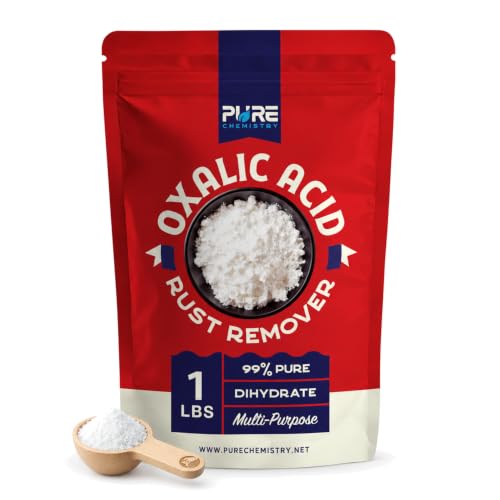
OXALIC ACID BULK: This 99% pure oxalic-acid powder comes in generous bulk quantities, well-suited for industrial or commercial use; Ideal as an oxalic cleaner, targeting oxidation on tools, appliances, and surfaces with precision

Contains oxalic acid which when mixed with hot water
Drying Time Considerations
Brightening prepares your wood’s surface, but you’ll need to account for drying time before staining can begin—a factor that directly impacts stain absorption and finish quality. After pressure washing, wait a minimum of 48 hours for surface moisture to dissipate completely. Verify wood moisture content stays below 15% for peak stain penetration.
Weather conditions greatly influence drying timelines. Humidity effects are critical; maintain relative humidity between 40–70% for ideal curing. Avoid staining if temperatures drop below 50°F or exceed 90°F, as both extremes compromise adhesion. Wind and airflow accelerate drying, while rain within 24–48 hours post-application risks washout, especially with water-based products. Most experts recommend waiting at least 48 hours before placing furniture back on the deck to ensure the finish has fully cured.
Schedule staining during late morning or early afternoon to allow adequate drying before cooler evening conditions develop. Selecting the appropriate stain type for your climate conditions ensures optimal performance and longevity of your deck’s finish.
Final Preparation Before Staining
You’re now ready to shift from surface brightening to final preparation—the critical phase that guarantees ideal stain adhesion and a professional-quality finish. Conduct a thorough final inspection of your deck surface, checking for missed spots, remaining debris, or uneven sanding. Confirm all repairs and structural issues are completely resolved before proceeding. Make certain the deck is entirely smooth and free from contaminants.
Next, test your stain color and finish on a small, inconspicuous area. Allow it to dry fully so you can evaluate appearance and adhesion accurately. Mix multiple stain cans together to achieve consistent color across the entire deck. For best results, use a wood brightener to restore the wood’s natural pH balance and ensure optimal stain absorption. Ensure at least 24 hours of dry, mild weather is forecasted to allow optimal stain absorption and drying. Finally, protect surrounding areas by covering plants, landscaping, and structures with drop cloths, and tape off adjacent zones to prevent accidental overspray on windows, siding, and furniture.

BRIGHTENS & RESTORES WOOD COLOR - Restore-A-Deck Wood Brightener helps restore the natural appearance of weathered exterior wood after cleaning or stripping by improving wood tone and reducing darkened wood fibers.

Ultra oxidizer, oxygen-activated powder concentrate
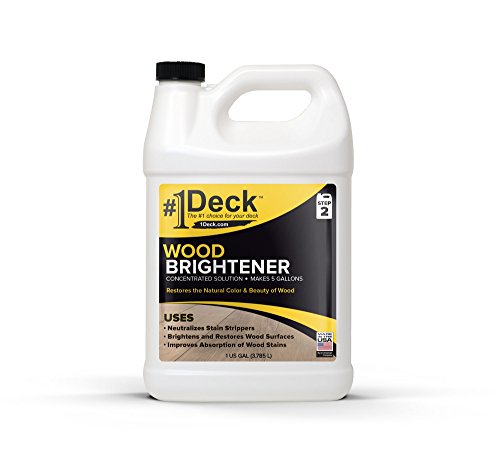
Restores wood's natural color and beauty