How to Measure Your Patio Furniture for Perfect Cushions
You’ll measure outer arm-to-arm distance for seat width, then add one inch for proper fit. Measure seat depth from the front edge to backrest, adding one inch for overhang. For back cushions, measure width at the widest point and height from seat to the furniture’s top, subtracting cushion thickness. Choose foam with 1.5-1.8 lbs./cu. ft. density and minimum 3-inch thickness for durability. Document each measurement immediately to guarantee accuracy and avoid ordering errors—discover additional considerations for unique furniture styles.
Tools and Preparation You’ll Need
Before you measure your patio furniture, you’ll need to gather three essential measuring instruments: a rigid tape measure for accurate readings across flat surfaces, a retractable tape measure for convenient storage and handling, and a flexible measuring tape for capturing measurements around curves and irregular shapes. You’ll also need pen and paper for documenting measurements immediately.
Your preparation steps should include clearing the measurement area around your furniture to guarantee unobstructed access. Position each piece on level ground to assure accurate depth and width readings. Remove existing cushions from the furniture frame before measuring, as you need actual furniture dimensions rather than old cushion sizes. Stand facing the furniture directly when beginning your measurement process for consistent positioning. Gather all tools in one location beforehand to improve efficiency and accuracy. When preparing for new cushions, keep in mind that selecting UV-resistant fabrics will ensure your cushions maintain their appearance and durability in outdoor conditions. Consider how your patio furniture placement relates to pergola designs and other outdoor structures, as this can affect both measurements and cushion fit in your space.

Non-stretch, wear-resistant, vinyl-coated fiberglass tape (1/2-inch wide) for reliable strength and flexibility

Open Reel Measuring Tape: Easily measure the dimensions of any area with the Champion Sports Open Reel Fiberglass Tape Measure. This dual-sided tape measure features feet on one side and meters on the other, and it is available in multiple lengths.

High Quality - Made of premium fiberglass, this tape measure is soft, durable, water resistant.
Measuring Seat Width Accurately
Three critical measurements define your seat width: the outer arm-to-arm distance, the inner arm-to-inner arm distance, and the adjusted width accounting for your cushion configuration. You’ll use a rigid tape measure placed horizontally across your seating surface for measurement precision. Start at the outer edge of one armrest and extend to the outer edge of the opposite armrest, establishing your baseline dimension.
Next, measure between the inner edges of both armrests to determine your actual usable seating surface. Add one inch to your raw measurement to allow snug fitting without excessive tightness while ensuring slight overhang for cushion aesthetics. If you’re installing multiple cushions, divide your total width by the number of cushions, then subtract cushion thickness to prevent overlapping. Document all measurements in writing for future reference and ordering accuracy. Proper measurement techniques complement protective covers and weatherproof sealants by ensuring your cushions fit securely and protect your furniture investment from environmental damage.
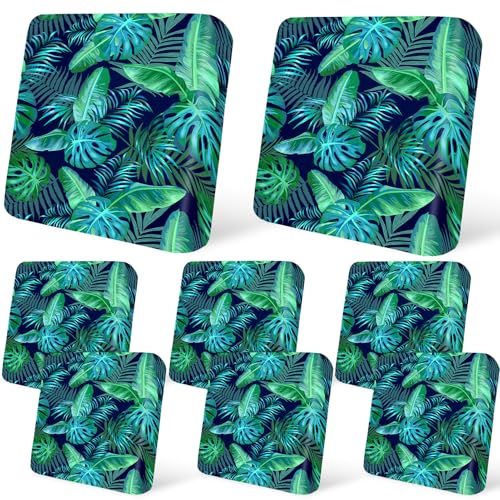
Various Complete Ensemble: This package contains different combinations, which can be used to meet different needs, offering full protection for your sofa cushions. Designed to fit cushions 20-27 inches in length/width and 2-8 inches in height. Suitable for various shapes, letting you revamp your sofa without replacing inserts. Please measure your cushions before purchasing to ensure the best fit.

👍Available in Multi-Size Combos - Each package includes 8 pieces of outdoor cushion cover. Stretch-fit design ensures universal compatibility with most patio/indoor cushions for a wrinkle-free, tailored look. The Square Large size fits most cushion with 21~26 inches in length, 21~26 inches in width, and 2~7.8 inches in height. The Rectangle size fits most cushion with 21~26 inches in length, 16.5~23.5 inches in width, and 2~7.8 inches in height. Please measure your sofa cushion before purchasing

Dimensions: 24x24x4 inch 4 pack. Please measure your cushion size before purchasing. It is recommended to choose a slipcover that is 1-1.5 inches larger than the seat cushion. Various colors are prepared. You can choose the color you like to cover. COVER ONLY – DOES NOT COME WITH CUSHION INSERTS.
Getting Your Seat Depth Right
Seat depth—the front-to-back distance across your seating surface—is just as critical as width for guaranteeing proper cushion fit. You’ll measure from the center front edge to the backrest using a rigid tape measure positioned horizontally along the seat’s centerline. Clear any obstructions to guarantee unrestricted access and accurate readings.
Standard outdoor furniture typically ranges from 20–24 inches in depth. You should add one extra inch to your measurement to accommodate seat overhang, which enhances cushion comfort and prevents overly tight fitting against the frame. This allowance lets your cushion hang slightly over the front edge.
Consider your furniture’s frame type and shape. Squared-off corners require measurements at both front and back edges, while rounded designs may need only front-edge readings. Document measurements immediately to prevent errors. Before measuring for cushions, assess your furniture for any damage or wear that might affect its structure, as weathered wood surfaces may need refinishing to ensure stability and longevity. Regular inspection for wear helps identify structural issues early and maintains your furniture’s integrity for years to come, particularly when combined with appropriate protective sealants.

【Set and Size】This is a complete outdoor deep seat cushion set, which includes a seat cushion (24"W x 24"D x 5.75"T) and a matching back cushion (25"W x 22.5"H). Perfect for outfitting an entire patio furniture collection or a large sectional sofa. For a seamless match, measure your furniture's width and depth before purchase.

【Size Detail】Zonamat outdoor chair cushions measuring 19"x19"x3". (Please measure your furniture first to ensure the perfect fit for your outdoor seating space.) Out patio furniture cushions offering a perfect fit for most patio, garden and lawn chairs; ideal for lawn, deck, balcony, beach, or even indoor use.

【Set Size】Outdoor Cushion Set includes 1 seat cushion measuring 24"W x 24"D x 5.75"T and 1 back cushion measuring 25"W x 22.5"H. (Measure the seating area of your furniture to make sure the cushion size is right).Pro Tip: Always double-check measurements before purchase! For assistance, contact us for a step-by-step video guide.
Taking Back Cushion Measurements
Getting accurate back cushion measurements requires you to focus on two key dimensions: width and height.
For back width, you’ll stretch a rigid tape measure horizontally across the entire back section at its widest point. Add one inch to your measurement to guarantee a snug fit and allow for natural cushion overhang that softens the furniture’s edges.
When determining back height, measure vertically from where the seat cushion meets the back to the furniture’s tallest point. Start at the base of the seating surface and extend upward. Subtract your cushion’s thickness from this measurement to prevent cushions from extending beyond the back’s top edge.
These precise measurements assure your replacement cushions fit properly and provide maximum support and comfort for your patio furniture.

【Perfect Fit for Loveseats】Includes 1 seat (46"L x 26"W x 4"H) and 2 backs (24"L x 19"W x 4"H). Whether you need outdoor loveseat cushions for a wicker frame or love seat cushions for outdoor furniture for a standard patio set, this size fits most wicker loveseat cushions outdoor applications.

Outdoor Seat Cushion Covers Replacement Set Size: Deep seat cushion cover x 2pcs: 28"L x 28"W x 6"H, backrest cushion pillow cover x 2pcs: 28"L x 13"W x 6"H. COVER ONLY

【Set Size】Outdoor Cushion Set includes 1 seat cushion measuring 24"W x 24"D x 5.75"T and 1 back cushion measuring 25"W x 22.5"H. (Measure the seating area of your furniture to make sure the cushion size is right).Pro Tip: Always double-check measurements before purchase! For assistance, contact us for a step-by-step video guide.
Understanding Cushion Thickness and Foam Density
Once you’ve determined the proper dimensions for your cushions, you’ll need to understand how foam density and thickness work together to deliver comfort and durability. Foam density—measured in pounds per cubic foot—directly impacts your cushion materials’ performance. Industry standards for outdoor cushions range from 1.5-1.8 lbs./cu. ft., with higher density producing firmer support and greater foam durability against weather exposure.
You’ll also encounter Indentation Force Deflection (IFD) measurements, which quantify foam softness through compression resistance testing. Medium firmness foam rates at 40-45 IFD, ideal for everyday outdoor use. For peak performance, pair medium-density foam (2-4 PCF) with 2.5-3.5 inches thickness. Outdoor applications require minimum 3-inch thickness due to UV rays and temperature fluctuations that degrade foam structure faster than indoor environments.
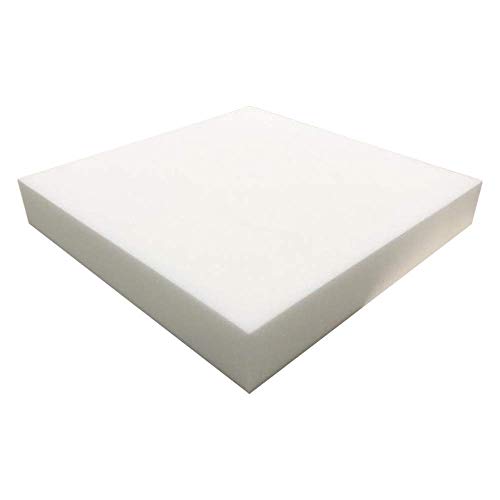
LONG-LASTING AND DURABLE: Our long-lasting high-density foam replacement cushions are proudly made in the USA! Foamma foam cushions are durable and will maintain their comfortable, firm support for 7 – 10 years. Perfect for couch cushions, sofa cushion, and chair pad.
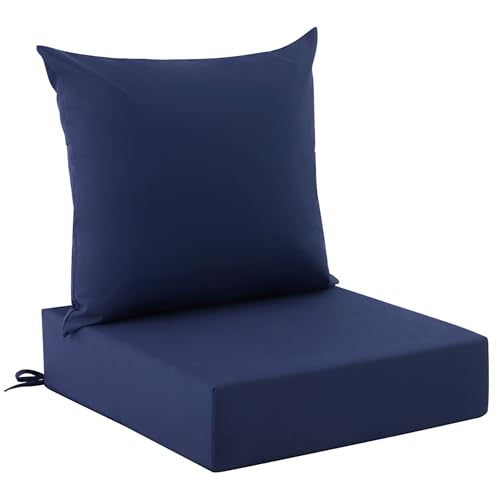
UNIVERSAL DEEP SEAT SIZE - This outdoor cushion set includes 1 outdoor seat cushion (24” W x 24” D x 5.75” T) and 1 backrest pillow (25” W x 22.5” H), designed to fit most deep seat patio chairs or outdoor couches. Please measure your patio furnitures carefully to ensure a proper fit.

Size and Package: The size of the outdoor chair cushions is 18.5 X 16 X 3 inches and fits most standard size chairs. As the cushions are vacuum packed, you can press and tap them for a while after unpacking and they will restore fluffy within 24-48 hours
Measuring Unique Furniture Styles
How do you account for the distinct spatial requirements of different furniture configurations? You’ll need to assess chaise lounge dimensions carefully, measuring both length and depth to guarantee proper cushion fit. When measuring ottoman dimensions, document height, width, and depth separately, as these pieces often require custom cushion specifications.
For wraparound bench seating, measure linear edge distances to establish accurate cushion lengths. Sectional pieces demand dimensional assessment of each module’s footprint and connecting points. Round tables necessitate measuring the longest and widest points to determine circular cushion sizes. Rectangular dining tables require precise length and width documentation for fitted cushion fabrication.
Bar tables with stools need height verification for both seat cushions and standing clearance. Plan adequate clearance around furniture to ensure comfortable movement and functionality in your outdoor space. To maintain your cushions and furniture long-term, implement regular maintenance and gentle cleaning to prevent dirt accumulation and keep your patio setup looking new. Document all measurements twice to prevent errors before ordering custom cushions for your unique patio layout.