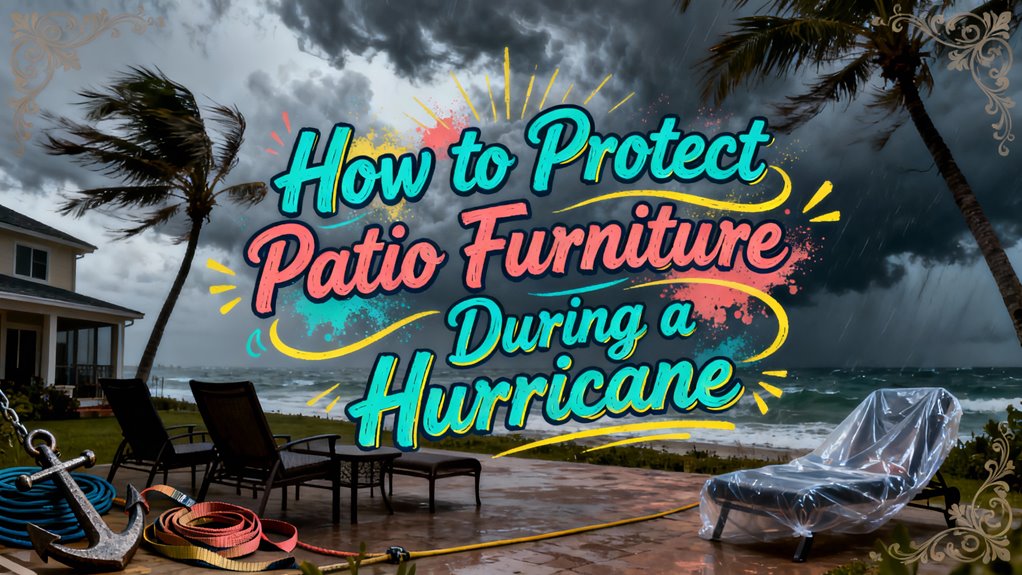
How to Protect Patio Furniture During a Hurricane
You’ll protect your patio furniture by moving lightweight items indoors immediately when a hurricane’s forecasted. Secure heavier pieces with sandbags, straps, or tie-down kits, bundling them together for stability. Apply high-quality protective covers weighted down with sandbags to shield against wind and water damage. Document your property’s current condition with photographs before the storm arrives. Complete all preparations at least two weeks ahead. The following sections outline specific techniques that’ll strengthen your defense against hurricane-force winds.
Develop Your Hurricane Preparedness Strategy
Before hurricane season arrives, you’ll need to develop a thorough preparedness strategy that addresses your property’s specific vulnerabilities. Start by analyzing local storm frequency data and historical hurricane patterns for your region. Assess your property’s exposure to wind and flooding using official flood maps and wind zone classifications. Evaluate your furniture materials—whether wood, metal, or composite—to determine appropriate protection methods. If you have spruce furniture, apply UV-resistant sealers to protect it from rot, decay, and damage during severe weather. Document existing structural weaknesses in decks, patios, and outdoor spaces. Identify hazards like nearby trees and power lines that pose risks during high winds. If your deck has been recently stained, ensure it has adequate curing time before hurricane season to prevent damage from heavy rain and wind. Next, designate a responsible party to monitor weather updates and coordinate securing outdoor assets. Establish communication protocols for notifying relevant parties when hurricane conditions approach. This proactive assessment guarantees you’ll implement targeted protection measures effectively before storms arrive.
Move Lightweight Items to Safety
The most critical step in protecting your patio during hurricane season is removing lightweight furniture—plastic, aluminum, and resin pieces—that’ll become dangerous projectiles in high winds. You should prioritize moving potted plants, cushions, lawn ornaments, and storage baskets indoors immediately when a hurricane forecast is issued.
Clear your garage, shed, or basement to accommodate these items. Stack and fold furniture designs to maximize storage efficiency. Before moving anything, inspect pieces for sharp edges or fragile components that’ll sustain damage during changeover.
If indoor storage isn’t available, group furniture closely and secure it with ratchet straps or bungee cords. Add weight using sandbags, then position items in sheltered corners against walls. Avoid placing lightweight furniture beneath large trees or overhead structures vulnerable to collapse. These furniture materials and storm risks demand swift, strategic action.
Secure Furniture in Place
Once you’ve removed lightweight items, you’ll need to secure remaining furniture against wind forces through multiple stabilization methods. You can apply weights—sandbags, water-filled bases, or concrete blocks—ensuring even weight distribution to prevent tipping. For anchor solutions, use straps, bungee cords, or tie-down kits fastened to deck rails or professionally installed D-rings. Spiral earth anchors work effectively on soil surfaces. Bundle furniture pieces together with cords to minimize individual movement and wind resistance. Adhesive gel under legs prevents sliding on hard surfaces, though it’s most effective for lighter items when combined with other methods. Multiple anchor points per piece greatly increase stability. Like the steady, overlapping passes recommended when spraying deck railings, securing furniture requires consistent and thorough techniques across all anchor points. Before securing, apply weatherproof sealants to exposed wood and metal surfaces to protect furniture from moisture damage during the hurricane. Strategic positioning against walls or in sheltered corners provides additional protection during hurricane conditions.
Apply Protective Coverings and Barriers
After anchoring your furniture, you’ll want to add layers of protection that shield against wind uplift, flying debris, and water damage. High-quality protective materials with superior weather resistance create a barrier against heavy rain and UV rays. Custom-fit covers reduce wind uplift by fitting snugly around individual pieces, eliminating wind entry points. Secure covers with tie-downs, drawstrings, or clips to prevent them from detaching during storms. Weight down covers with sandbags to counteract upward forces and maintain stability.
For thorough protection, install temporary plywood barriers around your patio furniture to deflect strong wind gusts. Consider using specialized hardware such as patio roof risers to create additional structural support for your outdoor furniture during extreme weather. Strategically position heavier furniture pieces to buffer lighter items nearby. Proper surface preparation and cleaning of your furniture before hurricane season improves the effectiveness of protective coverings in maintaining adhesion and durability. These layered approaches—combining weather-resistant coverings with physical barriers—significantly minimize storm-related damage while maintaining furniture functionality post-hurricane.
Conduct Pre-Storm Inspections and Final Preparations
As hurricane season approaches, you’ll need to systematically inspect your patio infrastructure and implement preventative measures that identify vulnerabilities before destructive winds arrive. Conduct thorough safety checks on structural components, including railings, roof shingles, and deck anchors. Test all exterior doors and windows to confirm they seal properly. Document your property’s current condition with photographs and verify insurance coverage for storm damage before the season peaks. Review your utility shutoff plan, marking gas, electricity, and water valve locations clearly. Turn off irrigation systems and disconnect outdoor lighting fixtures to prevent electrical hazards. If your pergola or deck is constructed from untreated wood, ensure it has been pressure-treated or sealed to better withstand the moisture and wind exposure during hurricane conditions. Bring patio furniture cushions indoors or store them in a protective shelter to prevent moisture accumulation and mold and mildew damage during the storm. Complete these final preparations at least two weeks before predicted hurricane activity to address any issues systematically.