Is Bamboo Good for Outdoor Furniture? A Durability Guide
You can rely on bamboo for outdoor furniture because its tensile strength of 28,000 psi actually surpasses steel, and mature culms provide hardwood-like durability. However, you’ll face significant challenges: bamboo isn’t naturally waterproof, UV exposure causes fading and cracking, and temperature fluctuations trigger warping. Treated pieces last 20–30 years with consistent maintenance, while untreated options deteriorate within two years. Understanding the interplay between bamboo’s exceptional strength and its weather vulnerabilities reveals the complete durability picture.
Exceptional Strength and Durability Properties
Bamboo’s tensile strength—approximately 28,000 psi—actually exceeds steel’s 23,000 psi, while its compressive strength rivals concrete, making it exceptionally suited for outdoor furniture applications. You’ll find that bamboo’s dense natural fibers provide substantial scratch and dent resistance, surpassing many hardwoods in fiber density.
What distinguishes bamboo further is its inherent flexibility, which enhances structural integrity by allowing the material to bend under stress rather than crack or break. When you select mature culms—typically 5-7 years old—and guarantee proper harvesting and treatment, you gain hardwood-like durability characteristics. This combination of exceptional tensile strength and flexibility means your outdoor furniture withstands mechanical stresses that would compromise less resilient materials, delivering reliable long-term performance in demanding outdoor environments.

COMFORTABLE SEAT: Our balcony furniture with clean lines for an elegant and luxurious style. The streamlined design of the wide armrests doubles the comfort by allowing the arms to be free from constraints.

Removable and Washable Cushion Covers: All cushion covers can be easily removed and hand-washed for convenient maintenance and cleaning.

【Acacia Wood 8 Pieces Conversation Sets】Experience the unparalleled durability and exotic beauty of our 8 piece outdoor furniture set, expertly crafted from high-grade acacia wood. This resilient material is naturally resistant to outdoor elements, ensuring that your furniture remains stunning and robust without darkening over time
Rapid Growth and Renewable Resource Benefits
When you’re evaluating outdoor furniture materials, growth rate emerges as a critical sustainability metric that fundamentally distinguishes bamboo from conventional hardwoods. Bamboo species mature within 3-5 years, enabling multiple harvests from a single plant—Moso bamboo regenerates five times during a 25-year product warranty without replanting. This rapid renewability guarantees stable furniture supply without resource depletion.
The sustainable cultivation practices amplify bamboo’s advantages. You’ll find that bamboo requires no pesticides, fertilizers, or irrigation, minimizing chemical runoff and water consumption. Its natural pest resistance further reduces agrochemical dependency. Bamboo’s extensive root systems prevent soil erosion while thriving on marginal lands unsuitable for food crops, eliminating competition with agriculture.
These environmental benefits—coupled with bamboo’s capacity to sequester 12 tons of CO2 annually per hectare—position it as a genuinely sustainable outdoor furniture material.
Natural Pest and Disease Resistance
Because outdoor furniture endures constant environmental exposure, inherent pest resistance becomes essential for long-term durability without chemical intervention. Bamboo’s natural silica content creates a physical and chemical barrier that deters wood-boring insects, though this doesn’t guarantee complete immunity to all pests.
You’ll notice resistance variability across bamboo species. Moso bamboo demonstrates superior pest and decay resistance compared to other varieties, making it the ideal choice for outdoor applications. Geographic origin influences these protective capabilities considerably.
You can further enhance bamboo’s natural defenses through treatment. Carbonization reduces moisture content to 10-15%, greatly strengthening pest deterrence methods. Pressure and chemical treatments create additional protective layers. Beyond initial treatment, storing items in cool, dry places during off-season periods helps maintain bamboo’s natural resistance properties. Just as proper post locations and alignment ensure structural integrity in outdoor installations, regular inspections and periodic maintenance, including waterproof sealant reapplication every 6-12 months, sustain long-term resistance.
Weather Exposure Challenges and Limitations
While natural pest resistance protects bamboo furniture from biological threats, environmental exposure presents distinct challenges that require different mitigation strategies. You’ll face moisture management issues since bamboo isn’t naturally waterproof; prolonged rain or humidity causes swelling, warping, and rotting without protective sealants reapplied every 6-12 months. UV protection demands equal attention, as sunlight fades, dries, and cracks bamboo fibers, compromising structural integrity over time. Temperature fluctuations stress bamboo’s cellular structure, risking expansion and contraction damage. Additionally, extreme climates—particularly humid, wet, or freezing environments—severely challenge bamboo’s durability. You’ll need strategic placement in shaded areas, routine inspections for early damage detection, and consistent resealing to maintain your furniture’s longevity and appearance in outdoor settings.
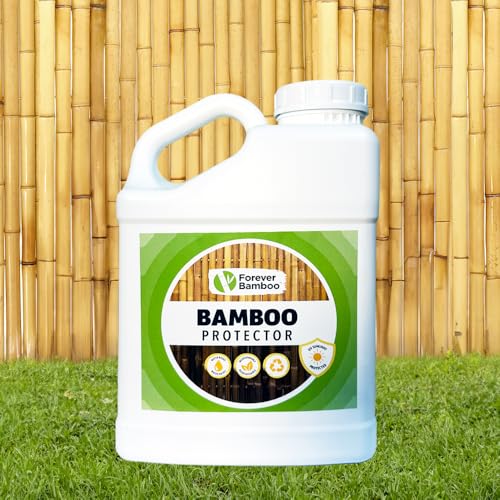
EXCLUSIVE FORMULA: Professional-grade bamboo restoration solution specially formulated for optimal adhesion to bamboo products, providing a durable and reliable coating ideal for natural bamboo materials

ENHANCES THE BEAUTY OF THE WOOD: Teak Oil restores the beauty of grey, old and weathered teak furniture to give a golden-brown natural finish.

Repels moisture as it enhances wood's natural beauty. Protect your outdoor furniture from mother nature and protect your investment.
Dimensional Stability Concerns in Outdoor Environments
As moisture and temperature fluctuate throughout seasonal cycles, bamboo’s cellular structure responds through dimensional movement that can compromise your furniture’s structural integrity and aesthetic appeal. Untreated bamboo exhibits significant expansion and contraction, particularly in humid climates, leading to warping and cracking.
Environmental factors directly challenge bamboo’s mechanical properties. While engineered solutions like strand woven bamboo and high-density composites improve dimensional stability through compression and resin infusion, they still underperform compared to tropical hardwoods like teak. Processing methods—including heat treatment, carbonization, and lamination—enhance resistance to dimensional change, but results depend heavily on manufacturing quality.
Poorly processed bamboo remains vulnerable to environmental stress. Your outdoor bamboo furniture requires proper acclimatization and treatment to minimize movement in variable climates.

DURABLE WOOD:This bistro set is made of real Acacia wood with a natural finish. This chat set is solid, strong and durable.This table chair set is Crafted from solid, weather-resistant natural acacia wood for beauty and long-lasting durability.Acacia wood is strong and durable.No splinter, rust, crack, chip or peel.Chat Set Bistro Set Table Chair Set.

Sturdy&Long-lasting Patio Furniture: Solid metal structure make it super safe to sit in the sofa set. Added strong steel for the frame enhance the sturdiness and allow the sofa to support heavy people about 400lbs. PE Wicker rattan is strong enough to survive inclement weather and guarantee the Patio Furniture Sets has a long service life.

Tatami-style floor cushion--outstanding workmanship, reasonable design, stable and practical, will bring you a ,chair pads outdoor
Long-Term Lifespan and Maintenance Requirements
Your bamboo furniture’s service life hinges on treatment quality and maintenance discipline rather than the material itself. Untreated pieces deteriorate within two years, while properly treated furniture lasts 20–30 years. Combining chemical preservatives, heat treatment, and water-resistant sealants maximizes durability. Your maintenance practices directly extend lifespan: apply exterior-grade oil annually, clean regularly with mild soap, and reapply protective finishes every 1–2 years. Inspect periodically for insect damage or rot. Move furniture undercover during extreme weather. These treatment methods and consistent maintenance practices transform bamboo into a competitive alternative to hardwood, dramatically reducing replacement frequency and environmental waste.

CLEAR WATERPROOFING WOOD SEALER: Olympic WaterGuard clear sealer waterproofs and protects exterior wood and masonry without changing the surface's natural look.

3-IN-1 FORMULA: WOOD STAIN, WOOD SEALER, & PROTECT IN ONE COAT: Stop layering multiple products. SENVEN’s advanced water-based formula combines rich, even pigment with a deep-penetrating sealer and durable wood protector. It revitalizes old wood with a natural matte finish while building a cellular-level barrier against water, UV rays, and saltwater spray—all in a single, time-saving application. No primer, no topcoat needed.

3-IN-1 FORMULA: WOOD STAIN, WOOD SEALER, & PROTECT IN ONE COAT: Stop layering multiple products. SENVEN’s advanced water-based formula combines rich, even pigment with a deep-penetrating sealer and durable wood protector. It revitalizes old wood with a natural matte finish while building a cellular-level barrier against water, UV rays, and saltwater spray—all in a single, time-saving application. No primer, no topcoat needed.
Comparing Bamboo to Premium Hardwood Alternatives
When you’re selecting outdoor furniture, understanding how bamboo stacks against established hardwood alternatives requires examining multiple performance dimensions. Bamboo aesthetics offer contemporary appeal with unique grain patterns, while hardwood versatility delivers timeless designs with traditional richness. However, performance differences are substantial. Premium hardwoods like teak contain natural oils providing inherent moisture and pest resistance, requiring minimal maintenance. Bamboo demands chemical treatments to achieve comparable protection against fungal decay and insect infestation. Structurally, strand-woven bamboo rivals many hardwoods in hardness, yet hardwoods excel in impact resistance. Environmentally, bamboo’s three-to-seven-year maturity cycle outpaces hardwood’s forty-to-fifty-year growth period. You’ll find bamboo economically attractive initially, but hardwood’s superior weather resilience and reduced treatment needs may justify higher upfront costs for long-term outdoor applications.

- Sturdy & Durable: Devoko rattan patio furniture set is made of brown PE rattan and strong steel frame, It is durable enough to withstand rain and wind for long time using. Featuring sturdy construction and durable rattan, this porch furniture set can withstand the test of time and high temperature

Modern and Ergonomic Design: The design of our patio furniture set is simple, stylish and Ergonomic. It is perfect to decorate your your yard, poolside, balcony, patio and indoor area. Provide great comfort for you while you are enjoying your leisure time

Durable and Long-Lasting: This metal patio furniture set is constructed from steel, offering a stable structure with excellent strength. This small patio furniture set frame features an external rust-proof coating that provides water resistance and corrosion protection, ensuring a long service life