Is Wood Furniture a Good Choice for Outdoor Spaces?
You’ll find premium woods like teak and ipe deliver exceptional durability for outdoor spaces, lasting 20–75 years with proper care. They naturally resist rot and insects while staying cooler than metal alternatives. However, you’ll need consistent maintenance—monthly cleaning, annual oiling, and occasional deep treatments. While synthetics require less upkeep, wood’s renewable nature and superior aesthetics often justify the effort. Understanding the specifics of each wood type will help you determine if it’s right for your situation.
Durability and Lifespan of Wood Furniture
When you’re evaluating wood furniture for outdoor spaces, durability‘s one of the first factors you’ll want to contemplate—and it’s where wood truly separates itself from lesser materials. Teak longevity stands out exceptionally: you can expect 20–40 years of reliable performance, with premium sets lasting 50+ years. Teak’s natural oils provide inherent rot and insect resistance without requiring constant intervention.
Other durable woods like ipe and mahogany offer comparable lifespans, though they demand more attention. Ipe wood in particular can last up to 75 years with proper care, making it one of the longest-lasting options for outdoor furniture. Meanwhile, redwood and cedar deteriorate within 3–5 years outdoors.
Maintenance practices greatly extend your furniture’s lifespan. Yearly oiling and routine cleaning can push teak furniture beyond 50 years. For cushions paired with wood furniture, applying fabric sealants provides additional long-term protection against moisture damage. However, teak’s remarkable resilience means you’ll enjoy decades of use even with minimal upkeep—a genuine advantage for busy homeowners.

【Premium Acacia Wood Construction】Crafted from high-grade acacia wood, this set combines durability with exotic beauty. Naturally resistant to outdoor elements, acacia maintains its rich, sleek appearance without darkening over time. Its sturdy hardwood frame ensures long-lasting resilience against wear and tear, making it a timeless investment for your patio or garden.

ACACIA WOOD: Made with acacia wood that brings a sleek and exotic look to your space, this durable hardwood naturally withstands outdoor elements and will not darken over time. Acacia wood is perfect as a solid, heavy frame that resists wear and tear.
How Wood Compares to Synthetic and Metal Alternatives
While teak furniture delivers exceptional longevity, it’s worth understanding how wood stacks up against synthetic and metal alternatives—especially since each material handles outdoor conditions differently. Synthetics like HDPE resist warping and fading better than wood, requiring minimal maintenance. Metal offers superior rust resistance with powder-coated finishes, though it becomes uncomfortably hot in direct sunlight. Wood stays cooler to the touch, providing better comfort in summer. To maintain wood’s outdoor performance, regular application of protective oils like teak oil can enhance durability and preserve natural beauty.
Aesthetically, wood’s natural grain and warm appearance surpass synthetic mimicry, though composites improve durability. Metal delivers sleek, modern appeal with color customization.
Environmentally, wood wins as a renewable, biodegradable resource—especially with FSC certification. Synthetics, while often recycled, don’t decompose. Metal’s recyclability helps offset energy-intensive production. Woods like eucalyptus offer sustainable alternatives that combine affordability with environmental responsibility.
Your choice depends on balancing durability needs, aesthetic preferences, and environmental values.

DURABLE WOOD:This bistro set is made of real Acacia wood with a natural finish. This chat set is solid, strong and durable.This table chair set is Crafted from solid, weather-resistant natural acacia wood for beauty and long-lasting durability.Acacia wood is strong and durable.No splinter, rust, crack, chip or peel.Chat Set Bistro Set Table Chair Set.

【Acacia Wood 8 Pieces Conversation Sets】Experience the unparalleled durability and exotic beauty of our 8 piece outdoor furniture set, expertly crafted from high-grade acacia wood. This resilient material is naturally resistant to outdoor elements, ensuring that your furniture remains stunning and robust without darkening over time
Essential Maintenance Requirements for Outdoor Wood
You’ve chosen wood for its superior comfort and natural aesthetics—now you’ll need to protect that investment through consistent maintenance. Establish monthly cleaning protocols using mild soap solution and soft-bristle brushes to remove debris without damaging the finish. During peak seasons, deep clean every few weeks with oxygen bleach to tackle stubborn stains and mold.
Apply protective finishes every few years to maintain color and shield against moisture and UV damage. For hardwoods like teak or eucalyptus, use linseed oil annually. Before resealing, properly prepare surfaces through washing and sanding for maximum adhesion. Drying furniture thoroughly before retreatment ensures optimal absorption and effectiveness of protective coatings.
Inspect hardware monthly, tightening loose bolts and addressing worn areas promptly. When storing furniture during off-seasons, use waterproof and UV-resistant covers to prevent moisture buildup and environmental damage. Use breathable covers during extreme weather and extended non-use periods. This disciplined approach preserves wood’s integrity and extends lifespan appreciably.

ENHANCES THE BEAUTY OF THE WOOD: Teak Oil restores the beauty of grey, old and weathered teak furniture to give a golden-brown natural finish.

Prevents further drying and fading of wood finishes due to sun exposure, temperature variations, and moisture both indoors and outdoors

Repels moisture as it enhances wood's natural beauty. Protect your outdoor furniture from mother nature and protect your investment.
Natural Weather Resistance and Protective Properties
Beyond the maintenance regimen that preserves wood furniture lies an equally important advantage: the inherent protective properties built into premium wood species themselves. When you choose teak or ipe, you’re investing in woods that naturally defend against outdoor threats. Teak’s tectoquinone compound delivers natural pest resistance, repelling termites and fungi without chemical treatments. Its high oil content provides moisture repulsion, preventing water damage and structural weakening from rain and humidity. Ipe’s dense composition offers similar protection, lasting up to forty years through its innate resistance to rot and insects. These woods maintain their integrity against temperature fluctuations and UV exposure, developing distinguished patinas rather than deteriorating. While cedar offers natural resistance to insects, moisture, rot, and decay, it remains softer and more susceptible to damage in high-traffic areas compared to harder species like teak and ipe. With proper care, teak furniture can maintain its exceptional performance for 30 to 75+ years, making it a sustainable long-term investment for outdoor spaces. You’re selecting furniture engineered by nature to withstand outdoor environments.

CUSHIONED SOFA: Looking for something more refined in your outdoor space? This sofa fulfills with comfy cushions and eucalyptus wood that's protected to weather the elements with ease

Premium Outdoor Furniture: Werph outdoor conversation furniture set is all crafted from premium 100% acacia wood which is more durable and FSC certified. With a smooth processed, it is enhanced waterproof, ensuring furniture lasts for years in your outdoor space, like patio, garden, porch and courtyards
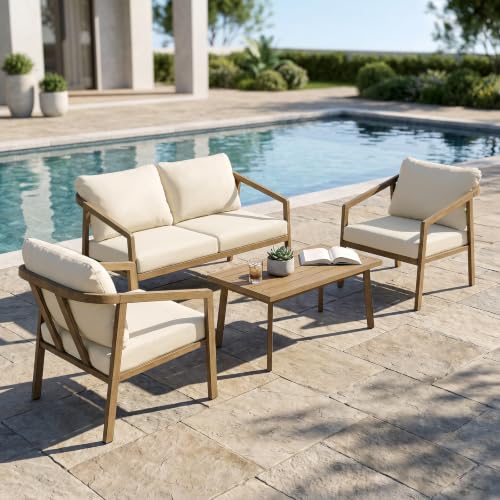
WRAPAROUND ALL-IN-ONE COMFORT: This 4-piece patio conversation set combines a two-seat aluminum loveseat, two patio armchairs, and a coordinating coffee table to create a complete outdoor seating experience. The ultra-thick high-resilience foam cushions and plush back pillows maintain shape and firmness for long-lasting comfort. Perfect for patios, balconies, or backyard lounging, the balanced proportions of the set allow multiple adults to relax together without feeling cramped or restricted. The warm teak finish adds a natural, inviting aesthetic to your outdoor space.
Long-Term Value and Cost Considerations
When you’re evaluating outdoor wood furniture, the sticker price tells only half the story. Your investment analysis reveals that premium teak furniture costs $2,000–$5,000 initially but averages just $40–$250 yearly over 30+ years. Compare this to softwoods requiring replacement every 3–5 years, and teak’s true value becomes clear.
Material selection matters greatly for long-term economics. Ipe wood lasts 50 years, mahogany endures for decades, while cedar needs refinishing every two years. Mahogany’s natural resistance to rot makes it a competitive alternative to teak when properly maintained. Regular sealing and maintenance are essential for preserving wood furniture’s appearance and durability. Plastic furniture demands replacement within five years, dramatically increasing total ownership costs.
Climate greatly impacts your material’s performance. Coastal and humid regions maximize teak’s moisture resistance, while extreme weather accelerates softwood deterioration. Protected patios extend lower-grade wood lifespans, reducing replacement frequency and protecting your financial investment throughout the furniture’s lifespan.

All-Weather HIPS Material: Constructed from high-impact polystyrene (HIPS), this dining set delivers exceptional durability and reliable weather resistance. Unlike traditional wood and metal, it resists splintering, cracking, peeling, rotting and rusting, ensuring long-lasting performance and low maintenance for year-round outdoor use.

General to fit round patio table set size up to 92” Diameter. Please be remind the include distance that chair backs jut out from the table while measuring.

FITS YOUR CHAIR, CHECK YOUR SIZE FIRST—A cover that billows in the wind or crushes tight against armrests is just as useless as no cover at all. This outdoor patio chair cover fits furniture up to 32"W x 37"D x 35"H. Measure your chair before ordering and match it to the size guide. Built-in air vents release trapped moisture and heat underneath, preventing mold and mildew buildup—a common issue in humid climates like Florida and coastal backyards.