Is Beech Wood Durable Enough for Outdoor Furniture?
While beech’s 1,450 lbf Janka hardness rating suggests durability, you’ll find it inadequate for outdoor furniture. Its closed-grain structure absorbs moisture rapidly, causing dimensional instability and warping without proper sealing. You’re risking rot within six months under untreated conditions. Though beech matches oak’s hardness, it lacks the moisture resistance that guarantees long-term outdoor performance. You’ll need annual finish reapplication and consistent maintenance. Superior alternatives like cedar, teak, and acacia demand considerably less effort to maintain their integrity.
Understanding Beech Wood’s Natural Properties
Beech wood boasts a Janka hardness rating of 1,450 lbf, positioning it among the most durable hardwoods available for furniture applications. You’ll find its strength characteristics comparable to white and red oak, making it exceptionally resistant to wear and tear. Only hickory surpasses beech in strength properties among North American hardwoods.
Beyond durability, you can appreciate beech’s aesthetic appeal. Its golden brown or reddish-brown color, combined with a tight, fine grain and uniform appearance, sands to a high polish. The wood takes stains and varnishes without blotchiness, allowing you to customize the final color from natural to Cordovan tones.
However, you must understand beech’s limitations. At 45 pounds per cubic foot, it’s relatively heavy. More critically, improper drying causes significant dimensional instability—shrinkage rates reach 17.2% volumetric—making beech unsuitable for outdoor environments where moisture fluctuations occur. For outdoor applications requiring weather resistance, materials that support climbing plants for natural canopy protection or other weather-resistant solutions are preferable to beech.

【2 PACK QUALITY WOOD HANDLES 】: Included 2 pieces 12 inch high quality wood door pull handles, hand grip bars with real solid beech wood and supported with metal brackets, simple, elegant and sturdy enough for hand hold.

DURABLE WOOD:This bistro set is made of real Acacia wood with a natural finish. This chat set is solid, strong and durable.This table chair set is Crafted from solid, weather-resistant natural acacia wood for beauty and long-lasting durability.Acacia wood is strong and durable.No splinter, rust, crack, chip or peel.Chat Set Bistro Set Table Chair Set.

SWEEPS DUST EFFORTLESSLY: Soft yet dense natural horsehair bristles pick up bed hair, table crumbs, sawdust, beach sand, dirt, pet hair and dust with minimal residue left behind
Vulnerability to Moisture and Environmental Damage
While beech wood’s impressive hardness and aesthetic qualities make it attractive for furniture, its exceptional vulnerability to moisture fundamentally undermines its viability for outdoor applications. You’ll find that beech’s closed grain structure offers minimal natural water resistance, allowing rapid moisture absorption that causes dimensional instability and warping. Without proper sealing, you expose the wood to fungal growth and decay—risks that escalate dramatically in humid climates. Outdoor elements compound these problems: UV radiation degrades surfaces, temperature fluctuations trigger repeated expansion and contraction, and ground contact accelerates deterioration. You’re looking at potential rot within six months under untreated outdoor conditions. Ground-level or standing water exposure proves particularly damaging, as moisture penetrates most easily through joints and end grains, initiating structural failure before visible damage appears. Unlike naturally rot-resistant woods such as cedar, beech lacks the inherent protective qualities necessary to withstand prolonged outdoor exposure without extensive intervention.

WATERPROOFING STAIN – Bring out the beauty of your outdoors with Thompson’s WaterSeal Clear Multi-Purpose Waterproof Stain. Proven to waterproof concrete, brick, exterior wood and other exterior surfaces.

ENHANCES THE BEAUTY OF THE WOOD: Teak Oil restores the beauty of grey, old and weathered teak furniture to give a golden-brown natural finish.

Prevents further drying and fading of wood finishes due to sun exposure, temperature variations, and moisture both indoors and outdoors
How Beech Compares to Other Outdoor Woods
To understand beech’s limitations for outdoor furniture, you’ll need to examine how it stacks against woods specifically suited for exterior applications. White oak surpasses beech durability through superior moisture resistance and closed cellular structure—critical for wet environments. Oak’s density rating of 800kg per cubic meter exceeds beech’s 700kg, while antifungal properties that beech lacks provide additional protection against decay. Birch offers better moisture resistance than beech, though both underperform compared to cedar. Despite beech’s respectable 1,300-1,450 Janka hardness rating matching oak’s hardness, this hardwood comparison reveals that surface hardness alone doesn’t guarantee outdoor longevity. Like maple wood, beech lacks the natural weather resistance necessary for prolonged outdoor exposure without extensive protective treatments. Beech’s brittleness and high humidity sensitivity make it fundamentally unsuitable for exterior use without constant maintenance, unlike naturally durable alternatives such as Siberian larch, which resists decay and warping through its high resin content and frost hardiness.

Crafted from natural beech wood with beautiful grain patterns and cut with clear lines, providing sturdy and reliable support for furniture pieces, they seamlessly blend with any decor style. Please note that because wood is a naturally occurring material, every wooden chair leg is unique. Variations in color, texture, and grain pattern are normal.

Premium Material: Omninmo manual auger drill is made of carbon steel with a black finish for extended longevity, self tapping screw are professionally milled and welded to drill perfect holes
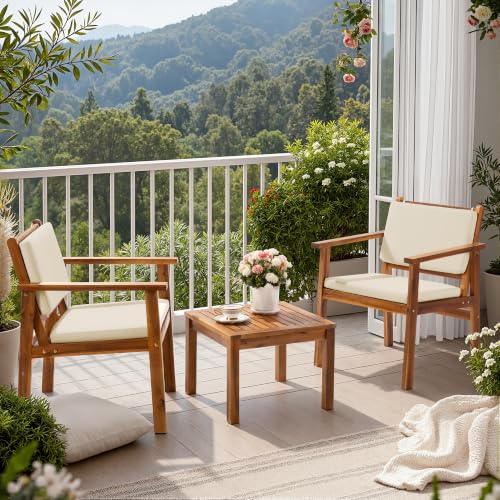
- Natural Acacia Wood - Patio furniture is made of whole solid Acacia wood, which provides better load bearing and appearance than traditional synthetic wood. Beside, the surface has been lightly polished and varnished to make it feel smoother.
Maintenance Requirements for Outdoor Beech Furniture
Given beech’s inherent moisture sensitivity and brittleness, you’ll need to commit to consistent maintenance protocols that outdoor woods like cedar and oak don’t demand. Your cleaning techniques should employ soft cloths with mild soap and water or white vinegar solutions biannually, avoiding harsh chemicals that damage wood fibers. Hardware maintenance proves equally critical—regularly tighten screws and bolts while lubricating joints to prevent structural instability and warping. Inspect for splinters, cracks, and corrosion near joints and water-collecting areas, replacing damaged hardware promptly. Additionally, reapply protective finishes yearly for untreated beech, monitor varnished surfaces, and use furniture covers during non-use periods. In coastal environments, rinse salt residue regularly to prevent degradation, while cold climates require elevated positioning to avoid standing water and ice contact. Consider applying sealants or finishes annually to create a protective barrier against the elements, particularly in regions with significant temperature fluctuations or high humidity.

LONG-LASTING PROTECTION - Outperforms teak oils and sealers under harsh tropical sun and salt conditions; a reliable choice for all your fine woods

MARINE-GRADE TEAK SEALER beautifies wood & repels water without making surfaces slippery; use this natural danish oil finish instead of teak oil to protect the teak on boat decks, trim, cockpit, swim platform, handrails, cabinetry, grab rails & more

LONG-LASTING PROTECTION - Outperforms any teak oil or sealer, even under harsh tropical sun and salt conditions; a reliable choice for all your fine woods
Better Wood Alternatives for Your Patio
Since beech’s demanding maintenance requirements and inherent brittleness make it poorly suited for outdoor furniture, you’ll find more practical options that deliver superior durability with less upkeep. Teak benefits include natural oils providing 50+ year lifespans outdoors. Cedar affordability makes it ideal for budget-conscious buyers, lasting 10–15 years with minimal care. Acacia density offers hardwood durability at lower costs, though it requires sealing against sun damage. Polywood resilience delivers virtually maintenance-free performance across extreme temperatures with 20-year warranties. Redwood alternatives provide moisture resistance with attractive grain patterns and can last 10 to 30 years or more even in harsh climates thanks to their natural tannins and stability. Eucalyptus sustainability combines fast-growing availability with rot resistance, though it demands regular sealing. For those seeking minimal maintenance, synthetic materials like resin offer UV stabilization and non-porous surfaces that prevent water absorption and fading while requiring only soap and water for cleaning. These woods systematically outperform beech by reducing maintenance demands while extending outdoor longevity considerably.

【Premium Acacia Wood Construction】Crafted from high-grade acacia wood, this set combines durability with exotic beauty. Naturally resistant to outdoor elements, acacia maintains its rich, sleek appearance without darkening over time. Its sturdy hardwood frame ensures long-lasting resilience against wear and tear, making it a timeless investment for your patio or garden.

ACACIA WOOD: Made with acacia wood that brings a sleek and exotic look to your space, this durable hardwood naturally withstands outdoor elements and will not darken over time. Acacia wood is perfect as a solid, heavy frame that resists wear and tear.

CUSHIONED SOFA: Looking for something more refined in your outdoor space? This sofa fulfills with comfy cushions and eucalyptus wood that's protected to weather the elements with ease
Maximizing Longevity With Proper Protection
While beech wood’s poor natural decay resistance makes it inherently vulnerable outdoors, you can greatly extend its lifespan through strategic protective measures and consistent maintenance. Applying protective finishes like varnish, lacquer, or water-based oils creates foundational defense against moisture penetration and environmental damage. You’ll need to recoat varnish annually and oils every six months to maintain effectiveness. Pressure-treatment before application notably enhances outdoor performance beyond untreated wood. Your sealing techniques should prioritize preventing moisture absorption through careful washing and prompt drying. For superior outdoor durability, spar urethane offers UV resistance and flexibility that outperforms traditional lacquer, typically lasting 3–5 years with proper maintenance. In contrast, materials like teak wood require far less frequent maintenance due to their natural resistance to rot and moisture. Regular inspection identifies finish degradation before structural damage occurs. Covering furniture when unused dramatically improves protective finish longevity. These thorough strategies transform beech from a poor outdoor choice into a manageable option requiring dedicated maintenance commitment.