Cedar Vs Pine: Which Wood Is Best for Outdoor Furniture?
You’ll find cedar outperforms pine for outdoor furniture through superior durability, lasting 10–20 years untouched versus pine’s rapid deterioration. Cedar’s natural oils resist rot and warping while demanding only annual cleaning and sealing every 1–2 years. Though cedar costs $3–$7 per board foot compared to pine’s $2.50–$4.50, its lower maintenance and extended lifespan justify the investment. Pine requires rigorous upkeep but offers budget-friendly initial savings. Your choice hinges on balancing upfront costs against long-term maintenance demands—and there’s considerably more nuance to explore.
Durability and Weather Resistance
When choosing between cedar and pine for outdoor furniture, durability and weather resistance should be your primary considerations.
Cedar’s natural oils and compounds provide inherent rot resistance, extending wood longevity to 10–20 years outdoors without treatment. Its superior climate performance stems from natural moisture resistance, making it less prone to warping, splitting, or cracking in fluctuating conditions. Cedar withstands heavy rainfall and dry heat effectively. Cedar’s Janka hardness rating of 350 means it is relatively soft and susceptible to dents and scratches in high-traffic areas.
Pine lacks natural durability and deteriorates quickly when untreated. However, pressure-treated pine rivals cedar’s lifespan, lasting 15–20 years with chemical preservatives enhancing its climate performance. Untreated pine remains susceptible to warping in wet or humid environments. Understanding the modulus of elasticity of different wood species helps predict how each will perform under outdoor stress conditions.
Cedar’s grain structure and stability provide longer-term protection, while pine’s durability depends entirely on chemical treatment. For regions experiencing extreme weather, cedar offers superior, maintenance-free resistance.

Repels moisture as it enhances wood's natural beauty. Protect your outdoor furniture from mother nature and protect your investment.

MARINE SEALANT: Our liquid formula creates a UV-stable coating for protection against the elements, saltwater spray, and water damage. Marine is a protector for outdoor furniture, thermally modified wood, and boat docks. Marine is safe for use over open water and is non-hazardous to aquatic life. ** This product is NOT intended for hardwoods such as ipe, mahogany and teak. NOT intended for wood submerged under water or on wooden boats **
Maintenance Requirements
Because cedar’s natural oils provide inherent protection against decay and pests, you’ll find its maintenance demands considerably lighter than pine’s requirements. Your maintenance frequency for cedar involves annual cleaning with mild soap and water, followed by resealing every 1-2 years with quality outdoor sealants. Pine, conversely, demands more rigorous attention—particularly untreated varieties requiring regular inspection, frequent sealing applications, and potential component replacement. Pressure-treated pine reduces this burden somewhat but still necessitates annual care. Your cleaning methods remain consistent for both woods: mild soap solutions preserve natural oils better than harsh chemicals. Cedar’s superior weather resistance means you’ll spend less time addressing moisture damage and pest infiltration, while pine’s softness requires vigilant monitoring for dents and structural compromise throughout its lifespan. Like spruce, pine is particularly susceptible to rot and decay without proper protective coatings and maintenance. For enhanced durability, pine furniture can benefit from protective coatings like marine spar varnish, which requires regular reapplication to maintain optimal weather resistance.
Cost and Affordability
While cedar commands a premium price at $3 to $7 per board foot compared to pine’s $2.50 to $4.50 range, you’ll find this initial investment difference becomes less significant when evaluating long-term value. For a 150-foot fence, you’d spend $3,000 to $5,250 for cedar versus $1,500 to $3,000 for pine—a substantial upfront gap. However, your cost comparison must account for durability and maintenance cycles. Cedar’s natural rot resistance and lower maintenance requirements offset its higher initial expense, whereas pine demands frequent sealing and treatment to rival cedar’s lifespan. Pressure-treated pine provides a middle-ground option, lasting up to 20 years with moderate upkeep. Unlike woods with only moderate natural resistance to decay, cedar’s superior durability makes it a more reliable choice for withstanding outdoor elements. For outdoor applications, selecting the appropriate board thickness and width ensures your furniture investment performs well over time. For long term investment in outdoor furniture, cedar’s total cost of ownership typically proves more economical despite requiring periodic sealing.

WATER-BASED POLYURETHANE WOOD FINISH: Our sealant provides top-notch protection against wear and tear in high traffic areas. It's odorless and suitable for use on wood siding, log homes, swing sets, outdoor furniture, wooden deck and fence, and more

PENETRATING OIL-BASED WOOD STAIN – Advanced conditioning oils penetrate deep into wood fibers while drying oils lock in protection, helping prevent cracking, peeling, and premature wood deterioration.
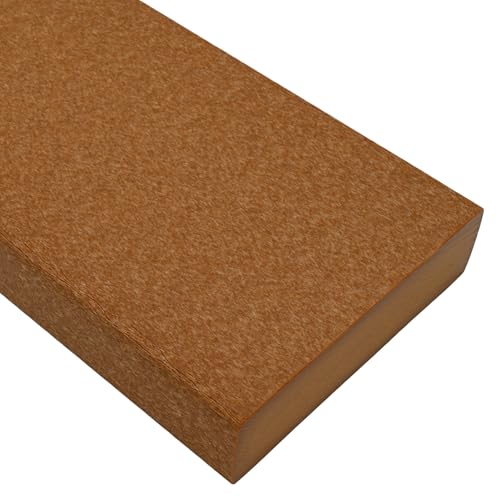
NOTICE: The 1×4 profile is 0.75" thick and 3.5" wide. The length includes a ±0.125" tolerance.
Workability and Construction
Cedar and pine differ considerably in how they behave during construction, with cedar offering superior workability for most outdoor furniture projects. You’ll find cedar responds excellently to standard woodworking tools, cutting and shaping with minimal resistance. Its natural properties make assembly techniques more efficient—cedar holds nails, screws, and glues exceptionally well while resisting splintering during construction.
Pine presents contrasting challenges. While it’s softer and easier to cut initially, you’ll encounter difficulties achieving smooth finishes without extensive sanding. Pine splinters more readily, complicating assembly work.
Cedar’s advantage extends further: its wood bends beautifully under steam, enabling curved designs that enhance furniture aesthetics. Additionally, cedar surfaces sand smoothly with minimal effort, reducing construction time. Once your cedar furniture is complete, you can apply deck coating finishes to enhance durability and protection against outdoor elements.
For outdoor furniture demanding durability and ease of construction, cedar’s superior workability makes it the more practical choice for serious woodworkers. Larch wood, another alternative, offers high density and resin content that makes it naturally tough and resistant to knocks during the construction and assembly process.
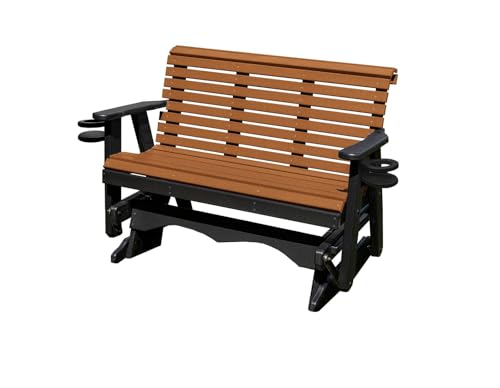
1000 LB CAPACITY — BUILT LIKE A TANK - Engineered to support up to 1000 lbs with reinforced anti-sag metal plates and structural bracing. Zero wobble. Zero flex. Designed for real family use, not decorative display. CUPHOLDERS included.
NOTICE: The 1×4 profile is 0.75" thick and 3.5" wide. The length includes a ±0.125" tolerance.

NOTICE: The 1×6 profile is 0.75" thick and 5.5" wide. The length includes a ±0.125" tolerance.
Aesthetic Appeal and Appearance
When selecting outdoor furniture, the visual presentation matters as much as durability does. Cedar offers distinctive reddish-brown tones with color variations that develop into silvery-gray patina when exposed to the elements. You’ll appreciate its fine, uniform texture and natural character that suits traditional aesthetics without finishing requirements.
Pine presents lighter golden-yellow to tan hues with texture contrast through its straight grain patterns. Its uniform appearance accepts stain and paint applications exceptionally well, enabling you to customize finishes for modern or contemporary designs. While cedar’s natural beauty often stands alone, pine requires protective sealing to maintain visual appeal outdoors.
Cedar’s rustic appearance limits design flexibility, whereas pine’s versatility accommodates diverse aesthetic preferences and color schemes through finishing options.
Environmental and Practical Considerations
Beyond aesthetics, your choice between cedar and pine hinges on environmental impact, durability expectations, and long-term maintenance commitments. Cedar grows slower but supports sustainability practices through managed forests, while pine plantations enable faster harvesting cycles. You’ll find cedar naturally resists decay for 20+ years with minimal intervention, whereas untreated pine deteriorates in 5–10 years. Pressure-treated pine extends lifespan to 20 years but introduces chemical safety concerns, as treatments may leach into soil. Cedar’s natural oils eliminate the need for toxic preservatives, making it ideal for gardens and children’s spaces. Douglas Fir offers another alternative as a rot-resistant softwood that can last 15 years untreated or beyond 30 years with proper sealing and maintenance. To maintain your deck’s appearance over time, regular cleaning with mild soap or specialized deck cleaner helps preserve the wood’s integrity and extends its life regardless of material choice. While pine costs less initially, cedar’s durability and lower maintenance requirements often justify higher upfront investment, reducing long-term ownership expenses and replacement frequency.
Making Your Final Choice
After weighing environmental impact, durability, and maintenance demands, you’ll find your decision ultimately hinges on three interconnected factors: budget constraints, climate conditions, and aesthetic preferences.
If you’re prioritizing longevity and live in a challenging climate, cedar’s natural resistance to decay and warping justifies its higher initial cost. You’ll spend less on maintenance over 20–30 years compared to pine’s frequent sealing requirements.
Conversely, pressure-treated pine suits you if budget constraints dominate your final decision. Pressure-treated lumber uses water-based preservatives like ACQ and Copper Azole to provide long-lasting protection against rot and insect damage, allowing you to accept additional upkeep for comparable durability at lower cost. With proper maintenance, pressure-treated wood can last 15-30 years or longer, making it a practical investment for budget-conscious homeowners.
Your personal preference matters equally. Cedar’s distinctive reddish-brown hue and silver-gray aging appeal to traditional aesthetics, while pine’s lighter tone accommodates various stains and paints. Consider your climate’s severity, maintenance tolerance, and financial capacity to determine your ideal choice.