Polyurethane Vs Varnish: Best Finish for Outdoor Furniture
For outdoor furniture, you’ll want spar varnish over polyurethane. Varnish’s flexible resin accommodates wood movement and resists UV degradation for 3-5 years, while polyurethane’s rigid structure cracks, yellows, and fails in 1-2 years. Varnish also delivers superior visual clarity and smoother gloss finishes. Though both require multiple thin coats, varnish’s slower drying allows better leveling. Consider your climate, maintenance tolerance, and budget—each factor shapes which finish truly serves your furniture best.
Understanding Varnish and Polyurethane Finishes
When you’re choosing a protective finish for outdoor furniture, you’ll find that varnish and polyurethane represent two distinct approaches to wood protection, despite their surface similarities.
Varnish consists of resin, oil, and solvents, with traditionally higher oil content that creates flexibility. Polyurethane, conversely, uses urethane polymers for superior hardness and abrasion resistance. These finish characteristics directly influence their performance.
Application differences matter considerably. You’ll apply varnish with a brush, benefiting from slow drying that reduces brush marks and allows superior leveling. Polyurethane dries faster but demands careful technique to avoid bubbles. Recoating varnish requires minimal preparation, while polyurethane typically needs sanding for proper adhesion.
Understanding these formulation and application differences helps you select the most appropriate finish for your specific outdoor furniture needs.
Appearance and Visual Quality Comparison
The visual performance of your outdoor furniture‘s finish extends far beyond initial aesthetics—it’s a direct reflection of how each coating responds to weathering, UV exposure, and wear patterns. Varnish maintains superior visual clarity over time, preserving wood’s natural color with minimal yellowing when UV inhibitors are included. Its oil content creates deeper, warmer tones that enhance wood character, especially in marine environments.
Polyurethane, conversely, yellows faster outdoors and develops surface haze without UV protection. Its amber tint reduces visual clarity compared to varnish’s transparency. Through finishing techniques, varnish achieves smoother, more uniform gloss levels—from high-gloss to satin—while polyurethane‘s rubbery texture complicates achieving glass-like finishes. Varnish also allows gentle rubbing out for sheen restoration, whereas polyurethane requires sanding between coats, making seamless repairs more challenging for maintaining consistent appearance.
Durability and Protection Against Elements
Outdoor exposure tests your furniture’s finish in ways that interior coatings never face—and that’s where polyurethane and varnish diverge distinctly in their protective capabilities. Spar varnish delivers superior weather resistance through UV inhibitors that slow degradation, while standard polyurethane yellows and cracks under prolonged sunlight. You’ll find varnish’s flexibility accommodates wood movement better, preventing the cracking that allows moisture intrusion beneath polyurethane layers. Regarding finish longevity, properly maintained varnish outlasts polyurethane considerably—lasting 3-5 years outdoors versus polyurethane’s 1-2 years. Spar varnish’s formulation specifically addresses water resistance and humidity exposure, making it ideal for rain-prone climates, much like how durable outdoor products are designed to withstand harsh environmental conditions. Water-based polyurethanes offer faster drying times and resist yellowing more effectively than oil-based formulations, providing a more natural appearance for those prioritizing application convenience. While polyurethane excels at abrasion resistance, its UV sensitivity undermines long-term performance in direct sunlight applications.

Ideal for use on exterior wood surfaces above the water line, including trim, railings and wood furniture
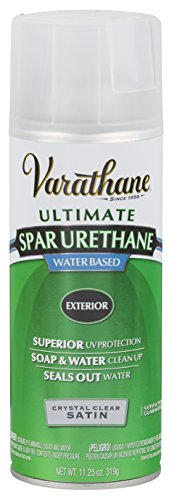
Protects outdoor wood surfaces such as furniture, fences, boats, trim and more

Protects outdoor wood surfaces such as furniture, fences, railings, trim and more
Why Polyurethane Fails in Outdoor Conditions
While varnish’s inherent flexibility allows wood to breathe and move without compromising the finish, polyurethane’s rigid structure creates an entirely different set of problems once you expose it to outdoor conditions. UV radiation initiates rapid polyurethane breakdown, causing yellowing, cracking, and chalking within months. Moisture trapped beneath the impermeable surface accelerates delamination and wood rot. Temperature fluctuations stress the brittle coating, promoting flaking and separation. Environmental pollutants, salt air, and acid rain chemically degrade polyurethane faster than varnish alternatives. Additionally, poor adhesion on outdoor furniture leads to bubbling and peeling after minimal exposure. Unlike exterior-grade alternatives such as spar urethane, standard polyurethane lacks the specialized formulation needed to withstand harsh weather conditions and UV exposure. Unlike polyurethane, products that penetrate deeply into the wood provide superior protection through nourishment rather than surface film formation. You’ll find that polyurethane’s outdoor performance deteriorates considerably compared to traditional varnishes, requiring frequent reapplication and ultimately proving less cost-effective for exterior applications.

PROTECTIVE CLEAR FINISH – Minwax Helmsman Spar Urethane is specially formulated as a protective varnish for wood for interior and exterior projects. It contains special UV blockers that reduce the sun’s graying and fading effects.

3X‑THICK ONE‑COAT PROTECTION: Formulated to be three times thicker than Varathane Ultimate Water‑Based Spar Urethane, allowing excellent durability and project completion up to three times faster in just one coat

Protects outdoor wood surfaces such as furniture, fences, railings, trim and more
The Case for Spar Varnish on Exterior Furniture
Given polyurethane’s documented failures in exterior environments, spar varnish emerges as the superior alternative for protecting outdoor furniture. You’ll benefit from spar varnish’s long-oil formulations, which deliver the flexibility benefits polyurethane lacks. These compositions accommodate wood expansion and contraction without cracking, maintaining coating integrity through seasonal stress cycles.
You’ll gain extensive UV protection through integrated light-absorbing additives that standard finishes don’t provide. This protection shields both your furniture’s surface and underlying wood from solar degradation.
You can expect two to four years of protective performance with annual touch-ups in standard outdoor conditions. The film-forming barrier resists moisture infiltration, extreme temperature fluctuations, and humidity changes that degrade rigid alternatives. Unlike materials with high moisture absorption, spar varnish creates a protective seal that prevents the wood from deteriorating when exposed to outdoor elements. For comparison, premium wood species like eucalyptus offer natural oil content that similarly resists moisture and decay.
Spar varnish’s engineered flexibility guarantees your outdoor furniture endures environmental stress while maintaining aesthetic appeal and structural protection.

PROTECTIVE CLEAR FINISH – Minwax Helmsman Spar Urethane is specially formulated as a protective varnish for wood for interior and exterior projects. It contains special UV blockers that reduce the sun’s graying and fading effects.

CLASSIC MARINE VARNISH contains premium tung oil, phenolic resins and UV blockers for a beautiful transparent amber finish on all types of interior and exterior wood on boats, strip canoes, kayaks, outdoor wooden bar tops, garage doors, furniture and more
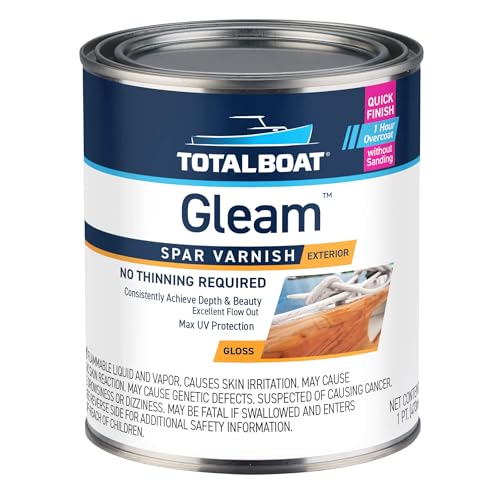
CLASSIC MARINE VARNISH contains premium tung oil, phenolic resins and UV blockers for a beautiful transparent amber finish on all types of interior and exterior wood on boats, strip canoes, kayaks, outdoor wooden bar tops, garage doors, furniture and more
Application Techniques and Drying Times
Proper surface preparation and meticulous application technique will determine whether you achieve a durable protective finish that withstands years of environmental exposure. You’ll find that application techniques differ markedly between polyurethane and varnish. Brush-on methods suit flat surfaces, while wipe-on applications work better for contoured pieces, requiring 4-6 coats for adequate protection. Spray application handles large furniture efficiently when applied in light, even coats. Maintaining a wet edge while applying ensures even coverage and prevents lap marks from forming across your furniture.
Drying times heavily influence your project timeline. Oil-based polyurethane demands 24 hours between coats and up to 30 days for full cure. Water-based polyurethane dries considerably faster—2-4 hours between applications. Spar varnish typically requires similar extended drying periods. Light sanding between coats with 220-320 grit sandpaper removes imperfections and promotes adhesion. For outdoor furniture, multiple thin coats outperform single thick applications, improving flexibility and weather resistance. Consider applying your chosen finish to pergola components and other backyard structures to ensure comprehensive protection against environmental exposure.

Ideal for use on interior/exterior surfaces including wood, plastic, plaster, metal, masonry and unglazed ceramic

PROTECT WOOD SURFACES – Minwax Polyurethane Wood Finish Aerosol spray protects interior projects, including woodwork, furniture, floors and cabinets. Clear top coat is one of the most durable coatings for wood protection against scratches, spills & more.

Protects outdoor wood surfaces such as furniture, fences, boats, trim and more
Long-Term Maintenance Requirements
Once you’ve applied your chosen finish, the real test begins—maintaining it against the relentless assault of outdoor elements. Your maintenance frequency depends largely on environmental factors and the finish you’ve selected.
Polyurethane requires reapplication every 1-3 years and offers superior water resistance, minimizing moisture-related repairs. Varnish demands refinishing every 1-2 years and proves more susceptible to cracking under UV exposure. Both finishes need regular cleaning with mild soap and water to prevent degradation from debris and contaminants.
Environmental factors greatly impact upkeep: high UV environments accelerate breakdown for both coatings, while moisture and humidity particularly stress varnish. Coastal salt air and temperature extremes expedite deterioration. Polyurethane‘s flexibility resists cracking better than rigid varnish, reducing repair frequency. Proper flashing installation and structural protection, similar to deck construction principles, can help shield your furniture from water intrusion during storage. Address surface scratches promptly through light sanding and recoating to prevent moisture infiltration, following the same careful technique as professionals use when restoring deck surfaces. Strategic storage during off-seasons substantially extends maintenance intervals for both finishes.
Cost Analysis and Value for Outdoor Projects
While polyurethane typically costs about 20% more than varnish upfront, you’ll need to evaluate the true expense by factoring durability, maintenance frequency, and application efficiency into your decision. Water-based polyurethane runs around $37 per 32 fl oz, while oil-based formulations range from $58.98 to $124.99 per gallon. Your budget considerations matter greatly here. Oil-based options provide 2-5 years protection with minimal maintenance, delivering superior cost efficiency over time. Water-based alternatives require annual recoating, increasing long-term expenses despite lower initial investment. When comparing finish options, consider that water-based paint dries quickly and resists UV fading better, which may reduce maintenance costs for some outdoor furniture projects. Just as deck railings must comply with local building code requirements to ensure both safety and legality, your choice of outdoor finish should balance protection standards with budget constraints. For tight budgets under $50 per gallon, Ready Seal and Varathane Ultimate offer solid protection. Mid-range selections like Minwax Helmsman ($50-$75 per gallon) provide decades of reliable performance, maximizing your value proposition for outdoor furniture projects.

Apply to outdoor wood projects

Ideal for professional artists and decorative crafters

Premium Material: Crafted with a high-quality textured PU upper, and retro fashion color polishing toe processing, these men’s ankle boots deliver a clean, classic look inspired by everyday casual style