Decking Oil vs. Stain: Which Offers Better Protection?
You’ll find that oils penetrate wood fibers internally, allowing your deck to breathe while resisting cracking and peeling under foot traffic. Stains create surface barriers offering superior UV and weather resistance with better color retention. Oils require maintenance every 1–2 years but enable localized repairs; stains need annual recoating and costlier removal before reapplication. Your choice depends on whether you prioritize nourishment and repairability or maximum weather armor. Understanding how each method performs across different conditions reveals which strategy suits your deck’s specific environment.
How Oils and Stains Protect Wood Differently
While oils and stains both shield wood from the elements, they’ll protect your deck through fundamentally different mechanisms. Oil penetration saturates your wood fibers internally, filling pores and regulating moisture content to prevent swelling and warping. This approach allows your wood to breathe naturally while maintaining structural integrity.
Stain coverage, by contrast, operates through surface protection. Solid stains create an opaque barrier that hides imperfections and repels water and UV rays. Semi-transparent stains offer partial wood grain visibility while still providing water and UV protection. Oil-based stains penetrate deeper than water-based varieties, though they don’t match pure oils’ internal saturation. Proper preparation steps like cleaning and sanding ensure that whichever product you choose will adhere evenly and perform optimally. For optimal results, allow adequate drying time between coats to ensure each layer cures completely before application of the next. The key distinction: oils work from within, while stains defend from without, each offering distinct protective advantages for your deck’s longevity.
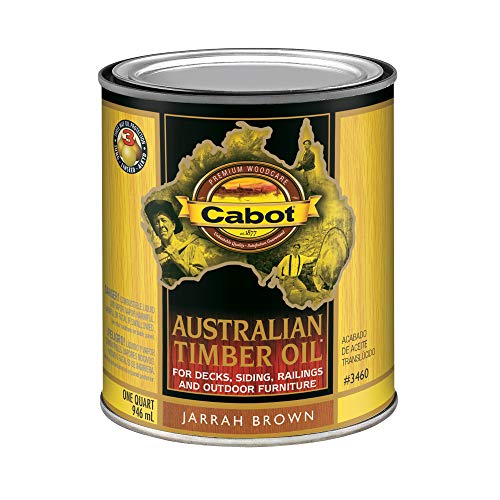
WOOD PROTECTOR – Cabot Australian Timber Oil Wood Stain provides 3-way oil protection for superior penetration. The unique blend of oils is an advanced-technology treatment designed to protect wood surfaces from extreme weather exposure like never before.

NO LAPS, RUNS OR STREAKS: Goof Proof formula with no back brushing required; ideal for exterior wood projects

NO LAPS, RUNS OR STREAKS: Goof Proof formula with no back brushing required; ideal for exterior wood projects
Durability and Maintenance Requirements
Because oils and stains protect wood through different mechanisms, they’ll demand distinct maintenance approaches and deliver varying longevity. Oil-based finishes penetrate wood fibers, wearing gradually and allowing you to perform localized repairs that blend seamlessly—ideal for high-traffic areas. You’ll maintain them simply by cleaning and applying a top coat every 1-2 years. Water-based stains, conversely, create a surface protection layer requiring annual reapplication or more frequent recoating, especially heavily pigmented varieties. While stains dry faster and minimize downtime, oils resist cracking, peeling, and blistering better, maintaining their satin finish under foot traffic. Oil finishes also regulate moisture content, reducing swelling and shrinkage that compromise structural integrity. Before applying any finish, thorough cleaning to remove dirt, mildew, and old coatings ensures optimal adhesion and longevity of your chosen product. For best results with stain applications, proper technique like back-brushing into wood grain ensures the finish penetrates deeply and lasts longer. Choose based on your maintenance capacity and traffic patterns.
UV and Weather Resistance Comparison
When you’re evaluating UV and weather protection for your deck, you’ll find that oils and stains employ fundamentally different defensive mechanisms. Oil-based products penetrate deeply into wood pores, offering internal UV protection that slows damage progression. Darker oils provide enhanced UV filtration, though they fade gradually over time. Water-based stains, conversely, create surface-level protective films that repel UV rays before penetration occurs, delivering superior color retention and fade resistance.
Regarding weather resistance, water-based stains demonstrate longer-lasting performance and resist mildew, mould, and algae growth more effectively. Oil-based alternatives resist peeling but require frequent reapplication. Both technologies reduce biological growth compared to untreated decking, yet oil-based products contain materials that potentially encourage microbial development. For outdoor applications, materials like resin offer exceptional durability against harsh weather conditions including rain, sun, and extreme temperatures. For traditional wood applications requiring maximum durability and flexibility, spar urethane provides a weather-resistant film that outperforms traditional oils and stains, lasting 3–5 years with proper maintenance. Your choice depends on prioritizing either internal wood protection or sustained surface defense.

ONE‑COAT PROTECTION: Oil‑base formula seals and protects exterior wood surfaces in a single coat, delivering strong defense against water and UV exposure

WATERPROOFING STAIN – Bring out the beauty of your outdoors with Thompson’s WaterSeal Clear Multi-Purpose Waterproof Stain. Proven to waterproof concrete, brick, exterior wood and other exterior surfaces.

READY-TO-USE DECK STAIN & SEALER: Olympic WaterGuard woodland cedar semi-transparent wood stain and sealant combines color and waterproofing in one water-based, ready-mix coat.
Application Process and Drying Times
The application and drying processes for decking oils and stains differ markedly in both preparation requirements and timeline. Oil-based treatments demand thorough surface preparation—you’ll need to clean your deck and, for new hardwoods, wait 6–12 months for grain opening. Application methods include brushes, rollers, or pads, but you must wipe excess oil to prevent tackiness. Water-based stains require only cleaning with a stiff brush and cleaner before application using similar methods.
The drying timeline heavily favors water-based stains. You’ll wait 24–48 hours for oil-based products to cure fully, with humidity extending this period. Water-based stains dry within 1–2 hours, allowing multiple coats daily. This rapid drying reduces lap marks and accelerates project completion, though consistent technique remains essential for both application methods. For decks exposed to direct sunlight, water-based stains offer additional advantages in maintaining their appearance and protective qualities compared to oil-based alternatives. Proper surface preparation ensures the stain or oil penetrates well and maintains its protective qualities over time.

DEEP-PENETRATING FORMULA, NOT A SURFACE FILM – Infused with natural palm wax, our water-based wood wax oil soaks into the wood grain to nourish fibers from within, enhancing natural texture and luster without the peeling or flaking common with film-forming sealers.

EFFECTIVE ON ALL WOOD SURFACES and QUICK DRYING: Furniture Clinic Wood Stain is a fast drying and highly concentrated wood stain making it effective on all indoor and outdoor wood surfaces. Our wood stain provides excellent coverage and ensures even color penetration. It's water based, environmentally friendly, and dries to a natural matte finish in only 10 minutes.

DEEP-PENETRATING FORMULA, NOT A SURFACE FILM – Infused with natural palm wax, our water-based wood wax oil soaks into the wood grain to nourish fibers from within, enhancing natural texture and luster without the peeling or flaking common with film-forming sealers.
Cost-Effectiveness and Long-Term Value
Choosing between decking oil and stain requires weighing both upfront expenses and long-term maintenance costs, as initial price differences don’t necessarily reflect overall value. While oils command higher per-liter costs, stains typically demand multiple applications, offsetting their lower initial pricing. Your cost comparison must account for reapplication frequency: oils last roughly two years, while quality stains extend to 2-3 years. However, oils’ superior penetration reduces repair expenses and simplifies spot maintenance, whereas stain removal before recoating increases labor costs. Coverage efficiency favors oils at 8-24 square meters per liter versus stains’ thinner, multi-coat requirements. For optimal results with stains, proper drying time between coats of at least four hours helps avoid issues like uneven absorption or peeling that could compromise your investment. Water-based stains offer the advantage of low odor and VOCs, making them more suitable for environmentally conscious homeowners. Over time, oils’ deeper wood nourishment and easier localized repairs optimize long-term material expenditures, potentially delivering better value despite higher upfront investment.