How to Clean Your Cedar Deck Before Staining
You’ll need to clear your deck, sweep thoroughly, and pre-rinse to soften dirt. Apply a cedar-specific or oxygenated bleach cleaner, letting it dwell for 5-15 minutes while you keep the surface wet. Scrub systematically for 15-20 minutes, then rinse from bottom to top. Allow 24-48 hours for complete drying, testing moisture levels before staining. Proper preparation guarantees ideal adhesion and uniform color. There’s much more to master about this critical process.
Why Pre-Staining Deck Cleaning Matters
Before you apply stain or sealant to your cedar deck, you’ll need to clean it thoroughly—and there’s good reason why. Proper cleaning importance can’t be overstated when preparing softwood surfaces.
Cedar’s composition requires gentle cleaning approaches that preserve natural oils and structural integrity. Harsh chemicals damage the wood fibers you’re trying to protect. Specialized cleaners remove mildew, oil stains, and embedded dirt without excessive scrubbing that degrades the surface.
Effective deck maintenance through pre-staining cleaning guarantees ideal adhesion of your finish products. A contaminated surface prevents even stain application, resulting in blotchy, unprofessional appearance. You’ll avoid costly repairs from failed applications when you invest time upfront. Using proper pressure washing techniques or deck-specific cleaners ensures you remove all contaminants without damaging the cedar wood.
Clean surfaces also allow stain and sealant to penetrate properly, maximizing their protective benefits and extending your deck’s service life considerably. Testing your chosen stain color on a small patch before full application helps you verify the final appearance and ensure satisfaction with your selected finish.
Initial Preparation and Pre-Rinse Steps
To maximize cleaning effectiveness and protect your belongings, you’ll need to clear all furniture, potted plants, barbecues, and outdoor equipment from the deck surface. This unobstructed access enables thorough cleaning of all board surfaces and joints while preventing damage from cleaning solutions.
Next, use a broom to sweep the entire deck thoroughly. Remove all leaves, dirt, and debris caught between boards through multiple passes. This prevents debris from embedding into wood grain during washing and guarantees loose wood fibers are cleared before chemical treatment.
Before proceeding, assess weather conditions carefully. Confirm at least 24 hours of sunny, dry weather and verify rain won’t occur for 48 hours post-staining. Avoid cloudy or muggy conditions that compromise stain application. Conduct a deck assessment to determine if additional sanding is necessary beyond standard cleaning. For optimal results, consider pre-rinsing the deck to soften any remaining dirt and prepare the wood surface for deeper cleaning solutions.

The width of the broom part is about 18 inch long, so it can sweep a large area at a time, and we use a special technology to produce the broom head, to make it more durable, and better than ordinary broom
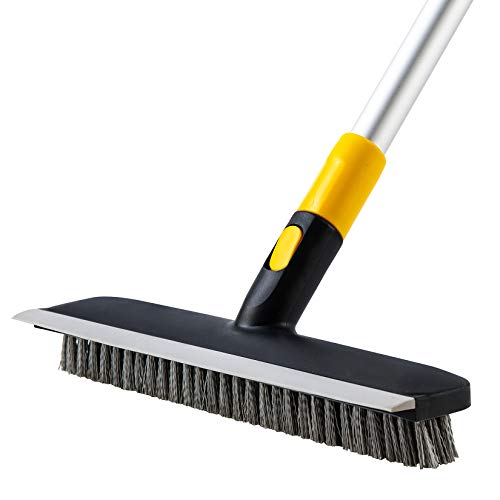
Floor Scrub Brush 2 in 1 Scrape and brush Push Broom Effective, Easy and Save Effort Brush and scraper 2 in 1 design floor scrub brush with stiff bristle and rubber squeegee; Strong cleaning ability; Brush and scrape steps to easily remove the stain, stubborn grime, dirty water, and dust; Improve effectiveness when you doing housework

24" Large Push Broom Head: This push broom has large broom head with wider coverage, you can quickly clean the floor to save you time.
Applying Your Deck Cleaner
Selecting the right cleaning solution is critical to achieving professional results on your cedar deck. You’ll find commercial cedar-specific cleaners, oxygenated bleach mixtures, or homemade solutions all work effectively. Before application, ascertain powdered formulations dissolve completely in warm water to prevent sprayer damage.
Apply your chosen cleaner using a pump sprayer, garden hose sprayer, or brush for even coverage. For safety measures, wear eye protection, gloves, and full-length clothing when handling caustic products. Position yourself upwind to avoid inhaling fumes, and protect surrounding plants, windows, and siding from overspray. Testing your cleaner on a small, inconspicuous area first helps ensure it won’t damage or discolor your cedar wood.
Keep the deck surface wet during the 5 to 15-minute dwell time by misting additional product. This prevents premature drying and allows the cleaner to activate properly, lifting embedded stains effectively. After the dwell time, allow the deck at least 24 to 48 hours of drying time before proceeding with staining to ensure optimal stain absorption.
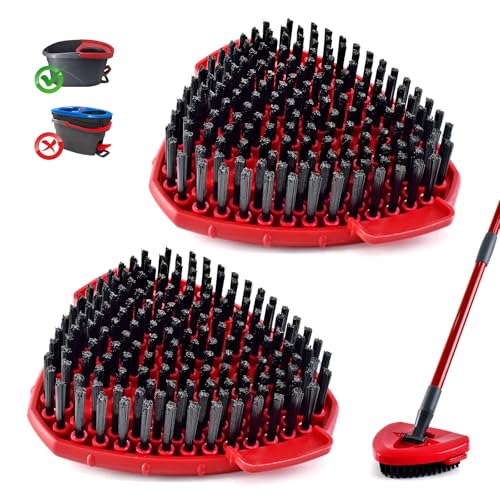
[COMPATIBLITY]: The scrubber mop head is compatible with O Cedar EasyWring Microfiber Spin Mop. 𝐍𝐎𝐓𝐄: 𝐒𝐜𝐫𝐮𝐛𝐛𝐞𝐫 𝐦𝐨𝐩 𝐡𝐞𝐚𝐝 𝐨𝐧𝐥𝐲 𝐜𝐨𝐦𝐩𝐚𝐭𝐢𝐛𝐥𝐞 𝐰𝐢𝐭𝐡 𝟏-𝐓𝐚𝐧𝐤 𝐬𝐲𝐬𝐭𝐞𝐦, 𝐍𝐎𝐓 𝐟𝐨𝐫 𝐑𝐢𝐧𝐬𝐞𝐂𝐥𝐞𝐚𝐧 𝟐-𝐓𝐚𝐧𝐤 𝐬𝐲𝐬𝐭𝐞𝐦.

POWERFUL, EFFECTIVE CEDAR CLEANER ― Say goodbye to ugly black and green stains and debris on your cedar roof, shakes, shingles, fencing, clapboard, beams, decks, siding or other wood surfaces. Cedar Wash Premium Wood Cleaner is what professional power washing contractors use to safely and effectively clean without the use of harsh chemicals or bleach.

Makes 20 gallons
Scrubbing and Rinsing Your Deck
After your cleaning solution’s dwell time, you’ll need to scrub the deck thoroughly to dislodge embedded dirt that compromises staining application. Use effective scrubbing techniques with a deck cleaning brush attached to your garden hose, maintaining continuous scrubbing motions across all board surfaces for 15 to 20 minutes. Keep the deck surface wet throughout this process to prevent premature drying of the cleaning solution.
Work systematically across the deck rather than randomly to guarantee consistent coverage. Once scrubbing’s complete, rinse thoroughly from bottom to top using a garden hose or power washer set at 1200 to 1400 psi with a 45-degree tip. Remove all cleaning solution residue completely. Address any stubborn stains, mold spots, or water beading patterns with targeted treatment before applying your brightening agent. Proper drying and preparation of the wood surface ensures the even, thin coats of stain will adhere uniformly to your deck. For cedar decks with wider board spacing, ensure your rinse reaches deep into crevices where moisture can linger and compromise the wood.
Drying and Final Surface Inspection
Once you’ve rinsed away all cleaning solution residue, the deck enters its most time-sensitive phase: drying and final inspection before staining. Allow 24 to 48 hours for complete drying, longer in cool or humid conditions. Weather greatly impacts drying time—ideal temperatures range from 50°F to 85°F with moderate humidity between 40 to 70%. For pressure treated wood, the drying process may take several weeks or even months depending on climate and exposure.
Perform moisture testing before proceeding. Use a moisture meter to verify wood readiness, or conduct the water drop test: if water beads on the surface, wait longer; if it soaks in, you’re ready. Check multiple deck areas, especially shaded spots where moisture lingers. Proper moisture control is essential because excess water can interfere with how stain or protective sealers adhere to the wood surface.
Inspect the entire surface for damp spots, standing water, mildew, or residue. Verify all boards, cut ends, and nail holes are completely dry. Only then can you confidently apply stain with proper adhesion and a uniform appearance.