How Many Lumens Do You Need for Deck Lighting?
You’ll need between 50 and 500 lumens per fixture, depending on your deck’s specific zones. Ambient areas require 50-100 lumens, while task-oriented spaces like dining zones demand 150-300 lumens. Step lighting needs only 12-100 lumens, and security fixtures work best at 300-700 lumens with motion sensors. The Illuminating Engineering Society recommends 10-20 lumens per square foot for safety compliance. Your exact requirements depend on deck size, materials, and intended use—factors we’ll explore in greater detail ahead.
Understanding Lumens and Light Output
The foundation of effective deck lighting lies in understanding lumens, the standardized unit that measures visible light output rather than energy consumption. You’ll find that lumens quantify the total perceived brightness your eyes receive from a light source, making them essential for determining adequate deck illumination.
When you’re evaluating deck lighting options, you should prioritize lumen ratings over wattage. A common misconception equates higher watts with brighter light, but modern LED technology produces equivalent or superior output at lower power consumption levels. You’ll also want to take into account lumen distribution and light color, as these factors considerably impact how your deck appears and functions at night. The CIE standardizes lumen measurements based on human eye sensitivity across various wavelengths, ensuring consistent comparisons between different lighting products.
Recommended Lumen Ranges for Different Deck Areas
Once you’ve grasped how lumens measure light output, you’ll need to apply that knowledge strategically across your deck’s distinct zones. Ambient areas benefit from 50-100 lumens per bulb, creating a welcoming environment without harsh glare. Task-oriented spaces demand 150-300 lumens to support dining, games, and navigation safely. Consider your fixture styles—string lights typically produce 50-100 lumens for festive aesthetics, while spotlights highlight architectural features effectively. Step lighting requires only 12-100 lumens for subtle yet functional illumination. Installation tips include positioning ambient fixtures near deck surfaces for maximum subtlety and placing task lights strategically near seating areas. Entertainment zones benefit from 300-500 lumens for versatility, with dimmer switches allowing you to adjust mood throughout the evening.

【High Bright &More Safe】Bright warm white LED deck lighting brings an impressive starry effect, making you feel sweet and comfortable in your house. Adding the black protective shell for embedded installation on the floor/stone stairs will make the LED deck lights kit safer.

Solar Spot Lights Outdoor All-Round Upgrade: 5.5V 2.5W solar panel for faster charging; built-in battery reaches 2600mA; 18LED superbright bulb reaching 300 lumens with further and wider range

Eliminate Manual Switching Hassles Tired of forgetting to turn lights on or off? The built-in Photocell Sensor (Dusk to Dawn) automatically activates light at sunset and turns it off at sunrise, providing reliable overnight illumination while saving energy during the day.
Calculating Total Lumens for Your Deck Space
Now that you’ve identified the lumen recommendations for your deck’s various zones, you’ll need to calculate the total lumens required for your entire space using a straightforward mathematical approach.
Start by measuring your deck’s length and width in feet, then multiply these dimensions to determine total square footage. Next, apply the lumen method formula: multiply your deck’s square footage by the appropriate foot-candle requirement for your intended use. This calculation yields your baseline lumen visibility needs.
Consider adjusting your results upward by approximately 10% if your deck features dark materials or fixtures with shades. Environmental factors like ceiling height and personal brightness preferences may also warrant additional adjustments. This thorough approach guarantees your deck ambiance meets both functional requirements and aesthetic expectations while preventing over-lighting or under-lighting issues.
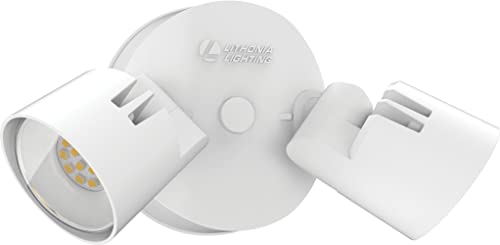
VERSATILE OUTDOOR LIGHTS FOR HOUSE: The HomeGuard LED family of residential security lights are long-lasting, energy-efficient outdoor lighting solutions for replacing incandescent light fixtures; They are great for yards, driveway lights, and walkways

150W Brightness & Energy Saving: Equipped with 154 ultra-bright LEDs, this 150w flood lights outdoor can produce up to 15000 lm high brightness output. Equivalent to 400W other high energy consumption bulbs, our Onforu with low energy consumption, it can save more than 85% electricity bill

【9000LM SUPER BRIGHT 4 HEAD FlOOD LIGHT】With an output of 80W, this floodlight emits a powerful 9000 lumens of 5000K light. The four adjustable heads and unique four beam design provide uniform and extensive illumination, ensuring coverage of up to 2,370 sq. ft. Additionally, it offers over 88% energy savings compared to traditional halogen bulbs.
Step Lights and Stair Illumination Requirements
Since proper stair illumination directly prevents falls and guarantees safe footing on your deck, you’ll need to prioritize step visibility when planning your lighting scheme. Step light placement should follow spacing of 3-4 feet apart, positioning one fixture on each step or every other step, centered horizontally. Individual step lights typically produce 20-40 lumens, consuming only 1 watt per fixture despite their brightness output.
For stairway safety, aim for the Illuminating Engineering Society’s recommended minimum of 1 foot-candle (10.76 lumens per square foot) on outdoor stairways. Select warm white color temperatures between 2700K and 3500K to reduce glare and eye strain during nighttime navigation. Higher lumen values allow increased spacing between fixtures, while lower outputs require closer placement to maintain even illumination without excessive shadows.

☀️ 20 LUMENS PER LIGHT, FAN SHAPED SUNBURST GLOW - The ribbed fan lens spreads light into a wide radiating pattern across the surface below, instead of the single dim spot most flat deck lights throw. Each unit puts out 20 lumens from 3 LED beads in 3000K warm white, so a run of 8 reads as continuous lighting rather than eight separate dots.

Bright 3000K Warm White Accent Lighting & 4 Dynamic Modes Featuring 600 LEDs at 0.65in spacing delivering 200 lumens of cozy 3000K warm white light—ideal for accent lighting on staircases, pathways, patios, decks, and gardens. Choose from 4 modes: Always ON, Breathing, Fast Flash, Slow Flash. The built-in memory function automatically recalls your last mode setting after power-off, so you never have to reset
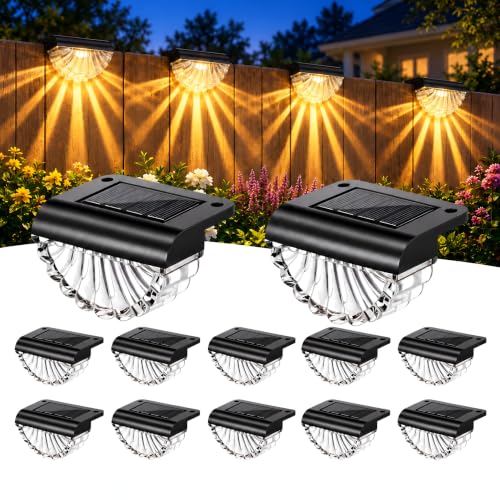
☀️ 20 LUMENS PER LIGHT, FAN SHAPED SUNBURST GLOW - The ribbed fan lens spreads light into a wide radiating pattern across the surface below, instead of the single dim spot most flat deck lights throw. Each unit puts out 20 lumens from 3 LED beads in 3000K warm white, so a run of 12 reads as continuous lighting rather than twelve separate dots.
Pathway and Edge Lighting Specifications
Because pathways and deck edges require consistent, even illumination to guide foot traffic safely, you’ll need to balance lumen output with fixture spacing to eliminate dark spots without creating excessive brightness. For pathway lighting, choose 100–150 lumens for residential areas or 150–300 lumens for commercial applications. Edge lighting typically requires 100–200 lumens per fixture, depending on whether you’re prioritizing ambient aesthetics or security.
Space pathway lights 6–8 feet apart, adjusting based on lumen output—lower-output fixtures need closer spacing, while 200-lumen fixtures can extend to 8–10 feet. Verify beam overlap prevents dark patches along your deck perimeter.
LED fixtures deliver superior energy efficiency while providing reliable illumination. Your fixture’s beam angle and shielding design greatly impact light distribution and overall performance.

✅ Premium Bronze Finish, Timeless Pathway Design: Elegant bronze-tone finish and classic pathway shape add a refined architectural look to walkways, driveways, and garden paths — enhancing curb appeal without overpowering your landscape.

【DUAL COLORS & DOUBLE SURPRISES】2 Colors IN 1 (green light or red light) to make the solar deck lights not only can be driveway markers lights, warning step lights and guiding lights but also as solar outdoor decoration lights to beautify your house, garden and patio. Two-color modes, fit for different adornment styles perfectly!

Solar lights garden--warm light, people with gorgeous colors, decorate some romantic environment,garden lights solar powered
Ambient Versus Task-Oriented Lighting Needs
Your deck’s lighting strategy must distinguish between ambient and task-oriented purposes, as each serves fundamentally different functions and demands different lumen specifications. Ambient light sources require only 10-20 lumens per square foot, creating a welcoming atmosphere with soft, diffused illumination suitable for relaxation and entertaining. Task-oriented lighting, conversely, demands 30-50 lumens per square foot to guarantee functional visibility for work areas and navigation. This distinction prevents over-illumination in decorative zones while assuring adequate brightness where you need it most. Task light efficiency becomes critical when calculating total lumen requirements—underestimating creates safety hazards, while overestimating wastes energy. By tailoring lumen output to specific purposes, you’ll achieve ideal comfort, safety, and energy consumption across your entire deck environment.
LED Technology and Energy Efficiency Benefits
LED technology operates fundamentally differently from traditional incandescent systems, converting electrical energy directly into light through semiconductor technology rather than relying on heated filaments that waste energy as heat.
You’ll experience substantial Energy Savings when upgrading your deck lighting to LED fixtures. A standard 60-watt incandescent bulb produces approximately 700 lumens, while LED alternatives deliver similar output at a fraction of the wattage. Your deck and step lights typically operate at 40 watts or lower, with individual step lights consuming just 1 watt while producing 20-40 lumens.
This LED Efficiency translates directly to reduced electricity bills and decreased demand on your residential electrical system. Lower energy consumption also minimizes your household’s carbon footprint while supporting sustainability goals through reduced strain on power generation infrastructure.
Comparing Incandescent, Fluorescent, and LED Options
When selecting deck lighting fixtures, you’ll want to evaluate how incandescent, fluorescent, and LED bulbs stack up against one another. LED options emerge as the superior choice for deck lighting applications. You’ll achieve 5–10 times greater energy efficiency compared to incandescent alternatives, consuming considerably less power while producing equivalent or superior light output. LED longevity dominates the comparison, offering 25,000–50,000 hours versus incandescent’s mere 750–2,000 hours. While fluorescent advantages include reasonable efficiency and moderate lifespan, they contain mercury requiring careful disposal. LEDs maintain consistent brightness throughout their lifespan without hazardous materials. For deck environments where durability and performance matter, LED bulbs deliver ideal lumens-per-watt efficiency, minimal maintenance demands, and cost-effective long-term value. If your deck boards require maintenance or replacement, proper removal techniques will help preserve materials for potential reuse. Your deck lighting investment benefits most from LED technology’s proven reliability and energy efficiency. When planning your deck lighting project, consulting with a qualified contractor ensures proper fixture placement and installation for optimal results.

1W T5 T10 Wedge Base LED Bulb. It is an ideal replacement bulb for some light fixtures that do not need too much brightness. Wide applications: they are compatible with 12V landscape lighting systems, such as 12V low voltage step lights, deck lights, driveway lights, path lights, gazebo lights, paver lights and RV Tailer Lighting(for dome lights only).

Superior Brightness & Connectable - Unlike dim low-voltage string lights, our 120V outdoor lights provide 2X the brightness for full illumination. Built with pure copper wiring for improved conductivity and safety, they support end-to-end connection of up to 15 strands without voltage drop or dimness, ideal for large spaces. If you need powerful lighting for a grand setup, this is your good choice.

High Efficacy 1156 1141 S8 Landscape LED Bulbs. 400 Lumen output in 3 Watts. It equivalent to 18W-35W 12V S8 shape bayonet incandescent halogen bulbs, which would make a big improvement of your lighting and save over 85% on your lighting costs.
Safety Standards and Visibility on Elevated Surfaces
Because elevated surfaces present heightened fall risks, you’ll need to meet specific safety standards and visibility requirements that go beyond basic ambient lighting. The Illuminating Engineering Society recommends 10–20 lumens per square foot for general deck lighting, with a minimum of 10 lumens per step for peak visibility.
You should aim for 10–20 foot-candles (100–200 lux) of illuminance to safely identify trip hazards and surface changes. Even light distribution across your entire deck prevents dark spots that increase fall risk. Strategic lighting placement on stairs, landings, and level shifts highlights these critical areas where accidents commonly occur. Proper railing post spacing and structural support should complement your lighting design to ensure comprehensive safety on elevated surfaces.
Your safety regulations compliance requires even coverage without shadows on steps or walkways. Consider local building codes, which often mandate lighting on all elevated surfaces and access points for thorough nighttime safety. For pergola installations, ensure your lighting system includes GFCI-protected power sources to meet outdoor electrical standards and protect against electrical hazards on elevated structures.
Security Lighting and Motion Sensor Considerations
While safety standards address the visibility you’ll need to navigate your deck confidently, security lighting serves a distinct but complementary purpose—deterring unauthorized access and monitoring your property after dark. You’ll want to deploy motion sensor lights in the 300 to 700 lumen range, depending on your deck’s size and traffic patterns. Strategic security fixture placement around entry points and perimeter areas maximizes deterrence effectiveness. Motion sensor range typically covers larger zones efficiently while minimizing energy consumption and glare. For thorough protection, position fixtures to eliminate dark spots and overlap coverage zones. Consider adjustable brightness settings that allow you to balance visibility with neighbor considerations. This approach provides reliable security monitoring without excessive illumination, creating a well-protected outdoor environment.