How to Remove Deck Boards With Ring Shank Nails
You’ll need specialized equipment to remove deck boards with ring shank nails, which provide 40% more holding power than smooth nails. Start by inserting a pry bar beneath the board edge and apply steady, incremental force to loosen the fasteners. For stubborn nails, use a cat’s paw or consider the Deck Demon for efficient removal. Remove adjacent boards first if you encounter significant resistance. Cutting boards into sections can also ease nail extraction. Understanding the right techniques and tools will dramatically reduce your labor time.
Understanding Ring Shank Nails and Their Holding Power
Before you attempt to remove deck boards, you’ll need to understand what you’re working against—ring shank nails, which feature annular threads running along the nail’s length that create a powerful locking effect with wood fibers. These deformations provide approximately 40% more holding power than smooth nails, making withdrawal considerably more difficult.
The ring shank advantages become evident when you consider nail withdrawal mechanics. The threads generate friction against wood, creating a locking mechanism that resists pull-out forces. This design makes these fasteners ideal for deck construction, where wood expansion and contraction occur constantly. Understanding this holding power helps you prepare appropriate removal tools and techniques. You’ll need strategies that account for this enhanced grip force, as traditional removal methods often prove ineffective against ring shank nails‘ superior retention capabilities.
Selecting the Right Tools for Efficient Removal
Now that you understand ring shank nails‘ formidable holding power, you’ll need specialized tools designed to overcome their superior grip without damaging your deck structure. Consider the Deck Demon®, which cuts demolition time in half using a lever design that pivots off floor joists. Its 44″ steel handle provides superior leverage while reducing fatigue. The Demo-Dek tool removes up to 16-ft boards in one pull and features an integrated nail puller, eliminating separate tools. For tight spaces, the Crescent 44″ Indexing Deck Removal Bull Bar offers enhanced accessibility with adjustable leverage angles. All these options feature commercial-grade steel construction for tool durability and ergonomic design that minimizes bending and back strain. Standing-use designs and patented rocking motions further reduce physical effort during removal. Before selecting your removal tool, inspect the type of fasteners securing your boards to ensure compatibility with your chosen equipment.
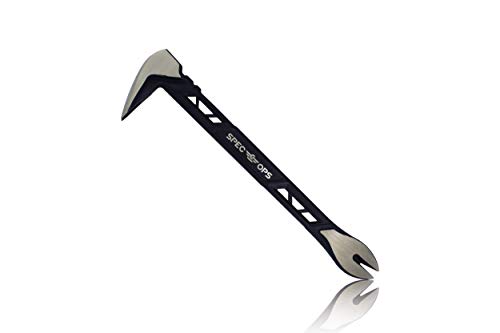
Up to 20% lighter, carbon-steel design for sniper control
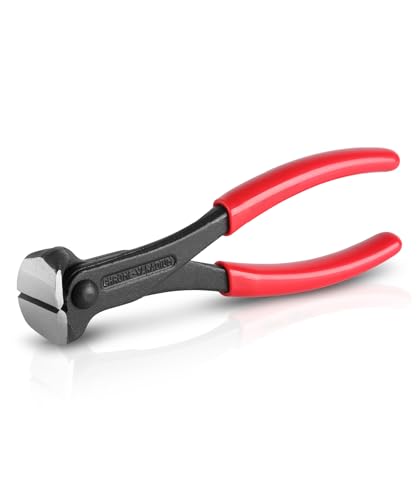
7” End Cutting Plier, Nail Puller
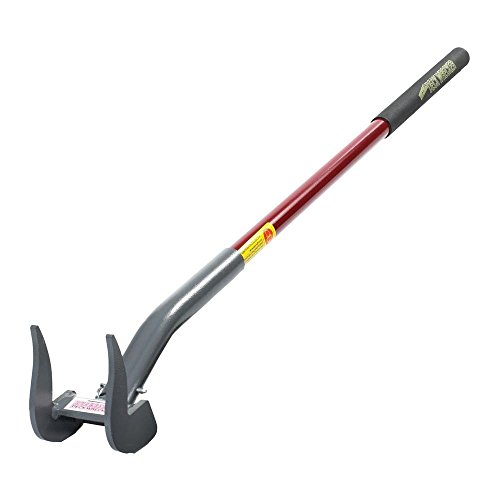
WORK SMARTER, NOT HARDER: Introducing the Duckbill Deck Wrecker – the ultimate tool designed for effortless and efficient deck board removal. Say goodbye to a sore back and experience the ease and efficiency the Deck Wrecker brings to your project.
Step-by-Step Removal Techniques for Board Extraction
Successfully extracting deck boards requires methodical preparation and careful execution to protect your deck’s structural integrity. You’ll begin by inserting a pry bar beneath the board edge, then gently wiggle it to loosen the ring shank nails. Apply steady, incremental force rather than sudden jerks to avoid breaking boards or damaging joists. If resistance is significant, remove adjacent boards first to gain better access underneath.
For stubborn fasteners, use a cat’s paw to dig under nail heads and leverage them free. When extraction proves difficult, consider cutting the board into sections with a reciprocating saw, then remove nails afterward. Before beginning removal, assess your deck for potential hazards including electrical lines that may be present near the structure. Once you’ve safely removed the boards, pressure washing can help clean the underlying joists and structural components before installing new boards.
This board extraction method preserves your frame during deck maintenance. Always work methodically from one side to the other, monitoring fastener response throughout the removal process to maintain consistent progress.

Quick Teardown: This lever-style pallet buster uses a curved pointed tip to slip into board gaps for fast removal. You save time and effort while helping reduce board breakage for better reuse

High-Quality Tools: The pallet buster made of good workmanship with 50'' long and high-quality steel straight heavy tube handle, which is not easily bend or broken when prying, cover with orange powder coating, and one-piece smooth welding for strength and durability.
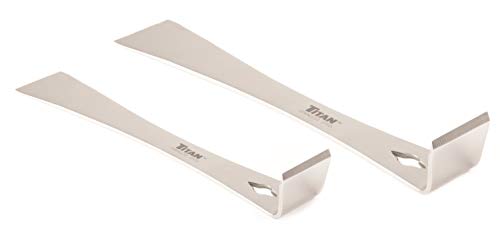
Set Contents: (1) 7-1/4" and (1) 9-1/4" Stainless Steel Pry Bar Scraper
Safety Precautions and Protective Measures
While careful extraction techniques protect your deck’s frame, you’ll want to safeguard yourself throughout the removal process by implementing thorough safety precautions. Start with a detailed hazard assessment, inspecting for structural damage, electrical lines, or unstable sections before beginning work. Your PPE requirements include gloves, safety goggles, hearing protection, sturdy boots, and a dust mask to shield against wood particles and debris. Wear long pants for leg protection. Check all tools for defects and keep a first aid kit accessible on-site. Avoid working in wet conditions that increase slip hazards. If your deck’s elevated, use scaffolding rather than ladders and enlist a helper to prevent falls. Remove boards systematically from the perimeter inward, maintaining structural stability throughout the process. Allow adequate time for any freshly stained surfaces to reach full cure time before beginning removal work to ensure the deck structure has proper integrity. When removing boards with stain finishes, note that multiple thin coats of stain penetrate more effectively into the wood grain than heavy applications, so take extra care not to damage these layered finishes during extraction.
Cost and Time Savings With Specialized Equipment
Investing in specialized deck removal equipment transforms your project’s economics by greatly reducing both labor costs and completion time. You’ll accomplish what traditionally takes half a day in roughly 30 minutes using tools like the Deck Demon, which costs around $110—a one-time investment that pays for itself after two uses.
Your labor savings reach up to 75% compared to hiring professionals at $5–$15 per square foot. Specialized equipment enables you to work solo efficiently, eliminating crew expenses. Rental options provide cost efficiency for single projects, while reciprocating saws and power drills expedite fastener removal considerably.
Beyond immediate savings, you’ll reduce physical strain and injury risk, allowing longer productive work periods. Faster removal accelerates your entire project timeline, enabling same-day or next-day new construction scheduling. When planning your deck replacement, ensure your new railing posts meet building code spacing requirements to maintain structural integrity and safety compliance. Proper preparation also includes removing the ledger board attachment to ensure complete deck deconstruction before building your replacement structure.

ROTATING PALM SANDER: The PaintEater 4-1/2" disc sander is tough on paint but gentle on surfaces, making this the ideal power rotary paint removing tool


Black + Decker Jr gets real with the Matrix Jr Drill with additional Jigsaw head