The Perfect Spacing for Deck Boards: A Complete Guide
You’ll want to maintain 1/8 to 1/4 inch spacing for standard deck installations, though professionals often recommend 3/16 to 3/8 inch for ideal drainage and airflow. Your material choice determines exact requirements—kiln-dried lumber needs tighter gaps than air-dried wood, while composite materials demand consistent 3/16-inch spacing. Pressure-treated boards install tightly initially, then naturally shrink to create proper gaps. Climate conditions and moisture levels also affect your spacing decisions considerably. The specifics of matching your deck’s unique requirements deserve closer examination.
Standard Spacing Range for Deck Boards
Whether you’re working with pressure-treated lumber or composite materials, you’ll want to maintain a gap of 1/8 inch to 1/4 inch between deck boards for standard installations. Some professionals recommend expanding this range to 3/16 inch through 3/8 inch for enhanced water drainage and airflow. Narrow boards up to 90 mm wide typically require a minimum 5 mm gap. You’ll notice that gaps exceeding 3/8 inch create safety concerns, including trip hazards and debris accumulation.
Consistent spacing directly impacts both aesthetic considerations and maintenance impacts. Uniform gaps enhance your deck’s visual appearance while preventing moisture entrapment that causes rot. Proper spacing also facilitates easier cleaning and reduces long-term structural problems. Pressure-treated boards that are wet when installed should be placed tightly together initially, as natural shrinkage during drying will create appropriate gaps over time. Maintaining proper board spacing works together with joist spacing to ensure adequate water drainage and ventilation throughout your deck system. Using decking spacer tools or 16D nails as guides guarantees you achieve reliable, even gaps throughout installation.
Material-Specific Spacing Requirements
While the standard spacing range provides a solid foundation, your specific material choice demands adjustments to these guidelines. Traditional wood decking requires the tightest tolerances due to significant wood movement—you’ll install freshly treated boards without gaps, then allow 3 mm spacing after acclimation. Composite materials like TimberTech and Trex demand 3/16-inch to 3/8-inch side-to-side gaps depending on moisture exposure, with temperature-dependent end-to-end spacing. Ipe hardwood requires 3/32-inch spacing for proper airflow and dimensional stability. Your fastener selection directly influences spacing innovation within these ranges, and hidden fastener systems enable seamless board appearance while maintaining proper ventilation underneath. For hardwood species, pilot holes prevent splitting and ensure secure fastening during installation. Temperature during installation, local climate conditions, and board width all affect your actual gap requirements. Understanding these material-specific demands confirms your deck accommodates expansion and contraction appropriately throughout seasonal cycles.

Efficient Design: This deck hidden fastener tool compatible with Trex hidden fasteners, Installing the hidden fasteners have become more convenient and efficient. A must have and value for money tool that simplifies the installation process and greatly improves deck installation efficiency, installing decks like a pro

Kiln-Dried vs. Air-Dried Lumber Considerations
Since your deck’s spacing requirements hinge directly on how much the boards’ll move, understanding the drying method becomes critical to your installation strategy. Kiln-dried lumber offers substantial kiln benefits: boards move minimally with seasonal humidity changes due to collapsed cell walls, requiring tighter spacing of ⅛ to ¼ inch. Air-dried wood presents significant air dry drawbacks—it remains prone to cupping, warping, and twisting when exposed to moisture fluctuations, demanding wider spacing of ¼ to ⅜ inch to accommodate movement. Most professional deck builders prefer kiln-dried boards for superior dimensional stability and predictable spacing calculations. However, if you’re using air-dried lumber for cost reasons, plan conservatively with larger gaps to prevent board buckling during seasonal shifts. To further protect your deck investment, consider applying exterior-grade wood stain with built-in sealer to your boards before installation for enhanced weather resistance. Proper spacing also works in tandem with hidden deck fasteners, which can accommodate board movement while maintaining the clean aesthetic of your deck surface.
Pressure-Treated Wood Installation Gaps
Pressure-treated lumber arrives at your job site saturated with moisture—typically around 25% moisture content from the chemical treatment process—which fundamentally changes how you’ll space your deck boards. You’ll face significant installation challenges if you don’t account for this moisture. Install wet boards tightly together with no gaps, allowing natural shrinkage to create approximately 1/8 to 1/4 inch spacing as they dry. Implement moisture monitoring using the sprinkle test: water absorbed within 10 minutes indicates dry boards; beading water signals wet lumber. For dry pressure-treated wood, maintain a 3/16 inch gap using a 16D nail as your spacer. This approach prevents both unattractive large gaps exceeding 1/4 inch and future expansion issues while optimizing your deck’s appearance and longevity. The water-based preservatives used in modern pressure treatment, such as ACQ and Copper Azole, help protect the wood from rot and decay while allowing it to shrink predictably as moisture content decreases. When planning your deck layout, consider that joist spacing typically ranges from 12 to 24 inches on center, which will influence how your deck boards bear weight across the framing structure.
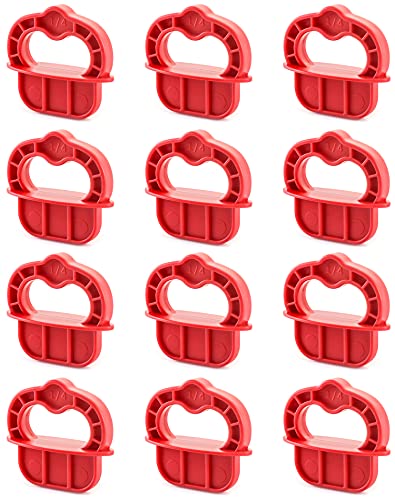
Secure and Durable: Made from quality plastic material, these spacer rings securely hold the deck boards in place, preventing movement and warping over time. 12 Pack.

【5-Size Deck Spacers & 20-Pack】This listing: Mix-Size set. Quantity: 20 spacers per box, with 5 sizes (4 of each size). Ideal for long spans decking.▼Included Color & Size: Red: 1/8" (3.2mm) spacing, Orange: 5/32" (4mm), Yellow: 13/64" (5.2mm), Green: 1/4" (6.4mm), Blue: 5/16" (8mm).

Deck Spacers: You will receive 6 orange deck spacers. Their vibrant color makes them easy to identify during installation, and the clear size markings on the surface ensure smooth installation of new decking boards.
Composite and PVC Decking Spacing Guidelines
Composite and PVC decking materials behave fundamentally differently from pressure-treated wood, requiring you to adopt distinct spacing strategies. You’ll maintain 1/8 inch to 1/4 inch side-to-side gaps, with 3/16 inch serving as the ideal middle ground for most installations. Installation best practices demand you adjust end-to-end spacing based on temperature: use 1/8 inch gaps on days warmer than 40°F and 3/16 inch on colder days to account for material contraction.
You should employ deck spacer tools to promote consistent spacing throughout your project, positioning two to three spacers between boards every 24 inches. Hidden fastener systems automatically establish proper gaps through mechanical clip design. Spacing maintenance becomes critical—gaps larger than 1/4 inch create safety hazards. In high-moisture environments like docks, increase width-to-width gaps to 3/8 inches to ensure adequate drainage and prevent water accumulation. Always consult your manufacturer’s specific guidelines, as spacing maintenance requirements vary by product composition and fastener type.
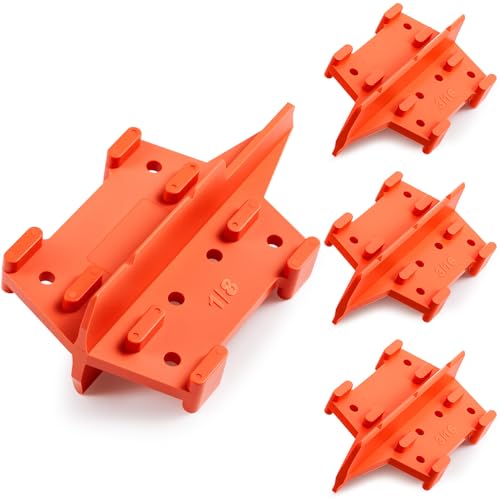
Functionality: the deck spacers feature either 1/8" or 3/16" shim edges; It spaces deck lumber apart to allow for adequate expansion and contraction to minimize guesswork; The efficient design of this decking tool ensure not only a visually appealing finish but also a solid foundation, elevating the quality and durability of your decking endeavors
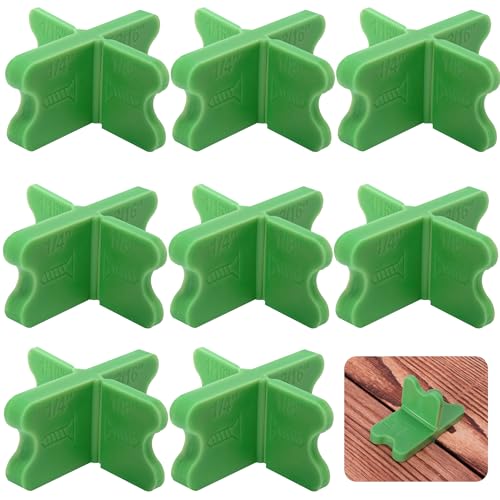
Deck spacer:Deck spacer tool ensures even gaps and consistent alignment between boards. Adequate gaps help promote effective drainage and debris removal, accommodate board expansion and contraction, and prevent dents and scratches in hardwood and synthetic deck boards.
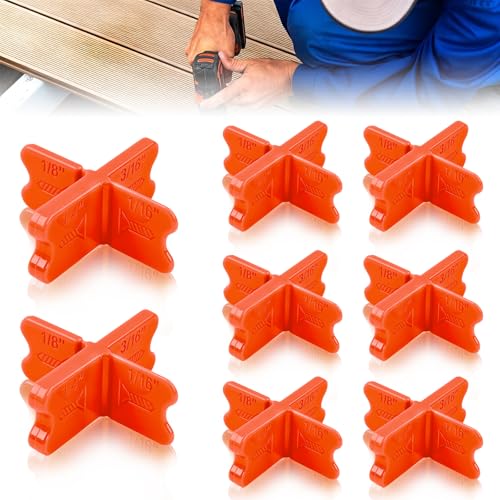
Universal Sizes: 1/16", 1/8", 3/16", and 1/4". These deck board spacers provide precise spacing control for your decking project, eliminating manual measurement errors and ensuring consistent spaces between boards
End-to-End and Edge-to-Object Gap Requirements
The spacing you establish between board ends and around deck perimeters directly impacts your deck’s structural integrity, drainage performance, and safety. For end to end spacing, you’ll need minimum 1/8″ gaps between composite board ends to prevent buckling and warping. Temperature conditions dictate adjustments: below 32°F requires 3/16″, while 32–75°F calls for 1/8″ spacing. For edge to object spacing, maintain 1/4″ to 3/8″ gaps along deck edges, ledger boards, and posts. This range prevents problematic foot entrapment while allowing adequate water drainage and debris clearance. Gaps exceeding 3/8″ create safety hazards; gaps under 1/4″ compromise water management. When installing composite decking, manufacturers almost universally specify 16 inches on center as the maximum spacing to ensure proper support and performance. Hidden fastener systems like side-groove fasteners and under-mount options help maintain these precise spacing requirements while creating a seamless, professional appearance. Consistent application across all installations guarantees peak performance throughout seasonal temperature fluctuations.
How Fastener Type Affects Board Spacing
While establishing proper end-to-end and edge-to-object gaps forms the foundation of deck board spacing, your fastener choice directly determines whether you’ll maintain those gaps consistently throughout the deck’s life. Face-driven screws demand precise manual spacing, often resulting in inconsistent gaps without careful attention. Conversely, spacing innovations like hidden clips engineered for grooved-edge boards maintain uniform 1/4-inch or 3/16-inch gaps automatically at every joist. Fastener durability depends heavily on material selection—stainless steel, particularly 316 grade, resists corrosion and preserves spacing integrity in harsh environments. For outdoor applications, galvanized steel fasteners offer a cost-effective alternative that provides adequate corrosion resistance for most decking projects. Fastener length proves equally critical; penetrating at least 1-1/4 inches into joists prevents board shifting and gap changes. Short fasteners compromise stability, while oversized fasteners risk splintering. For face screw installations, countersinking screw heads until flush with the board surface ensures a clean finish and maintains the aesthetic consistency of your deck. Your fastener selection fundamentally impacts both immediate spacing accuracy and long-term performance.

30% FASTER INSTALLATION TIME vs. COMPETITION: Complete your project faster

Premium 304 Stainless Steel: Our deck screws are crafted from high-grade 304 stainless steel, renowned for its rust resistance and durability. This material choice ensures long-term performance even in the most challenging outdoor conditions, including coastal environments where salt air is prevalent. Whether you’re working on residential or commercial projects, these screws are engineered to withstand the elements without corrosion.
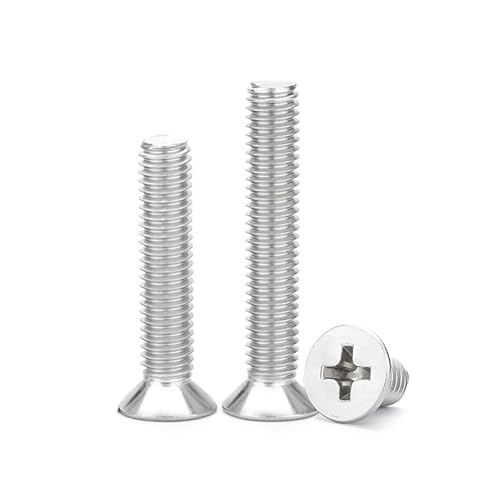
VALUE PACKAGING AND EASY TO USE - This Flat Head Machine Screws package contains 10 Pcs screws, You can get your work done easily and qucikly. They are ideal for use at home, in the office or at work.
Climate and Moisture Impact on Spacing Decisions
Because wood’s movement is governed primarily by moisture absorption and release rather than temperature alone, you’ll need to adjust your spacing strategy based on your region’s humidity patterns and seasonal variations. In high-humidity areas like the Midwest and East Coast, increase gaps by 1/32 to 1/16 inch as insurance against expansion. Conversely, drier southeastern regions require spacing adjustments accounting for drought conditions. Ground-level decks function as moisture traps, necessitating wider-than-normal spacing. Before installation, check your boards’ moisture content—anything above 15% indicates ongoing shrinkage. Winter installations typically benefit from consistent 1/4 inch gaps throughout the year. Acclimate boards on-site for 1-2 weeks before fastening to prevent significant post-installation shifts. The handrail height and railing angle alignment must be calibrated to work harmoniously with your deck board spacing to ensure both aesthetic consistency and structural safety. Proper spacing requirements also extend to balusters and railing components, which must adhere to building code standards to ensure safety and structural integrity. These climate variations directly impact long-term deck performance and board stability.
Tools and Techniques for Maintaining Consistent Gaps
Once you’ve determined your target spacing based on climate and moisture conditions, you’ll need reliable tools and proven techniques to maintain those gaps throughout installation. Stanley deck board straightening tools or board benders compress rows while maintaining consistent spacing without additional clamping hardware. Clamp ends tightened between boards work with spacers to hold your desired gap width—avoid overtightening to prevent board cupping. Shimming decking at multiple locations proves more effective than concentrating shims in one spot when gaps remain unequal. For gap cleaning and gap tools, homemade hook tools screwed into broom handles extract debris between boards cost-effectively. Regular maintenance prevents severe gunk buildup that becomes increasingly difficult to remove later. Consider incorporating adjustable shading elements such as retractable canopies over your deck to protect the wood from excessive UV exposure. After installation, applying a clear deck sealer protects your boards from moisture and UV damage while preserving the natural wood appearance in those carefully spaced gaps.

Deck Spacers: You will receive 2 orange deck spacers. Their vibrant color makes them easy to identify during installation, and the clear size markings on the surface ensure smooth installation of new decking boards.

【Product Size】This steel deck spacing tool is 9.25 inches(23.5cm) in length and is used for wood and composite decking. HOTUFELG's sets the correct gap between deck boards according to manufacturer specifications,making Keeping the grounds neat and attractive.

Universal Sizes: 1/16", 1/8", 3/16", and 1/4". These deck board spacers provide precise spacing control for your decking project, eliminating manual measurement errors and ensuring consistent spaces between boards