What Size Boards Are Best for Deck Joists?
You’ll want to select 2x8s or 2x10s for most residential decks, as they span 12–16 feet effectively. Your choice depends on joist spacing, wood species, and load requirements. Douglas Fir-Larch and Southern Yellow Pine outperform Spruce-Pine-Fir at identical sizes. Spacing joists 12 inches on-center instead of 16 inches increases load capacity and structural integrity. Pressure-treated lumber offers economical protection, while engineered alternatives provide superior straightness. Understanding how these factors interact guarantees your deck meets building codes and performs safely long-term.
Standard Joist Sizes and Span Capabilities
When you’re planning a deck, you’ll typically choose from 2×6, 2×8, 2×10, or 2×12 lumber for joists, with selection driven by your span length and load requirements. At standard 16″ on-center spacing, you can expect these approximate maximum spans: 2×6 joists reach 8′ to 9.5′, 2×8 joists span 12′ to 14.5′, 2×10 joists extend 14′ to 16′, and 2×12 joists reach 16′ to 18′. Your joist materials‘ species and grade greatly impact these capabilities—Douglas Fir-Larch typically outperforms spruce-pine-fir at identical sizes. Reducing spacing to 12″ on-center increases span potential and structural integrity. Always consult local span tables matched to your lumber specifications for precise calculations before finalizing your design.
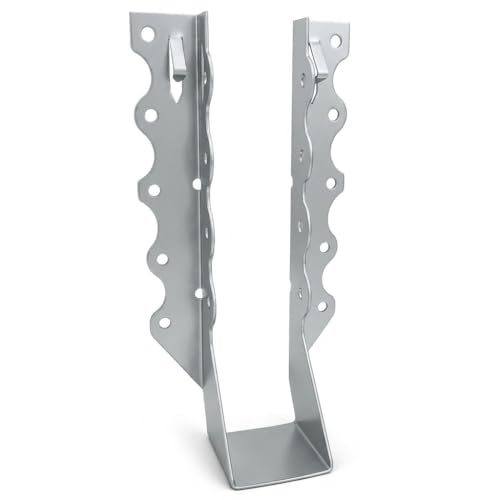
Made from 18 gauge galvanized steel to increase rust and corrosion resistance, creating a stronger, long-lasting joist-to-header connection


Secure Connection: Designed for wood-framed structures, the 2x6 joist hanger strengthens the connection between the joists and headers, providing higher structural stability. It ensures the building's safety and reliability, even under strong winds and heavy loads
How Wood Species Affects Joist Selection
Because wood species vary considerably in strength and stiffness, they’ll directly influence the maximum spans you can achieve with your deck joists. When you compare joist material properties across species, you’ll find significant performance differences. Southern Yellow Pine and Douglas Fir, for instance, support wider spacing and longer spans than Spruce-Pine-Fir or Western Red Cedar. This strength variance means you can use smaller dimension joists with stronger species while maintaining structural integrity.
Your wood species comparison should consider the Modulus of Rupture (MOR), which determines load-bearing capacity. Selecting higher-grade lumber amplifies these advantages regardless of species choice. You’ll also need to factor durability—pressure-treated Southern Yellow Pine offers chemical preservation, while naturally durable cedar and redwood require more maintenance but provide inherent decay resistance for long-term performance. Most common joist sizes range from 2×6 to 2×12 lumber, with the appropriate dimension depending on your span requirements and local building codes. Proper specialized hardware selection ensures your joists remain securely fastened and can withstand environmental stresses over time.
Understanding Joist Spacing and Load Distribution
Proper joist spacing directly determines how effectively your deck distributes structural loads across the entire frame, making it one of the most critical decisions you’ll make during construction. You’ll typically choose between 12 inches or 16 inches on center spacing, depending on your joist types and load considerations. Closer spacing—12 inches OC—better distributes weight from heavy furniture or hot tubs, preventing sagging and warping. Wider spacing can cause decking boards to crack or bend prematurely. Your joist size influences spacing options: larger joists like 2x10s accommodate wider spacing, while smaller 2×6 or 2×8 joists demand tighter spacing. The board dimensions you select, such as standard 1″ × 5.5″ boards, should be matched to your joist spacing to ensure proper load support. Installing blocking at regular intervals of 4 to 6 feet reduces joist movement and prevents excessive gapping between boards. Always verify local building codes and manufacturer guidelines before installation to confirm compliance and protect your deck’s longevity.

NOTICE: The 1×6 profile is 0.75" thick and 5.5" wide. The length includes a ±0.125" tolerance.

By Crafters, For Crafters: Crafting and building with wood is our number one priority. Bringing you more of the wood craft supplies you love is our job
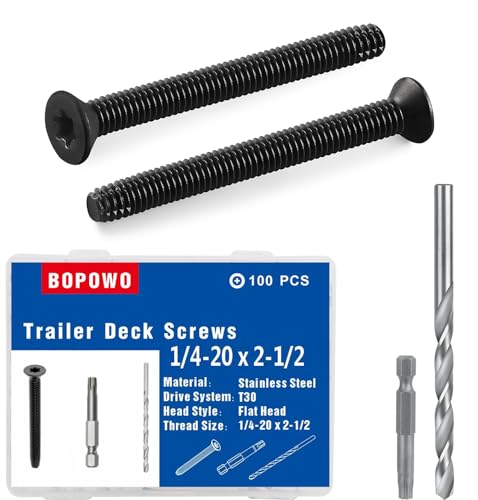
1. Professional flooring installation screws:Specifically designed for flooring panels, Type F structure, can be quickly self-tapping cut into the wood surface, to ensure a solid bite, for hardwood, laminate flooring and other efficient installation.
Maximum Span Tables and Load Requirements
Once you’ve determined your joist spacing, you’ll need to reference maximum span tables to guarantee your board size can safely support your deck’s structural demands. Standard residential decks assume a 40 psf live load and 10 psf dead load. These load requirements directly influence your maximum joist lengths. For Southern Pine 2×8 joists at 16″ on center, you’ll achieve spans between 11′-1″ and 12′-6″. However, specialized loads like hot tubs or heavy crowding demand larger joists or tighter spacing. Building codes enforce an L/360 deflection limit, ensuring structural safety. Higher lumber grades permit longer spans with identical joist sizes. When building with composite materials, ensure you use proper spacing and fastening techniques to maintain structural integrity and allow for natural expansion and contraction. Your deck railing system must also meet local building code requirements for safety, including proper baluster spacing requirements that typically mandate maximum gaps between vertical elements. Always consult current span tables specific to your lumber species and local building codes before finalizing joist dimensions.
Choosing Between Pressure-Treated Lumber and Alternatives
When you’re planning your deck’s structural foundation, selecting the right joist material substantially impacts both performance and long-term costs. Pressure-treated lumber remains the cost-effective standard, offering adequate strength for typical 16″ on-center spacing with spans up to 16 feet depending on joist size. Most pressure-treated joists are protected with water-based preservatives like ACQ or Copper Azole to guard against rot, decay, and insect damage.
However, pressure treated alternatives warrant consideration. Composite and PVC materials require tighter 12″ spacing but eliminate chemical preservatives, reducing environmental impact concerns. Hardwoods like Black Locust deliver superior strength—up to 19,400 PSI—enabling wider 24″ spacing, though higher costs offset durability gains.
Engineered lumber options provide excellent straightness and longer spans with minimal deflection, requiring compatible fastening systems. For additional weather protection on your deck structure, consider incorporating weatherstripping gaskets and sealants where joists meet other components to prevent water infiltration. Evaluate your environmental priorities, budget constraints, and span requirements carefully. Each material category demands different spacing and sizing strategies for peak deck performance.
It is easy to use

2x6 Joist Hanger: The joist hangers for pressure treated lumber is made to be installed from joist to header in wood-framed buildings with roofs, decks, floors, deck and ceilings. Creating a stronger, long-lasting joist-to-header connection

Black 2x4 Joist Hanger: The joist hangers for pressure treated lumber is made to be installed from joist to header in wood-framed buildings with roofs, decks, floors, deck and ceilings. Creating a stronger, long-lasting joist-to-header connection
Installation Factors That Impact Joist Performance
Beyond material selection, how you install your deck’s joists critically determines whether your structure will perform reliably or fail prematurely. Your installation techniques must guarantee joists remain level and in plane, preventing surface irregularities that compromise performance. You’ll need consistent sizing and spacing—typically 16 inches on center for straight layouts or 12 inches for diagonal patterns—to distribute loads evenly.
Environmental considerations greatly impact longevity. You should apply moisture defense like joist tape in damp climates, as water accelerates timber decay. Elevated decks require heightened protection due to increased exposure. Blocking between joists at 4–6 foot intervals prevents lateral twisting and maintains alignment. Using manufacturer-approved fasteners and hangers is non-negotiable. Skipping these steps invites deflection, bounce, or structural failure.
Balancing Comfort, Rigidity, and Long-Term Durability
As you select your deck joists, you’ll need to reconcile three competing priorities: underfoot comfort, structural rigidity, and decades-long durability. Larger joists like 2×10 and 2×12 excel across all three categories. They minimize deflection and bounce, enhancing deck comfort while resisting warping and splitting over time. However, 2×8 joists at 16″ OC spacing offer a practical middle ground for spans up to 12′-6“, delivering adequate joist performance for most residential applications while controlling costs. Narrower spacing amplifies comfort by reducing flex, particularly valuable in high-traffic areas. Thicker decking boards further stabilize the surface, and proper fastening with two screws per joist ensures that your deck maintains structural integrity and safety for decades to come. All joist installations must meet building code requirements to ensure adequate load capacity and structural safety. Ultimately, your joist selection should match your span requirements, load expectations, and local building codes while prioritizing the rigidity that preserves long-term structural integrity.