

How to Properly Paint Metal Patio Furniture: A DIY Guide
You’ll start by examining your furniture for rust, dents, and loose fasteners. Clean it thoroughly with mild soap or vinegar, then tackle rust with baking soda paste or wire brushes. Next, apply a rust-inhibiting primer and let it cure fully. Choose quality spray or brush-on paint designed for metal surfaces. Apply multiple thin coats with 2-4 hour drying intervals, then wait 24 hours before use. There’s much more to master about technique and product selection.
Assessing Metal Condition
Before you pick up a paintbrush, you’ll need to thoroughly assess your metal patio furniture’s current condition. Start your metal inspection by examining the frame for visible cracks, dents, or warping. Check all joints and connectors for damage, and guarantee fasteners are tight.
Next, conduct a structural analysis by testing stability and inspecting welds for separation. Gently apply pressure to different areas, listening for any concerning flexing or movement. Similar to how structural integrity is critical in deck railing systems, ensuring your furniture’s structural soundness is essential before refinishing.
Search for rust and corrosion, paying close attention to moisture-prone areas like joints and crevices. Look for reddish-brown spots, pitting, or white powdery residue on aluminum. Evaluate existing paint for peeling, chipping, or bubbling that indicates trapped moisture beneath the surface.
Use a flashlight to inspect undersides and hard-to-reach areas. This thorough assessment determines what preparation and treatment your furniture requires before painting.
Cleaning and Surface Preparation
Now that you’ve assessed your furniture’s condition, it’s time to clean and prepare the surfaces for painting. Start by selecting appropriate cleaning agents—mild dish soap works well for general grime, while white vinegar cuts through mineral deposits and oxidation. For stubborn buildup, use a baking soda paste with gentle scrubbing motions.
Clean with soft cloths or brushes to avoid scratching the metal. Rinse thoroughly with water to remove all residues that could interfere with paint adhesion. Completely air dry your furniture, using microfiber cloths to eliminate standing water and moisture.
Remove any existing surface coatings, grease, or dirt that might prevent proper paint bonding. For extra protection after painting, consider applying rust-inhibiting primers or clear sealants to create additional moisture barriers and UV resistance. This thorough preparation guarantees your paint adheres evenly and provides lasting protection for your metal patio furniture.

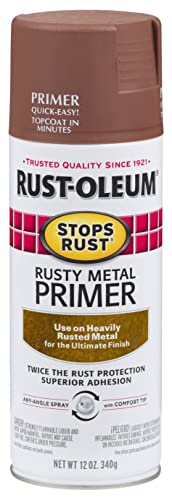
Use to prime exterior or interior heavily rusted metal surfaces only

Weather and corrosion resistant primer bonds tightly to exterior/interior surfaces like wood, metal, concrete, masonry and more to provide excellent adhesion for top coat
Rust Treatment and Priming
With your furniture thoroughly cleaned and dried, you’re ready to address any rust that might compromise your paint job’s longevity. Choose your rust removal techniques based on severity: use baking soda paste for moderate rust, or employ wire brushes and steel wool for heavier buildup. For stubborn corrosion, consider rust converters—they chemically transform rust into a stable compound, saving you time on complete removal.
After rust treatment, apply a rust-inhibiting primer formulated specifically for metal surfaces. This creates a critical bonding layer between metal and paint, preventing future corrosion. Ascertain the surface is completely dry before priming. Use spray application for even coverage on detailed pieces, then allow the primer to cure fully per manufacturer instructions before applying your topcoat and protective treatments.

Use on any rusty, metal surface to Instantly convert rust to a flat black, paintable surface that is protected and prevents future rust

RUST CONVERSION TECHNOLOGY: Penetrates rust on iron and steel and chemically transforms it into a protective black coating

Filler and sandable primer is suitable for use on wood, metal and fiberglass surfaces
Paint Selection and Application
Once your primer’s fully cured, you’re ready to select and apply the paint that’ll protect and beautify your furniture. Choose between oil-based enamel for superior durability or acrylic DTM paint for quick drying and easy cleanup. Popular paint brands like Rust-Oleum Painter’s Touch 2X and Krylon COLORmaxx offer rust-inhibiting formulations with UV resistance. For intricate designs, spray paint provides uniform coverage; brush-on works better for flat surfaces. When brush painting, use quality angled or small detail brushes for edges and intricate parts, applying paint in smooth, even strokes with a wet edge to avoid streaks. Apply multiple thin coats rather than one thick coat to avoid runs and drips. Follow manufacturer instructions for drying times between applications—oil-based requires 4-6 hours while water-based acrylics dry in 2-4 hours. Oil-based paint’s superior durability makes it ideal for furniture exposed to harsh conditions, though it yellows over time, whereas latex paint resists UV fading better and remains lower maintenance. This approach guarantees even, durable coverage that’ll keep your furniture looking fresh.

Weather and corrosion resistant coating protects exterior/interior surfaces like wood, metal, concrete, masonry and more
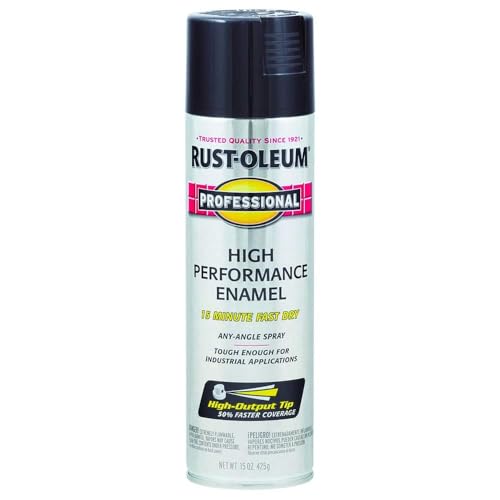
Ideal for use on ferrous, non-ferrous metal, wood, concrete, masonry and other such surfaces to provide rust protection and a tough attractive finish that withstands weathering

Weather and corrosion resistant coating protects exterior/interior surfaces like wood, metal, concrete, masonry and more
Coating Technique and Drying
Mastering proper spray technique and drying conditions guarantees your painted metal furniture develops a smooth, durable finish without defects. Hold your spray can 10-16 inches from the surface, using steady back-and-forth motions to apply even, light coats. Multiple thin layers prevent drips and runs better than one heavy application. Overlap your spray strokes slightly for superior coverage on intricate designs, and use a comfort grip tool to maintain consistency on large pieces.
Follow recommended drying intervals of 2-4 hours between coats to confirm proper adhesion. Paint above 50°F in well-ventilated areas away from direct sunlight. For hard-to-reach details, supplement spraying with a fine brush or roller. Allow full 24-hour curing before using your furniture, as environmental humidity and temperature greatly affect dry times.


