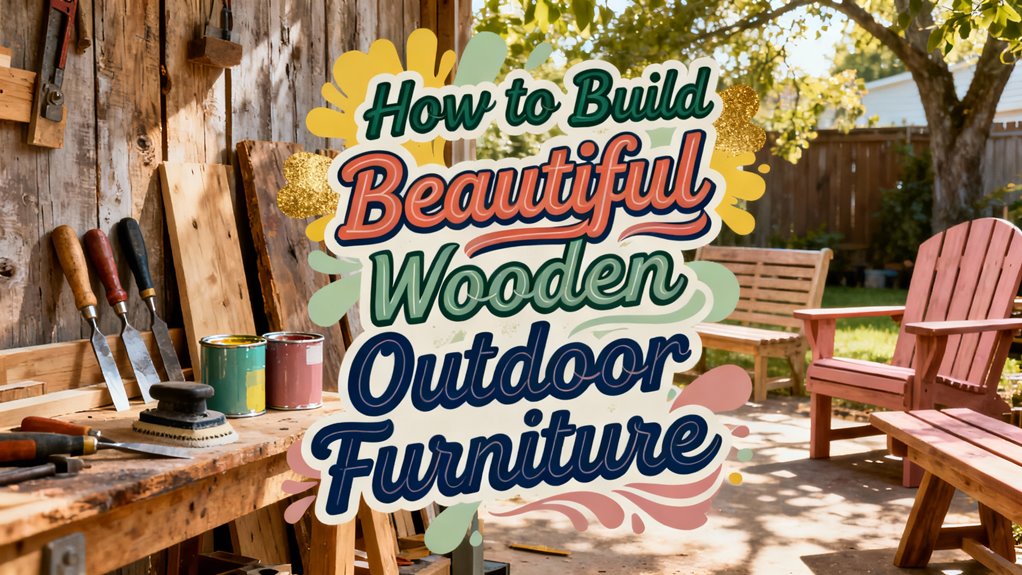
How to Build Beautiful Wooden Outdoor Furniture
You’ll build beautiful outdoor furniture by selecting weather-resistant woods like teak or black locust for longevity. Invest in quality tools—cordless drills, miter saws, and Forstner bits—for precision cuts and joinery. Master mortise-and-tenon joints and tongue-and-groove techniques for structural strength. Sand progressively from 80-grit to 220-grit, apply wood brightener, then finish with UV-resistant coatings. Elevate pieces on pallets and reapply sealants twice yearly. These fundamentals establish durability, though deeper techniques reveal truly exceptional results.
Selecting the Right Wood and Materials
When you’re building outdoor furniture, your wood choice fundamentally determines the project’s durability, maintenance requirements, and long-term cost. You’ll want to evaluate wood characteristics like natural oil content, grain density, and pest resistance alongside cost comparisons between options.
Teak offers exceptional longevity—50+ years—with minimal maintenance, but commands premium pricing. Cedar provides affordability and workability with 10-15 year durability, requiring regular oiling. Acacia delivers 30+ years of performance at moderate cost, though it needs consistent sealing. Black locust rivals teak’s 60+ year lifespan while remaining more accessible. Eucalyptus presents a sustainable alternative with good strength and moderate natural resistance, though it typically requires more regular upkeep than premium hardwoods.
You should match your budget against maintenance commitment. Premium woods like teak demand less upkeep, while budget-friendly cedar requires frequent treatment. Denser hardwoods resist warping better but prove harder to fabricate. Consider your climate’s moisture levels and pest pressures when finalizing your selection. For outdoor furniture with concealed joinery, implementing hidden fastening systems can enhance the aesthetic appeal and structural integrity of your finished pieces.

ENHANCES THE BEAUTY OF THE WOOD: Teak Oil restores the beauty of grey, old and weathered teak furniture to give a golden-brown natural finish.
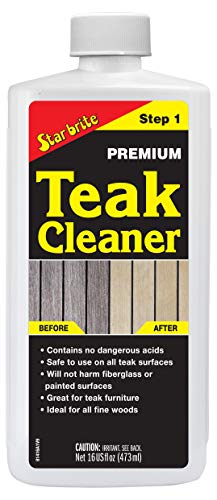
REVITALIZE YOUR TEAK - STAR BRITE Premium Teak Cleaner effortlessly restores the original charm of weathered and gray teak furniture or boat decks without the need for sanding or pressure cleaning

🌱 UNLEASH THE BEAUTY OF YOUR OUTDOOR WOOD WITH TEAK OIL: Our premium wood finish and sealer is specially formulated for outdoor furniture, providing waterproof protection and enhancing the natural color and structure of teak, mahogany, pine, beech, oak, and other wood types. Preserve and beautify your outdoor wood with confidence.
Essential Tools and Cutting Techniques
Once you’ve selected your wood, you’ll need the right tools to transform it into finished furniture pieces. Start with a cordless drill for fastening and a circular saw for straight cuts, preferably brushless models for extended battery life and increased power. A miter saw delivers precision angle cuts essential for joinery. Use a combination square and marking gauge to guarantee cutting accuracy before making any cuts. Straightedge attachments on your circular saw maintain precision during on-site work. Invest in Forstner bits for counterbore holes that allow screw heads to sit flush. For outdoor wooden furniture that will be exposed to the elements, ensure your materials are pressure-treated lumber to prevent rot and water damage. If you prefer a lower-maintenance alternative, consider that aluminum furniture offers superior rust and corrosion resistance compared to wood in challenging climates. Finally, prioritize tool maintenance by protecting saw teeth and cleaning equipment regularly, which directly impacts both your safety and the quality of your finished pieces.

Powerful 20 V Motor and 2 x 1.5 Ah Battery: Equipped with a robust 20 V motor and 2 Li-ion battery, this cordless drill delivers smooth power for various drilling and driving tasks;Its rechargeable battery ensures you're always ready for next project
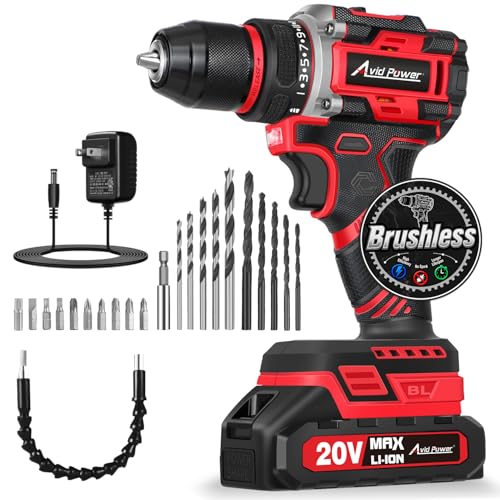
【High-Torque Brushless Motor with 355 In-Lbs Power】 Experience unmatched efficiency and power with our advanced brushless motor, delivering 40 Nm of torque. It offers extended runtime, reduced heat build-up, and longer tool life—perfect for demanding tasks like building decks, assembling machinery, or automotive repairs. Max torque for drilling into wood 13/16-Inch(20mm) or steel plate 3/8-Inch (10mm). Note: This drill is not suitable for more than 25mm drill bits

Brushless motor delivers more run time over brushed
Mastering Joinery and Assembly Methods
With the right cutting techniques in place, you’re ready to tackle the joints that’ll hold your outdoor furniture together—and the method you choose directly impacts durability, repairability, and load-bearing capacity. For load-bearing pieces like chairs and tables, mortise and tenon joints deliver superior joint strength through mechanical locking. Draw-bored versions resist racking forces exceptionally well. For tabletops and panels, tongue and groove joints accommodate wood movement while maintaining edge-to-edge connection integrity. Butt joints work adequately for basic frames when reinforced with glue and fasteners. Pocket-hole joinery offers quick assembly for non-load-bearing components but requires careful alignment to prevent splitting. Dovetail joints provide exceptional longevity through interlocking resistance to pulling forces. Selecting corrosion-resistant fasteners like galvanized or stainless steel hardware will enhance your furniture’s ability to withstand weather exposure and moisture. Ensuring your furniture is securely fastened with proper hardware will further enhance its ability to withstand outdoor conditions and heavy use. Master these joinery techniques to guarantee your outdoor furniture withstands environmental stress and seasonal fluctuations.

2 sheets of 304 stainless steel welded wire mesh; each sheet 11.8 x 23.6 inch (30 x 60 cm) with 1/4 inch (6 mm) square openings; 0.6 mm wire diameter; welded joints hold the grid rigid and square; both sheets arrive in 1 compact roll

Strength 198 Lbs. Temperature -170℉ To +1000℉, High-temperature Applications Such As Cv Boot Clamps, Tie Rod Boot Clamps, And Heat Wrap For Exhaust Pipes. Uv Resistant For Outdoor Pvc Pipes And Metal Pipes, Pipe Straps.

DURABLE GALVANIZED CHAIN : You will receive a total length of 19.6 feet of heavy duty coil chain, they are 6 mm thick, each ring is 1.18 inches long and 0.9 inches wide, long enough to meet the needs of your daily life
Surface Preparation and Finishing Your Furniture
Your joinery work won’t reach its full potential without proper surface preparation and protection—a well-executed finish shields your furniture from moisture, UV damage, and seasonal weathering while enhancing its natural beauty. Begin with thorough surface cleaning using soft bristle brushes and mild soap, then rinse completely. For stubborn stains, apply oxygen bleach solutions. Once dry, employ progressive sanding techniques: start with 80-150 grit for weathered surfaces, then advance to 150-220 grit for smoothness. Sand with the grain consistently. Apply wood brightener to eliminate oxidation and discoloration, letting it sit 15-20 minutes before rinsing. Finally, apply UV-resistant finishes in thin, even coats, sanding lightly between applications for maximum adhesion and durability. For furniture with vinyl components, ensure paint adhesion by sanding the surface before applying primer and finish coats.

Prevents further drying and fading of wood finishes due to sun exposure, temperature variations, and moisture both indoors and outdoors

Apply to outdoor wood projects

WATERPROOFING STAIN – Bring out the beauty of your outdoor wood with Thompson’s WaterSeal Transparent Waterproofing Wood Stain. Along with adding smooth color, it’s a deck sealer that prevents water damage to help you maintain your outdoor living spaces.
Maintenance and Longevity Tips for Outdoor Pieces
Although you’ve invested considerable effort in building and finishing your outdoor furniture, the work doesn’t end once assembly is complete—consistent maintenance is what separates pieces that last decades from those that deteriorate within a few seasons.
Establish routine cleaning practices using mild soap solutions or diluted vinegar, employing only soft brushes to avoid surface scratches. Perform hardware inspection annually, tightening all joints, screws, and bolts while replacing corroded fasteners with stainless steel alternatives. Apply silicone lubricants to moving parts for smooth operation and rust prevention.
Reapply protective sealants twice yearly, prioritizing joints and end-grain areas vulnerable to water intrusion. Elevate furniture on pallets to promote airflow and prevent moisture absorption. For coastal environments, regular rinsing removes salt deposits that accelerate wood degradation. Use weather-resistant protective covers during periods when furniture is not in active use to shield against UV rays, rain, and environmental debris. Store pieces indoors during extended non-use periods, and address any splinters, cracks, or warping immediately to maintain structural integrity and extend your furniture’s functional lifespan.