How to Cut 4×4 Posts for Your Deck Railing
You’ll calculate your post length by measuring from the deck surface to your desired rail height, subtracting rail thickness—typically 1.5 inches. Mark cutting lines at 34.5 inches using a framing square for precision. Use a circular saw with a clamped speed square guide, cutting halfway through, then completing from the opposite side. Apply wood preservative immediately to all exposed cut ends before installation. Position posts plumb using a 4-foot level, then secure them with through-bolts. Understanding the complete process guarantees code compliance and lasting durability.
Calculate Post Length Accurately
You’ll need to nail down three critical measurements before making a single cut: the required railing height for your jurisdiction, the thickness of your rails, and how far your posts’ll set back from the deck’s edge.
Start by checking your local building codes—residential decks typically require 36-inch railings, while commercial installations need 42 inches. Measure from the deck surface to where your top rail will sit. Next, subtract your rail thickness (usually 1.5 inches for 2x material) from the total railing height. This calculation determines your post height above the deck.
Account for setback distance, typically 1 to 2 inches from the deck edge, which affects your final measurements. Include any cap or trim thickness you’ll add to the post top. Before you cut, ensure your deck has been properly prepared and the wood is ready for finishing by allowing adequate drying time for pressure treated wood. Remember that local regulations may vary significantly, so always verify with local building authorities to ensure your deck meets specific regional requirements. Double-check all figures before cutting to verify measurement accuracy and avoid costly mistakes.
Mark Center Points and Positions
Before positioning any posts, you’ll need to establish precise center points on your deck’s framing—this step directly determines whether your entire railing system sits square and evenly spaced. Start by snapping chalk lines across your deck to create your centerline reference. Use your measuring tape to mark equal intervals along this line, establishing center points for each post location.
From each centerline, measure outward to mark your post sides using a framing square to guarantee parallel lines. This center alignment prevents cumulative spacing errors that compound across multiple posts. Draw these reference marks clearly on your rim joist or floor joist, labeling centers with “C” to avoid confusion. Ensure your joists are evenly spaced and level to maintain a uniform deck surface that will properly support your railing posts.
For post positioning, establish your corner and end posts first, then calculate spacing for intermediate posts working inward. Proper post spacing should typically fall between 4 and 6 feet apart to maintain structural integrity and comply with building codes.
Account for Post Sleeves and Trim
Once your 4×4 posts are positioned and secured at the center points you’ve marked, you’ll need to account for post sleeves and trim that’ll cover and protect them from the elements. Post sleeve installation requires precise measurements before cutting sleeves to length, as improper sizing compromises both aesthetics and protection.
Before fitting sleeves, inspect your posts for rot or insect damage. Pressure-treated wood should cure for one week before sleeve application to minimize swelling, and proper framing for drainage underneath your deck supports this curing process. Ensuring posts are plumb and stable through temporary bracing during the curing period helps maintain proper alignment before sleeves are applied. When sliding sleeves over posts, avoid forcing them, which can cause splitting or cracking.
Position post sleeve skirts to rest on decking surfaces, then secure sleeves inside them. Apply post base trim over installed sleeves, using proper caulking along trim edges to seal against moisture infiltration. This layered approach guarantees thorough weather protection and a finished appearance.

The vinyl 4x4 Post Kit makes installation simple. Compatible with the Bolton & Yorkshire Railings each post includes a post cap and post skirt. The skirt is one-piece and should be installed over the post before installing railing sections.

Ideal Mailbox Post Solution: Tired of a wobbly mailbox? This mailbox mounting post keeps it firmly in place, great for roadside rural setups or city-style curb appeal. It's sturdy, weather-ready, and built to last

COMPLETELY ENCLOSED CASE THAT SECURELY SNAPS SHUT - your collection is safe from loss because your cards won’t fall out
Prepare for Cutting
With your posts secured and sleeves positioned for weather protection, measuring and marking become your next focus. You’ll need to determine your post height based on local codes, which typically require a 36-inch railing with the cutline at 34-1/2 inches from your finished deck. Use a speed square to mark this measurement accurately on each post.
Next, identify and mark the quadrant sections you’ll remove during notching. Measure your beam specifications carefully—a 6-by-6 notch typically accommodates a 2-by-10 beam. Mark baluster lines with approximately 1.75 inches on each side of the post’s 3.5-inch width. To maintain structural integrity and comply with code requirements, avoid excessive notching of your 4×4 railing posts. After cutting, remember that back-brushing the cut surfaces helps ensure proper stain penetration if you plan to finish your posts with deck stain. Gather your reciprocating saw, skill saw, and chisel. Sand all rough edges beforehand to prevent splinters during installation.

Ideal for securing and stabilizing a nominal 4" x 4" post to a wood post or surface
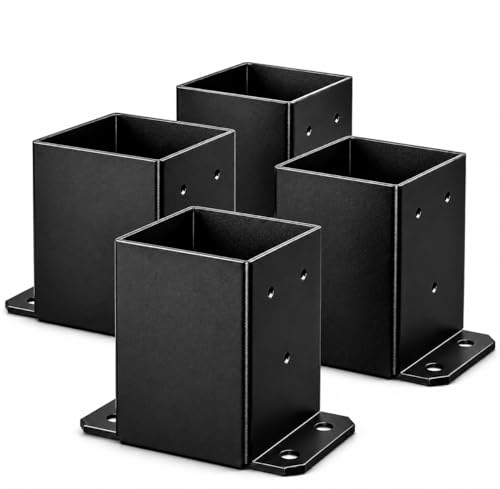
【STRONG AND STURDY】-Made from Q235 Steel,black powder-coat for rust-resistant and sturdy enough,Product Size: 6.8 x 5.6 x 3.8"

Proudly Made in USA: This 4x4 post base bracket Made in USA measures 6 x 6 x 2.5 inches, offering a perfect fit for your wood post projects while ensuring superior strength and durability as a reliable 4x4 post anchor and deck post base.
Execute Clean, Straight Cuts
Achieving a professional-quality cut on your 4×4 post requires precision from the moment you mark your lines. Your saw techniques matter considerably—keep the saw base flat against the post and maintain steady pressure throughout the cut. For circular saws, cut halfway through, then flip the post to complete the cut from the opposite side. If you can’t reach full depth, finish with a reciprocating saw. Alignment tips include using a cutting jig or clamped speed square as a fence to guide your blade straight. Take time with each pass, ensuring you’re following your marked line accurately. Don’t rush; steady, controlled cuts produce superior results and minimize splinters. Once your posts are cut to length, they should be securely installed at key points such as corners and stairways to create a structurally sound railing foundation. Proper railing post cuts work in conjunction with ledger board installation and other structural elements to ensure your deck meets building code requirements for safety and durability.
Drill Pilot Holes Before Fastening
Pre-drilling pilot holes is crucial before you fasten your railing components to the 4×4 posts. This practice offers significant pilot hole benefits: it eases the bolting process, reduces resistance when driving screws through dense lumber, and prevents wood splitting around connection points. You’ll also achieve proper alignment of railing components and create cleaner, more professional-looking installations.
For drilling techniques, select a 3/16″ drill bit for standard anchor screw applications—slightly smaller than your screw diameter. Use high-speed drill settings when boring through pressure-treated lumber to prevent binding and overheating. Center and level the bit to your marked location before applying pressure. Drill approximately halfway through the post, then complete from the opposite side. This two-step approach guarantees accuracy and perpendicular fastening. Properly spaced posts, typically no more than 8 feet apart, ensure your railing assembly maintains the structural integrity needed to support significant loads. Maintaining appropriate joist spacing requirements between support posts is equally important for long-term deck durability and safety.
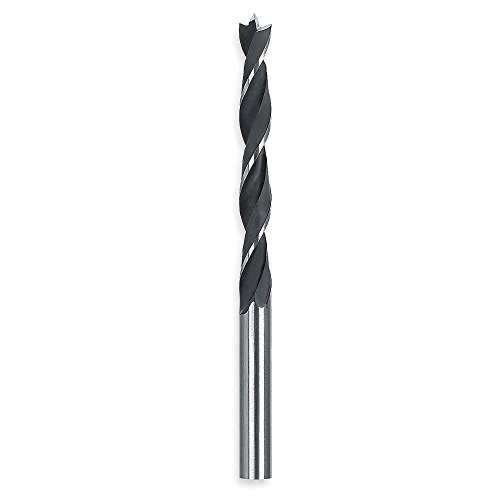
Precise cutting edges to reduce splintering

High-speed steel tools are good for most general purpose applications, offering a combination of hardness and toughness for wear resistance

PRECISION STARTS, NO WANDERING: The sharp, precision-ground brad point tip on this 3/16 In. bit bites into wood on contact. This prevents bit wandering, ensuring your holes are placed exactly where intended, a critical need for custom woodworking and assembly.
Create Notches for Stairs and Corners
After you’ve drilled your pilot holes, you’ll need to create notches where your 4×4 posts meet stairs and deck corners. Start by measuring and marking notch depth to match your decking thickness and stair stringers precisely. Use a square to draw clear, perpendicular lines on all post sides.
Cut multiple parallel lines with a circular saw within your marked outline, then chisel away the waste material for a snug fit. Remember that notch depth shouldn’t exceed one-third of the post’s cross-section to maintain structural integrity. Proper joist spacing on center ensures your deck framework can adequately support the loads transferred through notched posts and railings.
When marking, consider baluster aesthetics and code compliance by planning railing component placement around the notched section. Test fit your post before final fastening, adjusting incrementally if needed. Ensure good ventilation under the deck to prevent moisture damage and warping that could compromise your railing system’s longevity. This careful approach guarantees proper load transfer and alignment for your deck railing system.
Treat Cut Ends With Wood Preservative
Once you’ve notched your posts and test-fit them into place, you’ll need to treat all exposed cut ends with wood preservative before final installation. Choose from water-based copper azole or oil-based preservatives like Penofin, depending on your climate and maintenance preferences. Specialized cut-end sealers work well for pressure-treated posts. Apply your chosen preservative using a brush, saturating all exposed end grain surfaces thoroughly. For highly exposed locations, consider multiple coats. Allow adequate drying time before assembly, especially with oil-based products. This treatment prevents moisture absorption, fungal decay, and insect damage—critical for extending your railing’s lifespan. Oil-based options require reapplication every 1-2 years to maintain protection. Proper end-grain sealing protects your investment and guarantees structural integrity.

Ready-to-Use Copper Naphthenate 17% (contains 2% copper as metal), meets the AWPA M4 Standard

It is easy to use

Formulated to increase wood’s durability and enhance its resistance to weathering and aging.
Position and Temporarily Support Posts
Proper positioning of your 4×4 posts determines whether your railing will meet code requirements and function safely for years to come. Start by placing the post on the interior face of the rim joist, flush with the outside edge. Use a 4-foot level to check plumb in both directions, adjusting with treated-lumber shims as needed.
For temporary support, clamp the post using squeeze clamps positioned away from through-bolt locations. Attach a scrap 2×4 beneath the joist with screws for additional stability during installation. Recheck plumb after clamping and confirm the post remains vertical. Verify center-to-center spacing matches your railing system’s requirements—typically 52 7/8 inches. Measure all distances to ascertain even spacing and code compliance before permanent attachment. Protecting your posts from moisture damage during and after installation will help maintain their structural integrity. Ensuring proper surface preparation of the deck structure underneath will help guarantee the longevity and stability of your railing installation.
Secure Posts to Deck Structure Permanently
With your posts positioned and temporarily supported, you’re ready to secure them permanently to your deck structure using through-bolts. Start by marking anchor holes: position the first hole 2 inches down from the blocking top and 1 inch from the joist intersection. Mark the second hole 2 inches up from the blocking bottom and 1¾ inches from the joist. Use a 5/8-inch drill bit to bore holes completely through blocking, post, and rim joist, ensuring perpendicular drilling for maximum strength. Your fastener selection should include 1/2-inch by 8-inch hot-dipped galvanized hex bolts positioned at 1¾ inches from floor joist edges for ideal load distribution. Pre-drilling holes helps prevent wood splitting and ensures a secure connection that can withstand the required 200-pound loads at the top of your handrail. To ensure a flawless fit where your railing connects to the deck, consider using post-sized templates to mark and cut any deck boards that need to fit around your posts. Tighten nuts with a 3/4-inch socket, then verify post plumb before final securing.

Single Size: The drill bits include 4pcs 5/8" drills. If you have specific drilling size requirements, then the drill bit is very suitable for you

【Premium Large Size】5/8 Inch Reduced Shank Drill Bit featuring a 1/2" universal 3-Flat Shank. Compatible with all drill presses and most power tools.

Premium HSS Construction with Dual Coating: Crafted from industrial-grade high-speed steel, this drill bit delivers exceptional durability and wear resistance, outperforming standard bits when drilling hard materials