How to Properly Install Pergola Posts: A DIY Guide
You’ll start by marking post locations using the 3-4-5 triangle method, then excavate footings to your local frost line depth. Add compacted gravel and set 16×16 inch concrete footings for stability. Anchor posts with heavy-duty screw anchors and galvanized bolts. Measure twice, cut precisely, and apply preservative treatment before installation. Use temporary braces to keep posts plumb while concrete cures. Finally, tighten lag bolts in a cross pattern and verify all alignment. Each step builds toward a structurally sound pergola that’ll last for decades.
Planning and Layout of Pergola Posts
Before you dig a single hole, you’ll need to carefully plan your pergola’s footprint and post positions to guarantee structural integrity and visual balance. Start by selecting your location based on intended use—whether you’re creating shade near the house or establishing a garden centerpiece. Check local zoning laws and HOA regulations regarding setbacks before proceeding. Verify whether your pergola requires a permit based on size by consulting your local building department, as structures over 120 square feet or taller than 8 feet typically need formal approval. Additionally, be aware that attached pergolas or those with utilities almost always require permits regardless of size.
Use the 3-4-5 triangle method to establish precise right angles. Mark post locations with stakes, maintaining equidistant spacing for symmetrical post orientation. Establish string lines between stakes for alignment verification. Double-check diagonal measurements for squareness before digging.
Consider aesthetic considerations like sight lines and landscape features. Avoid obstructing pathways, utilities, and views while accounting for sun exposure and wind direction. Plan furniture placement strategically to maximize usable space around your posts.
Excavation and Foundation Footings
Once you’ve marked your post locations and verified your layout’s accuracy, you’re ready to begin excavation and establish proper foundation footings. Start by determining the correct footing depth based on your local frost line—typically 36–48 inches in cold climates or 18–24 inches in warmer regions. Consult your building codes for specific requirements. Before beginning excavation, verify whether your pergola requires a full construction permit based on its size and features. Use a post hole digger or auger to excavate holes slightly wider than your posts. Prioritize excavation safety by wearing proper equipment and checking for underground utilities beforehand. Remove loose debris from each hole’s bottom, maintaining consistent depth across all locations.
Add 2–4 inches of compacted gravel to promote drainage and prevent settling. For a 6×6 post, a common concrete footing size of approximately 16 inches by 16 inches square will provide adequate support and stability. Use sonotubes for uniform concrete piers, then pour concrete in layers, eliminating air pockets. Reinforce with rebar if required, ensuring level surfaces before curing. Securely anchor the posts to the footing using post anchors or saddles to ensure proper load transfer and prevent wobbling or structural failure.
Installing Post Bases on Concrete or Footings
With your concrete footings cured and ready, you’ll now install the post bases that’ll anchor your pergola structure to the foundation. Start by positioning each base at your marked corner locations, then temporarily move them aside to drill anchor holes. Use a hammer drill with carbide-tipped bits, drilling 1/4 inch deeper than your anchor specifications require. Insert heavy-duty screw anchors—such as Simpson Strong-Tie products—and tighten them securely with appropriate wrenches until no play remains. Reposition your post bases over the installed anchors and secure them using galvanized bolts with standoff hardware to prevent direct wood-to-concrete contact. Tighten all fasteners thoroughly. For long-term durability, consider applying natural vinegar cleaning solutions periodically to remove mineral deposits and corrosion from your metal fasteners and hardware. Securely anchored posts are essential to ensure your pergola can properly support the weight of the roof material you’ll eventually install. These installation techniques guarantee your bases remain immobile, creating a stable foundation for your entire pergola structure.

【FIT NOMINAL 4X4 WOOD POSTS】Designed for nominal 4x4 wood posts (actual 3.5" x 3.5" on market). Measure your post before ordering. Fits existing concrete

【FIT NOMINAL 6X6 WOOD POSTS】 Designed for nominal 6x6 wood posts (actual 5.5" x 5.5" on market), it provides a snug, gap-free fit and can be easily installed on existing concrete or wood decks

Heavy Duty Galvanized Steel: This 6x6 post base made from thick galvanized steel for reliable outdoor support. The rust-resistant coating helps protect the 6x6 post base from weather exposure, making it suitable for concrete foundations, decks, patios, pergolas, and gazebos.
Measuring, Cutting, and Preparing Pergola Posts
Now that your post bases are securely anchored to the concrete footings, you’re ready to measure, cut, and prepare the pergola posts themselves. Start by measuring each post twice before cutting—accuracy prevents costly mistakes. Account for post depth when determining overall length, ensuring posts extend fully into their bases. Make height adjustments based on your pergola’s design and local building codes requiring minimum 8-foot clearance.
Use a circular or miter saw for clean, straight cuts. Sand all edges to eliminate splinters and improve the finish. Label each cut post with its location to avoid confusion during assembly. Ensuring posts are plumb and level on all sides during preparation helps facilitate easier installation later.
For wooden posts, apply preservative treatment to prevent rot, especially for in-ground installations. Drill pilot holes for bolts or screws if using rafter clips or joist hangers to securely connect posts to your ledger board. Store prepared posts in a dry area until installation to prevent warping.

Re-Treat decaying posts the DIY friendly way with Post Proservative. No special tools required-just a power drill and Post Proservative.

Premium 2.5mm Reinforced Steel Construction:Crafted from upgraded 2.5mm thick galvanized steel (thicker and stronger than standard 2mm market brackets), these pergola brackets deliver enhanced structural integrity and long-term durability. The extended 5.9-inch design provides greater support surface and improved weight distribution, ensuring a more stable and secure pergola structure for heavy-duty outdoor projects.
Re-Treat decaying posts the DIY friendly way with Post Proservative. No special tools required-just a power drill and Post Proservative.
Raising, Plumbing, and Bracing Pergola Posts
Your prepared posts are ready for installation, and the foundation work you’ve completed provides the structural base for successful vertical alignment. You’ll achieve post stability by using a spirit level to guarantee perfect vertical positioning during placement. Wooden braces attached at 90-degree angles from the post base stabilize posts while concrete sets. Position two wooden stakes 6 feet from the post base and 90 degrees apart to create dual bracing points. Attach spare 2×4 lumber with single nails to these stakes, allowing post adjustment flexibility. These bracing techniques prevent shifting during the critical concrete curing period. You’ll keep temporary bracing in place until concrete fully cures and permanent fastening hardware secures posts to bases, such as heavy-duty post base brackets that provide essential structural support. Regular level and square checks throughout installation prevent alignment errors from compounding. For outdoor installations, consider applying fabric water repellency treatments to any fabric components near your pergola to protect them from moisture damage.
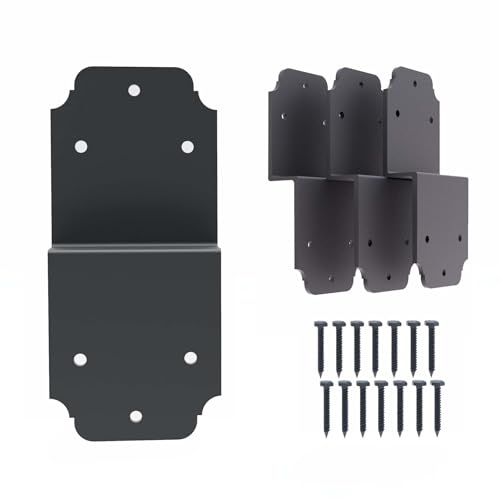
【Durable and Long-Lasting】Made from heavy-duty steel, these Z brackets are built to last and withstand heavy loads, making them perfect for a variety of repair and construction projects,our Z brackets provide reliable reinforcement and support, ensuring safety and stability for your projects.

Superior Quality Materials: This 4x4 pergola brackets feature a 90° right angle gusset plate design and weather-proof performance and a stable frame,so you do not have to worry about the attack and damage to storms and wind.

Engineered for USA Climates – ORIGLE 4x4 post brackets feature heavy-duty, corrosion-resistant steel with a premium black powder coating, ideal for pergolas, deer stand brackets 4x4, and gazebo kits in high-wind or heavy snow regions.
Verifying Level and Height Alignment
Before installing pergola posts, you’ll need to verify that your site provides a level foundation and that post positions align with your planned structure. Use a bubble level or laser level to measure multiple points across your intended pergola footprint. If ground slope exceeds two degrees, you’ll need leveling work before proceeding. Gentle slopes under 10% are manageable with minor adjustments involving digging high spots, filling low areas, and compacting soil.
For post alignment, mark each location using tape measures and string. Measure diagonals from corner to corner—equal lengths confirm squareness. Employ the 3-4-5 triangle method to establish right angles, using string and batter boards as reference lines. Check each post for vertical alignment with a 48″ level, using temporary wooden braces for support. Recheck alignment after securing posts to guarantee structural integrity. Ensure all post openings comply with local building codes for safety requirements. When attaching posts to existing deck structures, ensure you use heavy-duty lag bolts that are at least 2.5 inches long to resist wind loads and provide lasting durability.
Tightening Hardware and Connections
Once you’ve verified post alignment and secured them with temporary bracing, you’ll need to focus on tightening hardware and connections that’ll bear the pergola’s weight and weather exposure. Employ gradual tightening techniques to avoid over-torquing, which can damage wood or hardware. Tighten bolts and screws incrementally in a cross pattern, distributing pressure evenly across all fasteners. Match fastener size to lumber thickness and bracket specifications—typically 5½” screws for 6×6 posts. Consult manufacturer instructions for precise torque specifications and recommended fastener patterns. Use multiple fasteners per bracket for redundancy and strength. For added protection, consider applying water-resistant fabrics or weatherproof coatings to exposed wood surfaces to enhance durability. Before final tightening, verify all bracket holes align perfectly with post and base holes. To protect your investment from the elements, ensure fasteners are corrosion-resistant, as UV rays and moisture exposure can degrade standard hardware over time. Check connections frequently during initial settling, re-tightening as needed to maintain structural integrity.
Final Checks and Adjustments
After you’ve tightened all hardware and connections, it’s time to systematically verify that your pergola posts meet alignment, structural, and regulatory standards before proceeding to frame assembly. Check post plumbness with a level, guaranteeing vertical alignment and horizontal alignment across all post tops. Inspect foundation integrity and confirm post stability by verifying secure anchoring in concrete footings or metal bases. Examine posts for splits, warps, or damage, and guarantee all hardware surfaces are smooth and safe. Step back to assess overall symmetry and spacing within the pergola footprint. Verify code compliance with local building codes regarding depth, spacing, and material requirements. Confirm protective finishes have been applied and drainage systems prevent water accumulation around footings, guaranteeing long-term durability and structural integrity. Remember that permits may be required depending on your location before installation, so verify local regulations have been satisfied throughout your project. Most jurisdictions charge a typical permit fee of $60 to $150, though some cities may not require permits for pergolas at all.