Proper Footing Size for 6×6 Pergola Posts: A Guide
You’ll need to size your 6×6 post footings based on three critical factors: local frost line depth, soil bearing capacity, and structural loads. Standard square footings measure 16 by 16 inches with 12-inch diameter stems, extending 7–12 inches deep. However, you must dig below your region’s frost line—typically 3–8 feet in cold climates. Consider soil type: clay requires deeper footings than sandy soils. Wind and snow loads demand additional reinforcement. Local building codes vary considerably, so verify permit requirements before construction begins. The complete specifications follow below.
Standard Footing Dimensions for 6×6 Posts
For a 6×6 pergola post, you’ll typically need a square footing measuring 16 inches by 16 inches with a 12-inch diameter stem, or a cylindrical footing with an 18-inch minimum diameter. These standard footing types provide approximately 1.33 square feet of bearing area, suitable for most residential applications.
Footing depth typically ranges from 7 to 12 inches, depending on local codes and soil conditions. You’ll want to ascertain your footing extends below the frost line in your region to prevent heaving and structural movement. When installing your pergola structure, ensure proper baluster spacing principles are applied to any railing components you may incorporate.
When considering footing reinforcement options, incorporate rebar or wire mesh to increase concrete strength and prevent cracking. Position your 6×6 post at the center of the footing using approved post anchors. Always verify specific requirements with your local building authority before construction begins.
For additional structural integrity in your pergola assembly, ensure proper placement to allow for thermal expansion of any polycarbonate roofing panels you may install on top of the posts.

6" x 6" Four-Way Pergola Brackets: This durable pergola bracket covers wooden beams, preventing them from rotting due to rainwater and harsh sunlight. It's designed for mainstream 6"x6" specifications and can accommodate actual dimensions of 5.6x5.6 in (142x142 mm) for both soft and hardwood.Enhanced Durability: Constructed from 2mm Carbon Steel Plates with Black Powder Coating for Corrosion Resistance. Reinforced 90° Boot Structure Prevents Breakage and Deformation, Ensuring Stability.

Sturdy Material: Pergola bracket is made of high quality carbon steel, which has excellent wear resistance, corrosion resistance, and rust resistance, effectively extending the service life of the steel support frame of the pergola kit. You can use this high-quality material frame to build a stable pergola for family gatherings.

1" STANDOFF DESIGN FOR WOOD PROTECTION: Elevates your 5.5x5.5 wood post a full 1 inch above concrete. This ventilation gap prevents moisture buildup, reduces wood rot, and extends the life of your 6x6 post base for concrete. Simple design, big impact for pergola bracket kit longevity.
Minimum Size Requirements and Specifications
Once you’ve determined your footing dimensions, you’ll need to establish the post size that’ll support your pergola’s structural demands. You’ll find that 6×6 posts (actual 5.5″ x 5.5″) represent the baseline for structural integrity across residential and commercial applications. Posts smaller than 6×6 won’t suffice unless you’re building a minimal-span structure. Your local building codes likely mandate 6×6 as the minimum for freestanding pergolas, making compliance non-negotiable. When selecting footing materials, guarantee they accommodate concrete foundations with proper depth below the frost line. Consider post spacing carefully—standard recommendations follow engineering specifications based on your region’s frost depth requirements and load-bearing calculations, particularly since unsupported beam spans typically range between 6 and 8 feet depending on wood type and thickness. Using heavy-duty post base brackets ensures your posts remain plumb and properly secured throughout the installation process. These specifications directly influence your footing’s diameter and depth, creating an integrated structural system.

Solid Steel - The post bracket of this column is made of 2.0 mm thickness solid steel. Black premium powder coating. Absolutely rustproof.

✅ HEAVY-DUTY 10,000 LB CAPACITY – Reinforced 3.5mm thick post bracket supports 5x more weight than ordinary non-reinforced bases
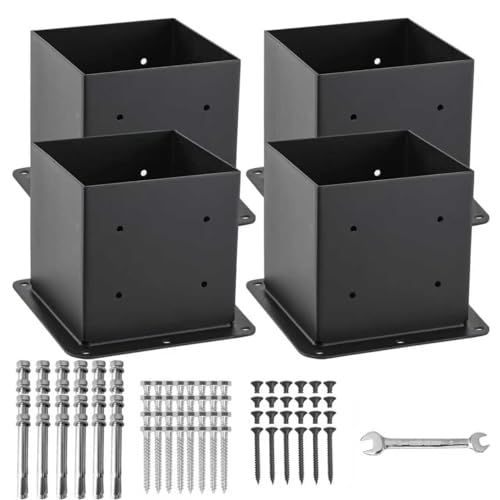
Material Of 6x6 Post Base: Made of Solid Steel, Black Powder Coated, Rustproof and Strong.
Load Capacity and Structural Strength
Because your pergola’s structural integrity depends entirely on how well its posts handle both vertical and lateral forces, you’ll need to match post size to your specific load conditions. Six-by-six posts provide robust load distribution for medium to large pergolas, while eight-by-eight posts handle oversized structures or high wind and snow loads. Post bases like the Sage-B 6×6, rated for 4,945 lbs of downward capacity, guarantee secure concrete attachment. Galvanized steel connectors enhance durability and structural stability in outdoor environments. Heavy-duty fasteners—such as ¼” x 1.5″ lag screws—maintain integrity under load. Built-in standoffs prevent wood rot while preserving capacity. When paired with 6×6 beam spans of 12 to 18 feet, properly sized posts ensure your pergola can safely distribute loads across the entire structure. Like deck railings that require proper spacing for safety, pergolas must adhere to local building codes and structural guidelines. Proper installation and base alignment are critical for ideal load distribution and long-term structural stability.
Soil Bearing Capacity and Limitations
Your pergola’s footing dimensions depend entirely on your soil’s load-bearing value (LBV)—the maximum weight per unit area that the ground can support without failure or excessive settlement. Undisturbed soils typically range from 1,500 to 4,000 psi, but soil types vary greatly. Clay expands when wet and demands deeper footings beyond 3 feet, while sandy soils require only 1.5 to 2 feet. Loam soils support standard 2-3 foot depths. Problematic soil types—organic silt, peat, or unprepared fill—necessitate structural engineering evaluation and reinforced concrete footings with rebar. Foundation stability hinges on proper soil testing, bearing capacity analysis, and compaction. Weak soils may require alternative solutions like screw piles or continuous slabs to prevent settling and shifting under your pergola’s load. Just as a pergola’s ledger board must be firmly anchored to the house structure to prevent shifting, your footing system must be equally secure to support the entire weight of the posts and rafters. Additionally, depending on your pergola’s size and design, you may need to verify building permit requirements with your local council before installation begins.

HEAVY-DUTY STEEL MATERIAL: The fence post holder bracket is made of 201 Stainless Steel plate and Φ5/8" threaded steel, The bottom of the bracket is processed with thickened (1/6") steel, The threaded steel post penetrates the steel plate for seamless welding, Strictly in accordance with engineering design specifications The surface is made of black powder coating, Which is waterproof and rust-proof, Provide a beautiful and stable and safe solution for the construction of your base

✅ Designed for 8x8 Posts – Precision-fit for true 8x8 nominal posts; adjustable inner base fits posts from 7.25" to 8.25"wide (inside dimensions) for a secure, professional installation.

【Premium Anti-Rust & Anti-Corrosion Construction】Made of thickened heavy-duty stainless steel with a durable black powder coating, this post base bracket resists rust and corrosion. Expert welding ensures a sturdy, long-lasting hold even in harsh outdoor conditions.
Frost Line Depth and Climate Considerations
While soil bearing capacity determines your footing’s width, frost line depth dictates how far down you’ll need to dig. The frost line represents where soil freezes during winter, and it’s critical that you extend your footings below this depth to prevent frost heave—a destructive force that shifts structures and causes cracking.
Your climate impact determines frost line depth considerably. Cold climates require footings 3–8 feet deep, while moderate zones need 2–4 feet, and warm climates may require less than one foot. Building codes mandate footings below the frost line, with 6–12 inches of additional depth for safety. Contact your local building department for your exact frost line depth, as it varies by region and elevation. Building inspectors must approve your footing depth before construction begins. Proper preparation of the soil, including cleaning and removing debris, helps ensure stable footings similar to how proper surface preparation is essential for protecting outdoor wood structures.
Regional Variations in Footing Requirements
Once you’ve determined your frost line depth and soil bearing capacity, you’ll need to consult your local building code to establish the specific footing requirements for your region. Regional soil variations and environmental considerations directly shape footing specifications across North America. Northern states typically mandate 16×16 inch or 16 inch diameter footings at 4 feet deep due to frost penetration and soil instability. Southern regions often require 16×16 inch footings at 18–36 inches deep, depending on soil composition. Midwestern codes commonly allow 12×12 inch footings for light structures. Coastal and mountainous areas demand larger or deeper footings due to softer soils, wind loads, or terrain challenges. Most municipalities reference the International Residential Code, though commercial pergolas frequently require engineered plans regardless of location. Contact your local building department for exact specifications before installation.
Installation Best Practices and Techniques
The success of your pergola installation hinges on executing proper footing and post-mounting techniques that comply with local building codes and manufacturer specifications. You’ll achieve installation accuracy by setting posts plumb using a 48-inch level before final fastening. Implement proper bracing with 1×4 lumber and stakes on multiple sides to prevent lateral movement during assembly.
Secure posts to Simpson Strong-Tie saddles using four ¼-inch by 3-inch lag screws with pilot holes to prevent splitting. Install heavy-duty screw anchors with stainless steel fasteners into concrete, ensuring concrete dust removal for maximum grip. Verify load distribution across the footing base so posts sit flush against mounting hardware. Similar to deck stair railings where posts must be plumb, pergola posts require precise vertical alignment to ensure structural stability. For regions experiencing extreme weather conditions, serious engineering may be required to ensure your pergola design meets all regulatory and safety requirements. Tighten all fasteners with impact wrenches or ratchets for consistent, reliable connections that maintain structural integrity throughout seasonal freeze-thaw cycles.

GALVANIZED FRAME SUPPORT: This 1-9/16 in. x 3-3/8 in. post‑frame saddle hanger is made from corrosion‑resistant G90 galvanized steel, providing dependable protection against rust and outdoor moisture while helping ensure lasting structural support for 2x4 wood joists in construction projects.
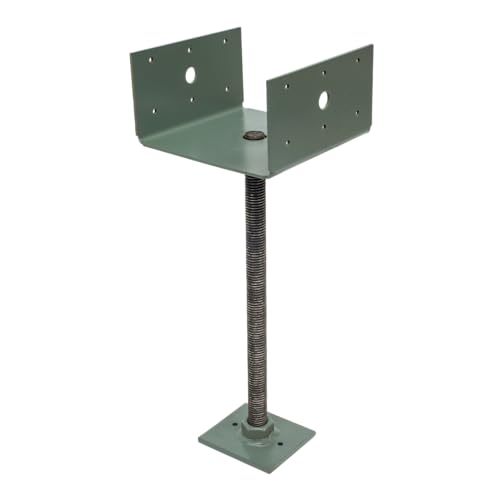
ADJUSTABLE HEIGHT PORCH BASE: This 5-1/2 in. x 5-1/2 in. porch post base supports framing throughout construction and lets you set the seat height from 4 in. to 12 in. before the slab is poured, eliminating the need for temporary supports while giving you a correct fit at pour time.
Installation prongs make setting the hanger quick and easy
Pergola Span and Post Size Guidelines
Selecting appropriate post dimensions and beam spans directly determines your pergola’s structural performance and compliance with load-bearing requirements. You’ll find that 6.5×6.5 inch posts represent the residential standard, capable of spanning 16 feet on-center width before requiring additional post installation. For beam and rafter selection, you can achieve maximum spans of 16 feet with 2×6 lumber or 22 feet with 2×8 lumber, depending on your post material and design complexity. For longer spans exceeding 20 feet, engineered lumber options like LVL provide superior load-bearing capacity compared to standard dimensional lumber. Your post material choice—whether wood, vinyl, or composite—affects both structural capacity and pergola aesthetics. Ensuring posts are securely anchored in concrete will provide the foundational stability necessary for your pergola to withstand environmental loads and maintain long-term durability. You should maintain rafter spacing between several inches to 16 inches apart to balance shade provision with visual appeal. These guidelines guarantee your pergola maintains adequate structural stability while achieving desired aesthetic qualities and functional performance.
Wind and Snow Load Adjustments
Because wind and snow loads vary dramatically across geographic regions, you’ll need to adjust your footing specifications beyond the standard 12-inch depth and 16-inch square dimensions established for moderate climates. High wind load areas demand deeper footings and reinforced post anchoring to resist lateral forces. Similarly, heavy snow regions require snow reinforcement through upgraded 8×8 posts paired with proportionally larger footings. You’ll find that post spacing greatly influences your footing design—closer spacing reduces individual post loads. Windy conditions combined with substantial snow accumulation necessitate thorough structural reinforcement throughout your pergola system. Footings should ideally extend below the local frost line to prevent shifting during freeze-thaw cycles in cold climates. A well-designed pergola with proper footings provides year-round usability even in challenging climates. Consult your local building code department, which specifies minimum depth requirements accounting for your regional wind and snow conditions. These adjustments guarantee your footing adequately handles combined environmental stresses year-round.
Local Building Codes and Professional Consultation
Before you break ground on your pergola project, you’ll need to navigate local building codes and permitting requirements that vary considerably by jurisdiction. You’ll likely need a building permit if your structure exceeds local thresholds—typically 100–120 square feet or 8–10 feet in height. Attached pergolas or those with electrical components require permits regardless of size.
Your building permit application must include site plans showing property lines, setbacks, and the pergola’s location with a north arrow and scale. Construction drawings should specify dimensions, materials, foundation type, and connection methods.
Code compliance demands professional consultation, especially for complex designs. Local building inspectors review your plans before construction begins, and structural engineers may be required for larger projects. Final inspections confirm your structure meets all local code requirements and safety standards.