The Ideal Angle for Installing Deck Stair Railings
You’ll match your deck stair railing angle between 30 and 37 degrees to your staircase’s slope—this critical measurement directly determines both safety compliance and structural integrity. The angle mirrors your stair design’s rise and run, guaranteeing comfortable gripping and proper load-bearing capacity. You’ll need a speed square or angle finder for accurate measurements, taking readings on tread surfaces. Verify measurements using rise-run calculations before cutting. Building inspectors verify these angles during inspections. Understanding how to calculate miter joints and post spacing based on your specific angle will guarantee a professional installation.
Understanding the Standard Angle Range for Deck Stairs
When you’re installing deck stair railings, the angle you choose isn’t arbitrary—it’s a critical measurement that typically falls between 30 to 37 degrees. This rail angle variations depend directly on your stair design considerations, particularly the rise and run of your steps.
The railing angle mirrors your staircase slope, guaranteeing comfortable gripping throughout descent and ascent. You’ll find that steeper stairs demand steeper rail angles, while gentler slopes require more moderate angles. This relationship between stair geometry and rail angle prevents awkward hand positioning that could compromise safety.
Vertical measurement remains essential for accuracy during installation. You must take measurements perpendicular to the stair tread nosing, never at an angle or from the step’s side. Precise calculations based on your specific rise-to-run ratio guarantee code compliance and peak functionality.
Why Proper Angle Measurement Matters for Safety and Compliance
Understanding the correct angle for your deck stair railings sets the foundation for safety, but that precision means nothing without proper measurement techniques that align with building codes and structural requirements. Angle measurement importance directly impacts your railing’s load-bearing capacity and overall structural integrity. When you measure angles inconsistently, you create hazardous height variations that increase trip and fall risks throughout your staircase.
Your angle measurements guarantee compliance with IRC standards requiring 34-38 inch railing heights measured vertically from stair nosing. Improper angles compromise the entire system’s ability to withstand 200 pounds of force applied at the top edge. Safety compliance protects you from liability exposure, fines, and potential insurance coverage voids. Building inspectors verify your angle measurements during final inspection, confirming adherence to International Building Code standards and local amendments. The openings in your railing system must not allow a 4-inch diameter sphere to pass through to ensure child safety. These height requirements are based on International Residential Code guidelines designed to prevent accidental falls and minimize the risk of children climbing over the top rail.
Tools and Techniques for Measuring the Rake Angle
Precision in rake angle measurement separates compliant installations from costly rework and safety violations. You’ll need specific tools to capture accurate angle measurements for your stair railings. A speed square provides direct angle readings on tread surfaces, while an angle finder tool delivers quick, precise results. You should also employ a level to establish consistent horizontal references throughout your installation techniques.
Transfer your measured angle to a scrap board before cutting posts or handrails. Align a straight edge along tread nosings to establish the rake angle clearly. Mark where the rail intersects the post face. Double-check all measurements using a secondary method—calculate using rise and run if needed. This verification step prevents installation errors and guarantees your railing meets code requirements while maintaining structural integrity. Before final installation, verify that posts are securely installed at corners and stairways to support the angled railing system. Proper structural integrity through accurate measurements ensures your deck railings will safely support lateral loads and resist wind forces over time.

VERSATILE 3-IN-1 DIGITAL ANGLE FINDER: Measure inside and outside angles, lengths, and calculate miter saw cut angles with precision

Clear Guide Lines for accurate drilling: This cable railing angle drill guide has been upgraded with black scales in two directions, Clear guide lines can make it easy to find exact location, which can save your time and get the work done effortlessly. Package includes: 1 pc drill guide

Durable high-impact molded body for maximum strength and lasting performance
Height Requirements and Vertical Alignment Standards
Once you’ve established your rake angle and confirmed post placement, you’ll shift focus to meeting the height requirements that govern stair railing installations. Your height specifications depend on building type: residential railings require 34 to 38 inches measured vertically from the stair tread nose to handrail top, while commercial applications mandate 42 inches minimum.
For accurate measurement techniques, you’ll use a level to extend a flat plane from the stair tread nosing, measuring vertically at multiple points along the stairway. This guarantees uniform alignment and prevents gaps that could allow falls or entrapment hazards. Verify local building codes before installation, as some states like California and Washington require 42-inch residential railings. All railings must also comply with spacing requirements, such as not allowing a 4-inch sphere to pass through any opening. In Florida specifically, deck stairs must comply with IRC handrail standards which require heights between 30 to 36 inches depending on the code section. Handrails must maintain 1¼ to 2-inch diameter for proper graspability and support 200-pound load capacity in any direction.
Calculating Post Length Based on Stringer Width and Angle
To determine your post length accurately, you’ll need to calculate the diagonal distance along your stair slope rather than relying on simple vertical or horizontal measurements. Your stringer width and stair angle directly influence the final post height calculation. Measure from the bottom stair nosing to the top landing post location, following the actual slope rather than a vertical plane. This diagonal measurement accounts for both horizontal distance and vertical rise simultaneously. Once you’ve established the diagonal length, subtract end post widths to determine your inside railing distance. Local building codes will specify minimum post height requirements, but your slope-following measurement guarantees proper material coverage. Always verify field measurements before finalizing post length specifications, as actual conditions take precedence over theoretical calculations.

🔧Applications - DN Mate Swage Lag Screw System is made of T316 stainless steel, helping you create or upgrade a sleek, modern and minimalist look while preserving your view. This cable deck railing hardware is suitable for straight, angled and corner sections, it is ideal for wire railing kit for decks, porches, stair railings, balcony railings and fences, creating stylish indoor and outdoor wood post cable railing systems that enhance your living space.


30° Angled-Hole Cable Railing Post: This 36" post is pre-drilled with 10 pairs of 30° angled holes, spaced 3.31 in apart. Designed for stair protection on 25°-35° inclines to help protect you and your family. Note: This upgraded version has adjusted hole quantity and spacing vs. the previous version—please verify hole positions and count when repurchasing or matching parts. Steel cable not included
Cutting Angles for Miter Joints and Corner Connections
Accurate miter joints and corner connections rely on understanding how stair angles translate into cutting angles for your railing components. You’ll calculate level miter angles by halving your stair angle, while plumb miters require dividing (90° minus stair angle) by two. For corner angle measurements, measure the actual joint angle with an angle finder—especially critical in older homes with irregular spaces. You’ll divide non-90° corners by the number of pieces; a 120° joint with two boards requires 60° per board. Before securing your connections permanently, dry-fit all parts to ensure proper alignment and spacing. Always mark cut lines on both sides and test your miter joint techniques on scrap pieces first. This systematic approach prevents gaps and guarantees seamless connections throughout your railing installation.
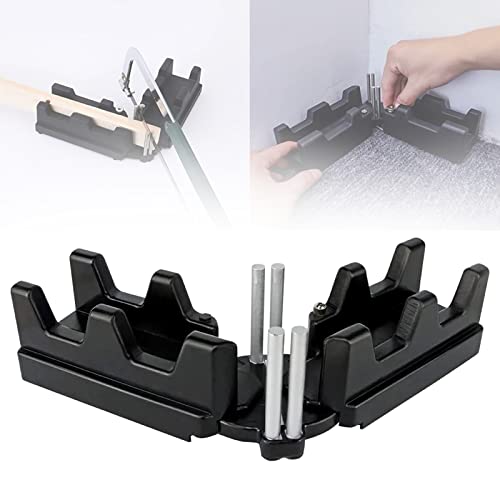
🔧 2-IN-1 MEASURING & CUTTING TOOL – Combines angle measurement and cutting in a single device. Eliminates the need for multiple tools and avoids errors when transferring angles to the saw. A must-have for efficient woodworking.
Used Book in Good Condition
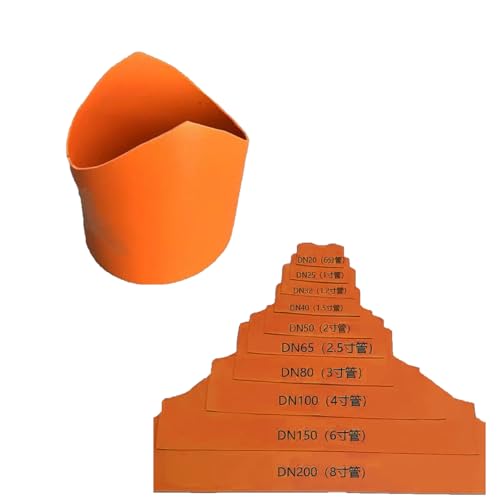
Accurate Pipe Marking Every Time: Designed to deliver consistent marking across pipes of different substances, this tool simplifies accurate arc edge contour cuts while excelling in miter cut applications.
Using Angle Adaptor Wedges and Bracket Systems
While precise miter cuts guarantee your rail components fit together cleanly, angle adaptor wedges and bracket systems offer a more direct solution for managing the slopes you’ll encounter on staircase installations. You’ll find 45° and 22.5° adaptor wedges available in multiple colors, each sold in sets of two with mounting screws included. Locating pins integrated into the adaptor design facilitate easier connection with straight rail brackets. For angle adaptation on 45° rail angles, you’ll need cap rail wedges cut to specific measurements (1-3/4″ from post to wide edge). Bracket compatibility remains critical—stair connectors attach directly to adaptor wedges using provided screws, with holes aligning precisely for proper integration. This system eliminates complex cutting while maintaining your required 36-inch railing height. Proper rail support also depends on understanding beam span capabilities to ensure your structural posts are adequately spaced for the loads they’ll bear. After installation, protect your railing components by applying gentle cleaning methods regularly to maintain their appearance and durability.

Compatible with Deckorators Grab and Go Classic Composite rail system

QUALITY DESIGN: Stair deck railing bracket connector fit standard 2"x4" (Actually 1.5"x3.5") Wood deck railing, Can be installed in the 45 ° oblique angle of the deck railing stairs, concealed stair railing bracket closely fit with the wooden Post connection, Beautiful and Solid

【Application】This handrail connector sleeve is not only designed for BLIKA BL01-T flat handrails, but are also compatible with other brands' metal cable railing handrails. This 45 degree sleeve joins together two cable railing segments at 45 degrees. The sleeve fits over the top of the straight handrail.
Determining Post-to-Post Spacing and Rail Length
Once you’ve finalized your adaptor wedge selections and bracket systems, you’ll need to determine precise post-to-post spacing and calculate the rail length required for your stair installation. For wood systems, standard post spacing is 6 feet on center for 4×4 posts, though 6×6 posts can extend to 8 feet. Cable railing systems require tighter spacing at 4 feet on center to maintain proper tension. Rail length is calculated by measuring the diagonal distance along your stair stringer, accounting for each tread and riser combination. You must also factor in overhang extensions at landings. Connecticut building codes require stair guards at a minimum of 34 inches measured vertically from the nosing of the tread. To ensure your railing system remains protective and visually appealing over time, consider the durability of materials, as deck stain typically lasts between 1 to 5 years depending on the type and environmental exposure. Always verify your specific post spacing and rail length calculations comply with local building codes before proceeding with installation.
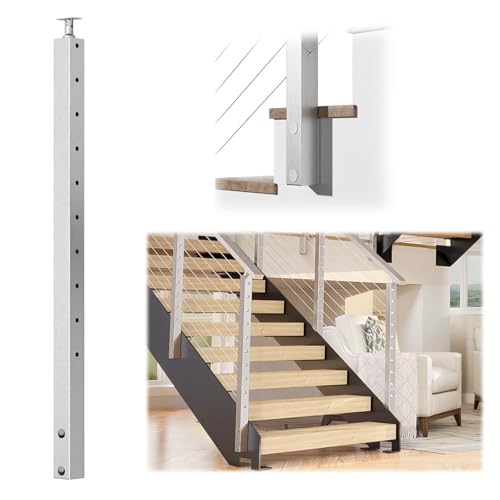
Universal for left&right stairs: This side mounted 36" square post (brushed finish) is specially designed to be installed against staircases of BOTH sides. It is pre-drilled with 10 pairs of 30 degrees angled holes to work on 25 to 35 degrees stair sections. With this multi-functional post, you can install stair posts without distinguishing between right and left ones

Versatile Cable Tensioning: This black deck railing hardware kit is specifically designed for 1/8 inch diameter cable railing systems, the lag screws could be drilled into wood to adjust the tightness without extra turnbuckle or tensioner. The left and right thread ensure that cables rotate in the same direction, preventing any twisting or damage, providing a smooth and secure cable railing installation.

Common Mistakes to Avoid When Installing Stair Railings
Now that you’ve calculated your post-to-post spacing and rail length, you’ll want to sidestep the installation errors that commonly undermine these calculations and compromise your railing’s structural integrity. The most critical construction errors stem from inaccurate measurements—always measure twice before cutting materials. Weak post anchoring represents another significant risk; ascertain newel posts are secured with pilot holes and proper blocking underneath. You’ll also encounter problems selecting incompatible fasteners that corrode or weaken over time. Don’t skip manufacturer instructions, as each aluminum system has specific guidelines that prevent structural failures and warranty voidification. Ensure your posts can withstand the 200 pounds of lateral force required by building codes to maintain safety standards. Remember that deck posts must be set in footings with a minimum depth of 36 inches to provide adequate support and stability. Finally, verify your installation meets local building codes, including handrail height between 34-38 inches, baluster spacing under 4 inches, and uniform stair rise of approximately 7 inches. These safeguards protect both compliance and safety.