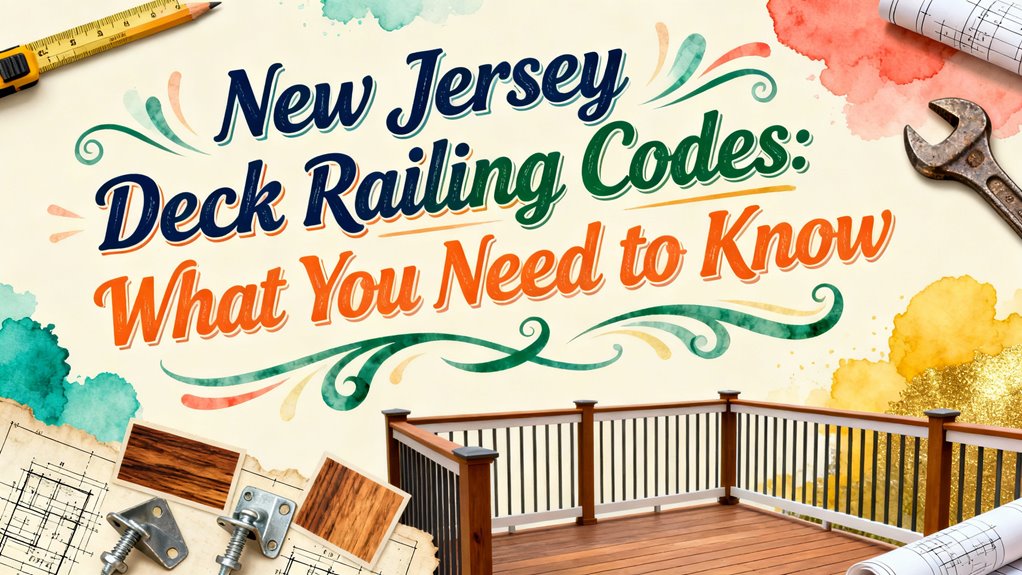
New Jersey Deck Railing Codes: What You Need to Know
You’ll need to install 36-inch minimum guardrails on decks 30 inches or higher above grade. Your top rails must withstand 200-pound loads applied vertically and horizontally. Space vertical balusters no more than 4 inches on-center to prevent a 4-inch sphere from passing through. Posts should be 4×4 minimum, spaced within 8 feet of each other. Handrails on stairs with four or more risers must be positioned 34-38 inches above treads. You’re required to obtain building permits and pass footing, framing, and final inspections before occupancy. The specifics of each requirement deserve careful attention.
Deck Height and Guardrail Requirements
When you’re planning a deck project in New Jersey, one of the first things you’ll need to determine is whether guardrails are required. The critical threshold for deck safety is 30 inches above grade. If your deck’s walking surface reaches or exceeds this height, you’ll need to install guardrails along all open sides.
Height measurement is taken vertically from the finished deck surface to the ground directly below. This straightforward calculation determines your compliance obligations. Decks below 30 inches don’t require guardrails under state regulations.
Guardrails must be at least 36 inches tall and feature balusters spaced properly to prevent a 4-inch sphere from passing through. However, local municipalities may impose additional requirements or exceptions beyond the state standard. Before finalizing your deck design, verify your specific local ordinances, as some jurisdictions enforce stricter guidelines that could affect your project planning and budget.

【Sturdy & Reliable Railings】The use of high-strength metal materials and precision welding technology, combined with waterproof and rust-resistant powder-coated surface treatment, ensures that the deck railing kit will remain stability and durability in any environment. The height of this horizontal railing is 34 inches, making it perfect for use as a deck railing, providing security for you and your family.

[Various Scenarios] Suitable for various installation scenarios, whether horizontal or on stairs, it can be achieved through the selected adjustable brackets. The package includes two types of screws: wood screws for wood decking and concrete anchors for concrete mounting. Compatible with various substrates such as wood and concrete, it meets the different requirements of decks, porches, balconies, yard, guard, fencing, exterior safety and so on.

【Multi-Mount Flexible System for Full DIY Custom Assembly】: Universal mounting brackets support three flexible installation ways: attach panels directly onto wooden deck beams, fasten firmly to solid house walls, or pair separately with our matching aluminum support posts. This systematic modular assembly framework lets you fully tailor layouts to your deck, porch, stair or balcony structure with total DIY freedom.
Understanding Load Capacity and Post Installation
Once you’ve determined that your deck requires guardrails, you’ll need to focus on the structural demands that ascertain your railing system can safely handle the forces it’ll experience. Your top rail must withstand a 200-pound uniform load applied vertically or horizontally, along with concentrated point loads at mid-span, adjacent to posts, and directly on posts during load testing.
Post spacing requirements mandate that manufactured railing posts stay within 8 feet of each other to ascertain adequate strength. Posts must measure minimum 4 inches by 4 inches and anchor securely to footings with girder attachment preventing rotation. For decks exceeding 8 feet in height, you’ll require 6-inch by 6-inch minimum column sizes. Pier footings must extend 36 inches below grade with 12-inch diameter minimum dimensions, ensuring they reach below the frost line for proper anchor stability. All railing systems must be tested and certified to comply with the International Residential Code adopted in your jurisdiction to ensure safety and structural integrity.
Baluster Spacing and Gap Specifications
With your posts and rails properly installed to handle structural loads, you’ll now need to address the spacing between balusters—a critical safety component that New Jersey code enforces rigorously. You must maintain maximum 4-inch spacing between vertical balusters to prevent child entrapment. Measure spacing on-center from the middle of one baluster to the next, then subtract baluster width to determine the clear gap. Your baluster designs must comply with the 4-inch sphere safety standard—no opening in the railing assembly can permit passage of a sphere this size. Additionally, you’ll guarantee the gap between your bottom rail and decking doesn’t exceed 4 inches. These spacing requirements are mandated by the International Residential Code to minimize fall risks and enhance occupant safety. Best practice recommends three balusters per foot of railing to achieve both safety compliance and visual appeal. These safety regulations apply consistently across all residential deck installations, protecting occupants while meeting New Jersey’s adoption of International Residential Code standards.

▼ BUILDING CODE COMPLIANCE: For 3/4" Round or 3/4"x3/4" Square balusters, the spacing will be 3-1/4" between balusters; For 1"wide facemount balusters, the spacing will be 3" between balusters. ▼ Spacing between balusters cannot exceed 4 inches.

4 Size Options in One Deck Spacer – This versatile deck board spacers tool combines four different gap sizes (5/32", 3/16", 1/4", 5/16") in a single, compact design. No need to carry multiple spacers – perfect for any decking project

Metal Stair Railing: The columns are made of high-quality and thickened wrought iron, robust construction, undergo a 180°C high-temperature baking process, and the surface coating is rust-proof, corrosion-resistant, and wear-resistant. Manufactured to meet high quality standards, built for long-term use. These columns can withstand prolonged exposure to external environments while maintaining stability.
Stair Handrail Guidelines and Measurements
Now that you’ve confirmed proper baluster spacing and railing integrity, you’ll need to focus on stair handrails—equally critical safety features that New Jersey code regulates with specific height, placement, and grip requirements.
You must install handrails between 34 and 38 inches measured from stair tread nosing. They’re required on at least one side for stairs with four or more risers and must run continuously without interruption. Your handrail materials and styles must accommodate secure gripping, typically featuring circular or elliptical cross-sections with diameters between 1.25 and 2 inches. You’ll maintain 1.5 inches clearance from adjacent walls, ensuring unobstructed hand access. Handrails must extend 12 inches beyond the top riser and one tread depth beyond the bottom. Mounting brackets must securely support 200 pounds of force in any direction, guaranteeing user safety during changes.

Large Faceplate For Secure Attachment To Wall

✨ Sleek Sturdy Support - Enhance safety and style in your home with our hand rail brackets for stairs, which are expertly crafted with both durability and aesthetics in mind, providing sturdy support to your handrails while adding a touch of elegance to your staircase!

Premium material: 3 inch Handrail brackets made from zine alloy,bright brass finish,durable,sturdiness and long-lasting use
Materials and Fastener Standards
Your handrail’s structural integrity depends entirely on the materials you select and the fasteners you use to secure it. You must use corrosion-resistant fastener types—stainless steel, hot-dipped galvanized steel, silicon bronze, or copper—to prevent rust when exposed to New Jersey’s moisture and treated lumber. Material compatibility is critical; electro-galvanized fasteners deteriorate rapidly with ACQ-treated wood, making them unsuitable choices. You’ll need joist hangers approved specifically for your lumber’s treatment type, installed with manufacturer-recommended fasteners rather than standard roofing nails. All connector holes must be fully filled with approved fasteners to maintain structural integrity. Your railing components require the same corrosion-resistant standards, particularly where they contact treated wood. Beyond fasteners, your balusters must be spaced no more than 4 inches apart to prevent a 4-inch sphere from passing through and meet safety requirements. Deck railing posts should typically be 4×4 or 6×6 lumber sized appropriately for your deck’s design to ensure proper support and stability. This careful attention to fastener types and material compatibility guarantees your handrail meets New Jersey safety codes while preventing premature degradation.

Versatile Cable Tensioning: This black deck railing hardware kit is specifically designed for 1/8 inch diameter cable railing systems, the lag screws could be drilled into wood to adjust the tightness without extra turnbuckle or tensioner. The left and right thread ensure that cables rotate in the same direction, preventing any twisting or damage, providing a smooth and secure cable railing installation.

Package Includes: you will receive 80 pack 3/16” stainless steel invisible receiver swage stud, comes with wrench, sufficient quantity provides support for the completion of your project
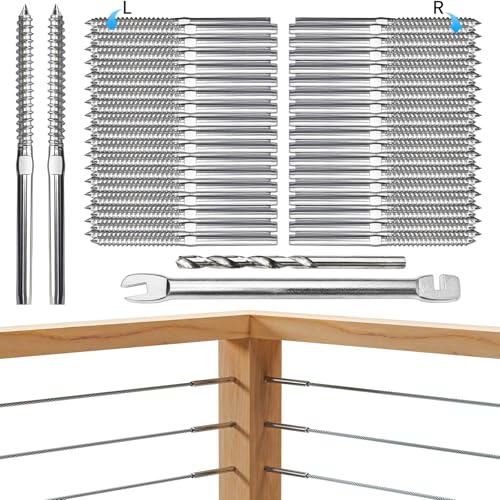
Versatile Cable Tensioning: This deck railing hardware kit is specifically designed for 1/8 inch diameter cable railing systems, these Swage Lag Screws are the ultimate solution for effortlessly adjusting cable tension. The left and right thread ensure that cables rotate in the same direction, preventing any twisting or damage, providing a smooth and secure cable railing installation.
Compliance With New Jersey Building Codes
Meeting New Jersey’s building code requirements isn’t optional—it’s a legal mandate that protects both your safety and your property’s value. You must obtain building permits and zoning approvals before constructing or replacing your deck. Submit detailed plans showing scaled site surveys, footings, framing, railings, and flashing specifications. These submissions guarantee your design meets all safety considerations, including guardrail heights of 36 inches minimum and load-bearing capacities of 200 pounds along top rails. Your deck aesthetics must align with structural standards: spacing between balusters cannot exceed 4 inches, preventing child entrapment. All beams, posts, and joists require positive connections using corrosion-resistant fasteners such as lag screws or bolts to ensure secure attachment to the structural frame. Posts should be constructed from at least 2-inch by 4-inch material and spaced appropriately to maintain structural integrity and durability. Inspections verify compliance throughout construction. This regulatory framework balances deck aesthetics with rigorous safety standards, guaranteeing your structure withstands environmental stresses and protects occupants from hazards.
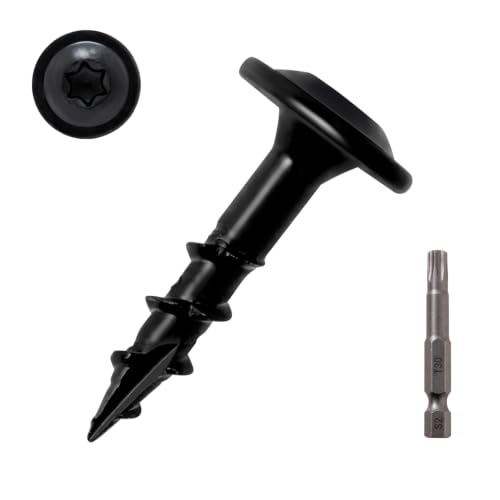
DIMENSIONS & SUPERIOR STRENGTH: Thread Diameter 0.25" - Head Diameter 0.55" - Length 1" - Use with T30 Star Bit. Crafted from heat treated steel, LIONMAX heavy duty lag screws offer unmatched strength and reliability for long-lasting woodworking projects
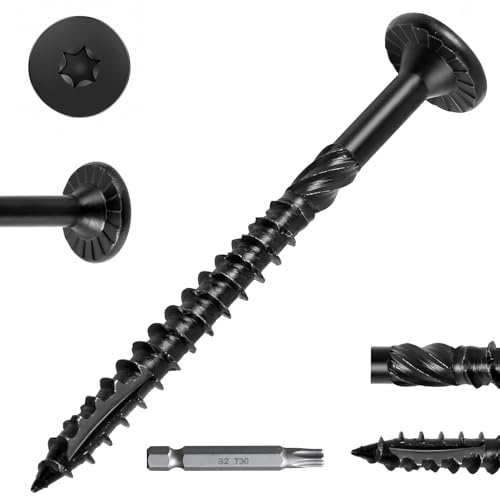
Quality Material: These Heavy-Duty wood screws are made of high-quality alloy steel and are compatible with ACQ-treated lumber. They are built to last and can withstand harsh outdoor conditions.

DIMENSIONS & SUPERIOR STRENGTH: Thread Diameter 0.25" - Head Diameter 0.55" - Length 2-1/2" - Use with T30 Star Bit. Crafted from heat treated steel, LIONMAX heavy duty lag screws offer unmatched strength and reliability for long-lasting woodworking projects
Permit and Inspection Procedures
Before you break ground on your deck project, you’ll need to navigate New Jersey’s permit and inspection framework—a structured process that guarantees your construction meets all safety and zoning requirements. You must submit your permit application to your local building department with required documentation, including surveys and scaled drawings. Inspection scheduling occurs at three critical stages: footing inspection before concrete placement, framing inspection before deck board installation, and final inspection upon completion. Each phase verifies compliance with structural codes and safety standards. Schedule inspections through your building department to avoid construction delays or penalties. Your contractor’s final payment typically remains withheld until you receive the Certificate of Approval following the final inspection, confirming full code compliance and structural integrity.