What Size Posts Do You Need for a Secure Deck Railing?
For residential decks, you’ll need 4×4 posts spaced at maximum 6-foot intervals, or 6×6 posts for 8-foot spacing and enhanced load capacity. Your posts must support 200-pound concentrated loads and 50 pounds per linear foot on top rails. Metal posts with 3-inch diameters work for 8-foot spacing if engineered properly. Height requirements demand minimum 36 inches, with 42 inches in California and Washington. Proper installation involves drilling through rim joists with 5/16″ leveling bolts and ensuring equal weight distribution. Understanding specific code requirements for your location reveals additional critical details.
Standard Post Sizes for Residential Decks
When you’re planning your deck railing, 4×4 posts are your most practical choice for residential applications, though 6×6 posts offer greater load-bearing capacity for larger or heavier systems. Both sizes are readily available in pressure-treated wood, composite, and metal materials, allowing you to match your deck aesthetics and durability requirements. Understanding nominal sizing is vital—these dimensions refer to rough-cut measurements before planing, so your actual post dimensions will be slightly smaller. You’ll find that traditional materials like pressure-treated wood remain cost-effective, while composites and metals provide enhanced longevity. To maintain your deck railing’s appearance and structural integrity over time, implement regular cleaning routines and address mildew removal promptly, as outdoor fungal growth can compromise both aesthetics and material durability. Regular maintenance such as cleaning bird droppings from your railing and surrounding surfaces will also help prevent staining and material degradation. Before finalizing your post selection, consult your local building codes, as they may mandate minimum size requirements specific to your region. This guarantees your railing meets all structural and safety standards.
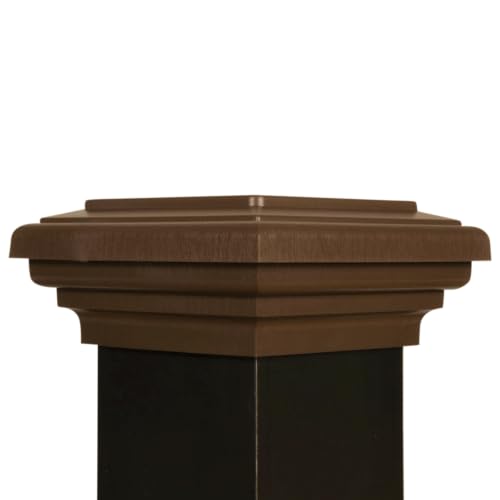
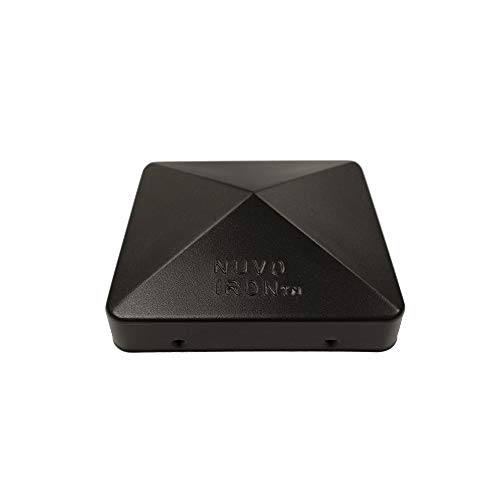
MEASURE POST Before ordering These post tops are designed to fit standard 4x4 pressure treated fence posts, these post caps fit 3.5"x 3.5 inch up to 3.75" x 3.75-inch posts and are perfect for any outdoor fence or deck project. They slide down the post 1.5 inches; their widest outside dimension is 5.5 inches. They will install on wood, composite, metal, and vinyl posts
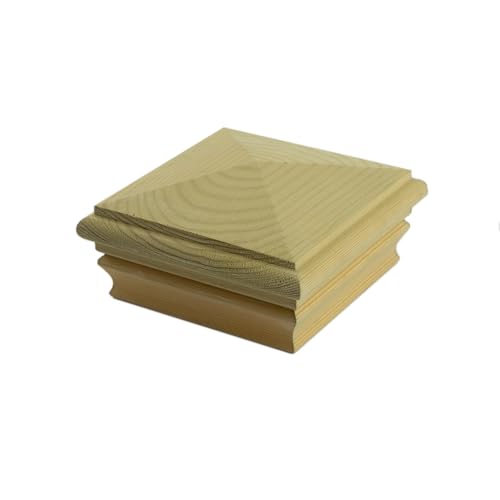
Virtually maintenance free with no painting or staining needed

Precise Fit for Standard Posts: MEASURE YOUR POST before ordering. Designed to fit standard 4x4 fence posts, these post caps fit 3.5"x 3.5 inch up to 3.75" x 3.75-inch posts for any outdoor fence or deck project. They slide down the post 1.5 inches; their widest outside dimension is 5.5 inches. They will install on wood, composite, metal, and vinyl posts
Commercial and Heavy-Duty Post Options
Commercial and heavy-duty deck railings demand considerably more robust specifications than residential installations. You’ll typically find 4×4-inch or 6×6-inch wooden posts meeting standard commercial requirements, while aluminum posts measure 3 inches in diameter with thicker walls for enhanced load capacity.
Your commercial post materials include pressure-treated wood, composite, aluminum, and steel—each selected for specific environmental conditions and durability needs. Heavy duty designs mandate posts spaced no more than 6 feet apart and capable of withstanding concentrated loads up to 200 pounds at any point. All manufactured railing posts must comply with building codes that regulate maximum spacing and load requirements. In addition to load capacity, commercial railings must meet minimum height requirements to ensure adequate protection for users.
You must secure posts using specialized connectors, through-bolts, or lag screws and obtain local building authority inspection approval. Post heights typically reach 42 inches to comply with stricter safety codes. These specifications guarantee your commercial deck maintains structural integrity and long-term performance under demanding conditions.

Stable Support: Each post base measures 5.9 x 5.7 inch, with a total of 2 pieces. The inner tube size is 5.9 x 5.55 inch, compatible with 6 x 5.5 inch, 5.5 x 5.5 inch, or 5.8 x 5.5 inch wooden posts. It provides secure and stable support without wobbling

【Ultra-Strong Material】The Deck Bracket is made of high-strength ADC-12 aluminum alloy. Designed for secure deck rail and fence connections, providing strong support that will never break.

36" Stair Cable Railing Post: Designed for 36-inch residential cable railing projects, this 2" x 2" stair post measures 35 inches high and reaches approximately 36 inches when paired with a top rail. The 33° angled hole is suitable for stair slopes from approximately 28° to 38°. A 1.35 mm post wall and thickened 4-3/8" x 2-3/4" welded base provide added support for surface-mount installation, while 10 pairs of pre-drilled holes simplify cable routing along stair sections.
Maximum Spacing Guidelines by Post Type
Post spacing directly impacts your deck railing’s structural integrity and safety compliance, varying considerably based on the material you’ve selected. Wood vs. metal posts demand different spacing strategies. Standard 4×4 wood posts require 6-foot spacing, while 6×6 posts allow up to 8 feet. Metal posts capitalize on superior strength, supporting 8-foot spacing when engineered properly for 200-lb lateral loads. Cable railing systems necessitate closer 4-foot spacing with intermediate supports to maintain tension and prevent sagging. The International Residential Code mandates maximum 6-foot spacing for wood railings in residential applications, though manufactured systems can reach 8 feet if load requirements are met. Guardrail openings must not allow passage of a 4-inch diameter sphere to prevent falls and ensure code compliance. For residential decks, guardrails must be capable of withstanding a 200-pound force applied in any direction along the top rail to meet Virginia safety standards. Post maintenance demands differ between materials—wood requires regular inspection and treatment, while metal posts offer durability with minimal upkeep, influencing your long-term spacing decisions.

【Upgraded materials】The Deck Bracket is made of Strong Nylon 6/6, contains 20% sun-proof fiberglass. Our deck railing brackets have high hardness, not easy to crack, corrosion-resistant, suitable for both indoor and outdoor.

Heavy-Duty Galvanized Steel — Built for Secure Level Connections: Made from strong galvanized steel with a protective black coating, these level railing brackets provide dependable support at key connection points while helping resist rust and corrosion outdoors. The durable finish stands up to rain, humidity, and seasonal weather and coordinates cleanly with Guwezoy railing panels, posts, gates, and accessories for a consistent, finished look.

Pre-drilled Nylon Material -- Made of high quality nylon that will never corrode or break. Thickness up to 3cm, Eapele railing connectors create a strong and effective support to the deck rail
Height Requirements for Safety Compliance
Your deck railing’s height is the most critical safety factor you’ll determine during construction. The IRC standard mandates a minimum 36-inch vertical measurement from your deck surface to the top of the rail for decks exceeding 30 inches above grade. However, California and Washington enforce stricter 42-inch requirements. You’ll measure height directly above the adjacent walking surface, ensuring compliance at all points within 36 inches horizontally to the open edge. Your railing materials must prevent a 4-inch sphere from passing through any infill openings. These height requirements are specifically designed to prevent accidental falls and minimize the risk of children climbing over the top rail. Stair railings typically require heights between 34 and 38 inches, which differ from deck railing standards and should be measured according to local building codes. Before selecting railing materials and finalizing dimensions, verify local building codes—municipalities frequently adopt additional deck safety requirements beyond baseline standards.
Load-Bearing Standards and Strength Ratings
Beyond height compliance, three critical load-bearing standards govern your deck railing’s structural integrity. Your top rail must resist a 200-pound concentrated load applied in any direction and withstand a uniform load of 50 pounds per linear foot. Infill components like balusters must support 50 pounds over one square foot.
Your load assessment determines material selection. You’ll need decay-resistant materials—pressure-treated wood, metal, or composites—with sufficient strength ratings. In coastal or high-moisture environments, corrosion-resistant fasteners become mandatory. Proper flashing and sealing prevents water infiltration and extends the lifespan of your railing components.
Post connections demand particular attention. They must transfer 200-pound loads to your deck structure using metal connector plates and bolts with 1,500-pound lateral load capacity. South Carolina requires deck posts to be treated wood sized at least 6×6 and properly anchored on concrete footings extending below undisturbed soil for maximum stability. Local codes may mandate higher requirements, so verify specifications before construction begins.
Fits over 6” x 6” USA retailers nominal square posts (actual measurement is 5-1/2" X 5-1/2")

MEASURE POST Before Ordering. These caps are a perfect Fit for most pressure treated lumber measuring 5.5 inches x 5.5 inches up to 5.75 inches x 5.75 inches.These 6x6 fence post caps are 7.5" x7.5" at widest point and slide down post 1.5" with our 2 part installation system.

★ UNIVERSAL FOR ANY PLACE: Myard post protectors (also known as post sleeves, guards, fence armor, or shields) fit around any 6"x6" post (actual size 5.5"x5.5")—whether wood, metal, or vinyl— fit for the posts of decks, fences, mailboxes, or little free libraries.
Proper Installation and Anchoring Techniques
Once you’ve selected your 4×4 posts and gathered the required fastening hardware, the installation sequence becomes critical to achieving structural compliance and longevity. Your installation techniques must prioritize precise positioning before final anchoring. Begin by tacking posts with a single screw on one side, allowing movement for plumb verification using a post level. After confirming plumb alignment, install the second screw through the frame’s top into the post.
Your anchoring methods require strategic fastener placement. Install 5″ and 8″ SDWS timber screws through rim joists into post blocking at specified depths. Tighten 5/16″ x 1″ leveling bolts to secure the structural mount. Stagger screws vertically to prevent fastener collision. Insert shims under post bases for leveling before final bolt tensioning, ensuring load distribution across the entire mounting surface. To maintain the longevity of your deck railing installation, ensure that cushion surfaces and all exposed wood components are protected from mold and mildew growth through regular inspection and maintenance. Following local building codes for spacing and safety requirements will help ensure your deck railing meets all necessary structural standards.

Ideal for securing and stabilizing a nominal 4" x 4" post to a wood post or surface

【APPLICATIONS】For 1/8 inch deck cable railing system. It's suitable for 4"x4" metal and wood posts and applicable for both level and angled sections. Provided a "dead end" for a DIY cable railing project, can be used on all sorts of posts in wood or metal. Perfect for installation on exterior decks, marine rigging, or interior applications.

Sturdy Heavy Duty Post Base: Our 4x4 post base features 2mm thick steel construction that resists corrosion and provides strong support for standard wood post anchors. The bright black curved design adds texture, enhancing durability for deck and mailbox posts