Proper Railing Height for Your Second Story Deck
You’ll need to install railings between 36 and 42 inches high on your second story deck, depending on your local building code and whether your structure qualifies as residential or commercial property. The IRC requires 36 inches for single-family residential decks, while the IBC mandates 42 inches for commercial and multifamily properties. Your railings must also withstand 200 pounds of lateral force, with balusters spaced no more than 4 inches apart. Verify your local jurisdiction’s specific requirements, as some areas impose stricter standards.
Understanding Code Requirements for Elevated Decks
When you’re building a second-story deck, you’ll need to comply with railing height standards that vary by jurisdiction and occupancy type. The IRC establishes a 36-inch minimum for residential decks, though states like California and Washington mandate 42 inches. Commercial multifamily decks require 42-inch railings under IBC standards. You’ll measure height vertically from the deck surface to the rail’s top, maintaining consistency along the entire length. Your chosen railing materials must satisfy both safety and aesthetics while meeting load requirements. You’re obligated to verify local codes before construction, as jurisdictions frequently exceed IRC minimums. Since your deck exceeds 30 inches above grade, railings are mandatory. New Jersey requires balusters spaced no more than 8 inches apart to prevent gaps that could pose safety hazards. Always consult your local building department to confirm specific requirements for your project.

Real 6063 Aluminum — Install Once, Skip Rust Headaches: A quick magnet test shows the difference—iron or steel attracts the magnet; Guwezoy 6063 aluminum does not. Iron or steel may develop red rust within 6 months–2 years, staining your deck as corrosion spreads and weakens the railing, leading to sagging, cracking, or early failure. With 6063 aluminum and an AAMA 2604 textured finish, Guwezoy is built for 30+ years outdoors with less sanding and repainting, so you can enjoy your deck more.

Horizontal Metal Deck Railing: Powder-coated and protected with blue plastic wrap, this outdoor handrail for flat surfaces is an ideal and reliable metal railing for the deck. Pair it with our handrail for outdoor steps for a complete deck railing system with our exclusive connector for a seamless connection and safety grip.

COMPLETE STARTER SET – 25 hollow rectangular black aluminum balusters (≈0.98" face width) with factory end caps + 50 true stainless steel screws (2 per spindle) for a rust‑resistant, finished look right out of the box.
Why Second Story Decks Require Higher Safety Standards
Understanding railing height codes sets the foundation for recognizing why elevated decks demand stricter safety protocols altogether. You’re dealing with considerably greater fall risks when constructing second story decks—falls from 10+ feet can result in severe injury or death, particularly for children and elderly individuals.
Your safety equipment must meet rigorous standards because higher elevation intensifies consequences. Guardrails require 36–42 inch heights and must withstand 200 pounds of lateral force. Balusters can’t exceed 4-inch spacing for effective fall prevention. These height requirements are based on the International Residential Code, which provides the foundation for safety standards across most jurisdictions.
You’ll also need thorough egress planning, smoke detectors on each floor, and potentially emergency ladders. Environmental exposure demands regular inspections for rot and corrosion. Deck posts must be set in footings with minimum depth to ensure structural stability and prevent settling over time. These heightened requirements aren’t bureaucratic obstacles—they’re essential safeguards protecting occupants from life-threatening situations unique to elevated structures.
IRC vs. IBC: Know the Difference for Your Project
Maneuvering building codes for your second story deck hinges on determining whether IRC or IBC standards apply to your project—a distinction that directly impacts your railing height requirements. If you’re building a single-family residential deck, IRC standards mandate a 36-inch minimum railing height. However, if your project involves commercial or multi-family properties, IBC standards require 42 inches. This 6-inch difference isn’t trivial; it affects your railing materials selection and overall design. Before purchasing materials or submitting building permits, confirm which code governs your jurisdiction. Single-family homes typically follow IRC guidelines, while commercial developments adhere to IBC specifications. Understanding this distinction guarantees your deck meets legal requirements and protects occupants effectively. Once your railings are properly installed according to code, you can enhance their appearance with deck staining techniques to achieve a polished, long-lasting finish. For best results when staining your railings, apply thin, even coats to ensure proper drying and prevent surface failure.

Safety & High Impact Resistance – Prioritize the safety of your family and guests. This deck railing kit is designed to comply with strict IBC/IRC/ASTM building codes. The sturdy 10mm solid balusters and reinforced aluminum posts provide exceptional load-bearing capacity (withstands up to 500 lbs impact), preventing dangerous accidents. Ideal for high-traffic areas, preventing children and elderly from falling off stairs or decks.

Free Design 1+1: We offer a diverse range of modular cable railing kits to match every home style. All you need to do is measure the installation area, and select a mounting method (see Figure 3), purchase the assembly kit. Installation is as easy as assembling a puzzle. Tip: Ensure the distance between posts does not exceed 4 feet

Real 6063 Aluminum — Install Once, Skip Rust Headaches: A quick magnet test shows the difference—iron or steel attracts the magnet; Guwezoy 6063 aluminum does not. Iron or steel may develop red rust within 6 months–2 years, staining your deck as corrosion spreads and weakens the railing, leading to sagging, cracking, or early failure. With 6063 aluminum and an AAMA 2604 textured finish, Guwezoy is built for 30+ years outdoors with less sanding and repainting, so you can enjoy your deck more.
State and Local Variations You Must Know
Because IRC and IBC standards serve as baselines rather than absolute requirements, your state and local jurisdictions can—and often do—impose stricter regulations. West Coast states like California and Washington mandate 42-inch minimums for residential decks, exceeding IRC standards. Northeast regions typically follow the 36-inch minimum, while Midwest and Southern states generally adhere to IRC guidelines.
However, local variations can shift these requirements considerably. Your municipality may require 42-inch railings for decks near pools, stairs, or elevated structures. Some jurisdictions demand railings for decks under 30 inches if the surface below is hard. Commercial and multifamily buildings almost universally require 42-inch minimums regardless of location. Just as outdoor deck materials like redwood require regular sealing to maintain their integrity and appearance, railing installations must also be maintained to ensure they continue meeting safety standards over time. Michigan decks must comply with the 2015 Michigan Residential Code, which incorporates the International Residential Code for residential construction standards.
Before beginning your project, verify your local building authority‘s specific codes, as regional differences and local variations may exceed standard requirements.

Certified Safety – IBC/IRC/ASTM Compliant: Don't settle for "looks safe"—choose railing that's proven safe. Built to meet key U.S. codes and ASTM standards, this system delivers reliable safety for decks, stairs, and balconies. A 42" height, <4" baluster spacing, and rigid, wobble-free structure help prevent falls and you loved one entrapment. For commercial use or CA/WA projects, choose the 42" option to meet local requirements.

16–20FT Side Mount Cable Railing Kit for Decking Projects: This modular side-mount cable railing kit is engineered for 42-inch deck applications, featuring 5 flat-top posts, silver cable, swage terminals, and a detailed installation guide. Ideal for decks, balconies, porches, and outdoor platforms, it delivers a sleek, open view while ensuring reliable safety for both residential and commercial use. 𝐈𝐟 𝐦𝐢𝐬𝐬𝐢𝐧𝐠 𝐩𝐚𝐫𝐭𝐬, 𝐜𝐨𝐧𝐭𝐚𝐜𝐭 𝐮𝐬 𝐟𝐨𝐫 𝐫𝐞𝐩𝐥𝐚𝐜𝐞𝐦𝐞𝐧𝐭𝐬—𝐧𝐨 𝐫𝐞𝐭𝐮𝐫𝐧 𝐨𝐫 𝐞𝐱𝐜𝐡𝐚𝐧𝐠𝐞 𝐧𝐞𝐞𝐝𝐞𝐝.

𝐑𝐞𝐚𝐥 𝟔𝟎𝟔𝟑 𝐀𝐥𝐮𝐦𝐢𝐧𝐮𝐦 + 𝐀𝐀𝐌𝐀 𝟐𝟔𝟎𝟒 𝐅𝐢𝐧𝐢𝐬𝐡, 𝟑𝟎+ 𝐘𝐞𝐚𝐫 𝐎𝐮𝐭𝐝𝐨𝐨𝐫 𝐋𝐢𝐟𝐞: Made from real 6063 aluminum—not iron or steel—this deck railing provides 30+ years of outdoor service with proper installation and care while requiring minimal maintenance. Iron or steel railings may rust within 0.5–2 years, potentially leading to corrosion, sagging, structural weakness, costly upkeep, and eventual failure. The textured black AAMA 2604 finish resists rust, fading, and corrosion while helping conceal minor scratches.
Measuring Railing Height Correctly
Accurate measurement of railing height is critical to meeting code compliance and guaranteeing the safety of your second-story deck. You’ll measure vertically from your finished walking surface to the top edge of the railing, typically between posts at mid-span for consistency. Use a tape measure or laser level to confirm accuracy importance throughout your project.
You must cross-check measurements at multiple points along the deck, accounting for surface unevenness or settling. Calibrate your tools before measuring to prevent costly errors. Your measurement techniques should always occur after finishing materials—including decking and railing caps—are installed, as these affect total height.
Mark measurement points before construction to avoid mistakes. Accurate measurement techniques guarantee your second-story deck meets the required 42-inch minimum height and provides adequate fall protection. Just as proper maintenance requires selecting an appropriate storage location for outdoor furniture when not in use, ensuring correct railing measurements during construction protects your deck’s long-term safety and compliance.

SELF-LEVELING LASER LEVEL – A 360-degree rotating wall attachment projects the laser line at any angle.

【MULTIFUNCTION LASER LEVEL】Laser level tool cool gadgets for men Works For Indoor Designed for any situation where accurate measurements are needed, such as hang shelves, cabinets, tiles and picture frames with accuracy. All The Job That Requires A Straight Line Or Accurate Measurement.
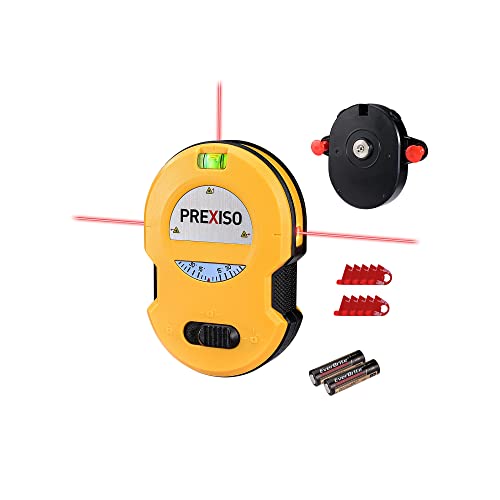
NOTE: This product is not a stud finder or a magnetic nail finder
Load Capacity and Structural Safety Standards
Once you’ve confirmed your railing meets the required 42-inch height, you’ll need to verify it can withstand the loads it’ll encounter during everyday use and emergency situations. Your guardrail must resist a uniform 200-pound horizontal load along the top rail, while infill components like balusters must handle 50 pounds. Load calculations must also account for concentrated impact forces of 200 pounds on guardrails and 50 pounds on infills. Material durability directly impacts your railing’s longevity and safety performance. Posts shouldn’t exceed 8 feet apart to maintain proper load distribution. For deck stairs, handrails between 34 and 38 inches should be measured from the stair nosing to ensure proper grip height. Your railing system must be tested and certified to comply with the International Residential Code (IRC) or International Building Code (IBC) adopted in South Carolina. Ascertain all fasteners, connections, and anchoring systems use approved hardware that maintains structural integrity through environmental stresses like moisture and temperature fluctuations.
Stair Railing Requirements for Multi-Level Decks
How do stair railings differ from standard deck guardrails on multi-level decks? You’ll find that stair railings require a shorter height specification—between 34 and 38 inches measured from the stair nosing to the rail’s top. This height variation from the standard 36-inch deck guardrail accommodates proper stair grips and ergonomic hand positioning during ascent and descent.
The IRC R311.7.8 standard establishes these specifications for all residential stairways. You typically need handrails on only one side rather than both. This design guarantees secure stair grips while maintaining the height variations necessary for comfortable and safe stair navigation on multi-level deck structures. Proper handrail diameter and positioning ensure that users of varying heights can comfortably grip the rail, similar to how seat height variations accommodate different body types. Additionally, continuous handrails without interruptions must conform to prescribed height ranges and diameters to ensure proper grip and safety during use.
California and Washington Specific Guidelines
State regulations in California and Washington establish railing requirements that exceed the standard 36-inch deck guardrail height you’ll find in most other jurisdictions. California guidelines mandate a 42-inch minimum height for all residential and commercial decks, with inspections required every six years under SB 326 and SB 721. You’ll also need to ascertain your railings withstand 200 pounds of force and prevent 4-inch sphere passage through infill openings.
Washington guidelines similarly require 42-inch railings for decks exceeding 30 inches above grade. However, Washington allows local jurisdictions to impose stricter requirements, so you must verify specifications with your building department before construction. Both states enforce these standards rigorously, requiring upgrades to non-compliant older decks. Always consult local authorities for jurisdiction-specific amendments.
Design Options That Maintain Code Compliance
Now that you’ve confirmed your railing height requirements with your local jurisdiction—whether you’re in California, Washington, or another state—you’ll need to select design options that actually meet those specifications. Your railing styles can include cable designs, glass panels, or traditional balusters, each offering distinct aesthetic and functional benefits. Regardless of which design materials you choose, you must guarantee baluster spacing prevents any 4-inch sphere from passing through infill openings. Posts must remain within 8 feet of each other for structural integrity. All infill components must withstand a uniform 50-pound load requirement. For decks elevated over 30 inches, guardrails are required with a minimum height of 36 inches for single-family homes to ensure adequate protection. California Building Code standards mandate that railings sustain a lateral load of 200 pounds to ensure structural durability against pressure or sudden impacts. These specifications apply universally across compliant railing styles, ensuring your second-story deck meets safety standards while accommodating your preferred visual design.

【Multi-Mount Flexible System for Full DIY Custom Assembly】: Universal mounting brackets support three flexible installation ways: attach panels directly onto wooden deck beams, fasten firmly to solid house walls, or pair separately with our matching aluminum support posts. This systematic modular assembly framework lets you fully tailor layouts to your deck, porch, stair or balcony structure with total DIY freedom.

[Various Scenarios] Suitable for various installation scenarios, whether horizontal or on stairs, it can be achieved through the selected adjustable brackets. The package includes two types of screws: wood screws for wood decking and concrete anchors for concrete mounting. Compatible with various substrates such as wood and concrete, it meets the different requirements of decks, porches, balconies, yard, guard, fencing, exterior safety and so on.

【Multi-Mount Flexible System for Full DIY Custom Assembly】: Universal mounting brackets support three flexible installation ways: attach panels directly onto wooden deck beams, fasten firmly to solid house walls, or pair separately with our matching aluminum support posts. This systematic modular assembly framework lets you fully tailor layouts to your deck, porch, stair or balcony structure with total DIY freedom.
Consulting Local Building Authorities Before Construction
Before you finalize your railing design and begin construction, you’ll need to consult your local building authorities to verify that your plans comply with jurisdiction-specific codes. Contact your building department early to request current code requirements and amendments specific to second-story decks. Schedule a pre-construction meeting to clarify height specifications, infill spacing, and load requirements that may exceed IRC standards. In Maine, guardrails must meet specific standards including a minimum height of 36 inches for porches and raised surfaces and the ability to resist a 200-pound load in any direction.
Submit your plans for official review if your municipality requires it. This local consultations process guarantees you understand all applicable regulations before investing in materials and labor. Obtaining building permits before starting work protects you from stop-work orders, costly modifications, and potential liability issues. Your building department staff can answer specific questions and may offer checklists or pre-inspection consultations. Guards must also be designed to prevent a 4-inch sphere from passing through any openings to ensure safety compliance. Verify requirements in writing to document compliance and avoid unexpected complications.