Massachusetts Deck Code: Building Safe Railings & Structures
You’ll need to comply with Massachusetts Building Code (780 CMR) when constructing deck railings and structures. Single- and two-family dwellings require 36-inch minimum guardrail heights, while multi-family residential demands 42 inches. Balusters can’t exceed 4-inch spacing to prevent falls. All railings must withstand 200-pound lateral loads with posts spaced no more than 6 feet apart. Handrails on stairs with four-plus risers must be 34-38 inches high with proper extensions. Understanding these specific requirements guarantees your deck protects occupants while meeting code standards.
Understanding Railing Height Requirements
When you’re planning a deck project in Massachusetts, you’ll need to comply with specific guardrail height standards that vary based on your structure’s use and elevation. For single- and two-family dwellings elevated more than 30 inches above grade, you must install guardrails measuring at least 36 inches high. Multi-family residential and commercial decks require a minimum 42-inch height. You’ll measure these heights from the deck surface to the railing’s top. Any deck or porch exceeding 30 inches elevation demands guardrails. These height requirements are based on the International Residential Code and are designed to prevent accidental falls and minimize safety risks. When selecting railing materials and design aesthetics, make certain they meet these mandatory standards. Replacement or newly constructed railings must comply with updated requirements established after August 28, 1997, so verify current local codes before beginning your project. To prevent safety hazards, balusters must be spaced no more than 8 inches apart to ensure children cannot slip through gaps in the railing.

【Multi-Mount Flexible System for Full DIY Custom Assembly】: Universal mounting brackets support three flexible installation ways: attach panels directly onto wooden deck beams, fasten firmly to solid house walls, or pair separately with our matching aluminum support posts. This systematic modular assembly framework lets you fully tailor layouts to your deck, porch, stair or balcony structure with total DIY freedom.

[Various Scenarios] Suitable for various installation scenarios, whether horizontal or on stairs, it can be achieved through the selected adjustable brackets. The package includes two types of screws: wood screws for wood decking and concrete anchors for concrete mounting. Compatible with various substrates such as wood and concrete, it meets the different requirements of decks, porches, balconies, yard, guard, fencing, exterior safety and so on.

L-Drilled Corner Post: Designed for 36-inch residential projects, this sleek black corner post features 10 pre-drilled horizontal adjacent holes, minimizing installation labor. A 4ft post spacing is recommended for safety and tension. Check local regulations as they vary. (Tip: For railings over 20ft, please select the T-drilled corner post)
Baluster Spacing and Safety Standards
While railing height sets the foundation for deck safety, the spacing between balusters—the vertical members that fill in your guardrail—determines whether your deck truly meets Massachusetts code requirements. You must maintain a maximum 4-inch spacing between balusters to prevent a 4-inch sphere from passing through any opening. Your baluster design must incorporate vertical orientation to eliminate climbing hazards, and you can’t create ladder-like patterns that compromise safety features.
You’ll secure balusters to both top and bottom rails, ensuring they withstand minimum 200-pound lateral loads. Posts supporting your balusters shouldn’t exceed 6-foot spacing. For stair railings specifically, you may space balusters up to 4 3/8 inches apart while still meeting safety standards. Material type affects spacing capabilities, as metal railings can accommodate wider spacing than wood due to their superior strength. Use corrosion-resistant fasteners and pressure-treated lumber or composite materials rated for outdoor conditions. Regular inspections catch gaps exceeding code limits, requiring immediate repairs that comply with current Massachusetts standards.
Gap Prevention for Child and Pet Safety
Because Massachusetts prioritizes protection for children and pets, you’ll need to design your deck railings with deliberate gap prevention strategies that go beyond basic baluster spacing. Child safety measures require closing triangular openings at stairs and preventing 6-inch spheres from passing through ornamental patterns. Pet safety considerations demand avoiding horizontal elements that pets could use for climbing or escape routes.
You can implement solid infill panels or mesh alternatives to open balusters, effectively eliminating gaps while maintaining structural integrity. Regular inspections guarantee components don’t loosen over time, allowing gaps to widen. By combining vertical balusters spaced no more than 4 inches apart with carefully designed rails, you’ll meet Massachusetts code requirements while protecting both children and pets from entrapment and fall risks. Posts supporting your railings should be sturdy and anchored securely to footings at appropriate depths to ensure the structural integrity of your deck system. Your railing system must be tested and certified to comply with applicable building codes that govern deck safety standards.

For outdoor living: Define a deck dining area or porch seating space with a sturdy stainless steel railing panel; its black color complements both modern and traditional homes

Heavy-Duty Galvanized Steel — Built for Secure Level Connections: Made from strong galvanized steel with a protective black coating, these level railing brackets provide dependable support at key connection points while helping resist rust and corrosion outdoors. The durable finish stands up to rain, humidity, and seasonal weather and coordinates cleanly with Guwezoy railing panels, posts, gates, and accessories for a consistent, finished look.

REFRESH YOUR OUTDOOR SPACE: Transform your porch, deck, patio, or balcony railing with the Weatherables Yorkshire Deck and Porch Railing Kit. Our vinyl rail kit offers a sophisticated look, is easy to install, and made is to withstand time and weather.
Structural Integrity and Load Resistance
Your deck’s structural integrity depends on proper load calculations, material sizing, and connection standards that comply with 780 CMR and ASCE 7. You must size joists and beams according to span tables based on lumber grade, species, and spacing to handle dead, live, and environmental loads. Your material selection directly impacts safety—use pressure-preservative-treated No. 2 grade lumber minimum for ledger boards and structural components. You’ll need to verify that all connections resist concentrated loads, including 200-pound railing forces. Secure ledger boards with lag bolts to the house band joist, maintaining no more than one inch gap. Proper flashing prevents water intrusion that compromises structural stability. Building officials review plans and conduct inspections to confirm your deck meets load resistance requirements and maintains stability after potential local damage.

Dual-Layer Corrosion Defense: Featuring a robust combination of epoxy coatings, these screws offer superior rust protection making them perfect for pressure-treated wood and harsh outdoor decking environments.

Ready-to-Use Copper Naphthenate 17% (contains 2% copper as metal), meets the AWPA M4 Standard

Bugle Head Design: This #12 x 6 In multi-purpose wood screws features a precision drive and flush-fit design.underhead cutting teeth reduce wobble, prevent stripping, and ensure clean, flush seating and countersinking. Engineered for low torque and fast driving to boost productivity in wood-to-wood fastening and framing.
Force Testing and Stability Inspection
Once your deck’s structural framing is complete, you’ll undergo force testing and stability inspections to ascertain that all safety components—particularly railings and connections—can withstand the loads they’ll encounter in service. Inspectors apply concentrated 200-pound forces to your top rail in multiple directions, simulating real-world scenarios where adults lean or fall against railings. During stability inspection, they examine your railing’s response to this direct pressure, identifying any loose sections that require reinforcement or replacement. The building department conducts these assessments at critical stages: footings, framing, and final sign-off. Any sections susceptible to movement are flagged immediately. To further ensure safety, inspectors verify that spacing between balusters prevents a 4-inch diameter sphere from passing through, protecting occupants from falling hazards. This rigorous force testing guarantees your deck meets Massachusetts code requirements and protects occupants from preventable injuries.
Handrail Requirements for Stairways
Since stairways present one of the most common injury points in residential and commercial structures, Massachusetts code mandates specific handrail specifications that you’ll need to follow during construction and inspection. You must install handrails at heights between 34 and 38 inches, measured vertically from stair nosings. Handrail types include circular designs with diameters between 1¼ and 2 inches, or non-circular profiles with perimeters between 4 and 6¼ inches. Regarding handrail materials, you’ll find options in wood, metal, and composite construction, provided they maintain adequate graspability. You’re required to install handrails on at least one side of stairs with four or more risers, extending 12 inches beyond the top riser and 12 inches plus one tread width beyond the bottom riser.

Large Faceplate For Secure Attachment To Wall

The armrest bracket is made of zinc alloy and is durable. 3.15 inches protruding from the wall the base diameter is 2.13 inches

Built to Last: Crafted from durable zinc alloy, these handrail brackets are built to last and provide sturdy support
Continuous Handrail Design Specifications
Beyond meeting the dimensional and material requirements for individual handrail components, you’ll need to understand how those elements must function together as a continuous handrail system. Your continuous handrail importance cannot be overstated—it must run uninterrupted along the entire stair flight from above the top riser to above the lowest riser.
You’re permitted interruptions only at landings, posts, or turns, never within a single flight. Your handrail materials selection directly impacts durability and safety. You’ll make certain ends return securely to walls or terminate in newel posts—never abrupt endings. At the top, extend your handrail 12 inches beyond the riser parallel to the floor. At the bottom, extend 12 inches plus one tread width, sloping initially then horizontal. These specifications guarantee user safety throughout the stairway.
Massachusetts Building Code Compliance Standards
As you plan your deck project, you’ll need to navigate Massachusetts’ extensive building code framework, which centers on 780 CMR plus local amendments. The 10th Edition Building Code, effective October 11, 2024, governs all permit applications filed after July 1, 2026. You must submit your permit application to your local building department for verification of compliance with both state and municipal codes. Your application requires construction plans drawn to scale, site plans demonstrating setbacks and property lines, and framing plans specifying joist layout and beam sizes. For complex or high decks, engineering documentation is necessary. The building department will schedule inspections at critical stages: footing and foundation, framing, and final approval. Proper railing installation and spacing must also comply with Massachusetts code requirements to ensure safety and durability. Railings are mandatory for decks located more than 30 inches above ground level, with balusters spaced no more than 4 inches apart to prevent small children and pets from slipping through gaps. This structured process guarantees your deck meets all regulatory requirements.
Installation Best Practices and Professional Consultation
Once you’ve secured your permit and passed initial inspections, proper installation execution becomes critical to achieving code compliance and guaranteeing your deck’s longevity. You’ll need essential tools—tape measure, level, power drill, and saw—plus appropriate safety gear including gloves and goggles. Material selection demands galvanized or stainless steel hardware with hot-dipped application prior to fabrication. During installation, verify railing height at multiple points, maintaining the 36-inch minimum measurement from deck surface to top rail. Ascertain balusters maintain vertical orientation with maximum 4-inch spacing. Aesthetic coordination should be finalized before procurement to assure uniform appearance. All railings must also be structurally sound to support specified live loads as required by building codes. Railings should be designed to withstand a lateral load of 200 pounds to ensure they can handle pressure and sudden impacts without failure. Consider consulting professional installers for complex sections or when visual weakness indicators emerge. This approach minimizes rework and guarantees regulatory adherence throughout your project.

Durable Outdoor Finish — Designed for Long-Term Use: Crafted for outdoor railing applications with a textured matte black finish designed to resist everyday wear and maintain a clean appearance across deck, porch, and stair railing systems.
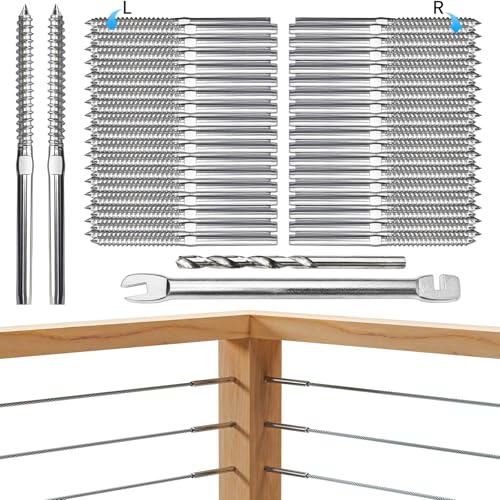
Versatile Cable Tensioning: This deck railing hardware kit is specifically designed for 1/8 inch diameter cable railing systems, these Swage Lag Screws are the ultimate solution for effortlessly adjusting cable tension. The left and right thread ensure that cables rotate in the same direction, preventing any twisting or damage, providing a smooth and secure cable railing installation.

Durable material: Our post base is constructed from high-strength thick steel, providing heavy duty support for wood posts and firmly anchoring to concrete. Built for maximum stability, it effectively eliminates wobble and ensures secure
Routine Maintenance and Inspection Procedures
Your deck’s safety and longevity depend on systematic inspection and maintenance that you’ll need to perform at least annually and following any severe weather or visible damage. Establish an inspection frequency that captures seasonal changes and weather impacts specific to Massachusetts.
During deck cleaning, remove debris, leaves, and dirt from surfaces and joints to prevent moisture retention and deterioration. This practice directly combats wood rot and structural compromise. Cleaning between deck boards requires specialty tools and hand cleaning rather than pressure washers, as the spaces are often tight and compacted with debris that can take 4 to 6 hours to thoroughly remove from a typical deck.
Document all inspection findings and maintenance actions meticulously. Tighten or replace loose fasteners, handrails, and balusters immediately upon detection. Apply protective sealants or stains periodically to resist weathering and prolong wood life.
Your documentation creates a compliance record demonstrating adherence to Massachusetts code requirements and establishing patterns that inform future maintenance decisions. Ensure that baluster spacing and other critical structural elements meet current code standards during your inspections to maintain safety compliance.