Cable Spacing for Deck Railing: Building Code Guide
You’ll need to space your deck railing cables no more than 3⅛ inches center-to-center to comply with 2024 IRC and IBC codes. This spacing guarantees a 4-inch sphere can’t pass through, meeting inspector requirements during final approval. Metal posts can extend to 8 feet on center, while wood posts max out at 6 feet. Cable tension should reach 200-300 pounds using tension meters. Local jurisdictions may enforce stricter requirements, so you’ll want to verify your area’s specific code variations before installation.
Understanding the 4-Inch Sphere Rule
Three critical safety objectives drive the 4-inch sphere rule: preventing small children’s heads from passing through railing openings, establishing a standardized compliance baseline, and eliminating entrapment hazards across residential and commercial installations. You’ll find this rule applies to spaces between cables, between cables and posts, and between cables and deck surfaces.
Understanding these safety guidelines guarantees your railing system meets code requirements. The 4-inch sphere represents the maximum gap dimension you can allow anywhere in your cable configuration. During inspection practices, inspectors use this sphere to test compliance at installation and verify that no dangerous openings exist.
You must recognize that cable systems require tighter initial spacing than rigid balusters because cables deflect under pressure, potentially expanding gaps beyond acceptable limits.

【Stair Drilled Post】This (2"x2") square black finish stair cable railing post, with a height of 35", is expertly designed for building 36" high cable railing systems. The stair post serves as both a structural end and middle post in stair sections, compatible with 25 to 35 degrees staircases, while features 10 pre-drilled holes for easy and precise installation of level cable lines. We recommend the level post together for seamless transitions across stair, or landings(search "PLANTOP MY08-L/MY07-LP/MY20-LP)

Wide Application: This tensioner is suitable for 2"x2" 4"x4" wood, metal and aluminum posts. If you use the hand swage fitting on the post size less than 4", you can cut off the extra thread rod with a power cutting tool. If you use it on a wood post, you need to drill a hole with a drill bit. Package includes: 20 packs tensioner, 1 pc drill bit, 1 pc bent wrench

Wide Application: This tensioner is suitable for 2"x2" 4"x4" wood, metal and aluminum posts. If you use the hand swage fitting on the post size less than 4", you can cut off the extra thread rod with a power cutting tool. If you use it on a wood post, you need to drill a hole with a drill bit. Package includes: 60 packs tensioner, 1 pc drill bit, 1 pc bent wrench
IRC and IBC Cable Spacing Standards
Now that you understand why the 4-inch sphere rule protects against entrapment hazards, you’ll need to know how the IRC and IBC codify this standard into specific cable spacing requirements. The 2024 codes establish a maximum horizontal cable spacing of 3⅛ inches, measured center-to-center between adjacent cables. This regulatory impact guarantees consistent safety across residential and commercial applications. The standardized requirement provides design flexibility by allowing you to install cables at 3 to 3½ inches spacing, accommodating potential stretching while maintaining compliance. These specifications apply universally under IRC and IBC sections, though exceptions exist for stair applications with modified spacing requirements. Understanding these codified standards guarantees your cable installations meet regulatory requirements and pass inspector approval.

For Wood Post in Level: These stainless steel protective sleeves fits 1/8" wire rope on wood posts and wood posts with PVC sleeves. NOT for angle applications or metal posts. They prevent the wire rope from being damaged by friction wear. We also offer protective sleeves specifically designed for 5/32" and 3/16" wire ropes to fit your project needs
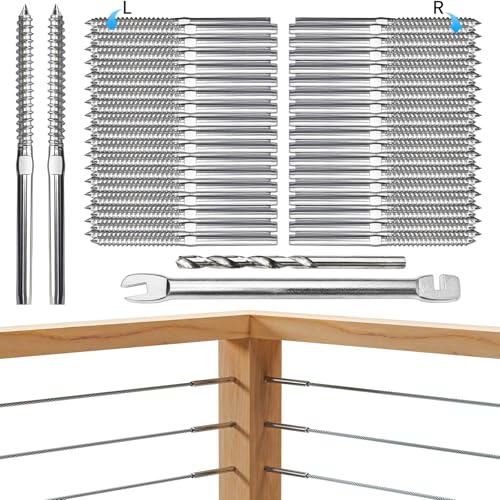
Versatile Cable Tensioning: This deck railing hardware kit is specifically designed for 1/8 inch diameter cable railing systems, these Swage Lag Screws are the ultimate solution for effortlessly adjusting cable tension. The left and right thread ensure that cables rotate in the same direction, preventing any twisting or damage, providing a smooth and secure cable railing installation.
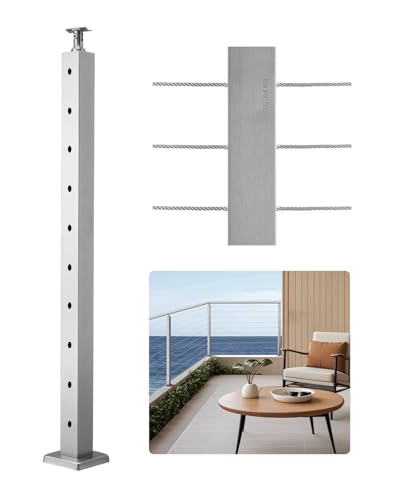
Horizontal-Hole Cable Railing Post: This 36" post is pre-drilled with 10 pairs of horizontal holes, spaced 3.31 in apart. Designed for level surfaces/deck railing protection to help protect you and your family. Note: This upgraded version has adjusted hole quantity and spacing vs. the previous version—please verify hole positions and count when repurchasing or matching parts. Steel cable not included
Maximum Spacing Requirements by Jurisdiction
While the 2024 IRC and IBC establish baseline cable spacing standards nationally, you’ll find that individual jurisdictions enforce these requirements with varying degrees of stringency based on local conditions and safety priorities. Jurisdiction comparisons reveal that most states—California, New York, Texas, Florida, and Chicago—mandate the standard 3⅛-inch maximum spacing to meet the 4-inch sphere rule for residential applications. However, code enforcement varies considerably. Some jurisdictions permit up to 4⅜ inches for commercial projects when cables are properly tensioned, while others require tighter spacing in high-traffic or coastal areas. Stair applications consistently demand 6-inch sphere blocking across all jurisdictions. You’ll need to verify your specific local amendments, as requirements often exceed baseline standards.
Post Spacing Guidelines for Metal Systems
Once you’ve confirmed your jurisdiction’s cable spacing requirements, you’ll turn your attention to the posts themselves—the structural backbone of your metal railing system. Metal strength allows you to space posts up to 8 feet on center, considerably more than wood alternatives. This wider spacing doesn’t compromise safety because metal posts withstand the required 200-pound concentrated load and 50-pound linear load stipulated by building codes.
During post installation, you’ll ascertain each post is plumb and securely anchored to your deck frame using manufacturer-specified hardware. Accurate measurement and chalk lines guarantee even spacing. You’ll verify all connections meet code requirements and check for proper alignment after fastening. Metal’s superior rigidity means you can achieve maximum spacing while maintaining full structural integrity and safety compliance.

【Applications】This tensioner is suitable for 2x2 posts. Their main purpose is to anchor cable on one end of runs – you’ll then need some type of tensioner on the opposite end. Perfect for planning your own cable railing project, good for indoor or outdoor applications( wood, steel, aluminum post on deck railing).
![[Patent]Muzata 20Pack Black Cable Railing Hardware Invisible Tensioner CR36](https://m.media-amazon.com/images/I/41MKVakQ79L._SL500_.jpg)
Patent Invisible Design: With the patent invisible flattened tail design, you can hide the ugly swaged end inside the wood post to get a neat appearance, and get enough tension to pass 4” sphere test to meet code compliance. The customized socket wrench Muzata CT16 is essential for the invisible installation and keeps the cable from spinning when tightening. Package includes: 20 packs of tensioners and 1pc allen wrench, 1pc socket wrench

【APPLICATIONS】For 1/8 inch deck cable railing system. It's suitable for 4"x4" metal and wood posts and applicable for both level and angled sections. Provided a "dead end" for a DIY cable railing project, can be used on all sorts of posts in wood or metal. Perfect for installation on exterior decks, marine rigging, or interior applications.
Post Spacing Guidelines for Wood Systems
Wood railing systems require more conservative post spacing than their metal counterparts due to the material’s lower rigidity and load-bearing capacity. You’ll need to space 4×4 posts maximum 6 feet apart, while 6×6 posts can extend to 8 feet. Most local codes mandate 6-foot spacing for standard wood systems, though the IBC permits up to 8 feet for manufactured systems.
Your post sizing directly impacts spacing intervals. Undersized posts demand closer spacing to maintain structural integrity under the required 200-pound pressure load. You must verify local building department regulations before finalizing your layout, as jurisdictions often impose stricter requirements than national standards. For decks elevated more than 30 inches above ground, ensure your posts and railings meet local setback requirements to maintain compliance with zoning permits.
Install posts at corners, stairways, and consistent intervals along the deck perimeter. Proper post spacing prevents wobbling and guarantees your railing meets both safety and code compliance requirements. Connecticut requires guardrails at least 36 inches high for decks more than 30 inches above grade to ensure adequate protection for users.

Real 6063 Aluminum — Install Once, Skip Rust Headaches: A quick magnet test shows the difference—iron or steel attracts the magnet; Guwezoy 6063 aluminum does not. Iron or steel may develop red rust within 6 months–2 years, staining your deck as corrosion spreads and weakens the railing, leading to sagging, cracking, or early failure. With 6063 aluminum and an AAMA 2604 textured finish, Guwezoy is built for 30+ years outdoors with less sanding and repainting, so you can enjoy your deck more.

Certified Safety – IBC/IRC/ASTM Compliant: Don't settle for "looks safe"—choose railing that's proven safe. Built to meet key U.S. codes and ASTM standards, this system delivers reliable safety for decks, stairs, and balconies. A 36" height, <4" baluster spacing, and rigid, wobble-free structure help prevent falls and you loved one entrapment. For commercial use or CA/WA projects, choose the 42" option to meet local requirements.

Real 6063 Aluminum, Not Iron or Steel — Skip the Rust, Repaint & Replace Cycle: A quick magnet test reveals what black coatings can hide—iron or steel attracts the magnet; Guwezoy 6063 aluminum does not. Iron or steel may rust within 6 months–2 years, leaving stains, corrosion, and earlier replacement. Guwezoy combines 6063 aluminum with an outdoor AAMA 2604 textured finish for 30+ years of outdoor service, with less sanding and repainting and more time enjoying your deck.
Cable Deflection and Load Considerations
Cable systems demand different considerations than the post-spacing protocols you’ve just established, because cables flex under load in ways that solid balusters don’t. You must account for deflection when calculating spacing, as cables compress under the required 200-pound concentrated load test. Stainless steel cable material impact directly affects performance—premium grades resist stretching better than inferior alternatives, maintaining code compliance longer. For optimal performance, type 316 stainless steel cable with 1×19 construction is the industry standard, providing low stretch and high breaking strength that ensures durability against corrosion in outdoor environments. Your cable tensioning techniques prove critical; proper tension via turnbuckles or compression fittings minimizes deflection gaps. However, you’ll avoid over-tensioning, which damages posts and fittings. Typical spacing of 3 to 3.5 inches on center guarantees the 4-inch sphere rule compliance even under load. Regular maintenance keeps tension consistent, preventing stretching from creating unsafe openings over time.
Stair Railing Cable Spacing Requirements
Because stair applications introduce a distinct geometric challenge—the triangular opening formed by treads, risers, and bottom rails—you’ll need to understand how the 6-inch sphere rule differs from the 4-inch sphere rule you’ve applied elsewhere. This exception specifically addresses the gap between your bottom rail and step treads, allowing larger spacing while preventing entrapment hazards and maintaining visibility.
However, you must maintain the 4-inch sphere rule for vertical gaps between cables on stair runs. You’ll typically install cables at 3 to 3.25 inches on center to guarantee compliance. Both the IRC and IBC recognize these stair design safety features. Your posts shouldn’t exceed 4 feet on center for metal systems, though wood allows up to 6 feet. When securing posts at key points such as corners and stairways, use carriage bolts or lag screws to ensure structural integrity. Guardrails must also be able to resist a 200-pound load applied in any direction to ensure structural safety. Always verify local code requirements, as jurisdictions may impose stricter spacing rules for your specific project.
Proper Cable Tensioning Techniques
Achieving proper cable tension is fundamental to deck railing safety and performance, requiring you to follow a systematic approach using specialized tools and techniques. You’ll employ cable tensioning methods that begin by anchoring cables into non-tensioning fittings before threading through all midposts. Using tensioning tools like turnbuckles and wrenches, you’ll adjust cables to 200-300 pounds of tension, verified with a tension meter. Start from center cables, alternating toward top and bottom to maintain consistent pressure. Apply medium-strength thread locker to prevent loosening. You must avoid over-tightening, which causes post deflection, and under-tensioning, which creates sagging. For optimal results, ensure post spacing does not exceed 4 feet to maintain structural integrity throughout the railing system. Inspect hardware connections regularly and re-tension as needed, following manufacturer specifications to guarantee compliance with International Building Code requirements and the 4-inch sphere test.
Local Code Variations and Compliance
Once you’ve properly tensioned your cables to specification, you’ll need to verify that your installation complies with local regulations, which often differ markedly from baseline IRC and IBC standards. Local code variations present significant compliance challenges that require careful attention. California, for instance, mandates 42-inch guardrail heights versus the IRC’s 36-inch minimum. Your jurisdiction may impose stricter cable spacing, different post intervals, or enhanced load requirements. Some regions permit 4⅜-inch gaps between cables for railings between 36″ and 42″ in height, while others enforce tighter tolerances. Coastal areas typically require corrosion-resistant materials. It’s important to note that railing height requirements are designed to prevent accidental falls and minimize the risk of children climbing over the top rail. Before installation, contact your local building department to obtain current amendments and exceptions applicable to your project. Many jurisdictions demand pre-installation plans or engineering stamps for cable systems. Building inspectors’ll verify compliance using sphere tests and may require modifications if your installation proves non-compliant.
Installation Best Practices for Code Compliance
To achieve a cable railing system that passes inspection and protects occupants, you’ll need to coordinate post spacing, cable tensioning, and height measurements as an integrated whole rather than treating them as separate tasks. Start by selecting installation materials that match your local code requirements—typically 3-inch cable spacing for National Building Code compliance or 4-inch spacing where permitted locally. Install tensioning devices such as turnbuckles or adjustable fittings at endpoints and intermediate posts to maintain proper tension throughout the system. Verify your handrail height meets local standards, whether 36 inches for residential or 42 inches for commercial applications. Posts supporting cable railings must be sturdy, typically 4×4 or 6×6 lumber, and anchored securely to footings at or below the frost line to ensure structural integrity. Test cable deflection under applied force to confirm it doesn’t exceed 25%, ensuring no 4-inch sphere can pass through openings. For residential decks, remember that guardrails must be capable of withstanding a 200-pound force applied in any direction along the top rail to meet Virginia building code standards.