How to Build a Beautiful Deck Railing With Metal Balusters
You’ll build a sturdy, attractive metal baluster railing by first determining post spacing based on local codes—typically 6 feet apart. Plan baluster spacing under 4 inches for safety compliance. Select corrosion-resistant materials like powder-coated aluminum or galvanized steel. Measure precisely, cut components accurately, and install posts with secure blocking. Attach rails, position balusters at consistent intervals, and inspect for code compliance. Use exterior-grade fasteners and maintain proper alignment throughout. The details of execution matter considerably for both aesthetics and durability.
Determine the Number and Spacing of Posts Based on Deck Size and Local Building Codes
Three critical factors—material type, local building codes, and deck dimensions—determine how you’ll space your railing posts. Metal posts typically allow 8-foot spacing on center, offering flexibility for larger decks. However, you’ll need to verify code requirements with your local building department, as the International Residential Code generally limits spacing to 6 feet for residential decks.
Start by measuring your railing’s total length. Divide that figure by your desired spacing—typically 4 to 8 feet—to calculate post count. Always add one post at each end. Account for corners, staircase changes, and obstructions that may require additional posts. Railing height requirements vary by location, with most jurisdictions mandating a minimum of 36 inches measured from the decking to the top rail.
Your posts must withstand 200 pounds of lateral force at any point. This performance standard directly influences post spacing decisions. Consult local codes before finalizing your layout, as regional variations exist. In Connecticut specifically, guardrails must be at least 36 inches high to meet state building code requirements for decks over 30 inches above grade.

Horizontal-Hole Cable Railing Post: This 36" post is pre-drilled with 10 pairs of horizontal holes, spaced 3.31 in apart. Designed for level surfaces/deck railing protection to help protect you and your family. Note: This upgraded version has adjusted hole quantity and spacing vs. the previous version—please verify hole positions and count when repurchasing or matching parts. Steel cable not included

Give Your Railing a Clean Finish: Complete the open end of your deck or porch railing with a purpose-built end post. The single-sided connection keeps the railing termination neat, with no unused connection holes on the other faces.
Plan Baluster Spacing to Meet Safety Regulations
Once you’ve positioned your posts, you’ll need to plan your baluster spacing to comply with safety codes that protect children and pets. The critical rule requires that no opening between balusters exceeds 4 inches—preventing a sphere of that diameter from passing through.
You’ll typically space balusters at 3.66 inches on center for thin balusters or 5.5 inches for wider ones. Measure the distance between baluster centers using a ruler or caliper to verify compliance checking. Metal balusters can accommodate wider spacing than wood due to superior strength of metal, allowing for more flexible design options while maintaining safety.
Before installation, consult your local building codes, as some regions allow slight variations like 4-3/8 inches on stairs. Additionally, your railing must be able to withstand a 200-pound force in any direction to prevent structural failure and ensure long-term safety. Once installed, perform a visual inspection at all points along the railing to confirm child safety. This guarantees your deck railing meets mandatory safety regulations.

Wide applications: This 26" round aluminum baluster can be used to build a 36" wood and composite deck railings, creating a stable, stylish look. It can be easily cut to different heights to suit various needs. In addition, its 3/4" diameter allows it to be compatible with most baluster connectors or shoes on the market
【Strict Quality Control】- Every Our Deck Balusters are thoughtfully made to adhere to ISO9001 manufacturing process. And meet the rigorous building standards.very strong, safe,waterproof ,corrosion resistant stable and beautiful

【EVERYTHING YOU NEED IN ONE BOX】 Get started right away with our complete kit: 105 elegant round balusters (26" x 3/4"), 210 straight connectors, 30 angled connectors(30 degree), all necessary screws, and a professional-grade screw bit. Perfect for creating stunning 36" rail heights on both level and stair applications.
Select Appropriate Metal Balusters and Railing Kits
With your baluster spacing confirmed to meet safety codes, you’re ready to select the metal balusters and railing kit that’ll define your deck’s appearance and durability.
For metal baluster selection, consider powder-coated aluminum for outdoor projects—it offers superior weatherproofing and affordability. Galvanized steel outlasts aluminum and resists corrosion when properly coated. Choose your style: plain square balusters for modern aesthetics, twist designs for traditional appeal, or custom laser-cut panels for distinctive looks.
Regarding railing kit options, pre-assembled kits streamline installation with included connector bases, collars, and fastening hardware. Select face mount systems for direct rail attachment, or explore rod rail, cable, and glass infill alternatives. Consider mixed wood and metal designs combining wooden posts with metal balusters for contemporary appeal. Most jurisdictions require a minimum railing height of at least 36 inches measured from the deck surface, though some states mandate higher standards, so verify your local building codes before finalizing your design. To maintain your metal railings and prevent corrosion over time, regular cleaning with mild soap and water will keep them looking beautiful and extend their lifespan.

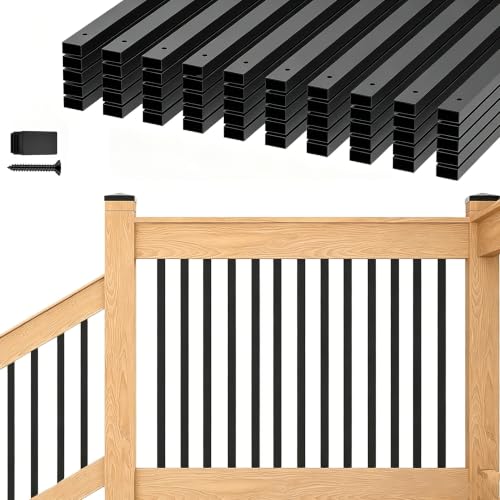
Durable Aluminum Material: The deck baluster made of sturdy metal material can improve safety and durability, with a black powder-coated finish using electrostatic spray technology, ensuring strong adhesion, corrosion resistance, anti-aging, scratch resistance, and low maintenance costs

PREMIUM ALUMINUM CONSTRUCTION -- Made from high quality, rust-proof aluminum with a durable powder coated finish. These deck balusters resist fading, corrosion, and weather damage so your porch railings stay crisp through seasons. Low maintenance vs. wood.

100-PACK SUPPLY FOR FULL RAILING PROJECTS - Includes 100 black rectangular deck balusters, matching end caps, and stainless steel screws, giving homeowners and contractors a practical supply for larger deck, porch, stair, or balcony railing runs.
Measure and Cut Railing Components With Precision
Precision in measuring and cutting your railing components will make or break your installation’s success. You’ll measure deck runs in level linear feet along each perimeter section, while stair railings require angled linear feet measurements instead. Document everything with tape measures, paper, and writing implements.
For cutting precision, use a 10-inch mitre saw with an 80-tooth non-ferrous metal blade for cleanest results. Cut identical top and bottom rails from the same side to prevent misalignment. Extend aluminum approximately one-quarter inch beyond your final measurement initially, then slide it back one-eighth inch after cutting to eliminate gray streaks.
For obtuse angles exceeding 90 degrees, subtract from 180 degrees, then divide by two to establish your saw’s degree setting. Maintain level railing positioning throughout your measurement techniques for accurate miter cuts. Ensure your baluster spacing meets code requirements to prevent structural gaps. Just as flashing prevents water damage in ledger board installation, proper railing measurements prevent structural misalignment in your deck system.
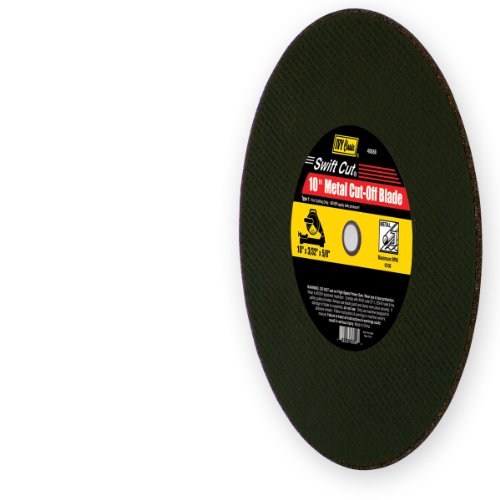
Designed to cut steel, angle iron, sheet metal and other ferrous metal products, Do not use on High Speed Saws, Swift Cut (Registered Trademark)

ALUMINUM CUTTING: This circular saw blade designed for cutting Aluminum Plastic and Non-Ferrous Metals

10 Inch Miter/Table Saw Blade Metal Cutting 80-Tooth TCG, KERF 0.094", 5/8" Arbor
Install Deck Posts and Support Blocks Securely
Now that you’ve cut your railing components to precise specifications, you’ll shift focus to establishing the structural foundation that’ll support everything you’ve measured and prepared. Begin by installing adequate blocking underneath each post location, spacing blocking every six feet for maximum stability. This blocking reinforcement method prevents posts from failing under load or stress.
Next, employ post alignment techniques by using a chalk line to keep corner and line posts perfectly straight. Install shims to square posts with your deck surface before final fastening. Use 3/8″ fasteners to loosely secure posts initially, allowing adjustment room.
Finally, tighten all connections using 3/8″ x 8″ bolts and washers for secure post-to-frame attachment. Remember: posts must never rely solely on deck boards for support—structural blocking is critical to your railing’s integrity and longevity. All railings and guardrails must be structurally stable to resist concentrated force and prevent failures under load. Inspecting the railing for stability after installation will confirm your work meets safety standards.
Attach Bottom and Top Rails to Posts
After you’ve secured your posts and verified they’re perfectly plumb, you’ll attach the bottom and top rails using metal brackets and structural fasteners designed to resist both lateral and downward forces. Position your bottom rail to clear the deck surface while maintaining proper baluster spacing. Use hot-dipped galvanized bolts with washers and nuts for corrosion resistance on treated lumber. Your hardware options include surface-mount or fascia-mount methods, each offering distinct advantages. Surface mounting places brackets directly on post faces, while fascia mounting preserves deck area. Drill pilot holes to prevent wood splitting, then insert bolts and tighten securely. For top rails, follow code-compliant heights of 36-42 inches, using structural bolts or engineered connectors like Simpson Strong-Tie tension ties. When selecting posts for your railing system, verify that dressed lumber dimensions are smaller than nominal sizes, as this affects your baluster spacing calculations. All railings must comply with spacing requirements to ensure safety and code compliance. Verify level and plumb throughout installation before fully tightening all fasteners.
Install Metal Balusters at Proper Intervals
With your rails securely fastened and verified for level and plumb, you’re ready to install the metal balusters that’ll complete your railing’s structure and safety function. Start by measuring your total rail length between posts, then subtract one baluster width. Divide the remaining length by your desired spacing plus baluster width, rounding to the nearest whole number for total balusters needed.
Use a speed square to mark each baluster’s center point for drilling. Maintain consistent spacing across the entire rail section, avoiding placement directly adjacent to posts. Drill holes at marked locations using the appropriate bit size.
Insert balusters and secure them with provided fasteners, ensuring plumb alignment. Use spacing adjustments and blocking if necessary for even distribution. Verify all gaps remain under 4 inches, meeting code compliance before finalizing installation. Remember that proper baluster spacing ensures your railing meets local building codes and provides the structural integrity required for residential decks.
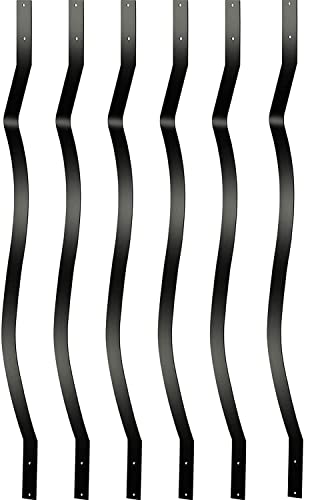
【HIGH QUALITY MATERIALS】Our metal deck balusters are made of durable Cast Iron, which means they can withstand harsh weather conditions and resist corrosion. The metal balusters ensure that your deck will remain safe and secure for years to come.

ULTIMATE RUST & WEATHER PROTECTION: Crafted from premium heavy-duty stainless steel with a durable black powder-coated finish. These balusters are engineered to withstand harsh outdoor elements-rain, snow, sun, and humidity-without rusting, peeling, or corroding for long-term use on porch railings and decking

HIGH QUALITY MANUFACTURING: Our metal handrails are made of durable cast iron, manufactured according to strict production standards. They are coated with a rust-proof layer and are solid, thus being able to withstand harsh weather conditions, resist rust and corrosion, prevent deformation, and be more sturdy and safe. The metal handrails ensure that your terrace remains safe and stable for years to come
Apply Finishing Touches and Safety Inspections
Before you consider your deck railing project complete, you’ll need to conduct a thorough safety inspection that verifies every component meets code requirements and performs its critical safety function. Test handrails by pushing firmly to confirm they don’t wobble. Verify baluster spacing doesn’t exceed 4 inches to prevent entrapment hazards. Check all fasteners—nails, bolts, and screws—for proper tightness and corrosion. Examine wooden components using a screwdriver to probe for soft spots indicating rot. Inspect metal connectors for rust or deterioration. Ascertain your railing withstands approximately 200 pounds of lateral force without excessive movement. For residential decks, guardrails must be at least 36 inches high to meet safety standards and prevent falls. In New Jersey, ensure your handrails are positioned between 30 to 38 inches from the tread and run continuously from the top riser to the lowest riser. These finishing touches and safety inspections protect everyone using your deck and confirm your work meets local building codes.
Follow Tips and Best Practices for Optimal Results
Since proper planning and execution directly determine your railing’s safety and longevity, you’ll want to follow proven installation techniques from the outset. Select best materials by choosing exterior-grade, corrosion-resistant fasteners that withstand weather exposure. Match baluster connectors and brackets to your metal baluster diameter for compatibility. Pre-drill all holes using correct bit sizes—1/8″ for rails and 9/64″ for balusters—preventing splitting and misalignment. Use a 2×4 spacer block to maintain consistent 4″ spacing throughout installation, as openings must not allow a 4-inch diameter sphere to pass through for safety compliance. Clamp rails during attachment for precision, and avoid over-tightening screws that damage components. For decorative elements, guarantee consistent height and alignment across all posts. Store metal parts in dry conditions before installation, preventing premature rust. Building codes typically require a railing on any deck 30 inches or higher above ground to ensure safety and structural integrity. These practices assure a structurally sound, visually appealing railing.