How to Build a Deck Using a Ledger Board: Step-by-Step Guide
You’ll start by removing siding to expose framing, then inspect for rot and damage. Next, mark your ledger board height using a laser level and snap a chalk line for accuracy. Position the board flush against the wall and secure it with lag screws spaced 16 inches apart. Install flashing above and below to prevent water infiltration. Finally, verify all fasteners are tight and aligned with local codes. The structural details that follow will guarantee your deck’s longevity and safety.
Understanding Ledger Board Basics
When you’re building a deck, the ledger board is the critical horizontal structural member that’ll connect your deck to your home’s framing and transfer all deck loads safely into the house structure. You’ll typically use pressure-treated lumber matching your joist dimensions—commonly 2×8 or 2×10—for durability against decay and insects. The ledger board functions as your primary connection point, supporting all deck joists while distributing structural loads directly into the rim joist. Understanding ledger board materials and functions is essential because improper installation remains a leading cause of deck failure. You must recognize that this single component bears responsibility for your entire deck’s safety and longevity, making precise execution non-negotiable during construction. Proper spacing and alignment of fasteners along the ledger board ensures consistent load distribution and prevents structural stress points. The ledger must be securely attached with ½-inch diameter bolts spaced according to local building codes to ensure proper load distribution and structural integrity.

Package Included: this package included 10 pack of deck spacers; These deck spacers feature a 2-inch diameter and ½-inch thickness, providing a larger support surface compared to standard washers; Offering lightweight yet strong reinforcement for deck joists, stair stringers, and other structural applications

Package Included: this package included 20 pack of deck spacers; These deck spacers feature a 2-inch diameter and ½-inch thickness, providing a larger support surface compared to standard washers; Offering lightweight yet strong reinforcement for deck joists, stair stringers, and other structural applications

Package Included: this package included 10 pack of deck spacers; These deck spacers feature a 2-inch diameter and 1/4-inch thickness, providing a larger support surface compared to standard washers; Offering lightweight yet strong reinforcement for deck joists, stair stringers, and other structural applications
Preparing the House and Ledger Board
Because the ledger board connects your deck directly to your home’s structure, you’ll need to meticulously prepare both the house wall and the ledger board itself before installation. Start by removing siding or stucco to expose framing, then inspect for rot or water damage. Identify your sill plate—the primary attachment point—and verify the wall can support your deck design’s additional load.
Next, cut pressure-treated lumber to specification and retreat cut ends. Drill clearance holes angled slightly upward, positioned three inches below the upper edge. Install back flashing above and below the ledger board, extending at least six inches up and three inches down, ensuring proper overlap and sealed seams. Proper flashing installation creates the vapor barrier protection necessary to prevent moisture damage to your home’s structure. Properly anchored ledger boards should be firmly secured to prevent shifting during installation and use. Temporarily secure the ledger board with fasteners every two feet, maintaining structural integrity throughout.

SUPERIOR HOLDING POWER: Serrated threads create a tight seal that increases draw-down strength and reduces driving torque by 40%.

SUPERIOR HOLDING POWER: Serrated threads create a tight seal that increases draw-down strength and reduces driving torque by 40%.
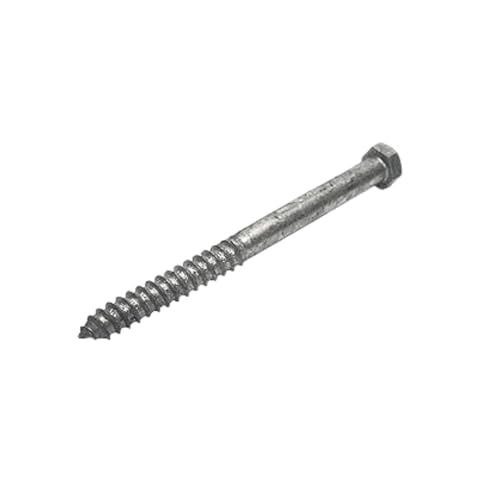
1/2" x 8" SIZE FOR STRUCTURAL WOOD FASTENING 1/2 inch diameter and 8 inch length designed for strong wood-to-wood connections where structural strength is required without excessive embedment depth.
Marking and Leveling the Ledger Board
Before fastening the ledger board permanently, you’ll need to mark its exact height and confirm it’s perfectly level across the entire span—a critical step since this board’s position determines your deck’s finished height and overall frame geometry. Start by measuring height from your reference point, typically the door sill, then subtract 1 1/8 inches for standard 1-inch decking. Use a laser level to project a horizontal line at this height, marking multiple points along the wall. Snap a chalk line connecting these marks. Verify levelness with a 4-foot level, adjusting marks as needed for wall irregularities. Shim any dips or protrusions so your ledger sits flush and level before securing ledger fasteners. Ensuring proper post spacing and placement at critical points like corners will maintain structural integrity throughout your deck frame. Choosing the right roller cover nap will also help ensure your stain application is even and properly worked into the wood once your deck is built. This guarantees your joists will be perfectly level for consistent decking installation.

Rechargeable Battery and 10-Hour Runtime: With its integrated 2200 mAh rechargeable battery, the Fanttik D2 laser level can work continuously for up to 10 hours on a single charge. The high-capacity battery can be recharged more than 500 times, which is very practical

★ DUAL MODES & SELF-LEVELING ★ The cross line laser with slide switch enable you to set 2 modes, self-leveling mode and manual mode. When working in self-leveling mode, the range of leveling and compensation is 4°± 1°and the laser level will automatically level for horizontal/vertical/cross line, otherwise the laser will flash to indicate thr out-of-level condition. In manual mode, the self-leveling function is deactivated and the cross is locked to use the device at any angle.

【MULTIFUNCTION LASER LEVEL】Laser level tool cool gadgets for men Works For Indoor Designed for any situation where accurate measurements are needed, such as hang shelves, cabinets, tiles and picture frames with accuracy. All The Job That Requires A Straight Line Or Accurate Measurement.
Installing the Ledger Board
Now that you’ve marked and leveled your ledger board line, you’re ready to install the ledger board itself—the critical structural connection between your deck and house. Position your pressure-treated ledger board against the prepared wall, aligning it with your marked height line. Use temporary blocks at the bottom for support during installation. Verify the board’s level across its entire length before securing.
For attaching methods, use lag screws or bolts that penetrate through the ledger, band joist, and into the house framing. Space fasteners approximately 16 inches apart, staggering them vertically for maximum stability. Drive fasteners until flush with the ledger board surface. To prevent corrosion and ensure longevity, select 316 stainless steel fasteners for superior durability in outdoor conditions. The fastener spacing you use should align with local building codes that govern your deck construction to ensure proper structural integrity. After securing, inspect for level alignment, test stability, and verify all fasteners are tight before proceeding.

Type: Lag Screws | Diameter: 3/8 inch | Length: 1-1/2 inch | Threads Per Inch: 7 | Thread Type: Coarse | Material: 316 Stainless Steel | Finish: Plain

Premium 304 Stainless Steel Construction: These hex head lag screws for wood are made of 304 stainless steel with corrosion and rust resistance longer service life, for both indoor and outdoor wood structure connection.

Superior Resistance to Rust & Corrosion When Compared to Common Stainless Kits
Flashing and Moisture Protection
With your ledger board securely fastened, you’ll need to address the vulnerabilities where water can infiltrate and compromise the entire structure. Select from common flashing types—asphalt-based, acrylic, or butyl-based membranes—each offering distinct advantages. Butyl-based options are particularly popular due to their self-sealing properties around fasteners.
Install your moisture barriers to extend beyond the ledger board edges, tucking under house siding and folding over the top. Properly lap all flashing layers at corners to prevent water seepage. Use self-adhesive flashing tape that conforms snugly to surfaces, and seal every fastener penetration. This continuous, overlapped approach creates an effective defense against rot, mold, and structural failure. For maximum protection, pair your flashing system with under-deck drainage systems to divert water away from wooden substructures. Treated deck boards with water-based preservatives provide additional rot and decay resistance when combined with proper flashing installation. Combined with proper drainage design, your flashing system protects both substructure integrity and fastener longevity.

WATERPROOF JOIST PROTECTION: The 6-inch wide butyl tape seals the top of deck joists against rain and snow melt, stopping water from seeping into the end grain where rot starts. Apply before you lay the deck boards to extend the life of your framing.
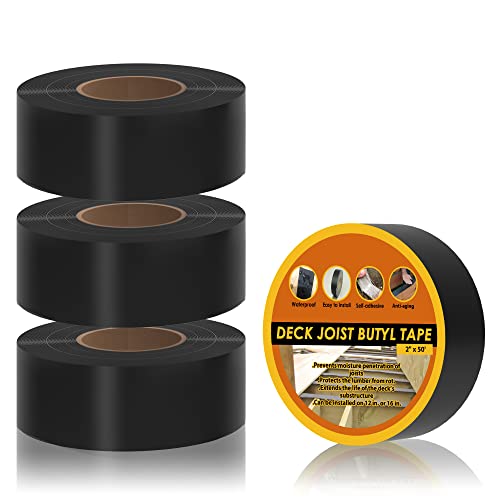
4 Rolls Deck Joist Tape:2" x 50' Butyl Joist Tape *4. With a total length of 200 feet, it can be easily customized by cutting it to the desired length. Deck Tape for Joists is compatible with most decking materials (wood, metal, etc.), saving you money on maintenance/replacement costs.

EXCELLENT INVESTMENT, EXTEND DECK LIFE: Wet joists will eventually lead to mold and rot. Joist Tape prevents water from getting under your deck and into the frame, extending the life of your deck. You no longer need to spend a lot of money on your deck, this affordable joist tape provides effective insurance for your deck infrastructure.
Building Code and Safety Requirements
Building a compliant deck requires you to adhere to specific code standards that govern everything from material selection to fastening methods and load capacity. You must consult your local building department before construction begins, as state, city, county, and township regulations may vary from International Residential Code standards. Your deck must support a minimum 50 pounds per square foot total load—10 pounds for structural deadweight and 40 pounds for live loads from occupants and furniture. Additionally, you’ll need to withstand concentrated loads of at least 200 pounds at any point. Code compliance necessitates ½ inch bolts or lag screws for ledger attachment to the house band joist. For ledger boards specifically, cedar wood’s rot resistance makes it an excellent material choice that helps maintain long-term structural integrity in outdoor conditions. Guardrails must meet minimum height requirements to ensure safety, particularly for decks elevated more than 30 inches above ground level. These safety regulations guarantee your deck’s structural integrity and protect against failure or collapse.