The Best Ways to Fasten Cedar Deck Boards
You’ll secure cedar deck boards most effectively with stainless steel fasteners, which resist the wood’s corrosive tannins and oils. Choose between face screwing for quick, strong installation or hidden systems for superior aesthetics. Apply two fasteners per board end, maintaining 1/8 to 1/4 inch gaps between boards. Pre-drill pilot holes to prevent splintering and guarantee proper perpendicular orientation. Comply with local New Jersey deck codes for structural integrity. The specifics of fastener selection, placement techniques, and long-term durability strategies reveal deeper optimization opportunities.
Choosing the Right Fastener Type for Cedar Decking
When you’re fastening cedar deck boards, what matters most is selecting fasteners that won’t corrode or stain your wood. Stainless steel screws offer superior fastener compatibility with cedar’s natural oils and tannins, making them your best choice. Hot-dipped galvanized fasteners work as economical alternatives if you pre-prime or paint your boards. You’ll want to avoid copper and electroplated options entirely, as cedar’s tannins actively disintegrate these metals.
For installation techniques, screws outperform nails markedly, delivering stronger holds and greater durability. Choose screws with coarse or aggressive threads that grip soft cedar effectively. Consider self-drilling or self-tapping varieties to eliminate pre-drilling and reduce splitting risk. For optimal results with cedar, aim for screws to penetrate at least 1 inch into the joists below for a secure hold. Prioritize drive systems like Torx or star drives to minimize camout during installation. After installation, proper deck maintenance—including sanding between boards—will help preserve your cedar’s appearance and protect your fasteners from long-term exposure. Ultimately, matching your fastener type to cedar’s chemistry guarantees long-lasting, stain-free results.

Defeat Rust for Good with 304 Stainless Steel - Tired of rusty screws ruining your project's look and strength? Get screws that stand the test of time. Crafted from premium 304 stainless steel, these construction screws resist corrosion in wet, coastal, and high-moisture environments, delivering lasting performance where ordinary screws fail.
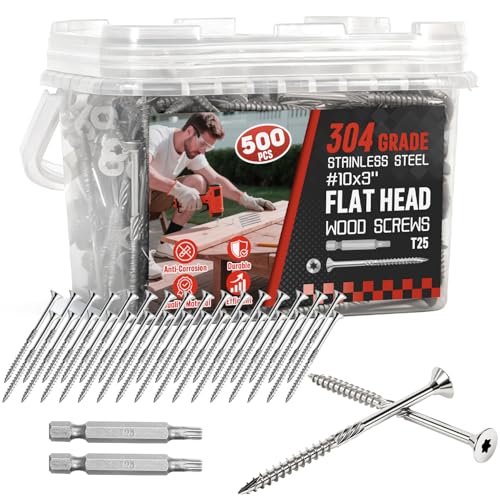
Defeat Rust for Good with 304 Stainless Steel - Tired of rusty screws ruining your project's look and strength? Get screws that stand the test of time. Crafted from premium 304 stainless steel, these construction screws resist corrosion in wet, coastal, and high-moisture environments, delivering lasting performance where ordinary screws fail.
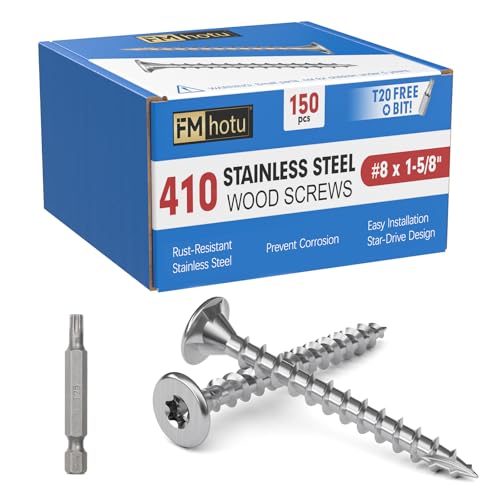
Premium Stainless Steel Construction: Crafted from 410 stainless steel, a top-grade alloy renowned for its exceptional strength and durability. Outperforming 304 stainless steel, these screws boast superior load-bearing capabilities, ensuring longevity even in challenging outdoor environments.
Face Screwing Vs Hidden Fastener Systems
Two primary fastening approaches—face screwing and hidden fastener systems—offer distinctly different trade-offs for cedar deck installation. Face screwing involves direct screw placement through boards into joists, delivering strong mechanical connections quickly with standard tools. However, visible fastener heads compromise fastener aesthetics and create a cluttered appearance.
Hidden fastener systems conceal fasteners using clips or grooved boards, achieving superior visual appeal that most customers prefer. This installation efficiency trade-off means longer setup times and specialized equipment requirements. Hidden systems allow controlled board movement, reducing splitting risks and water infiltration. Yet they typically cost $15–$30 more per square foot and provide less shear strength than face screws. For structural elements like joists and framing, nails offer superior flexibility and compliance with building codes, while face screws remain optimal for decking boards. Proper spacing and installation height considerations, much like those important in pergola design planning, ensure long-term structural integrity and optimal performance.
Your choice depends on prioritizing aesthetics and durability versus speed and cost-effectiveness.
Essential Fastening Techniques and Tools
Proper fastener selection and preparation form the foundation of a durable cedar deck installation. You’ll enhance installation efficiency by pre-drilling pilot holes slightly larger than screw threads, allowing boards to seat flush without binding. Speed up your drilling process and reduce physical strain using an impact driver rather than manual tools.
For fastener durability, select stainless steel screws with small cutter knives under the head to prevent splintering. When working with warped boards, step on them to hold them flat during fastening. A framing square guarantees joists remain perpendicular, while a level verifies structural alignment. Ensure all fasteners are exterior-grade and corrosion-resistant to protect against the elements.
Keep your circular saw and Sawzall readily available for trimming boards and posts to exact specifications, maintaining clean finishing details throughout your installation. Similar to railing post installation, using corrosion-resistant fasteners ensures your deck structure withstands moisture exposure and environmental stresses over time.
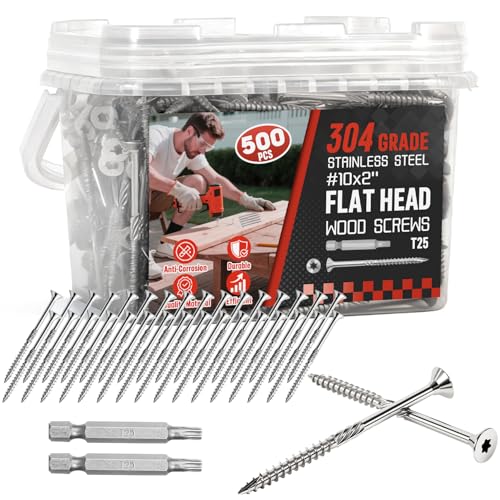
Defeat Rust for Good with 304 Stainless Steel - Tired of rusty screws ruining your project's look and strength? Get screws that stand the test of time. Crafted from premium 304 stainless steel, these construction screws resist corrosion in wet, coastal, and high-moisture environments, delivering lasting performance where ordinary screws fail.
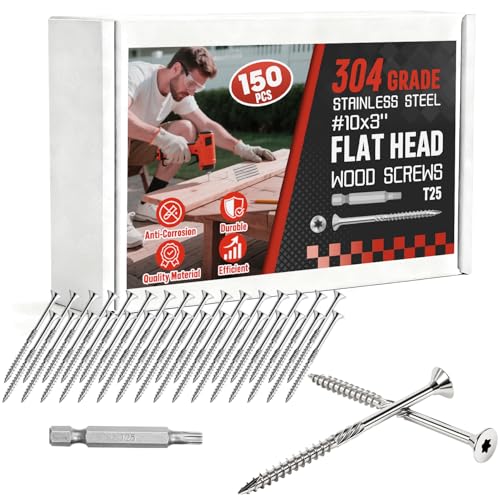
Defeat Rust for Good with 304 Stainless Steel - Tired of rusty screws ruining your project's look and strength? Get screws that stand the test of time. Crafted from premium 304 stainless steel, these construction screws resist corrosion in wet, coastal, and high-moisture environments, delivering lasting performance where ordinary screws fail.

【Package Contents】:Each package contains 100 #10 x 3-inch 316 stainless steel flat-head wood screws and one T25 Torx screwdriver bit.
Optimal Fastener Placement and Spacing Patterns
Once you’ve selected your fasteners and prepared your tools, you’ll need to master the spacing and placement patterns that keep your cedar deck stable and attractive. Maintain 1/8 to 1/4 inch gaps between boards, adjusting based on temperature and moisture conditions. Use spacing guides like sixteen-penny nails or commercial spacers to guarantee spacing accuracy across all installations. Position two fasteners per board end at each joist, distributing load evenly and preventing cupping. Verify fastener orientation remains perpendicular to the joist surface for ideal penetration depth of at least 1 1/4 inches. This systematic approach to fastener placement prevents board movement, maintains consistent gaps during expansion cycles, and preserves your deck’s structural integrity throughout seasonal changes. The joist size you’ve chosen, whether 2×6, 2×8, or 2×10, directly influences how fasteners distribute load across your deck frame and should inform your fastener spacing decisions.

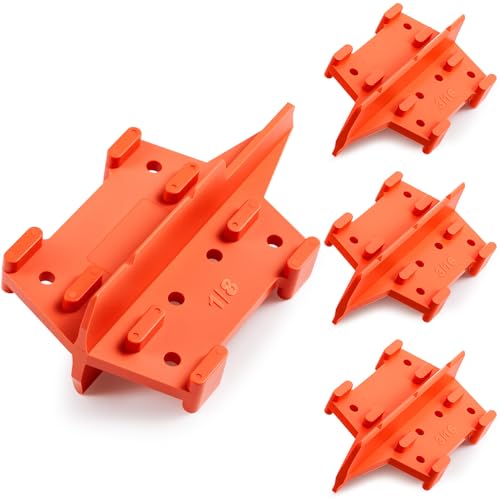
Functionality: the deck spacers feature either 1/8" or 3/16" shim edges; It spaces deck lumber apart to allow for adequate expansion and contraction to minimize guesswork; The efficient design of this decking tool ensure not only a visually appealing finish but also a solid foundation, elevating the quality and durability of your decking endeavors
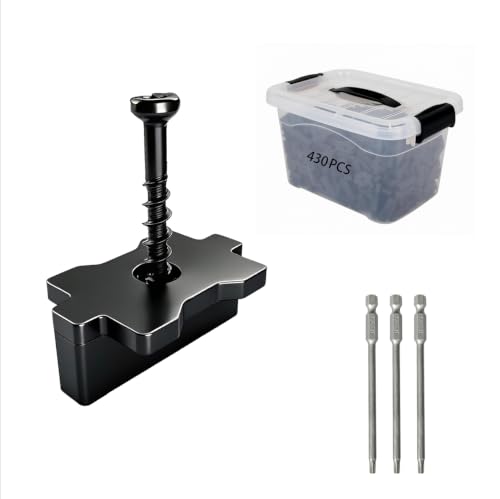
【Anti rust coating】: Our star hole screws are coated with three layers of anti rust coating, which has high corrosion resistance and is suitable for external and internal projects. It provides reliable anti rust and anti-corrosion protection while reducing friction during use, ensuring smooth installation and long-lasting performance.
Cedar-Specific Material Considerations
Cedar’s natural chemistry demands fastener selection that won’t corrode or stain your deck. The wood’s tannins and preservative oils react negatively with certain metals, creating rust streaks and structural compromise. Your best choice is stainless steel (grades 304 and 316), which offers superior corrosion resistance and won’t degrade cedar’s wood properties.
Hot-dipped galvanized fasteners work acceptably if they have adequate zinc coating thickness. Avoid electroplated, electro-galvanized, and copper options—these invite discoloration and corrosion. Using deck screws with appropriate coatings ensures durability while maintaining holding power without wood damage.
Beyond corrosion resistance, consider maintenance considerations and aesthetic factors. Brass and bronze screws provide excellent durability and visual appeal, though at higher cost. Aluminum and exterior-rated coated screws serve as budget-friendly alternatives. Your fastener choice directly impacts long-term deck performance, maintenance demands, and appearance. Proper protective gear and fastener disposal practices will prevent contamination from metal oxidation byproducts during deck installation and future maintenance.
Comparing Benefits and Drawbacks of Fastening Methods
Several fastening approaches exist for cedar deck installation, each presenting distinct trade-offs between holding power, aesthetics, labor intensity, and long-term performance. Face screwing delivers maximum strength and simple installation but leaves visible fasteners that compromise aesthetic impact. Hidden clip systems create pristine surfaces yet require specialized grooved boards and slower installation. Edge fastening balances both concerns—it hides fasteners on standard boards while reducing splitting risks, though it demands specialized tools. Screw-and-plug systems offer finished aesthetics but risk plug loosening over time. Traditional nailing remains affordable and quick but risks popping nails and visible heads. For a fastener-free surface with premium results, hidden fastening systems like TimberTech’s CONCEALoc provide superior aesthetics by concealing all fasteners within the board grooves. Your choice depends on prioritizing installation speed, budget constraints, aesthetic preferences, and cedar’s expansion characteristics. Additionally, ensure your deck fastening approach complies with New Jersey deck codes to guarantee structural integrity and safety standards. Evaluate which fastening methods align with your project’s specific requirements and long-term durability expectations.