How to Securely Attach 4×4 Posts to Your Deck for Railings
You’ll secure 4×4 posts by marking locations every 4-6 feet on center per IRC standards, then fastening them with ½” galvanized carriage bolts through the rim joist. Pre-drill pilot holes to prevent splitting, and use timber screws for enhanced holding strength. Corner posts require a third bolt through adjacent joists for lateral load distribution. Verify plumb with a 4-foot level before tightening fasteners. Install post sleeves for moisture protection and finish with base trim. The specific techniques for load distribution and code compliance reveal why each step matters.
Marking Post Locations on Your Floor Joist
Before you drill any holes or install hardware, you’ll need to mark your post locations with precision on the floor joist to confirm your deck’s structural integrity and code compliance. Start by measuring and marking the center of each post location at deck corners and along straight runs, using a measuring tape for consistent spacing. Apply marking techniques that facilitate visibility by using clear, bold lines that won’t fade during installation. Verify your marks align with railing design requirements and local building codes. Double-check all measurements before proceeding further. Use a framing square to establish parallel lines indicating the sides of your 4×4 post on the inner face of the rim joist. These reference marks provide critical guides for accurate hardware placement and plumb post installation. Adding 1-2 inches to measurements allows for easier fitting and accommodates any structural extensions or adjustments during installation. Proper post spacing ensures that your 4×4 posts remain within the 6-foot maximum spacing requirement to maintain structural stability and safety compliance.
Measuring and Planning Post Spacing
Getting your post spacing right is essential—it’s the foundation of a code-compliant railing that’ll safely handle lateral forces and support loads. For 4×4 wood posts, you’ll space them no more than 6 feet on center to meet IRC and IBC standards requiring 200-lb. concentrated load resistance.
Start by measuring your total railing length and dividing it by your desired spacing interval. Most residential applications use 4–6 foot intervals. Account for post height variations, corners, and directional changes when calculating spacing adjustments. Use a measuring tape and chalk line to mark consistent locations along your rim joist. Proper post placement at key points such as corners and stairways ensures your railing can effectively resist concentrated loads.
Before anchoring, verify local building codes—some jurisdictions mandate stricter requirements. Double-check all calculations and measurements to confirm uniform support around your deck’s perimeter. If your deck is older or poorly maintained, you may need to address structural restoration before installing new railings to ensure a solid foundation for post attachment.
Cutting 4×4 Posts to the Correct Length
Once you’ve marked your post locations and verified spacing intervals, you’ll need to determine the exact length each 4×4 post requires to meet code-compliant railing height standards. Calculate total post length by adding your desired railing height (typically 36 or 42 inches per local codes) to joist height, decking thickness, then subtracting top cap thickness. You can employ two cutting techniques: pre-installation cutting for efficiency or post-installation cutting for design flexibility. For post materials like pressure-treated 4x4s, use a circular saw with a speed square as your guide to guarantee square, level cuts. Mark cut lines on all sides for consistency. Secure posts with clamps to prevent movement during cutting, and verify measurements before making any cuts to avoid costly material waste. After installation, protect your wooden posts with protective treatments to safeguard against UV damage, moisture, and rot. Before installation, ensure you’ve checked local building codes to confirm all height and structural requirements for your specific region.
Understanding Post Sleeve Requirements
Three critical functions define post sleeve performance: they’ll protect your wooden posts from moisture damage, isolate treated lumber from aluminum components, and maintain the finished aesthetic of your railing system.
Post sleeve dimensions must accommodate standard 4×4 lumber with minimal clearance—sleeves should slide over posts without forcing. For angles exceeding 31°, you’ll need 6×6 sleeves when installing on the flat side to guarantee structural integrity.
The interior liner provides essential wood protection by preventing direct contact between treated posts and aluminum. You’ll position post sleeve skirts directly on decking, then slide sleeves over posts before installing base trim. Regular maintenance of your deck, including cleaning bird droppings and other debris, will help preserve the integrity of your railing system over time. To further protect wooden posts from weathering, consider applying UV protection coatings designed for outdoor wood surfaces.
Verify post sleeve length exceeds your railing height by at least 1-1/2 inches. Maintain maximum height compliance at 72 inches while guaranteeing all posts remain plumb and level across installations.

Premium Aluminum Material: Each set includes two durable half aluminum post base cover components and two stainless steel fasteners, with four sets per box. Featuring a matte UV-resistant coating, this 4x4 post base cover delivers superior sun protection, waterproofing, and rust resistance for long-lasting outdoor performance.

★ UNIVERSAL FOR ANY PLACE: Myard post protectors (also known as post sleeves, guards, fence armor, or shields) fit around any 4"x4" post (actual size 3.5"x3.5")—whether wood, metal, or vinyl— fit for the posts of decks, fences, mailboxes, or little free libraries.

MATERIAL: Crafted from die-cast aluminum alloy 384, finished with UV-resistant powder coating baked at high temperatures for lasting protection against rust and corrosion.
Preparing Your Posts With Pilot Holes
Now that you’ve selected and positioned your post sleeves, you’ll move into the foundational step that determines whether your railing system achieves the structural integrity and load-bearing capacity required by code: drilling pilot holes.
Your pilot hole techniques must prioritize precision and accuracy. Mark post locations using a level, then verify spacing meets local code requirements. For drill bit selection, match your hardware specifications: use 3/16″ bits for standard lag screws, 9/16″ for 1/2″ bolts, and 5/16″ for 5-inch galvanized screws.
Drill straight through the post’s center, guaranteeing holes accommodate full fastener length. Use a drill press when possible for ideal accuracy. Remove wood shavings afterward to reduce friction. This preparation prevents splitting and guarantees proper hardware engagement, directly affecting your deck’s load-bearing performance and code compliance. Maintaining consistent fastener flow throughout installation ensures all connections remain secure and properly tensioned under structural load. Proper fastener spacing also aligns with New Jersey’s balusters spaced requirement to maintain structural safety across your entire railing system.
Installing Carriage Bolts for Standard Posts
With your pilot holes drilled and verified, you’re ready to install the carriage bolts that’ll anchor your posts to the deck’s joists and establish the structural foundation your railing system depends on. Insert ½” galvanized carriage bolts through your pilot holes, positioning the first bolt 1″ from the joist’s top edge and the second 5-1/8″ below it. The square neck seats into wood, preventing rotation during carriage bolt installation. Use a hammer to seat the bolt head flush with the surface, then thread the washer and nut onto the protruding end. Tighten securely with a wrench, ensuring proper post fastening techniques maintain connection integrity. Two bolts per post distribute lateral loads evenly, meeting code requirements for structural stability. Your railing assembly must be able to support a 200-pound load to ensure strength and safety. Just as securing a functional roof structure requires proper fastening methods to support the weight of roofing materials, your carriage bolts must be tightened to specifications to prevent loosening over time.

Diameter: 1/2" | Length: 7" | Head diameter: 1.062" | Nut diameter: 1/2" | Nut wrench size: 3/4" | Washer outside diameter: 1-3/8"

Diameter: 1/2" | Length: 4" | Head diameter: 1.062" | Nut diameter: 1/2" | Nut wrench size: 3/4" | Washer outside diameter: 1-3/8"

Diameter: 1/2" | Length: 6" | Head diameter: 1.062" | Nut diameter: 1/2" | Nut wrench size: 3/4" | Washer outside diameter: 1-3/8"
Securing Corner Posts With Additional Bolts
Because corner posts bear concentrated lateral loads from two perpendicular deck sections, you’ll need to install a third ½”x6″ galvanized carriage bolt through the adjacent joist to achieve the structural redundancy your local code requires. Drill holes at identical diameters, maintaining level alignment to preserve post plumb. Space fasteners strategically to prevent wood splitting while distributing bulk material stress effectively.
You’ll secure washers and nuts on the post’s interior side, ensuring all hardware resists corrosion through galvanization. Complement bolt installation with exterior-grade blocking near the corner post to enhance load distribution and eliminate wobbling. Before final assembly, prepare the wood surface by using chemical paint strippers if the deck boards have existing finishes that could compromise structural adhesion. To meet safety standards, ensure your railing height meets the code-mandated minimum heights for residential decks. This reinforcement proves critical for meeting code-mandated minimum load requirements. Verify your installation against local regulatory guidelines—corner posts frequently demand inspection documentation and manufacturer compliance verification before final approval.

Carriage Bolts are designed to fasten a wooden face to either wood or metal

Ready to Use – Save Time & Effort: This complete 4-piece set includes 4 precisely matched 1/2-13 x 6" Carriage Bolts, 4 Hex Nuts, and 4 Flat Washers; No more separate purchases or surprise missing parts—get everything you need to start and finish your project efficiently

Strong Carriage Bolts: Carriage bolt is dome head bolt fastener with a locking neck style, which prevents turning when the nut it tightened or removed. Can be used in wood, metal applications
Using Timber Screws for Enhanced Support
While through-bolts deliver redundancy at corner posts, timber screws offer a faster, equally effective alternative for securing 4×4 posts to rim joists and blocking throughout your deck frame. Timber screw benefits include superior holding strength due to deeper threads and larger diameters, reducing loosening under vibration and outdoor conditions. Their corrosion-resistant coatings prevent rust degradation.
For installation techniques, predrill both post and blocking using 1/8″ or 3/16″ bits depending on screw size. Stagger screw locations vertically and horizontally to distribute loads and avoid intersection. Use 5″ or 8″ exterior-grade timber screws, driving them into blocking behind joists for maximum structural support. A high-torque drill with torx bits guarantees efficient, controlled installation. Proper fastener placement and spacing ensure your posts remain secure and aligned with your deck’s structural requirements. Keep posts plumb using levels while securing, preventing wood splitting and guaranteeing code compliance for lateral load resistance. For optimal framing performance, coordinate your post installation with pressure-treated lumber used in the substructure to ensure consistent durability and weather resistance throughout your deck.

SawTooth point ensures fast starts, reduces installation torque and eliminates the need for predrilling in most applications
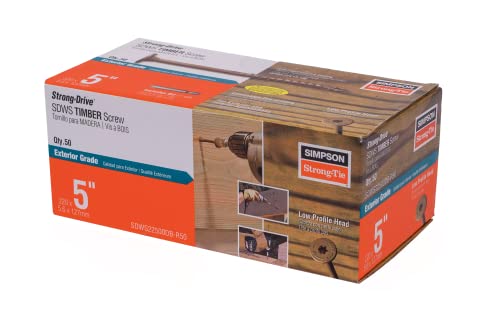
EASY DRIVING: These exterior screws have a 6-lobe T40 drive that provides positive engagement, making the screw easy to drive. The Sawtooth point ensures a fast start, eliminating the need for predrilling in almost every application.

DIMENSIONS & SUPERIOR STRENGTH: Thread Diameter 0.25" - Head Diameter 0.55" - Length 5" - Use with T30 Star Bit. Crafted from heat treated steel, LIONMAX heavy duty lag screws offer unmatched strength and reliability for long-lasting woodworking projects
Checking Plumb and Level During Installation
Ensuring proper post plumb in both vertical directions is critical to your deck’s structural integrity and code compliance. You’ll use a 4-foot level to verify post alignment before final fastening, sighting directly in front of the bubble while closing one eye for accurate readings. Apply treated-lumber shims or galvanized washers as necessary to achieve proper plumb without compromising fastener integrity. Your leveling techniques should include multiple checks throughout installation to maintain accuracy. Once you’ve positioned through-bolts in the center of 4×4 posts—located 1¾ inches from both floor joists—verify plumb again before tightening nuts. If using structural post mounts with leveling bolts, adjust the 5/16″ x 1″ bolts after main mounting bolts are positioned, then recheck plumb before final hardware tightening. Properly plumbed posts ensure your railing meets the minimum height requirements established by building codes to prevent accidental falls. Properly plumbed posts also support safe deck lighting installation, allowing you to position deck lights at the correct angles for optimal illumination and safety.
Finishing With Post Sleeves and Base Trim
With your 4×4 posts properly plumbed and secured, you’ll now install post sleeves and base trim to complete your railing’s finished appearance while concealing fasteners and structural elements.
Slide post sleeve skirts down first, positioning them on the deck surface. Carefully slide sleeves over posts, tugging downward to guarantee proper seating without forcing. Apply exterior-grade caulk to base trim underside before sliding it over each sleeve, particularly when using treated decking. Ensure proper ventilation beneath the deck around post bases to prevent moisture accumulation and wood degradation.
For post sleeve installation, pre-drill holes through the top support rail using 7/64″ or 3/16″ diameter bits before securing with exterior-grade screws. Confirm screws don’t penetrate entirely through rail sections. Just as thorough surface preparation ensures a professional deck finish, proper fastener placement ensures your railing’s structural integrity and longevity.
Attach post caps using exterior-grade metal construction adhesive on interior edges. Verify finished railing heights remain code-compliant—minimum 36″ for 36″ applications, 42″ for 42″ applications—throughout base trim and cap installation.

Package Information: you will get 8 pieces of vinyl post skirts, ideal for vinyl post hand and stair rails; Sufficient quantity will meet your using needs, and you can share them with your family

Six-Pack Wonder: Need to spruce up your porch? Our 6-pack of vinyl 3.5 inch x 3.5 inch post base covers has you covered! Ideal for wood and vinyl post handrails and stair rails, these post skirts offer ample quantity to meet all your needs—and then some. Share the extras with your family or save them for future projects!

【WHAT YOU WILL GET】You will receive 4pcs 4 *4 Inch post base, sufficient quantity will meet your using needs, and you can share them with your friends. 4pcs post bas adopt split design, which is convenient for installation.