How to Fit Decking Boards: A Step-by-Step Guide
You’ll start by preparing your site and leveling the ground, then assess your joist spacing—typically 12 to 16 inches on-center. Next, you’ll establish chalk lines for alignment and determine proper board gaps: 3/16″ for seasoned wood or 1/8″ to 1/4″ for composite. Use stainless steel fasteners, pre-drilling to prevent splitting, and drive them 1 inch into joists. Install boards perpendicular to joists, maintaining consistent spacing for ventilation. The specific techniques vary notably depending on your material type and fastener system.
Preparing Your Materials and Site
Before you lay a single board, you’ll want to clear your site completely—removing all vegetation, roots, rocks, and debris that could compromise your foundation or joist placement. Level the ground to prevent uneven settling, and check for underground utilities before excavation.
Assess drainage patterns and soil stability, adding gravel beneath footings if necessary to prevent water pooling and wood rot. Verify the ground slopes away from your house.
For material selection, choose decking appropriate for your site’s moisture exposure and sun conditions. Pressure-treated wood, composite, or PVC each offer different maintenance profiles. Composite wood offers weather resistance and durability without requiring painting or sanding after installation. Select corrosion-resistant hardware like stainless steel screws suited to your climate.
Order extra boards, fasteners, and supplies to account for cutting waste and mistakes. Consider growing fast-growing vines over a pergola structure built above your deck to provide additional shade and aesthetic appeal. Prepare a thorough tool and material list to avoid construction delays.
Understanding Joist and Substructure Requirements
The foundation of your deck—its joist and substructure system—determines how well your decking boards will perform and how long they’ll last. You’ll need to understand joist spacing requirements, which typically range from 12 to 16 inches on-center, depending on your decking material and board thickness. Composite and PVC materials generally require closer spacing than pressure-treated timber. Before installing boards, verify your substructure stability by confirming the frame is level and square. Install blocking between joists to minimize flex and improve rigidity. For optimal performance, blocking should be installed at intervals of 4 to 6 feet to reduce joist movement and prevent excessive gapping between boards. Position each joist with its crown facing upward to prevent sagging. Use galvanized or stainless steel hardware throughout. Inspect all framing for warping or damage beforehand. Your joist size selection should be based on the span and load requirements of your specific deck design. Proper joist spacing and substructure stability work together to create a durable, bounce-free deck.
Selecting the Right Fasteners
Choosing the correct fastener system will make or break your deck’s longevity and appearance. You’ll encounter two primary fastener types: face fasteners for solid edge boards and hidden fasteners for grooved designs. Fastener compatibility matters greatly—grooved composite boards require clips or edge screws, while solid edges work best with screws and plugs.
Consider your board material next. PVC and PE composites accept both fastener types, though some premium boards demand brand-specific options like Fiberon EDGE Clips. Universal alternatives like CAMO EDGE offer flexibility across most grooved boards.
For durability, prioritize stainless steel or epoxy-coated fasteners that resist corrosion, similar to how resistance to rust and corrosion extends the lifespan of outdoor materials in various climates. Gusseted clips provide superior lateral strength compared to standard designs. Methods like specialized clips inserted into board grooves can secure boards discreetly beneath the surface for a seamless appearance. Finally, select color-matched screws and plugs to achieve that seamless, professional finish you’re after.
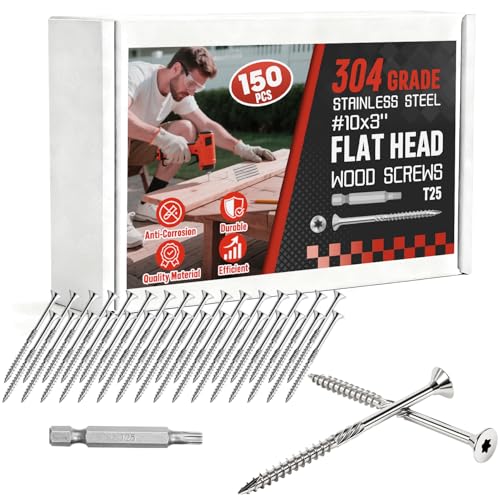
Defeat Rust for Good with 304 Stainless Steel - Tired of rusty screws ruining your project's look and strength? Get screws that stand the test of time. Crafted from premium 304 stainless steel, these construction screws resist corrosion in wet, coastal, and high-moisture environments, delivering lasting performance where ordinary screws fail.

BUILT TO LAST WITH 316 GRADE STAINLESS STEEL - These stainless steel wood screws are made from premium 316 Marine Grade Stainless Steel for superior strength. No more rust on your timber projects! Ideal for long-lasting performance in decking, fencing, and all types of outdoor woodwork. This steel prevents ugly rust streaks and stains on outdoor timber, keeping your structures looking clean, polished, and professional season after season.
Proper Fastener Installation Depth and Technique
Once you’ve selected the right fasteners, proper installation depth and technique become critical to your deck’s structural integrity and appearance. You’ll drive fasteners no more than 1/16″ below the board surface—flush is ideal. Use your drill’s clutch setting to control depth and prevent overdriving.
For fastener placement, install fasteners perpendicular to the board surface, keeping them at least 1″ from board edges and 3/4″ from ends. Use a string line to maintain alignment.
Pre-drilling techniques are essential, especially near board ends where splitting occurs. Match your drill bit diameter to the fastener shank size, then drill pilot holes through the board into the frame. For composite decking, pre-drill all face fastener installations. Consider using naturally durable woods like cedar or redwood if building with wood materials, as they resist weathering better than untreated softwoods. To ensure a secure hold, your fastener should penetrate at least 1 inch into the joist below the decking boards. These practices guarantee professional results and lasting performance.
Spacing and Aligning Your Decking Boards
Proper spacing and alignment determine whether your deck will resist the natural expansion and contraction that occurs with temperature and moisture fluctuations. You’ll want to establish deck board alignment by snapping chalk lines along your floor joists for the first board installation, ensuring it runs perfectly straight.
Your spacing techniques depend on your decking material. For dry, seasoned wood, use 3/16″ gaps—a 16D nail serves as a convenient spacer. Composite decking requires 1/8″ to 1/4″ minimum spacing, with exact requirements varying by fastener type and manufacturer specifications. Most composite decking brands recommend joist spacing of 16 inches on center for optimal deck performance and longevity.
When installing freshly treated lumber, you should place boards tight together; natural shrinkage during drying creates proper spacing automatically. End-to-end spacing should be adjusted based on installation temperature to accommodate potential expansion in warmer conditions and contraction in colder environments. Calculate your board layout by dividing total deck width by combined board width plus gap measurement to minimize narrow edge pieces.

Deck Spacers: You will receive 6 orange deck spacers. Their vibrant color makes them easy to identify during installation, and the clear size markings on the surface ensure smooth installation of new decking boards.

【5-Size Deck Spacers & 20-Pack】This listing: Mix-Size set. Quantity: 20 spacers per box, with 5 sizes (4 of each size). Ideal for long spans decking.▼Included Color & Size: Red: 1/8" (3.2mm) spacing, Orange: 5/32" (4mm), Yellow: 13/64" (5.2mm), Green: 1/4" (6.4mm), Blue: 5/16" (8mm).

PRECISE 1/4 IN. DECK BOARD SPACING TOOL FOR UNIFORM GAPS: Deck spacer tools maintain consistent 1/4 in. spacing between boards during installation, creating a clean, professional appearance and ensuring structural spacing performance.
Installing Boards With Precision
As you prepare to lay your first board, you’ll need to establish a rock-solid reference line that’ll guide every subsequent row across your deck. Snap a chalk line across the deck’s full length, then verify it’s perfectly straight by cross-measuring from multiple points. This baseline guarantees proper board orientation throughout installation.
For cutting techniques, use a circular saw or miter saw to achieve square ends and exact lengths. Set your saw depth carefully to avoid hitting joists beneath. Attach a guide board to maintain perfectly straight cuts.
Pre-drill fastener holes 1″ from board edges using a 1/8″ drill bit. Drive composite screws flush with the surface, keeping them perpendicular and aligned in precise rows. Use a speed square as your fastening guide, checking alignment after each row to catch mistakes early. Maintaining consistent spacing between boards using spacers will ensure proper ventilation and a professional appearance throughout your deck installation.

BUILT FOR COMPOSITE DECKING: These composite deck screws fasten composite and wood decking securely, with a dual-thread design that pulls boards tight and eliminates the plastic fiber mushrooming common with composite boards.
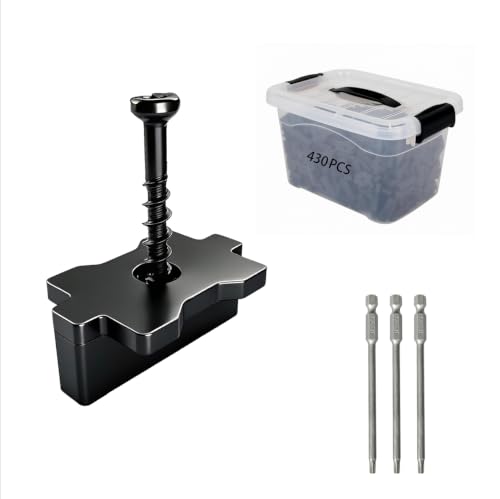
【Anti rust coating】: Our star hole screws are coated with three layers of anti rust coating, which has high corrosion resistance and is suitable for external and internal projects. It provides reliable anti rust and anti-corrosion protection while reducing friction during use, ensuring smooth installation and long-lasting performance.
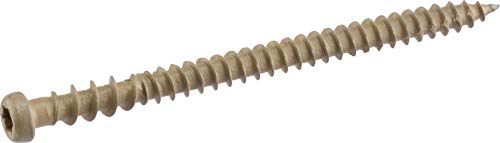
BUILT FOR COMPOSITE DECKING: These composite deck screws fasten composite and wood decking securely, with a dual-thread design that pulls boards tight and eliminates the plastic fiber mushrooming common with composite boards.
Special Considerations for Different Board Types
The board material you’ve selected—whether composite, pressure-treated wood, or premium hardwood—fundamentally shapes your installation approach, fastening strategy, and long-term maintenance requirements. Composite advantages include hidden fastener compatibility on grooved boards, eliminating visible screws and reducing maintenance demands. However, you’ll need corrosion-resistant fasteners specifically designed for composite profiles. Wood considerations differ considerably: pressure-treated boards demand regular power washing and staining, while hardwoods require less upkeep. You must accommodate wood expansion by spacing boards appropriately based on species and humidity conditions. Pre-drill pilot holes in wood to prevent splitting. Board thickness and width affect stability and durability—thicker boards handle heavy loads better, while narrower boards enable detailed patterns. For composite boards with grooved profiles, fasteners should be spaced consistently across all joists, typically with joist spacing not exceeding 16 inches on center. If your deck space receives significant sun exposure, consider how shade coverage solutions like shade sails or louvered systems can enhance comfort in your outdoor living area. Verify fastener compatibility with your specific board type before installation begins.

【Complete accessories】 You will receive 500 pieces of hidden fasteners in the package, and comes with 500 pieces of black deck screws made of Stainless Steel and 2 drive bit, which can meet 200-250 square feet of deck installation.

💯Features: Hidden fasteners are specifically designed to effortlessly install composite decks with grooves, making the installation process a breeze. These universal hidden deck fastener clips offer you a top-notch solution, ensuring a deck that looks flawless and free of any visible fasteners.

EDGE Clips are for 90° grooved deck installations with wood, composite, capped composite, and PVC