How Much Overhang Should Deck Boards Have?
You should plan for deck board overhangs between ¾ and 1¾ inches, with industry best practice recommending 1-2 inches. Your specific limit depends on board material, thickness, and joist configuration. Composite decking typically allows less overhang than hardwood due to durability concerns. Exceeding manufacturer specifications risks structural failure and safety hazards. Following proper cantilever ratios and building codes guarantees your deck’s longevity and stability. The specifics of your situation require closer examination.
Recommended Overhang Standards for Composite Decking
When you’re planning your composite deck installation, you’ll need to understand that most manufacturers and building codes recommend an overhang between ¾ inch and 1¾ inches, with 1-2 inches serving as the industry best practice. These overhang measurements guarantee structural integrity while preventing sagging or board weakening.
Your installation guidelines must account for manufacturer specifications, as different composite products vary greatly. Trex, for example, specifies a maximum perpendicular overhang of just ½ inch, while OVAEDA supports approximately 2 inches. Exceeding recommended limits creates safety hazards and compromises deck performance.
Before cutting boards, consult your specific manufacturer’s installation documentation. PVC and capped composite decking typically require tighter tolerances than standard options. Proper joist spacing at 16 inches on center for standard applications will support your board overhang and ensure structural stability. Maintaining consistent spacing and airflow between boards through proper installation techniques like hidden fastener systems ensures your deck’s longevity and safety standards. Proper overhang measurements, combined with adequate spacing and airflow, maintain your deck’s longevity and safety standards.

【Upgraded materials】The Deck Bracket is made of Strong Nylon 6/6, contains 20% sun-proof fiberglass. Our deck railing brackets have high hardness, not easy to crack, corrosion-resistant, suitable for both indoor and outdoor.

【Sturdy & Durable Bracket】SANKINS deck railing bracket is constructed from high-quality PP material, ensuring durability and long-lasting performance. The 2x4 railing bracket has qualified weight-bearing capacity with thick plastic and solid interior. Compared with other materials that are easily deformed and brittle to break, our Deck Railing Brackets is the most valuable choice in terms of corrosion resistance, safety and durability of use.

Pre-drilled Nylon Material -- Made of high quality nylon that will never corrode or break. Thickness up to 3cm, Eapele railing connectors create a strong and effective support to the deck rail
Material Thickness and Its Impact on Overhang Capacity
Because thicker boards resist flexing more effectively across span distances, you’ll find that material thickness directly determines your deck’s maximum allowable overhang. Standard deck board materials fall into three categories: 0.75″ (1× wood), 1″ (5/4 composites and PVC), and 1.5″ (2× lumber). Thicker options span greater distances between joists without deflection, expanding your overhang capacity substantially.
When performing overhang calculations, recognize that hardwood decking accommodates up to 1.5 inches maximum, while composite materials cap out at 1 inch or less due to durability concerns. Wood’s natural density provides superior performance compared to engineered alternatives. However, wood’s susceptibility to swelling and shrinkage requires careful consideration during calculations. Maintaining proper board spacing throughout installation prevents moisture-related expansion issues that could compromise overhang integrity. Your joist configuration also influences outcomes—2×10 joists at 16″ centers allow cantilever extensions up to 3 feet 5 inches, establishing your baseline for board overhang specifications.
Safety Risks Associated With Excessive Overhang
Exceeding your deck’s recommended overhang capacity creates multiple structural vulnerabilities that directly compromise safety. When boards extend too far beyond support joists, they’ll flex and crack under pressure, generating trip hazards and injury risks. You’ll weaken overall deck stability, particularly at concentrated load points where localized collapse becomes possible.
Uneven overhangs cause unpredictable board movement, further destabilizing your structure. Without adequate joist support, cantilever boards accelerate water damage and material deterioration, weakening your framing system. Regular maintenance and adequate drying times between protective applications help preserve your deck’s structural integrity. To prevent further degradation, consider applying stain-blocking products to protect exposed wood from moisture penetration. Statistics show over 6,500 deck-collapse injuries occur annually in the U.S., with many linked directly to inadequate overhang support.
Prioritize injury prevention by adhering to building codes limiting overhang to approximately 3/4 inch for composite materials. Proper compliance protects both your deck’s longevity and your family’s safety.
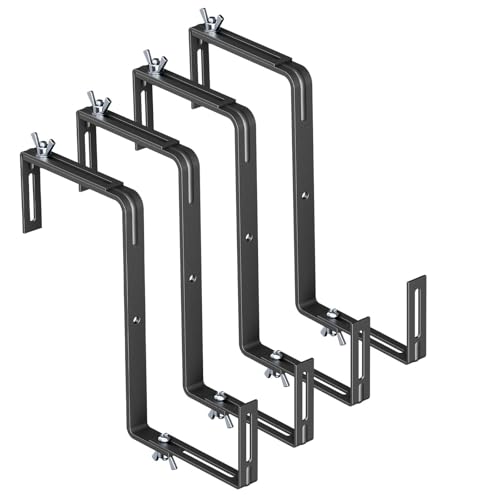
ADJUSTABLE DESIGN: Flexible sizing accommodates flower boxes from 2 inches to 7.8 inches wide with adjustable width from 4.9 inches minimum to 7.8 inches maximum, fitting various planter box dimensions

Smart Swivel Design -- These ingenious brackets take the frustration out of railing installation! The vertical swivel feature allows up/down adjustment to perfectly match your staircase or deck angle. No more fighting with fixed-angle brackets or making complex cuts - just adjust, tighten, and enjoy perfectly aligned railings every time. Makes DIY projects actually doable!

Heavy-Duty Galvanized Steel — Built for Secure Level Connections: Made from strong galvanized steel with a protective black coating, these level railing brackets provide dependable support at key connection points while helping resist rust and corrosion outdoors. The durable finish stands up to rain, humidity, and seasonal weather and coordinates cleanly with Guwezoy railing panels, posts, gates, and accessories for a consistent, finished look.
Joist Cantilever Rules and Building Code Requirements
Building codes establish specific cantilever limitations to prevent the structural failures that create those safety hazards. You’re restricted to cantilever lengths no more than one-fourth of your adjacent joist span, per the 2015 and 2020 IRC.
Your backspan requirements are equally critical. You must maintain at least a 2:1 backspan-to-cantilever ratio, meaning your joist’s supported length behind the beam must be twice the cantilever distance. Many professionals recommend a 3:1 ratio for enhanced stability.
You’ll also need proper joist-to-beam connections with uplift resistance, especially for cantilevers exceeding 24 inches. Blocking at the beam supports the full joist depth. These requirements work together to counterbalance loads and prevent excessive deflection or structural failure.
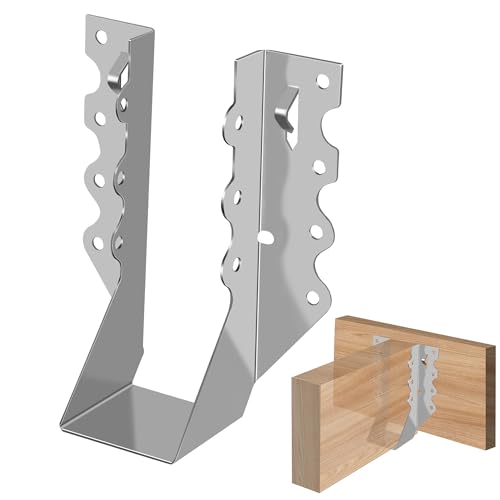
High-Quality Steel Joist Hangers: Designed for pressure-treated lumber, these 2x6 brackets for wood provide strong and long-lasting joist-to-header connections in wood-framed buildings, including roofs, decks, floors, and ceilings

Fits Nominal 2x6 or Actual 2x6 Rough Cut lumber

1/8" steel bracket support 1000 lbs. each. Offers multiple 1/4" mounting holes per side
Balancing Structural Integrity With Aesthetic Appeal
When you’re designing a deck overhang, you’ll need to reconcile two competing priorities: the structural limitations imposed by building codes and material properties, and the visual finish that appeals to homeowners. A standard aesthetic overhang of approximately 3/4 inch provides visual balance without excessive projection, creating a finished edge that enhances your deck’s appearance. However, you can’t sacrifice safety for looks. Composite decking typically permits only 10–13 mm overhangs, while wood allows slightly more flexibility. You’ll achieve the best result by consulting manufacturer specifications and local building codes first, then adjusting your design elements accordingly. Professional deck work often involves sanding and cleaning as essential prep work to ensure proper material preparation. Before installing your deck boards, ensure the underlying structure has adequate moisture content below 15% to prevent warping that could compromise your overhang dimensions. This approach guarantees your overhang maintains both structural integrity and the polished aesthetic you’re seeking.