The Ultimate Guide to Restaining Your Deck Like a Pro
You’ll transform your weathered deck by following a systematic approach: inspect for rot, clean thoroughly with pressure washing and oxygen bleach, sand progressively from coarse to fine grit, then select and test your stain carefully. Apply thin, even coats following the wood grain using brushes, rollers, or sprayers. Maintain wet edges to prevent lap marks. Finally, establish a maintenance routine with annual inspections, regular cleaning, and reapplication every 2-3 years. The complete process reveals expert techniques that’ll elevate your results markedly.
Preparation Essentials
Before you can achieve a professional-looking restain, you’ll need to prepare your deck thoroughly through inspection, cleaning, and surface treatment. Start with an extensive deck inspection, probing posts and wood contact points with an awl to detect hidden rot or decay. Replace any loose, split, or rotting boards and corroded fasteners with rust-resistant alternatives. Remove all furniture, plants, and debris to access the entire surface.
Next, address material safety by gathering appropriate protective equipment including gloves, goggles, and masks. Select your stain type based on wood composition and environmental exposure. Prepare cleaning agents and sanding supplies ahead of time to maintain workflow efficiency. Cover nearby landscaping with tarps to shield plants from cleaning agents and stain overspray. Apply a wood brightener to restore the wood’s natural pH balance and improve stain adhesion. Allow the wood to dry completely and test by observing whether water beads up on the surface before proceeding. This methodical approach guarantees ideal stain adhesion and professional results.
Surface Cleaning Techniques
With your deck properly inspected and your materials gathered, you’re ready to clean the surface—a critical step that removes years of accumulated dirt, mold, and weathering that’ll interfere with stain adhesion.
You’ve got two primary deck cleaning approaches. Pressure washing with a wide fan tip and moderate pressure effectively removes stubborn stains and mold, though you’ll need safety precautions and careful nozzle control to avoid gouging. Hand scrubbing with stiff-bristle brushes works better for sensitive wood or composite surfaces. Apply oxygen bleach cleaners formulated for your specific deck material, allowing adequate sit time before rinsing thoroughly. For tough stains that resist initial cleaning, combining stain stripper application with pressure washing can provide more effective results. Systematic rinsing from one end across eliminates all residue. For composite decks, use lower pressure settings and gentler techniques. To prevent surface damage during cleaning, always rinse thoroughly to prevent residue buildup that could compromise stain adhesion and durability. Allow complete drying before proceeding to staining.

Complete set: Twinkle Star Pressure Washer Tips contains 1 Black Brass soap nozzle, 1 Red Stainless Steel Nozzle Tip (0 Degree), 1 Yellow Stainless Steel Nozzle Tip (15 Degree), 1 Green Stainless Steel Nozzle Tip (25 Degree), 1 White Stainless Steel Nozzle Tip (40 Degree)

NOTE: Please see Image 6 and find the orifice you need based on working pressure and flow rate (GPM). The orifice of these nozzles are 2.5. Different angle allows you to clean hard-to-reach areas quickly and easily

Wide Applicability: Pressure washer rotating nozzle can be used in most of the high pressure cleaner. Great for rust removal, metal or plastic tank cleaning, boat cleaning, cleaning dirty garage floors, stripping paint from wood exterior, and removing mud and clay from highway and construction equipment
Sanding and Smoothing
Precision transforms your deck’s surface into a receptive canvas for stain. You’ll follow a strategic grit progression to achieve the best results. Start with coarse grit (60-80) to remove old finishes and stubborn coatings, then move to medium grit (80-100) for smoothing and eliminating scratches. Finish with fine grit (120-150) to create the super-smooth surface necessary for professional stain absorption.
Your sanding techniques matter greatly. Sand along the wood grain direction using long, overlapping strokes with consistent, moderate pressure. This prevents cross-grain scratches and guarantees even texture. Random orbital sanders handle large, flat areas effectively without gouging softwoods. Detail sanders reach tight corners and railings. Replace worn abrasives periodically and check progress frequently throughout the process. For optimal results, maintain lower pressure settings to avoid damaging the wood surface during preparation. Once sanding is complete, ensure your deck is thoroughly cleaned and dry before applying stain to achieve optimal stain adhesion and finish quality.

Detail Sander Sandpaper: 50 pcs 80 grit palm sander sandpaper with 12 holes 5-1/4 x 3-3/4” (13.5cm x 9.5cm), suitable for Black and Decker mouse detail sanders including BDCMS20C, BDEMS600...

Detail Sander Sandpaper: 50 pcs 120 grit palm sander sandpaper with 12 holes 5-1/4 x 3-3/4” (13.5cm x 9.5cm), suitable for Black and Decker mouse detail sanders including BDCMS20C, BDEMS600...

Detail Sander Sandpaper: 50 pcs 220 grit palm sander sandpaper with 12 holes 5-1/4 x 3-3/4” (13.5cm x 9.5cm), suitable for Black and Decker mouse detail sanders including BDCMS20C, BDEMS600...
Stain Selection and Testing
Now that you’ve prepared your deck’s surface, selecting the right stain becomes critical to achieving both the aesthetic and protective results you’re after. You’ll need to assess stain compatibility with your specific wood type—cedar demands semi-transparent formulations, while pressure-treated pine requires solid coverage to mask imperfections. Consider your deck’s condition next. Newer wood showcases transparent stains beautifully, whereas weathered surfaces benefit from semi-transparent options that camouflage flaws.
Evaluate your climate too. Harsh environments demand solid stains for maximum UV and moisture protection. For maximum durability, consider solvent-borne, oil-based stains which provide superior protection compared to water-based alternatives. Test your chosen stain on inconspicuous deck areas before full application. This reveals true color retention potential and guarantees the formulation—whether oil-based or water-based—performs as expected on your particular wood. Testing prevents costly mistakes and assures professional results. Applying even, thin coats following the wood grain ensures uniform coverage and optimal durability of your chosen stain.
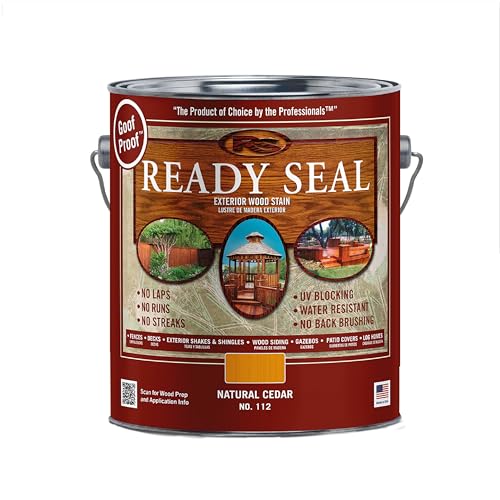
NO LAPS, RUNS OR STREAKS: Goof Proof formula with no back brushing required; ideal for exterior wood projects

NO LAPS, RUNS OR STREAKS: Goof Proof formula with no back brushing required; ideal for exterior wood projects

ONE‑COAT PROTECTION: Oil‑base formula seals and protects exterior wood surfaces in a single coat, delivering strong defense against water and UV exposure
Application Methods and Tools
Once you’ve selected and tested your stain, you’re ready to apply it—and your choice of application method will directly impact both your efficiency and the quality of your final finish.
You’ll find four primary techniques suited to different deck conditions. Roller techniques excel on large, flat surfaces, offering speed and minimal lap marks. Brush application provides precision control on uneven areas and end-grain, guaranteeing thorough penetration. Lambswool effectiveness shines for covering expansive sections while reaching cracks and crevices without frequent reloading.
For vertical elements like railings, sprayer tips deliver exceptional results—spray first, then backbrush immediately for even distribution. The most effective approach combines methods: spray verticals, roll main deck areas, then brush edges and gaps. Maintaining wet edges throughout prevents lap marks and guarantees professional-quality results.
Before applying stain, ensure your deck has dried completely to prevent moisture from interfering with stain absorption and adhesion. Allow sufficient drying time between coats to ensure proper adhesion and a durable finish that withstands weather exposure.

Our no-shed microfiber roller covers ensure a perfect paint or stain finish for stunning results.

Stains flat surfaces and between boards at the same time

Bates deck stain brush features a 7.5-inch width for expansive and even application, ideal for efficiently staining decks, fences, and other large wooden areas.
Finishing and Maintenance
After you’ve applied your final coat, the work isn’t complete—proper finishing techniques and maintenance protocols are what transform a freshly stained deck into a durable, professional-looking outdoor surface.
Your finishing techniques should include lightly sanding raised grain after the first coat dries, then wiping away all dust with a tack cloth before applying subsequent coats. Inspect for missed spots and uneven coverage, touching up as needed. Allow the final coat to cure fully per manufacturer’s instructions—typically 24–48 hours before light foot traffic.
Essential maintenance tips involve avoiding heavy use or furniture placement until complete curing occurs, which may extend to 72 hours depending on weather conditions. Remove painter’s tape carefully, then clean all tools immediately. When fastening down any loose boards, consider using screws for superior holding power to prevent decking from warping or popping up over time. For boards secured with ring shank nails, you may need to carefully remove and replace them with screws for better long-term performance. Follow local regulations when disposing of rags and leftover stain to protect your environment.
Long-Term Care and Prevention
Because your deck’s longevity depends on proactive management rather than reactive repairs, you’ll want to establish a thorough long-term care strategy that addresses inspection, cleaning, environmental protection, and moisture control. Conduct annual inspections to identify wear, fungus, and soft spots—early damage assessment prevents costly restoration. Sweep regularly and clean 1-2 times yearly with eco-friendly solutions, avoiding harsh pressure washing that forces water into wood fibers. To maximize stain absorption and ensure even coverage, apply a brightening solution while the deck surface is still wet to open up the wood’s pores. Reapply UV-protective sealants every 2-3 years based on exposure and climate conditions. Remove standing water and debris promptly to prevent warping and decay. Maintain proper ventilation by trimming surrounding vegetation. Sand rough patches before restaining to guarantee ideal finish adhesion, using medium-grit sandpaper to open the wood pores for better stain penetration. Keep detailed maintenance records to track product performance and refine your deck care budget effectively.