What Size Boards Are Best for Your Deck Construction?
You’ll want to match your board size to your joist spacing and deck’s visual goals. Standard 2×6 or 5/4×6 boards work well for most decks, with 5/4 boards allowing wider 24″ joist spacing. Thicker boards offer superior load-bearing capacity, while wider boards create modern aesthetics with fewer seams. Composite boards last 25–50 years versus wood’s 10–15 years, though they cost more upfront. Your local building codes will determine minimum thickness requirements. The right choice depends on your deck’s footprint, intended use, and maintenance preferences—discover how each factor influences your decision.
Understanding Standard Deck Board Dimensions
The foundation of a well-built deck starts with selecting the right boards, and you’ll quickly reveal that lumber sizing involves two completely different measurement systems. Nominal dimensions represent rough, unmilled lumber sizes used for ordering and labeling, while actual deck board measurements reflect the true dimensions after planing and finishing. A 5/4 x 6 board, for example, measures 1 inch thick by 5.5 inches wide in reality, though its nominal designation suggests otherwise. Understanding this distinction proves critical when calculating material needs and ensuring structural compliance. Standard nominal sizes include 2 x 4, 2 x 6, and 5/4 x 6, with the latter being most typical for deck surfaces. These variations, combined with lumber grading standards, determine your board’s durability, strength, and performance characteristics for your specific project requirements. Board selection also influences joist spacing requirements, as 1×4 and 1×6 boards accommodate 16″ center spacing while 5/4 boards allow wider 24″ center spacing. Proper deck construction also requires attention to complementary structural elements, such as ensuring balusters are spaced appropriately to meet safety standards and building code compliance.
Comparing Wood and Composite Board Options
Once you’ve selected your board dimensions, you’ll face a fundamental choice between solid wood and composite materials, each offering distinct advantages and trade-offs. Wood board advantages include lower initial costs, natural aesthetic appeal, and superior comfort—wood stays cooler underfoot and provides better traction when wet. However, wood demands rigorous annual maintenance: staining, sealing, and sanding to combat rot and insect damage. For outdoor wood applications, pressure-treated lumber significantly extends the lifespan of your deck while reducing maintenance requirements compared to untreated wood alternatives.
Composite boards eliminate these maintenance burdens, lasting 25–50 years versus wood’s 10–15 year lifespan. They resist warping, splintering, and decay without chemical treatments. Composite board disadvantages include higher upfront expenses and heat absorption, though newer capped technologies reduce surface temperatures by up to 35%. You’ll also encounter increased slipperiness when wet. When installing composite decking, color-matched composite screws ensure a seamless appearance while providing secure fastening to your joists. Evaluate your budget, climate, and maintenance capacity when deciding between these options.

BUILT FOR COMPOSITE DECKING: These composite deck screws fasten composite and wood decking securely, with a dual-thread design that pulls boards tight and eliminates the plastic fiber mushrooming common with composite boards.

Designed for Composite Materials: Specially formulated composite decking screws are excellently designed and specifically engineered for composite/PVC and wood decking applications, ensuring optimal performance for home renovation and general household use in both indoor and outdoor projects
Designed for Composite Materials: Specially formulated composite decking screws are excellently designed and specifically engineered for composite/PVC and wood decking applications, ensuring optimal performance for home renovation and general household use in both indoor and outdoor projects
How Board Thickness Affects Strength and Performance
While board dimensions establish your deck’s overall layout, thickness—often overlooked—fundamentally determines structural performance and longevity. Thicker boards demonstrate superior load bearing capacity and deflection resistance, reducing flex under foot traffic and weight distribution. A 3/4″ softwood board deflects 0.09″ at 16″ joist spacing, while denser hardwoods provide greater rigidity at thinner dimensions due to enhanced material density. Brazilian ipe 1×6 boards maintain structural integrity comparable to standard 5/4×6 boards, flexing only 1mm more despite their reduced thickness. Your joist spacing directly correlates with required board thickness—16″ spacing accommodates standard boards, while 24″ spacing demands thicker materials or engineered composites. Installing boards with hidden fasteners creates a seamless appearance while reducing the risk of splitting and maintaining uniform spacing across your deck. Proper framing for drainage and ventilation is also essential to prevent moisture damage and extend your deck’s lifespan. Selecting appropriate thickness guarantees your deck resists sagging and maintains stability throughout its lifespan.

【Sufficient Quantity】The package includes 50 pieces Christmas light clips, adequate quantity can meet your needs in use. Enjoy the holiday celebration hour by sharing these holiday light clips with your family and friends.
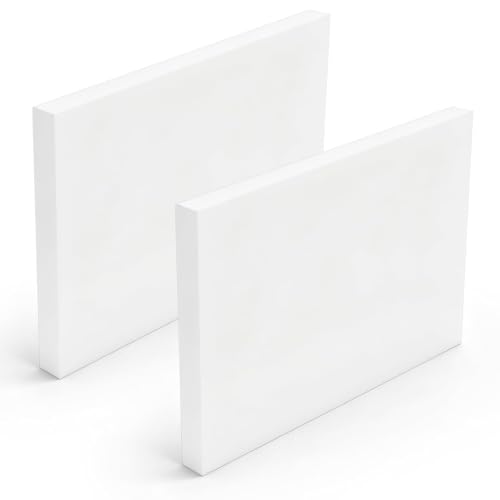
【Package】The Hiceeden white 8x12-inch size (2-pack) HDPE sheet delivers versatility for cutting or shaping as needed. The slick finish ensures easy cleaning, while the 3/4-inch(20mm) thickness provides structural integrity for load-bearing projects.

New Opened Box
Board Width and Visual Design Considerations
Board width fundamentally shapes your deck’s visual character, influencing everything from perceived spaciousness to design complexity. Narrow board aesthetics—typically 4 inches wide—create a segmented, traditional look with prominent seams that enhance visual interest and suit restoration projects. Wide board impact delivers the opposite effect: 6-inch boards establish modern, clean-lined appearances with fewer visible seams and unified surfaces.
Your material choice matters too. Composite and PVC options range from 3.5 to 6 inches, while wood profiles include 1×4, 5/4×6, and 2×6 dimensions. Standard residential boards measure approximately 5.5 inches, simplifying installation and material calculations.
Consider mixing widths strategically. Multi-width layouts blend traditional and contemporary elements, creating dynamic patterns without compromising structural performance. Wider boards expand more—up to 1/8 inch—requiring larger installation gaps of 1/4 to 3/8 inches for proper accommodation. Your deck’s overall safety depends on following local building codes that govern spacing and fastening requirements. Proper fastening with #10 x 3 screws ensures your boards remain secure regardless of width selection and seasonal expansion.
Matching Board Size to Your Deck Project
Selecting the right board dimensions requires aligning your choices with your deck’s footprint, intended use, and aesthetic goals. Your deck’s size directly dictates ideal board specifications. For larger decks exceeding 450 square feet, you’ll benefit from wider boards and longer lengths that reduce visual fragmentation. Smaller decks under 100 square feet demand narrower boards to maintain proportional balance.
Board length greatly influences seam placement strategy. Twenty-foot boards work well for expansive projects, while 12-foot boards suit compact installations. Standard 300-400 square foot decks—approximately 19′ x 19’—typically accommodate 5.5-inch boards effectively. Calculate your material needs accurately: 200-square-foot decks require roughly 435 boards at standard coverage rates. Add 10-15% waste allowance for irregular cuts and contingencies, ensuring your project stays on schedule without material shortages. Proper joist spacing beneath your deck boards is equally critical to ensuring structural integrity and preventing excessive board deflection over time. Maintaining consistent gaps between boards using spacer tabs or gapping charts specific to your composite decking manufacturer will ensure professional results and proper water drainage.
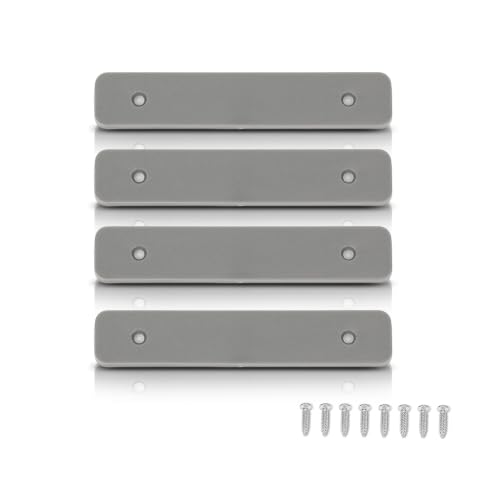
Exact Fitment: Fit 5.5" composite decking boards, designed as an end cap replacement or finishing accessory.

Easy to install:Use some glue for plastic in a hot location, please! The decking boards end caps can be easily attached to the end of the deck using adhesives or other fastening methods, making installation quick, easy and convenient.

Enhanced aesthetics: The Composite Decking boards End Cap provides a seamless and finished look to the ends of composite decking boards, enhancing the overall visual appeal of the deck.