

Is Cedar a Good Choice for Your Deck Boards?
Cedar’s a solid choice if you’re committed to maintenance. You’ll benefit from its natural rot and insect resistance, thanks to protective oils. However, you’re looking at resealing every two to three years and regular cleaning to prevent decay. While it’s aesthetically appealing and lightweight, softwood limitations mean refinishing’s necessary. Initial costs range from $3,600 to $9,000 for residential projects. Understanding cedar’s performance variations across different climates reveals why region-specific selection matters considerably.
Natural Durability and Rot Resistance
Cedar’s natural oils are the foundation of its rot and decay resistance. These oils create a protective barrier that actively repels moisture, preventing the wood from absorbing water that’d otherwise trigger decay. You’ll appreciate the natural oil benefits, as they eliminate the need for chemical treatments while maintaining durability.
The insect resistance you gain from cedar’s composition protects against termites, carpenter ants, and other wood-boring pests without synthetic additives. Western Red Cedar particularly excels in this regard, offering superior natural resistance properties that persist for years. To further protect your cedar deck from environmental damage, you should regularly maintain proper ventilation to prevent moisture buildup underneath.
When you choose cedar, you’re investing in wood that inherently resists environmental threats. The combination of moisture repulsion and pest deterrence means your deck boards maintain structural integrity longer than untreated alternatives, reducing your maintenance burden considerably. With proper maintenance, cedar deck boards can preserve their appearance and protective qualities for many years.
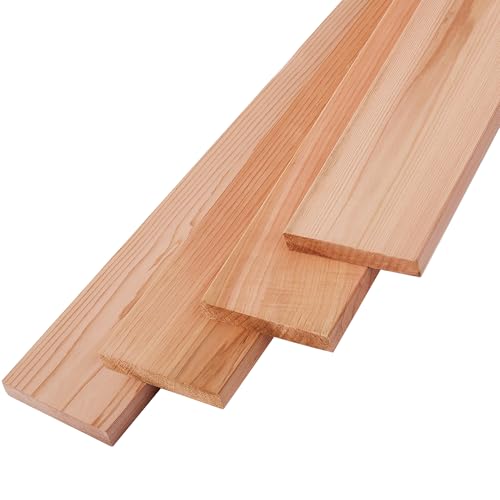
【PREMIUM CLEAR GRADE — VIRTUALLY KNOT-FREE】 Hand-selected for the most demanding projects. Our Western Red Cedar is true "Clear Grade" — virtually 100% free of knots, splits, and surface blemishes — delivering the clean, straight-grain aesthetic that defines high-end outdoor craftsmanship. Western Red Cedar has been North America's premier outdoor building material for over 100 years, specified by architects for premium decks, saunas, and coastal installations. This is the grade your local hardware store simply doesn't stock.


Package Includes: One box includes Canadian red cedar boards of various lengths, ranging from 16 inches to 55 inches, covering a total of 21 Square Feet
Maintenance Requirements and Long-Term Care
While cedar’s natural oils and insect-resistant properties give your deck an inherent advantage, maintaining that durability requires consistent care and vigilance. You’ll need routine cleaning with soft push brooms weekly to prevent debris buildup that accelerates decay. Annual deep cleaning removes mildew and pollen accumulation using cedar-specific solutions—never power washers, which damage soft wood.
Moisture control is critical for longevity. Guarantee adequate board gapping for drainage and airflow, particularly in shaded areas prone to dampness. Use only synthetic or plastic rugs to prevent trapped water. Reseal and stain every two to three years with UV-blocking products, allowing boards to dry completely beforehand. For stubborn stains or mildew, apply a mild bleach and water solution and thoroughly rinse before allowing the wood to dry completely.
Spring inspections catch loose fasteners, rot in ledger boards, and structural compromise early. Light sanding smooths warped areas that pool water. When making repairs that require cutting around posts or railings, use a jigsaw for curved cuts to ensure precise fitting without damaging surrounding cedar boards. With diligent maintenance, your cedar deck surpasses 20-year lifespans.
Aesthetic Appeal and Design Flexibility
Once you’ve established a maintenance routine that’ll keep your deck structurally sound, you can focus on the visual dimension that makes cedar such a compelling choice for homeowners. Cedar’s warm reddish-brown tones and straight grain patterns provide natural design inspiration for any outdoor space. You’ll appreciate how color variations across boards create visual depth and character without appearing random or poorly finished. Over time, cedar develops an attractive silver-gray patina as it weathers naturally, adding even more character to your outdoor space.
Cedar’s versatility lets you customize your deck through stains or finishes to match existing structures. You can shape and cut the wood easily, enabling creative patterns and layouts. Whether you’re designing a simple rectangular deck or a complex multi-level structure, cedar adapts seamlessly to both traditional and modern architectural styles, complementing your home’s exterior while blending harmoniously with natural surroundings. Cedar’s lightweight nature makes it easier to handle during installation compared to other deck board materials.

【100% Pure Tung Oil (For Wood)】100% Pure Natural! OAIEGSD tung oil food grade is 100% pure natural, which is extracted from natural tung seeds, without any additives and chemical ingredients, so it can be great for contact with food, you can use it safely. After using the pure tung oil, your wood products will have a longer life.

ADDED FLAVOR - Elevate your meals with both subtle smoky taste and fresh wood Western Red Cedar flavor. Great on Salmon, Pork, even grilled fruits and veggies

Textured Grilling Planks for More Smoke and More Flavor!
Cost Comparison and Budget Considerations
Most residential cedar deck projects run between $3,600 and $9,000, with labor typically consuming 60 to 70 percent of your total budget. Your cost estimation depends on deck size and location, with installation labor ranging from $10 to $25 per square foot.
For pricing breakdown, cedar decking materials represent only 25 percent of total project costs, ranging from $4 to $10 per square foot. Clear cedar commands premium pricing at $7 to $9 per linear foot, while Western Red Cedar starts around $3.60 per linear foot. Geographic variations considerably impact expenses—Boston averages $4,500 to $12,500, while Austin ranges from $3,200 to $9,000. Larger decks distribute fixed costs more efficiently, potentially lowering per-square-foot pricing for 16×16 or 16×18 configurations. The underlying structure, including joist spacing and beam selection, also affects total project costs and should be factored into your budget planning. While cedar decking requires regular sealing to maximize its lifespan and protect your investment, the upfront material costs remain relatively modest compared to labor expenses.
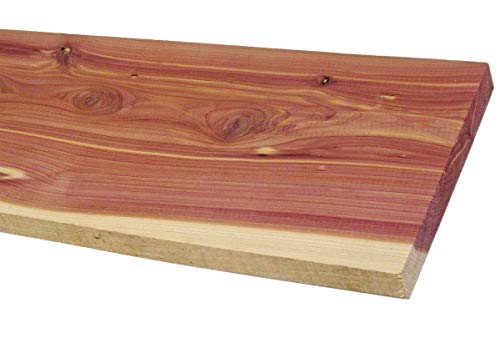
Select from several species above, then pick your size

Package Includes: One box includes Canadian red cedar boards of various lengths, ranging from 16 inches to 55 inches, covering a total of 10.5 square feet
Limitations and Potential Drawbacks
Despite cedar’s aesthetic appeal and initial affordability, you’ll encounter several significant drawbacks that can compromise both the deck’s longevity and your overall investment. Cedar’s softwood composition severely limits scratch resistance, making it vulnerable to damage from pets, furniture, and foot traffic. You’ll need regular refinishing to address surface marks.
Moisture management presents another critical challenge. Cedar boards expand and contract with humidity fluctuations, causing warping that threatens structural integrity. Horizontal installations retain water longer, accelerating deterioration. Ground contact accelerates moisture absorption and rot development, requiring elevated supports or concrete footings. Unlike deck railing posts, which use substantial 4×4 or 6×6 lumber for load-bearing support, cedar deck boards cannot provide the same structural resilience when exposed to ground moisture.
Additionally, cedar’s natural acids corrode galvanized fasteners, necessitating expensive stainless steel alternatives. For enhanced durability in outdoor applications, consider materials with UV-resistant properties to prevent fading and deterioration. Insects readily burrow into cedar, causing decay. You’re facing continuous maintenance cycles, including sealing every 1-2 years and annual sanding—substantial long-term costs that offset initial savings.
Environmental Impact and Sustainability
While cedar’s maintenance demands and vulnerability to deterioration raise concerns about long-term value, the material’s environmental credentials present a compelling counterpoint to its practical limitations. Cedar achieves carbon sequestration through its life cycle, storing approximately 193.33 kg CO2 per 100 ft² while emitting only 63.34 kg CO2 per 100 ft². This negative carbon balance substantially reduces your deck’s overall environmental footprint.
As a renewable resource, cedar forests receive sustainable management certification and support active reforestation programs planting over 218 million seedlings annually in British Columbia alone. Your cedar decking requires less manufacturing energy than synthetic alternatives and reduces transportation emissions through its lightweight properties. Unlike synthetic rattan, which can shed microplastics over time, cedar maintains environmental integrity throughout its lifespan. Cedar’s natural aesthetic qualities complement landscaping designs as effectively as customizable climbing plants enhance outdoor spaces.
At end-of-life, untreated cedar fully biodegrades without releasing toxins, returning nutrients to soil and avoiding persistent microplastic waste that composite materials create.
Climate Suitability and Regional Performance
Cedar’s performance as a decking material hinges greatly on your region’s climate patterns, since different cedar species thrive under distinct environmental conditions. Northern White Cedar excels in cold, moist climates like the Northeast, resisting warping despite temperature fluctuations. Western Red Cedar performs well in moderate climates and the Pacific Northwest, where its natural oils combat moisture and decay. Your climate adaptations matter greatly: in warm, humid regions, you’ll need frequent sealing to prevent rot; in hot areas like Texas, UV-resistant sealants become essential. While cedar offers natural resistance to decay, alternatives like pressure-treated boards using water-based preservatives such as ACQ or Copper Azole provide enhanced chemical protection for challenging environments. Like cedar, softer woods require proper sealing and maintenance to prevent moisture damage and ensure longevity in outdoor applications. Regional preferences reflect local availability—choosing native cedar species reduces transport costs and supports sustainability. Consider your area’s humidity levels, seasonal temperature swings, and rainfall when evaluating cedar’s suitability for your specific deck project.


