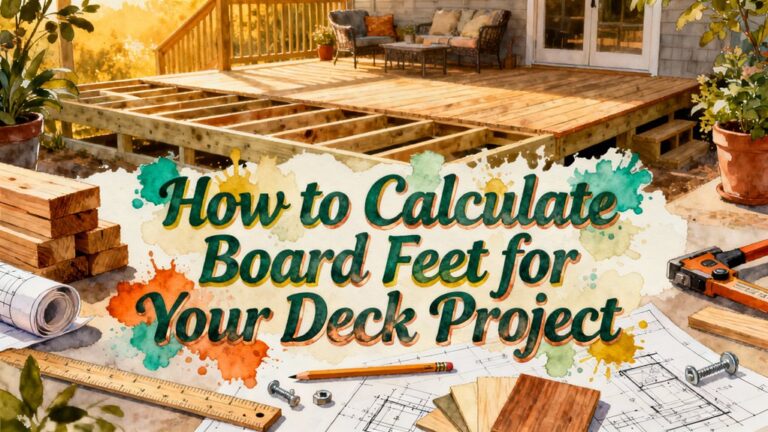
How to Fix and Prevent Warped Deck Boards
You’ll fix light warping by removing popped nails and using bracing techniques, while severely warped boards require replacement. To prevent future damage, you’ll need to address moisture imbalance through proper drainage and debris removal. During installation, maintain 1/8″ to 1/4″ expansion gaps between boards and guarantee correct fastener spacing. South-facing decks warrant extra attention due to uneven sunlight exposure. Long-term, you’ll want to seal annually, sweep weekly, and deep clean monthly to maintain your deck’s integrity.
Understanding the Causes of Warped Deck Boards
When your deck boards start to curl, twist, or cup, you’re witnessing the effects of moisture imbalance—the primary culprit behind warping. Water causes uneven swelling and shrinking, while poor drainage and trapped debris beneath boards intensify moisture retention. You’ll notice warping accelerates on south-facing decks where sunlight exposure creates uneven drying. Direct sun dries one board side while the other remains damp, causing stress and distortion.
Installation quality matters greatly. Boards fastened too tightly restrict natural expansion, while insufficient spacing prevents proper movement. Proper fastener spacing at regular intervals helps accommodate the natural expansion and contraction of deck materials. Lumber quality also plays a role—improperly dried wood and lower-grade boards with irregular grain patterns warp more easily. Composite materials, especially uncapped varieties, absorb excess moisture readily. Minimal ground clearance and poor ventilation compound these problems by trapping humidity and preventing adequate airflow under your deck structure. Without regular maintenance like sealing and cleaning, untreated wood decks can experience accelerated warping and deterioration within their typical lifespan.
Repairing Light Warping Issues
Once you’ve identified slightly warped boards—those with minor cupping or lifting at the edges—you can often restore them to a flat, safe surface without full replacement. Start by removing popped nails with a nail puller to eliminate tripping hazards. Your repair tools should include a drill, hammer, and pry bar for efficient work. Apply bracing techniques by screwing 2×4 lumber across warped and adjacent boards to flatten them. Pre-drill all screw holes to prevent splitting, then countersink heads and fill with wood filler. Check alignment after fastening to guarantee a level walking surface. For composite decking, ensure fastener spacing does not exceed 16 inches on center to maintain proper support and prevent future warping. Between repair projects, maintain your deck by regularly cleaning and inspecting all surfaces, including outdoor furniture cushions, to prevent moisture accumulation that can contribute to wood warping. These straightforward methods address light warping effectively while maintaining deck integrity and safety.
Addressing Moderate to Severe Warping
Moderate to severe warping demands more aggressive intervention than the bracing techniques used for minor issues, as greatly bowed or cupped boards can’t safely bear weight and pose serious tripping hazards. Your primary warping solution involves complete deck board replacement. Remove damaged boards carefully, then install new, properly acclimated decking that matches your existing material. Pre-drill holes to prevent splitting, ensuring screws penetrate at least 1.5 inches into joists for secure attachment. For optimal board longevity, screws provide superior holding power to prevent decking boards from warping or popping up over time compared to nails alone. If warping extends to the framing, you may need to sister new joists alongside compromised ones or reposition joists to crown upward. Countersink screw heads and fill with matching wood filler for a finished appearance. Before applying any stain or finish to your newly replaced boards, ensure they have adequate drying time to allow the wood to stabilize and prepare for proper stain adhesion. This decisive approach prevents further structural deterioration and restores safe deck functionality.

BUILT FOR COMPOSITE DECKING: These composite deck screws fasten composite and wood decking securely, with a dual-thread design that pulls boards tight and eliminates the plastic fiber mushrooming common with composite boards.

Compatible with full Replacement screw set for Steam deck consoles
Best Practices for Installation
Since you’ve addressed moderate to severe warping through board replacement, your next critical step involves executing a flawless installation that prevents future problems. Start with proper board selection by choosing boards with straight grain and minimal knots, then inspect for defects before installation. Store boards flat and acclimate them for at least 48 hours to your site’s conditions. Verify ideal joist spacing—typically 12″ to 16″ on center—and confirm all joists are level and in the same plane. Apply joist tape to protect against moisture. Position boards with the heart side up and end grain arching upward to encourage downward cupping when wet. Maintain consistent 1/8″ to 1/4″ expansion gaps between boards using spacers throughout installation. For cedar decking, use 316 stainless steel screws to prevent tannin staining and ensure long-term durability of your fasteners. After installation is complete, consider protecting the deck surface by applying an appropriate primer before painting to ensure long-term durability and weather resistance.

【Package Contents】:Each package contains 100 #10 x 3-inch 316 stainless steel flat-head wood screws and one T25 Torx screwdriver bit.

BUILT TO LAST WITH 316 GRADE STAINLESS STEEL - These stainless steel wood screws are made from premium 316 Marine Grade Stainless Steel for superior strength. No more rust on your timber projects! Ideal for long-lasting performance in decking, fencing, and all types of outdoor woodwork. This steel prevents ugly rust streaks and stains on outdoor timber, keeping your structures looking clean, polished, and professional season after season.
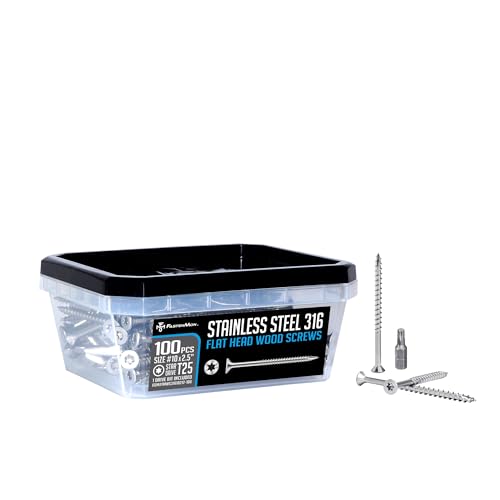
PACKAGE CONTENT: Each package contains 100 pieces of #10 x 2.5 inch stainless steel wood screws, weighing approximately 1.2 pounds, and includes a T25 star drive bit for easy installation.
Long-Term Maintenance and Material Choices
Your deck’s longevity depends far more on what you do after installation than on the work you’ve already completed. Consistent deck maintenance directly determines material longevity and prevents warping caused by moisture exposure.
You’ll maximize durability by selecting appropriate materials for your climate. Pressure-treated wood lasts 15-20 years with proper care, while cedar’s natural rot resistance extends lifespan further. Composite decks offer superior water resistance and won’t absorb moisture that causes warping. For optimal performance, consider board materials and spacing that match your climate and joist configuration to minimize movement and cupping.
Implement weekly sweeping and monthly deep cleaning using stiff-bristle brushes to prevent debris accumulation between boards. Clear corners and spaces where moisture builds up. Apply borate treatment before staining to inhibit algae and microorganism growth. For additional protection without altering your deck’s appearance, consider using clear deck sealers that safeguard against moisture and UV damage while preserving the natural wood look. Seal and stain annually, or stretch staining cycles to every 1-3 years depending on deck condition. Professional cleaning twice yearly removes embedded dirt and mold without harsh chemicals, preserving your investment.
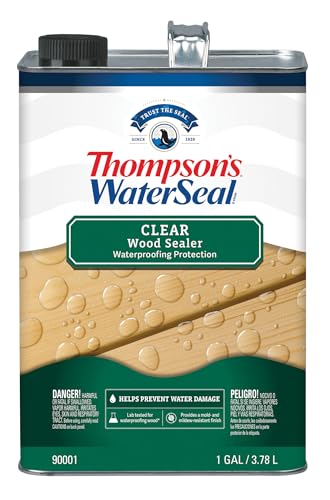
Helps Prevent Water Damage
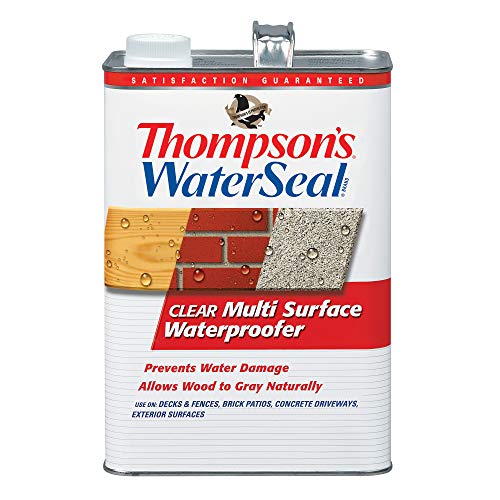
WATERPROOFING STAIN – Bring out the beauty of your outdoors with Thompson’s WaterSeal Clear Multi-Purpose Waterproof Stain. Proven to waterproof concrete, brick, exterior wood and other exterior surfaces.

MARINE SEALANT: Our liquid formula creates a UV-stable coating for protection against the elements, saltwater spray, and water damage. Marine is a protector for outdoor furniture, thermally modified wood, and boat docks. Marine is safe for use over open water and is non-hazardous to aquatic life. ** This product is NOT intended for hardwoods such as ipe, mahogany and teak. NOT intended for wood submerged under water or on wooden boats **