
How to Screw Deck Boards Without Splitting Wood
You’ll prevent splitting by pre-drilling pilot holes slightly smaller than your screw diameter before installation. Select #10 gauge stainless steel screws with bugle or square drive heads to minimize stress on boards. Space fasteners at least 1.5 inches from edges and no more than 12 inches apart. Insert screws slowly, allowing wood fibers to yield naturally. Use a cordless drill with adequate torque for consistent results. These foundational techniques establish the framework for understanding advanced deck installation strategies.
Pre-Drilling Holes for Maximum Protection
Before you drive a single screw into your deck boards, you’ll want to pre-drill pilot holes—especially if you’re working with hardwoods or fastening near board ends. Pre-drilling benefits include preventing wood splitting, reducing stress concentration, and ensuring clean, aligned fastener placement. You’ll also decrease installation torque and screw breakage, greatly extending your deck’s lifespan.
For drill bit selection, choose a bit slightly smaller than your screw diameter to balance easy insertion with holding power. Mark holes clearly with a fine-tip marker and use a punch tool to prevent bit wandering. For hardwoods, select bits specifically designed for dense materials to avoid excessive wear and heat buildup. This straightforward preparation step transforms your installation accuracy and deck durability. While screws offer superior tensile strength compared to nails, proper pre-drilling ensures you fully realize their holding power and resistance to surface pops. Allow adequate temperature and humidity conditions during installation to ensure optimal fastener performance and wood stability.
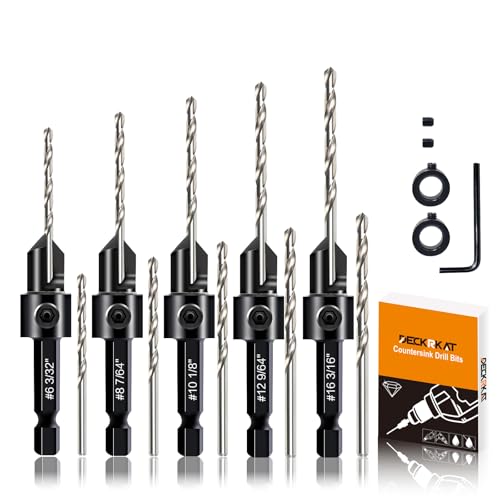
3in1 Countersink Drill Bit Set :Enable you to Drill, Countersink and Counterbore in one step, ideal woodworking tools for setting screws flush with or below the surface of a material.
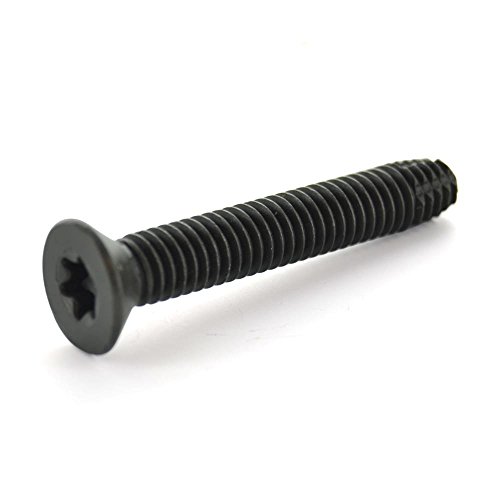
TYPE F SELF-TAPPING POINT - cuts machine threads directly into steel crossmembers up to 1/4" thick; drill a pilot hole, drive with an impact, no nut and no pre-tapping

Quality Material: These Heavy-Duty wood screws are made of high-quality alloy steel and are compatible with ACQ-treated lumber. They are built to last and can withstand harsh outdoor conditions.
Choosing the Right Deck Screws
Once you’ve prepared your pilot holes, selecting the appropriate deck screws becomes your next critical decision—the wrong choice can undo all your preparation work and compromise your deck’s longevity. Your deck screw materials should match your environment: 316-grade stainless steel excels in coastal or poolside settings, while 304-grade suits general outdoor use. For screw head types, bugle heads reduce splitting by dispersing wood fibers during installation, while flat heads provide a flush finish requiring precise countersinking. Choose Torx or square drive options over Phillips heads to minimize cam-out and stripping risks. Match your screw gauge to your decking material—#10 gauge stainless steel balances strength without excessive stress. Coarse threads work best for softwoods; fine threads suit hardwoods. Regular maintenance like cleaning between deck boards prevents debris accumulation that can compromise the structural integrity of your fastening strategy. For optimal deck stability and structural integrity, aim for two screws per joist to ensure your fastening strategy supports long-term deck performance.

QUICK AND EASY INSTALLATION: Secure your construction projects with Grip-Rite Exterior Screws. Self-starting T 17 point eliminates pre-drilling, while the star drive delivers increased torque and reduces splitting in treated lumber and hardwood.

QUICK AND EASY INSTALLATION: Secure your construction projects with Grip-Rite Exterior Screws. Self-starting T 17 point eliminates pre-drilling, while the star drive delivers increased torque and reduces splitting in treated lumber and hardwood.

QUICK AND EASY INSTALLATION: Secure your construction projects with Grip-Rite Exterior Screws. Self-starting T 17 point eliminates pre-drilling, while the star drive delivers increased torque and reduces splitting in treated lumber and hardwood.
Proper Installation Techniques
Mastering proper installation techniques transforms your preparation work into a structurally sound deck that’ll withstand years of use and weather. You’ll achieve ideal results by spacing screws at least 1.5 inches from board edges and maintaining no more than 12 inches between fasteners along the board length. For deck board alignment, use starter clips at joist ends to hold boards square and prevent movement during installation. Drive two screws at each joist near board ends for maximum strength. Insert screws slowly and deliberately rather than rapidly, allowing fibers to yield without tearing. If splitting begins, back out the screw immediately to relieve tension. Always use stainless steel screws rather than nails to prevent corrosion and ensure long-term deck durability. To protect your finished deck from damage, keep a wet rag handy nearby during any staining work to catch spills before they become permanent marks. This methodical approach guarantees even load distribution and accommodates natural wood expansion and contraction.

Defeat Rust for Good with 304 Stainless Steel - Tired of rusty screws ruining your project's look and strength? Get screws that stand the test of time. Crafted from premium 304 stainless steel, these construction screws resist corrosion in wet, coastal, and high-moisture environments, delivering lasting performance where ordinary screws fail.
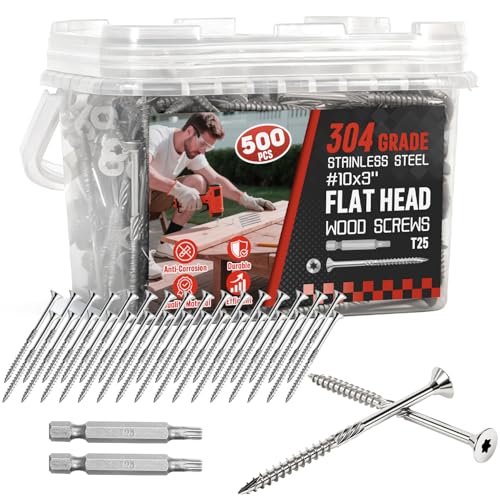
Defeat Rust for Good with 304 Stainless Steel - Tired of rusty screws ruining your project's look and strength? Get screws that stand the test of time. Crafted from premium 304 stainless steel, these construction screws resist corrosion in wet, coastal, and high-moisture environments, delivering lasting performance where ordinary screws fail.
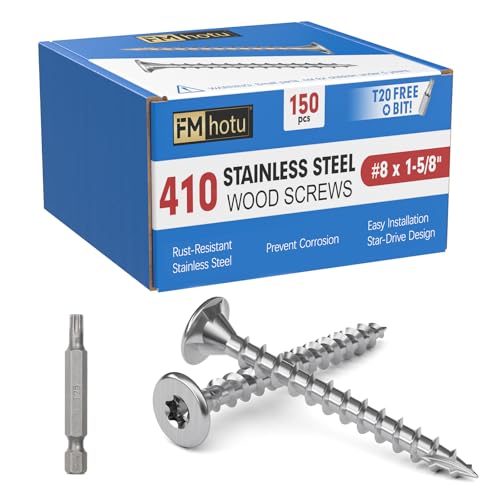
Premium Stainless Steel Construction: Crafted from 410 stainless steel, a top-grade alloy renowned for its exceptional strength and durability. Outperforming 304 stainless steel, these screws boast superior load-bearing capabilities, ensuring longevity even in challenging outdoor environments.
Essential Tools and Equipment
Five categories of specialized tools’ll help you drive screws efficiently while preventing splitting and ensuring structural integrity. You’ll need a cordless power drill with at least 18-20 volts for adequate torque and endurance. Deck jigs like the Kreg Deck Jig provide concealed fastening with precise angles and consistent board spacing through spacer rings. Measuring tools—speed squares, tape measures, and chalk lines—ensure accurate placement and alignment. Quick-grip clamps with decking adapters secure boards during installation, reducing splitting risk. Finally, hand tools including pry bars, utility knives, and screwdrivers handle manual adjustments and detail work. Just as ergonomically designed interfaces in modern cockpits minimize pilot errors, properly designed deck tools reduce mistakes and wood damage. Consider using hidden fastener clips to achieve flush placement and clean deck surfaces while eliminating exposed screws. Investing in these tools eliminates guesswork, reduces wood damage, and accelerates your project while delivering professional results.

Compatible with 12V MAX* and BLACK+DECKER 20V MAX* lithium ion battery/ slide pack batteries

Optimal Performance: 20V MAX* lithium-ion battery always ready for your next project

20V MAX* Lithium Ion battery for excellent power and runtime
Preparing and Inspecting Your Boards
With your tools ready, you’re now positioned to select and prepare boards that’ll resist splitting during installation. Start with thorough board selection by inspecting each piece for knots, splits, and warping. Prioritize straight grain patterns and avoid boards with large knots near ends or edges.
Next, perform moisture measurement using a moisture meter; aim for 12–15% moisture content for exterior decking. Readings above 15% cause excessive shrinkage; below 12% creates brittleness. Acclimate your boards to the installation environment for at least 48 hours before use.
Mark problem areas requiring special attention, particularly board ends and knot locations. Sand edges and ends to remove splinters, then round over tips slightly. Allowing your deck to dry fully before use will help minimize future splitting and warping issues. For standard residential applications, 5/4 × 6 boards are most common and work well with typical joist spacing. Pre-drill holes strategically, especially near knots or grain irregularities, to relieve installation stress and prevent splitting.
Professional Tips for Long-Lasting Results
Once you’ve prepared your boards, your success hinges on executing proper fastening technique and maintaining vigilant oversight throughout installation. Master screw spacing by placing one fastener per joist per board, staggering placement off the centerline to prevent splitting. Confirm joint alignment using a straightedge or chalk line before driving screws. Apply consistent pressure with a screw gun featuring depth control to avoid overdriving, which causes splitting and cracking. Use corrosion-resistant screws with sharp points and coarse threads rated for your decking material. For pressure-treated boards, install them tightly together initially, as pressure-treated wood shrinks naturally during the drying process, creating appropriate gaps without manual spacing. Most deck joists use common sizes like 2×8 or 2×10 lumber, which work well with standard fastening patterns.
After installation, inspect screw tightness annually and replace any corroded fasteners immediately. Clean gaps between boards regularly to prevent moisture retention. This proactive maintenance preserves structural integrity and extends your deck’s lifespan considerably.

137PCS 3-INCH DECK SCREWS: The 2-pound package includes approximately 137 pieces of #10 x 3-inch deck screws and one matching T25 star drive bit. A practical exterior wood screw set for decks, fences, framing and general outdoor construction projects.

Self-Drilling Point: Together, coarse screw threads and a self-drilling point design eliminate the need for a pilot hole

Gray exterior coated deck screws for decking, fencing, and exterior wood projects