

Embracing Modern Flight Decks for Smoother Operations
You’ll transform your flight operations by shifting from mechanical gauges to AI-enhanced glass cockpit systems like Honeywell Anthem. These integrated platforms reduce pilot cognitive load through voice-activated automation, predictive analytics, and real-time telemetry streaming of 90+ parameters. You’ll gain immediate decision-making capability via cloud connectivity with sub-10 millisecond query latencies. Enhanced safety features including autonomous stick shaker technology and 3D SafeTaxi monitoring minimize incidents while optimizing fuel efficiency. The operational advantages extend considerably beyond these foundational improvements.
The Evolution From Analog to Glass Cockpits
Before electronic displays transformed modern cockpits, pilots relied on mechanical instruments arranged in what became known as “the Six-Pack“—airspeed indicator, attitude indicator, altimeter, turn coordinator, heading indicator, and vertical speed indicator. You’d scan multiple individual gauges simultaneously, correlating readings across numerous dials. This approach demanded considerable skill and created substantial workload.
Analog limitations became apparent as you faced frequent calibration requirements and accuracy constraints. The lack of data integration further complicated your situational awareness. Cockpit ergonomics suffered from cluttered instrument panels containing countless switches and dials.
The 1982 Airbus A310 revolutionized aviation by introducing full glass cockpit technology. You now encountered integrated electronic displays consolidating flight data into unified digital formats. This conversion fundamentally simplified cockpit layouts, reduced your scanning requirements, and dramatically improved operational efficiency through streamlined information presentation.
Understanding Honeywell Anthem’s Advanced Architecture
As you evaluate next-generation flight deck solutions, you’ll find that Honeywell Anthem represents a fundamental departure from traditional avionics architecture through its flexible, modular, and scalable design. The modular design accommodates aircraft ranging from general aviation to large commercial jets, with compact components like flight control computers sized approximately like a book. You’ll benefit from extensive cockpit customization capabilities that align with your brand identity and specific aircraft requirements. The system supports multiple display sizes—17.3″, 14.6″, and 13.3″—tailored to your operational needs. Touch interfaces and conventional cursor control devices cater to pilot preferences, while the architecture enables seamless integration of controls and displays. This adaptability guarantees your flight deck configuration matches precise operational demands without compromising functionality or performance.
AI-Powered Systems Reducing Pilot Workload
Modern flight decks leverage artificial intelligence to fundamentally reshape how pilots interact with their operational environment, shifting focus from routine task execution to strategic decision-making. AI task automation handles flight scheduling, route planning, and data-intensive operations, directly reducing pilot cognitive load during critical phases. Voice-activated assistance systems like Honeywell Anthem’s PilotPredict prepopulate inputs—airspeed, heading, position information—enabling faster response times. Predictive analytics enhance weather forecasting, allowing you to proactively optimize flight paths and avoid turbulence. Machine learning algorithms continuously analyze engine performance and environmental conditions, providing real-time recommendations that improve operational flexibility. You’ll experience enhanced decision-making capabilities through integrated AI modules that dynamically adjust altitude and speed based on traffic and weather inputs, ultimately minimizing fatigue while maximizing safety and efficiency.

【Highly customizable voice commands】Supports 110+ preset commands. Users can edit command content online and generate firmware burning through web pages. It supports...
Real-Time Data Integration and Cloud Connectivity
The shift from cockpit autonomy to integrated data ecosystems marks a critical evolution in flight operations. You’ll find that real-time telemetry streams over 90 parameters directly to cloud analytics platforms, delivering sub-10 millisecond query latencies for immediate decision-making. This integration enables you to access personalized flight deck settings before arrival and receive continuous maintenance diagnostics during flight. Edge computing processes sensor data locally, filtering actionable information before transmission over satellite links, reducing bandwidth costs considerably. Secure cloud connectivity synchronizes information between flight deck and ground operations, supporting dynamic crew scheduling through workload analysis. You’re leveraging integrated data for route optimization using live weather and traffic inputs, enhancing fuel efficiency. This seamless connectivity empowers remote decision support while maintaining flight deck security segregation.
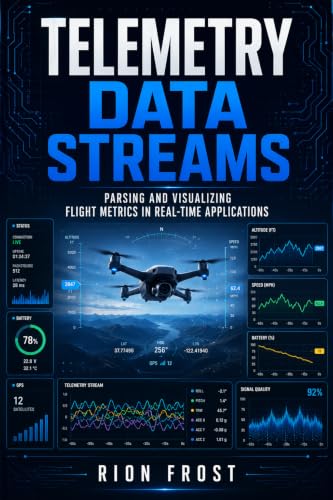

【Flight Data Telemetry】Telemetering model's voltage, speed, climb, throttle, longitude, latitude, altitude, GPS, RSSI, flight mode, yaw, roll, pitch, and distance when connecting with Mini Pix/ PIXHAWK/ Crossflight/ APM flight controller. Get real-time information to know the model's flight data clearly.

Enhanced Safety Through Autonomous Features and Sensors
While integrated data ecosystems optimize operational efficiency and ground coordination, you’ll find that autonomous safety systems and advanced sensors form the protective layer directly safeguarding flight operations. Your stick shaker technology alerts you through yoke vibration when stall conditions approach, enhancing low-speed awareness during critical phases. Flap airspeed protection monitors velocity automatically, preventing accidental configuration changes outside safe operating parameters. ADS-B systems deliver real-time traffic information directly into your cockpit, enabling collision avoidance and aircraft-to-aircraft alerts during primary system failures. Taxiway navigation and 3D SafeTaxi technology reduce runway incursion incidents through continuous airport environment monitoring. These autonomous sensors and safety features work seamlessly, eliminating pilot error during high-workload phases while maintaining situational awareness across all operational domains.

ASSEMBLED ADS-B KIT: Stratux dual band ADS-B receiver kit includes AHRS, fan controller, 10000mAh battery pack, suction mount, strap, SD card adapter, power cable, supports...
Display Technology Innovations for Better Situational Awareness
As you shift from relying on traditional analog gauges and electromechanical instruments, you’ll encounter glass cockpits that consolidate important flight data into integrated digital displays ranging from 8 to 15 inches. These EFIS systems employ high-resolution FHD displays that provide exceptional visual clarity for interpreting complex flight parameters. You’ll benefit from advanced optical bonding techniques and anti-glare coatings that enhance readability across varying lighting conditions, ensuring vital information remains accessible during bright sunlight operations. The strategic placement of Primary Flight Displays, Multifunctional Deck Displays, and Engine-Indicating systems enhances cockpit ergonomics by positioning essential instruments within your best field of view. This integrated approach notably improves your situational awareness while reducing cognitive workload during demanding flight phases.
Operational Efficiency Gains and Cost Savings
Your enhanced situational awareness translates directly into measurable operational gains that impact your airline’s bottom line. Modern flight decks enable fuel efficiency through precise positioning data that optimizes your flight paths, reducing consumption considerably. You’ll achieve immediate cost savings as improved scheduling optimization minimizes delays and holding patterns that waste fuel.
Real-time traffic visibility allows your crews to navigate congested airspace predictably, maximizing aircraft utilization and crew assignment efficiency. Advanced diagnostics from four to six times more sensor data than legacy aircraft prevent costly unexpected failures, reducing unscheduled maintenance events.
Your competitive advantage emerges through schedule reliability improvements that enhance on-time performance and passenger satisfaction. These operational efficiencies—from streamlined routing to predictive maintenance—compound into substantial bottom-line improvements across your fleet operations.

Updated in 2020 with 0.7" x 1.0" STEMMA QT standard, included 4 mounting holes and 2 STEMMA QT connectors for plug and play
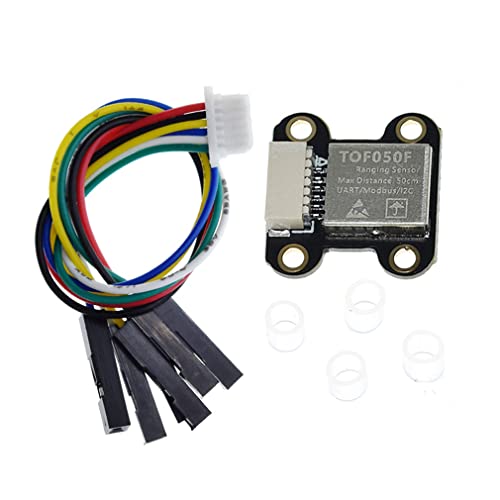
This is a ranging sensor module, built-in MCU and ranging algorithm

The VL53L0X time-of-flight range sensor is a next generation laser range module. The VL53LOX is a fully integrated sensor with embedded infrared, human eye safe laser, advanced filters and ultra high speed photon detection arrays for longer range, speed and accuracy.
The Future of Intelligent Flight Deck Technology
Beyond the operational efficiencies you’ve already gained, next-generation flight deck systems are fundamentally transforming how pilots interact with their aircraft through integrated displays, cloud-connected interfaces, and adaptive technologies that respond to real-time conditions. You’ll leverage AI-driven predictive analytics to anticipate system failures before they occur, while biometric sensors monitor your physiological state and fatigue levels. Voice recognition systems minimize manual inputs, allowing hands-free cockpit control. Advanced cybersecurity protocols protect your flight deck against evolving threats. These intelligent interfaces learn your preferences, automatically reconfiguring across multiple flights. Future predictions indicate autonomous capabilities will expand beyond emergency autoland to routine operations. You’re entering an era where your cockpit adapts to you, not vice versa, fundamentally enhancing situational awareness and decision-making precision.


