How Far Can a 2×12 Beam Span in Pergola Construction?
You’ll safely span a single 2×12 beam 12–13 feet maximum in pergola construction, while doubled 2×12 beams extend capacity to approximately 15 feet. Your actual span depends on load conditions—uniform loads typically range 40–80 pounds per linear foot for residential applications. Double beams achieve roughly 4 inches wide by 11.875 inches deep, maintaining consistent strength across the entire span. Local building codes require verification before finalizing your design. Understanding how material selection, post spacing, and deflection standards interact reveals optimization opportunities for your specific project requirements.
Single 2×12 Beam Span Limits
When you’re planning a pergola’s structural framework, the single 2×12 beam’s span capacity becomes critical to your design. You’ll find that a single 2×12 safely spans 12–13 feet maximum, depending on pergola width and load conditions. Beyond this threshold, you’ll encounter excessive deflection and structural compromise. Your single 2×12 limitations necessitate evaluating load factors: pergola weight, roofing materials, snow, and wind forces all impact performance. For span safety measures, you should consider beam spacing and post placement to reduce unsupported lengths. When your design exceeds 13 feet, you’ll want structural reinforcement options like sistering beams or metal strapping to secure connections. Before applying any protective finishes to metal reinforcement components, ensure the surface is properly prepared by progressing through different grit sandpaper stages to remove rust and debris. However, material alternatives such as engineered wood or doubled 2x10s provide superior performance for longer spans, delivering better durability and minimal sag.
Double 2×12 Beam Span Limits
Doubling your 2×12 beams substantially improves span capacity compared to single-member configurations, allowing you to extend your pergola’s unsupported length from 12–13 feet to approximately 15 feet under standard residential loads. This double beam advantage derives from increased cross-sectional depth and combined load-carrying capacity. When you sandwich two 2×12 members together, you create actual dimensions of roughly 4 inches wide by 11.875 inches deep, generating superior structural stability against deflection and bending forces.
Your doubled configuration maintains consistent strength properties across the entire span length. At standard residential assumptions—40 psf live load and 10 psf dead load—double 2×12 beams from Douglas Fir-Larch or Southern Pine deliver reliable performance. Selecting pressure-treated lumber rated for outdoor exposure ensures long-term durability and resistance to decay in your pergola structure. To protect your pergola investment, ensure moisture protection with silicone sealants is applied to all exposed wood surfaces and connection points. However, local building codes establish enforceable span limitations specific to your geographic area, so you’ll need to verify compliance before finalizing your design.

【Rolling flower stem and self attacking design】:The rolling handle and self tapping design can reduce the rotational resistance during installation. The deep thread profile and notch tip enable the screw to penetrate wooden materials with minimal pre drilling. Easy to firmly fix in hardwood, cork, and laminated boards. Exquisite craftsmanship ensures that our hexagonal washer heads are non slip, fast, not easily broken, have high strength, are not easily deformed, and are not eccentric.

Load Types and Their Impact on Span Capacity
Because beam span capacity depends directly on load characteristics, understanding how different loading scenarios affect your 2×12 beams is essential for accurate pergola design. You’ll encounter two primary load categories: dead load (pergola structure weight) and live load (snow, wind, occupant weight). Uniform loads distribute evenly across beam length, typically 40-80 pounds per linear foot for residential applications. Point loads create maximum bending stress at midspan, requiring conservative calculations of 1,000-2,000 pounds capacity at 12-foot spans. Load factors between 1.5-2.0 apply to equipment attachments. Your bearing requirements depend on reaction forces concentrated at supports, which must be transferred through concrete footings to prevent structural failure. Key factors affecting your design include post spacing and load conditions, which directly influence whether single or doubled beams are necessary for your pergola width. By analyzing these load effects quantitively, you’ll determine accurate span capacity and prevent crushing failures at support points.
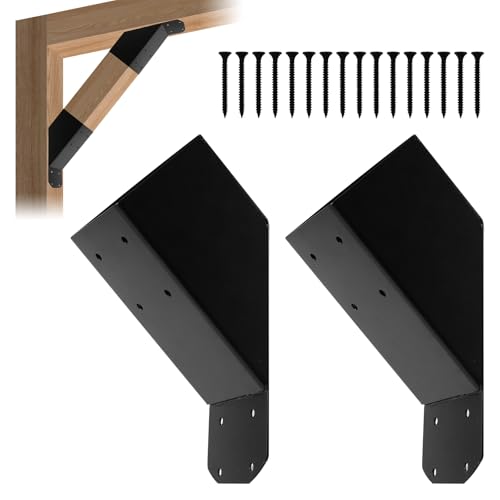
HEAVY DUTY SUPPORT BRACKET: The black pergola angle bracket is made of premium carbon steel that can hold heavy weight well. Heavy duty 2mm thick, black powder coating, provide long-lasting, reliable support for wood post.

CARBON STEEL MATERIAL: Our black joist anchor connectors are crafted from high-quality carbon steel Q235B, featuring a black powder coating for enhanced durability and corrosion resistance. This ensures that the connectors maintain stable performance over time and extend their service life, even in harsh environmental conditions.

Sturdy Steel:The pergola bracket kit are made of premium steel,precision welding using robotic arms,make them very strong and secure;Black powder coating to prevent rust and withstand extreme weather conditions, ensuring long-lasting durability.
Lumber Species, Grade, and Structural Performance
Once you’ve quantified your load requirements and determined reaction forces at supports, the next critical variable affecting beam performance is your material selection. Douglas Fir Larch demonstrates superior stiffness compared to softer species, directly influencing deflection rates and span capabilities. Hardwood benefits greatly outperform standard dimensional lumber for extended spans, offering enhanced load capabilities and structural efficiency. You’ll find treated lumber and premium grades provide superior environmental resilience and withstand greater concentrated loads than commercial-grade alternatives. Species comparison reveals that softer woods like Northern White Cedar require larger dimensions to achieve equivalent load-carrying capacity as stiffer options. Grade variations greatly impact long-term lumber durability and environmental stress resistance. For outdoor pergolas, pressure-treated wood or naturally durable woods like cedar and redwood are preferred because they resist weathering better than untreated softwoods and require significantly less maintenance over time. When selecting finishes for your wood, tung oil offers superior water resistance and natural mildew resistance compared to other options, further extending the lifespan of your pergola structure. Your selection directly determines whether your pergola maintains safe deflection tolerances across its intended span distance.

PENETRATING OIL-BASED WOOD STAIN – Advanced conditioning oils penetrate deep into wood fibers while drying oils lock in protection, helping prevent cracking, peeling, and premature wood deterioration.


Anti-Corrosion Coating: 3 inch wood screws passed 1000 hours salt spray test. 4-layer coating provides superior protection against rust and corrosion. These screws are made from premium carbon steel material and utilizes the latest rust-proofing technology. They deliver exceptional durability, corrosion resistance, and high-temperature endurance for long time use
Beam Spacing and Load Distribution Considerations
Your beam spacing strategy fundamentally determines load distribution efficiency and directly impacts the structural demands placed on individual pergola members. When you position posts closer together, you reduce unsupported span lengths and decrease concentrated loads on each beam section. An 18-foot post-to-post measurement creates approximately 9 feet 8 inches of unsupported span after accounting for bracing and post dimensions. You’ll find that multiple intermediate posts distribute stress more effectively than relying on single support posts, which create longer unsupported spans requiring larger dimensional lumber. Tighter beam spacing allows you to utilize smaller lumber dimensions while maintaining structural integrity. Strategic post placement directly correlates with your beam sizing requirements—closer spacing means you can achieve greater pergola widths without exceeding safe deflection limits or requiring expensive reinforcement systems. Proper post footing installation ensures that your posts remain securely anchored and prevents structural failure regardless of spacing configuration. For longer spans exceeding 18 to 20 feet, engineered lumber such as LVL offers superior performance compared to standard dimensional lumber and can maintain structural integrity across greater distances.

Fits 3.5x3.5 Inch Wood Posts: This 4x4 pergola kit is ideal for building a pitched-roof pergola and fits actual wood sizes of 3.5 x 3.5 inches (92 x 92 mm), compatible with both softwood and hardwood

【Upgraded 2mm Thick Reinforced Steel Structure】 Made of upgraded 2mm hot-dip galvanized steel, these brackets are thicker and stronger than standard 2mm ordinary brackets. The 5.6-inch extended design improves weight distribution and structural stress bearing, offering outstanding stability and high load-bearing performance. Built for heavy-duty outdoor pergola and gazebo use, they effectively prevent deformation and loosening for long-lasting structural safety.

【CORROSION-RESISTANT & DURABLE】The 3-way 4x6 pergola bracket kit is made from Q235 steel for robust stability with great rust resistance &durability will work for a long lifetime.It has strong resistance to humidity and high temperatures,black baking paint process.It fully covers beam ends to protect wood from weather,offering long-lasting support with minimal maintenance.
Joist Span Versus Beam Span Differences
How do joists and beams differ structurally despite using identical lumber dimensions? You’ll find that joist span greatly exceeds beam span for the same 2×12 lumber size. Joists typically span up to 20 feet when spaced at 16 inches on center, while single 2×12 beams span only 12-13 feet. This disparity stems from their distinct structural roles and load distribution patterns.
Joists run between beams supporting roof loads distributed across their length. Beams run between posts, concentrating joist reactions into concentrated loads at support points. Your joist orientation—the 12-inch dimension vertical—maximizes bending resistance. However, beams must resist both bending and shear stress from multiple joist reactions simultaneously. These load distribution differences explain why you can extend joists further than beams, making beam span the limiting factor in your pergola design. Without additional support posts or bracing, very long beam spans risk structural failure and sagging over time. For optimal pergola construction, local building codes should guide your final lumber selections and spacing decisions.
Deflection Limits and Structural Integrity
Because beam deflection directly impacts both safety and aesthetics, you’ll need to understand the L/240 standard that governs pergola design. For an 18-foot span, you’ll calculate maximum allowable deflection at 0.9 inches. A double 2×12 beam under 20 lb/sq ft load deflects approximately 0.82 inches—safely within limits.
You must evaluate deflection effects through load analysis, accounting for dead loads, live loads, and additional materials like polycarbonate panels at 12.5 lb/sq ft. Exceeding L/240 creates visible sag evaluation problems, compromising structural safety. Proper installation with heavy-duty post base brackets ensures your vertical supports remain plumb and stable during assembly.
You’ll strengthen your pergola by using double 2×12 beams for spans up to 18 feet. For longer spans, you’ll require triple 2×12 beams or reinforced posts. For substantially larger pergolas, upgrading to 6×6 posts ensures better durability and support for extended beam spans. Regular inspections catch excessive bowing before it becomes critical.
Professional Engineering and Installation Best Practices
Once you’ve calculated deflection limits and confirmed beam sizing, material selection becomes the foundation for achieving those structural targets. You’ll need to verify grade and species specifications against engineering standards, as they directly impact allowable span and strength. Implement proper installation techniques by securing beams with structural screws or lag bolts that penetrate posts adequately for stability. Crown your lumber to minimize deflection and bowing. For spans approaching 17–18 feet, you’ll require three or more support posts to distribute loads effectively. When installing beams, take care to inspect joists and underlying structures thoroughly, similar to how concealed clips and bolts must be properly assessed in deck systems to ensure long-term stability. Consider incorporating reinforcement elements like knee braces to extend your pergola’s structural capabilities and reduce sagging over time. Conduct thorough structural assessments and load calculations accounting for plants, lighting, and weather loads. Always consult licensed structural engineers for complex spans exceeding typical 2×12 limitations. Adherence to local building codes and safety regulations guarantees your pergola installation meets professional standards and protects against structural failure.