Pergolas: The Perfect Shade Solution for Outdoor Spaces
You’ll maximize outdoor shade by strategically orienting your pergola north-south for even coverage or east-west for targeted protection. Design factors like crossbeam spacing (2-4 inches), slat thickness, and structural height directly control shade intensity and shadow spread. Consider adjustable louvered systems or polycarbonate panels for customizable sun control across seasons. Climbing deciduous plants enhance density while allowing winter light transmission. Proper material selection—aluminum, vinyl, or cedar—ensures long-term durability and heat management. When you explore further, you’ll uncover how these elements combine to reshape your outdoor living experience.
Understanding Shade Coverage and Performance
When you’re evaluating a pergola’s effectiveness, you’ll need to contemplate how its design fundamentally determines shade delivery. Different shade structure styles produce dramatically different results. Traditional open lattice pergolas filter sunlight partially, while solid roof or louvered designs approach full shade capacity. Closely spaced crossbeams cast considerably more shade than wider gaps.
Optimal height considerations directly influence shadow spread and coverage area. Taller pergolas cast broader shadows, extending protection across larger ground sections. You’ll realize that size correlates with coverage—larger structures shade multiple activity zones effectively. Beyond shade performance, pergolas also enhance garden aesthetics by providing structural support for climbing plants that add visual interest to your outdoor space.
Orientation matters greatly. North-south alignment blocks afternoon sun during peak heat hours, while east-west positioning maximizes morning coverage. Seasonal sun angles further modify performance, with summer providing denser shade than winter. These variables combine to determine whether your pergola delivers the shade performance you require. For year-round functionality, consider pergolas with retractable shades to adapt performance across changing seasons and weather conditions.
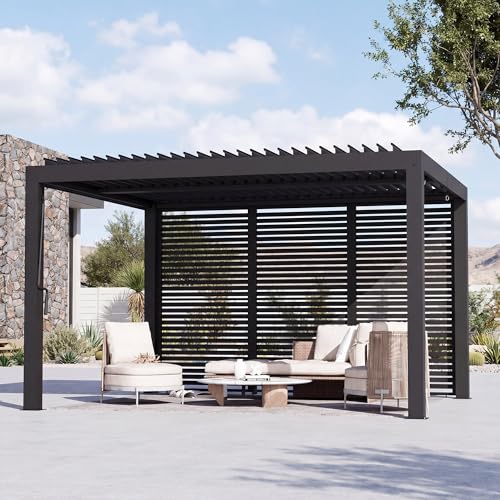
[Designed for Modern Louvered Pergolas] Engineered as essential Pergola Accessories, this Privacy Screen is specifically designed to complement modern shade louvered pergolas. The clean horizontal slat structure enhances your outdoor setup while delivering a sleek, contemporary Shade Screen Privacy Shade solution.

Modern Aesthetic Design:The louvered pergola screen, with its modern aesthetic design, adds a touch of style to any outdoor space. Whether on a balcony, in a garden, or in a relaxation area, this screen provides a unique visual appeal, creating a comfortable and inviting environment.

[Advanced Drainage System & Gutter Guard] Stay dry effortlessly with this upgraded louvered pergola. Rainwater is efficiently channeled through concealed integrated gutters, down the columns, and drained away. Built-in gutter guards prevent leaves and debris from clogging, ensuring smooth, worry-free drainage for your outdoor pergola even during heavy rain.
Design Factors That Maximize Shade Effectiveness
Now that you’ve grasped how pergola orientation and sizing influence shade performance, you’ll want to focus on the specific design factors that’ll maximize your structure’s effectiveness.
Slat thickness and spacing directly control shade intensity. You’ll achieve ideal coverage with slats spaced 2–4 inches apart; thicker, closer-set slats block more sunlight, while thinner, wider-spaced slats create dappled shade patterns.
Your roof design selection considerably impacts heat management and durability. Aluminum and vinyl roofing reflect heat efficiently, whereas polycarbonate panels deliver maximum sun blockage. Wood beams provide natural insulation and balanced shade despite higher heat absorption.
Consider integrating adjustable louvered systems or retractable canopies for customizable shade control throughout the day. These motorized options enhance comfort across seasonal variations and accommodate changing environmental conditions without structural modification.
Orienting Your Pergola for Optimal Sun Protection
Because the sun’s path shifts seasonally and varies by geographic location, you’ll need to analyze your site’s specific conditions before installation to maximize shade effectiveness. North-south orientations distribute shade evenly throughout the day, while east-west alignments concentrate protection during specific periods. Your pergola’s placement relative to your home and landscape directly impacts sun exposure management.
Consider adjustable pergola styles equipped with bioclimatic slats for precise directional control. Position slats parallel to your facade for north or south-facing structures, or perpendicular to adjoining walls for east or west exposures. Proper blade rotation—counterclockwise for north and west, clockwise for east and south—optimizes shade angles and prevents excessive solar radiation penetration, ensuring year-round comfort and temperature regulation. In hot climates, a north-facing pergola remains shaded most of the day and blocks intense sun exposure for maximum comfort. Once your pergola is positioned and constructed, applying the appropriate amount of wood stain will protect the structure and enhance its aesthetic appeal for years to come.

[Premium All-Aluminum Build] Crafted entirely with heavy-duty aluminum (no mixed steel), our pergola resists rust, UV damage, and corrosion; the Matte finish stays pristine...
Seasonal Variations in Pergola Shade Delivery
As the sun’s trajectory shifts throughout the year, your pergola’s shade delivery capabilities change dramatically, requiring you to understand how seasonal sun angles directly affect coverage effectiveness. Summer’s elevated sun position produces shorter shadows, reducing shade under fixed structures. Conversely, winter’s lower sun angle extends shadows, increasing coverage from identical pergolas. Spring and autumn provide intermediate conditions with moderate shade duration.
You’ll optimize performance by implementing adjustable features—louvered roofs, retractable canopies, and movable slats enable you to adapt shade patterns to seasonal demands. These mechanisms compensate for angular variations, maintaining consistent comfort throughout the year. Material selection matters too: light-colored surfaces reflect summer heat, while darker options absorb warmth during cooler seasons. UV-resistant fabrics preserve shade delivery effectiveness across all conditions, ensuring your investment performs reliably. When selecting materials for your pergola structure, consider weather-resistant woods like teak or eucalyptus that can withstand seasonal moisture and temperature fluctuations. For maximum shade during peak seasons, consider north-south aligned slats which provide more balanced, shifting coverage as the sun moves throughout the day.
Leveraging Vegetation for Enhanced Shade
While structural pergolas provide consistent shade through fixed or adjustable mechanisms, you’ll reveal superior coverage by integrating climbing vegetation directly into your design. Your climbing plant selection determines shade density, aesthetic appeal, and year-round functionality. Vines like wisteria, jasmine, and bougainvillea create layered canopies that evolve seasonally while maximizing light penetration during winter months. Fast-growing varieties such as Clematis and Virginia Creeper are particularly effective for rapid pergola coverage in various climate zones.
Vertical gardening benefits extend beyond shade optimization. You’ll maximize limited outdoor space without consuming ground area, enabling lush green environments in smaller yards. Deciduous varieties offer dual advantages: summer cooling through dense foliage and winter light transmission when deciduous leaves drop. For added ambiance, consider combining your vegetated pergola with command hooks to hang string lights that enhance evening enjoyment without requiring drilling.
This integrated approach transforms basic structures into visually dynamic focal points. You’ll achieve superior UV radiation reduction—up to 75%—while reducing surface temperatures and glare. Plant-based coverage elevates both functionality and landscape design simultaneously.
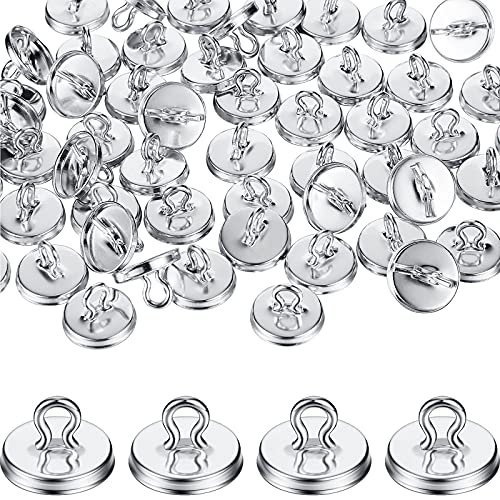
Sufficient Quantity: our plant anchor kit include 80 pieces plant anchors, these practical plant tools can be applied for your grid vines and wall climbing plants; Use your own delicate design to train the climbing plants

Complete Package for Convenience: the wire trellis kit Includes 61m trellis wire and 20 eye screws (diameter 2/10 inches); This package ensures you have all necessary components right at your fingertips, making set up a breeze and eliminating the need for additional purchases

50-Piece Anchors Only Refill Pack For Trellis, Wall Climb Plants, Vine and Lighting Strip,
Upgrading With Canopies and Shade Panels
To elevate your pergola’s functionality beyond vegetation alone, you’ll want to explore integrated canopy and panel systems that deliver customizable shade through engineered materials and mechanical controls. Motorized retractable canopies allow you to adjust coverage based on weather conditions, utilizing High-Density Polyethylene fabric that blocks 80-85% of visible light while providing 90% UV protection. For privacy enhancements, fixed deco panels offer horizontal louvered designs that effectively screen direct sunlight. Panel dimensions scale with your pergola size, ranging from 3’1″ to 4’5″ widths. During canopy installation, pre-drilled holes and slide-on wire systems simplify mounting on existing structures. These engineered solutions provide durable, three-year warranty protection while maintaining clean aesthetics and functional air circulation throughout your outdoor space.

Dual Motorized & Manual Modes: This electric retractable awning features an 18 ft power cord and supports remote control within 16.4-32.8 ft. A built-in motor ensures smooth extension with limit stops, and a 4.92 ft hand crank allows use during outages

12' by 10' HIGH-QUALITY STANDARD: 12feet long 10feet width Awning Backed with a 1 years warranty and certified CE, GS, and RoHS, this awning is built and tested to be simple to use and durable to last. Residential and commercial use. Most accurate fully extend product dimension: 11.32'x9.84'.
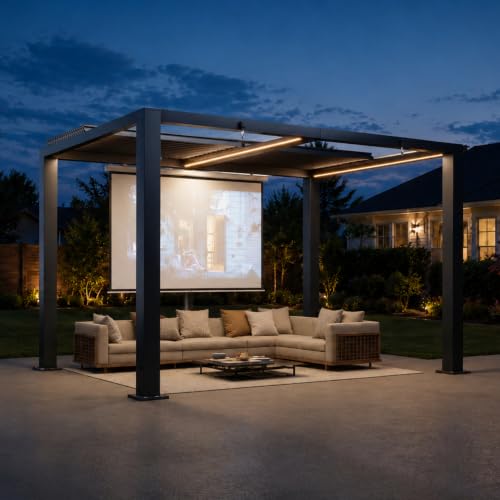
[Heavy-Duty Frame & Hidden Drainage] - Built with a reinforced aluminum and galvanized steel frame featuring a 5.75" center beam and 3.94" x 3.94" heavy-duty posts for enhanced stability and durability, this pergola is designed to withstand winds up to 90 MPH when properly anchored. Engineered to resist rust, corrosion, and outdoor elements, it features a hidden gutter system. Backed by a 2-year warranty for added peace of mind
Polycarbonate and Modern Material Solutions
When you’re seeking durability and performance beyond traditional pergola materials, polycarbonate emerges as a superior engineered solution that combines lightweight construction with exceptional weather resistance. You’ll benefit from polycarbonate advantages including impact resistance, UV protection, and thermal insulation that reduces temperatures by up to 20 degrees. The material withstands extreme temperatures from -40°C to +120°C without compromising structural integrity or becoming brittle under heavy snow loads.
You can customize designs with various opacities, colors, and finishes while maintaining modern aesthetics. Polycarbonate’s flexibility allows curved installations and contemporary styling, particularly when paired with aluminum frames. Its natural light transmission reduces artificial lighting dependency, lowering energy costs. You’ll also achieve easier installation and reduced labor expenses due to the material’s lightweight properties, making it an efficient upgrade for your outdoor shade structure. When compared to glass roofs for style, polycarbonate offers superior durability and practical performance without the maintenance demands of traditional materials.

Strong and Durable: Polycarbonate roof panels are made of new polyester resin and high-quality fiberglass materials,The panel surface is flat and smooth, with a thickness of about 0.3 in/0.8mm,It is impact-resistant and not easy to break

Polycarbonate Roofing Panels: Transparent roofing panels made from polycarbonate material, 1mm thick, offering transparency comparable to glass. Features waterproofing, thermal insulation, anti-aging, and impact resistance
Polycarbonate Roofing Panels: Transparent roofing panels made from polycarbonate material, 1mm thick, offering transparency comparable to glass. Features waterproofing, thermal insulation, anti-aging, and impact resistance
Calculating Return on Investment for Shade Structures
Because pergola investments represent significant capital expenditures, understanding their financial performance becomes essential for property owners evaluating long-term value. Your cost analysis reveals diverse ROI potential across investment tiers. Basic pergolas ($10,000) generate 50-100% returns, while mid-range structures ($20,000) produce 40-90% ROI. Luxury installations ($35,000) yield 30-70% returns with $45,000-$60,000 value additions.
Investment trends demonstrate geographic significance. Warm-climate regions—Southern California, Florida, Arizona—show superior returns compared to northern markets. Attached pergolas creating indoor-outdoor connections outperform freestanding designs. Premium materials and automation features add 15-20% costs while increasing property value 25-30%. When attaching pergolas to your home, ensure the wall is load-bearing or reinforced to guarantee structural integrity and long-term durability.
Before installation, property owners should budget for permit fees, which typically range from $60 to $150 depending on local building codes and whether the structure is freestanding or attached. Beyond resale appreciation, energy savings accumulate substantially. You’ll recoup $500+ annually through reduced cooling expenses, projecting $10,000+ savings over twenty years.
Enhancing Property Value Through Outdoor Design
Your pergola investment extends beyond personal enjoyment—it fundamentally reshapes your property’s market perception and tangible value. Strategic pergola styles—particularly attached structures creating seamless indoor-outdoor connections—yield higher returns than freestanding alternatives. You’ll achieve ideal results in warm-climate regions where outdoor living dominates buyer preferences, with returns sometimes exceeding 100%.
Quality materials like cedar, redwood, or aluminum greatly enhance value contribution. You should prioritize professional installation, permitting, and thoughtful design features such as adjustable louvers or integrated lighting. To preserve your cedar pergola investment, apply oil-based stains and clear sealants every 2-3 years to protect against UV damage, moisture, and decay. Proper post depth and stability ensures your pergola withstands environmental stresses and maintains structural integrity over time. Medium-sized pergola kits ($0-5,000 range) provide budget-conscious homeowners functional improvements while boosting curb appeal.
You’ll maximize property value by integrating complementary features—outdoor kitchens, fire pits, built-in seating—that transform your pergola into a complete outdoor room. These extensive outdoor living upgrades push value increases toward higher ranges, typically 10-20%.