Should You Keep Your Pergola Open or Closed During High Winds?
You should keep your pergola open during high winds because closed designs trap air, creating dangerous pressure buildup that can exceed structural capacity. Open layouts allow wind to pass through, greatly reducing uplift and lateral forces on posts and foundations. If your pergola features louvered roofs or motorized systems, you can optimize wind deflection further. Material selection—aluminum versus steel—and proper anchoring techniques also impact performance. Understanding your specific wind zone rating helps determine whether your structure can withstand local conditions.
Understanding Wind Flow and Structural Pressure
Wind doesn’t simply push against your pergola—it creates a complex interplay of forces that can compromise structural integrity. You need to understand wind dynamics and pressure differences to properly protect your structure.
When wind sweeps over your pergola, it generates positive pressure on the windward side and negative pressure (suction) on the leeward side. These opposing pressures create uplift forces that can loosen or detach roof panels and structural members. Wind gusts amplify this effect, rapidly changing forces that stress joints, fasteners, and your frame.
Horizontal wind loading pushes laterally against your structure, causing swaying or bending. Taller, more exposed pergolas experience greater wind loading and uplift risk. Similar to how building codes establish safety standards for residential structures, pergola design must account for these complex pressure dynamics. Understanding these pressure dynamics helps you make informed decisions about your pergola’s configuration during high-wind conditions.
How Open Designs Reduce Wind Load
When you choose an open roof design for your pergola, you’re fundamentally altering how wind interacts with the structure itself. Open designs eliminate wind pressure dynamics that plague solid-roof alternatives by allowing airflow to pass through rather than deflect against the frame. This considerably reduces uplift forces and lateral stress on your pergola.
Your open design advantages become apparent during high winds: slatted or angled louvers guide gusts over the structure, lowering effective wind area exposure. By decreasing the surface acting as a sail, you minimize pressure buildup that causes collapse or displacement.
Lightweight materials like aluminum amplify these benefits, further reducing wind load while maintaining structural integrity. To maximize wind resistance, pair your open design with proper ground anchoring methods that secure posts against both lateral and horizontal forces. In regions prone to extreme weather, such as hurricane zones or snowy areas, serious engineering is required to ensure your pergola can withstand the additional stresses. Proper anchoring with expansion screws guarantees your pergola remains stationary despite wind passing through. This synergy of open design and robust materials creates a genuinely wind-resistant structure.
The Risks of Closed and Enclosed Layouts
Unlike open designs that disperse wind pressure, closed pergola layouts trap air underneath the roof structure, creating dangerous pressure buildup that conventional installations aren’t engineered to withstand. You’ll face concentrated wind loads that exceed standard pergola capacity when curtains, screens, or solid slats seal your structure.
These closed systems dangers compromise critical joints and connection points. Your posts, beams, and foundations experience heightened stress that light vinyl or thin wood frames can’t handle. Freestanding closed pergolas require substantial extra reinforcement compared to attached models. When properly designed with customizable shade and protection, pergolas can be engineered to handle varying wind conditions more effectively.
The pressure buildup consequences extend to anchoring. Standard foundations designed for open pergolas prove insufficient when fully enclosed. You’ll need uplift-rated hardware and deep anchors—features frequently omitted from budget models. Poor installation quality reduces wind resistance by 30-50 percent, making structural failure increasingly likely during severe weather. Just as thin, even coats are essential for proper surface application and durability, proper structural engineering and quality installation are critical for pergola safety.
Louvered Roof Systems in High Winds
Because louvered roofs allow you to adjust blade angles dynamically, they offer a significant advantage over fixed closed structures during severe weather. You can optimize wind deflection by opening louvers to reduce wind loads on your pergola’s structure. This strategic positioning permits airflow through the system, minimizing updrafts and uplift pressure that damage support posts and connections.
Wind sensor technology enhances louvered roof benefits by automatically triggering louver adjustments when dangerous wind speeds approach. Motorized systems enable hands-free operation, ensuring timely response even during your absence. Commercial installations and real-world testing demonstrate that louvered roof systems withstand wind speeds exceeding 130 mph when properly configured.
Heavy-duty aluminum construction with powder-coated finishes and secure locking mechanisms provides durability. Miami-Dade County certification confirms compliance with strict wind resistance standards.
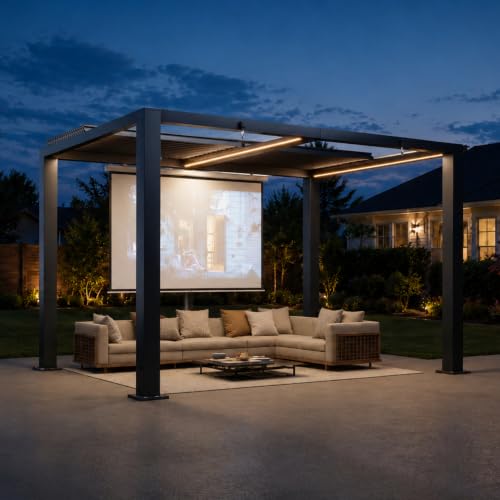
[Heavy-Duty Frame & Hidden Drainage] - Built with a reinforced aluminum and galvanized steel frame featuring a 5.75" center beam and 3.94" x 3.94" heavy-duty posts for enhanced stability and durability, this pergola is designed to withstand winds up to 90 MPH when properly anchored. Engineered to resist rust, corrosion, and outdoor elements, it features a hidden gutter system. Backed by a 2-year warranty for added peace of mind

[One-Touch Electric Control] – Effortlessly adjust shade coverage with a remote-controlled motorized system. Extend or retract smoothly for perfect sun protection anytime.
[Motorized + Manual Open-Sky Roof] – Open and close the louvered roof effortlessly with the included remote, or adjust it manually when needed—even during a power outage. Operate each roof section independently for flexible shade, sunlight, and airflow control, and enjoy an open-sky view whenever you want
Wind Rating Standards for Different Environments
To guarantee your pergola can withstand the specific wind conditions in your region, you’ll need to understand how wind rating standards vary across different environments and jurisdictions. Regional standards differ considerably—the absolute lowest requirement is 90 mph on California’s extreme coast, while federal minimums reach 105 mph. Hurricane-prone areas demand 115+ mph ratings, and high-wind zones require 130+ mph capabilities. Your pergola wind ratings must align with ASCE 7-10 risk categories and local building codes specific to your ZIP code. Exposure categories—whether open terrain or suburban surroundings—directly impact required wind resistance. Building authorities like Miami-Dade County establish their own specifications. Consult regional wind zone maps and charts to determine your exact requirements before selecting a pergola system.
Material Choices and Wind Resistance Capabilities
Three primary materials dominate wind-resistant pergola construction, each offering distinct performance characteristics that directly correlate with your regional wind requirements. Aluminum advantages include superior corrosion resistance, lightweight engineering, and ideal strength-to-weight ratios. High-quality 6061-T5 aluminum alloys withstand 110–140 mph winds when properly installed with reinforced joints and 1.8mm+ beams. Steel limitations stem from rust vulnerability in humid or coastal environments, requiring protective galvanization or coatings. However, steel delivers exceptional load-bearing capacity and handles extreme wind loads effectively, though it demands more substantial foundations and hardware. Wood deteriorates under wind stress as fasteners loosen and joints crack over time, necessitating frequent maintenance. While elm wood has been historically used in outdoor applications, it is classified as a non-durable hardwood with limited outdoor lifespan, making it particularly vulnerable to the structural demands of wind exposure. Similar to how UV exposure and moisture significantly impact the longevity of deck stain, wood pergola materials face accelerated degradation when exposed to environmental stressors. Fiberglass becomes brittle in cold climates, while vinyl hollow-core designs lack adequate wind resistance for high-wind regions without reinforcement.

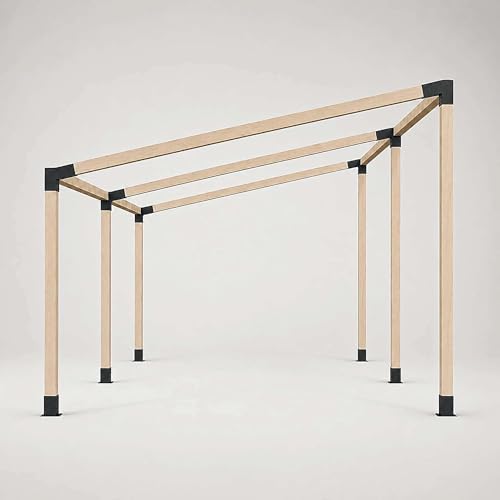
Fits 3.5x3.5 Inch Wood Posts: This 4x4 pergola kit helps you easily build a double-sided flat-roof pergola and fits actual wood sizes of 3.5 x 3.5 inches (92 x 92 mm), suitable for both softwood and hardwood
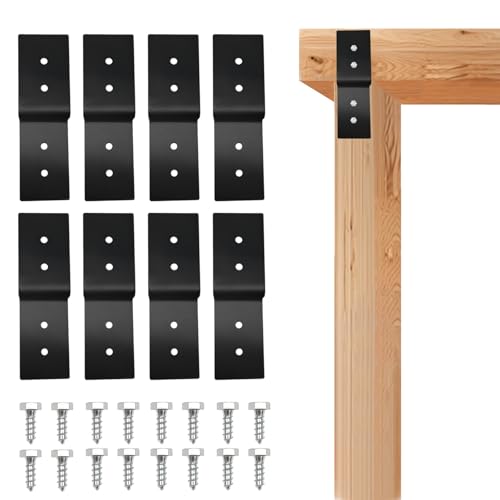
Top-Notch Material:JONEIMECY brackets for braces are crafted from high-strength Q235B carbon steel,the metal bracket is thicker and heavier,each one has a solid weight,these metal angle brackets feature a black powder-coated surface that resists corrosion and rust, ensuring long-lasting performance even in outdoor environments.

【CORROSION-RESISTANT & DURABLE】The 3-way 4x4 pergola bracket kit is made from Q235 steel for robust stability with great rust resistance &durability will work for a long lifetime.It has strong resistance to humidity and high temperatures,black baking paint process.It fully covers beam ends to protect wood from weather,offering long-lasting support with minimal maintenance.
Anchoring Techniques for Stability
While material selection establishes your pergola’s inherent wind resistance, proper anchoring transforms that capability into reliable performance across dynamic environmental conditions. You’ll find several anchor types suited to different installations: concrete footings reach below frost lines for permanent structures, spiral ground anchors work well in soil, and weight-based systems suit temporary setups. Your fastening methods should match these anchors—expansion bolts secure metal plates to concrete, lag bolts connect posts to ground anchors, and ratchet straps tension against weights or guy ropes. Proper board spacing and alignment ensure that load distribution remains balanced across all anchor points. You can combine approaches strategically: supplementing ground anchors with guy ropes increases stability for taller pergolas, while non-drilling solutions using weights and straps accommodate rental situations. Select hardware rated for your pergola’s weight and local wind conditions, prioritizing galvanized or stainless steel to prevent corrosion and guarantee durability, the same corrosion-resistant materials recommended for outdoor wood furniture hardware applications.
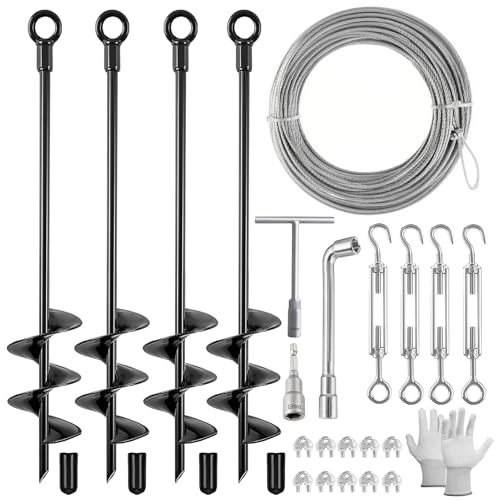
Complete Shed Anchor Kit: Includes 4 heavy-duty 18" ground anchors with removable eyes, 50 ft galvanized steel cable, 10 rope clamps, 4 adjustable turnbuckles,1 drill adapter, clamp wrench, T-handle wrench and gloves for anchoring outdoor structures

Complete Heavy-Duty Ground Anchor Kit: Comes with 4×18″ ground anchors, 50 ft of galvanized cable, bolt-type clamps, extra-wide tree straps, drill adapter, T-Socket & clamp wrench—all you need to secure sheds, mobile home, tents, trampolines, and canopies
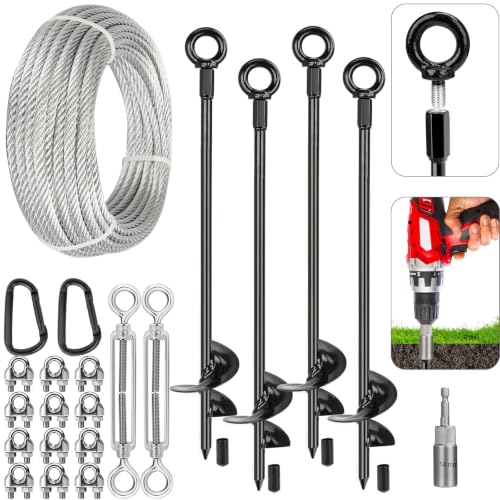
Heavy-Duty Anchoring System: 30" deep-drive anchors deliver strong ground hold (12mm steel-core construction + 50ft 3/16" reinforced cable)—engineered for TX/FL storms
Attached Versus Freestanding Pergola Performance
Your pergola’s attachment method fundamentally determines how it’ll withstand wind forces, since attached structures leverage building support while freestanding designs must independently resist lateral pressure from all sides.
Attached pergolas typically handle winds exceeding 115 mph due to direct building anchorage and partial load transfer to your home’s structural system. Freestanding stability requires heavier engineering, with most designs managing 70–100 mph depending on anchoring quality and cross-bracing reinforcement. Similar to how deck railings must withstand 200 pounds of lateral force during inspection, your pergola structure must be engineered to resist sustained wind pressures in your specific location.
When you close your roof, attached performance improves through distributed wind loads across the building. Conversely, freestanding pergolas become vulnerable with closed roofs, as concentrated wind pressure intensifies without adjacent structural support.
Your local building codes likely mandate 105–115 mph ratings for attached pergolas, matching residential standards. Freestanding models must comply with regional high-wind requirements, often demanding engineering-stamped certifications in zones exceeding 90 mph. Before finalizing your pergola design, consult your local building department to ensure your structure meets all applicable code requirements and wind load specifications for your area.

Wind-Resistant Protection: Pro-Tect tested and proven to withstand up to 100 mph winds*

𝟏𝟎𝟎% 𝐍𝐚𝐭𝐮𝐫𝐚𝐥 𝐂𝐞𝐝𝐚𝐫 𝐖𝐨𝐨𝐝 𝐂𝐨𝐧𝐬𝐭𝐫𝐮𝐜𝐭𝐢𝐨𝐧: Crafted from premium cedar wood, this pergola delivers exceptional strength and natural resistance to decay, rot, and insect damage. Cedar's natural oils protect against moisture and weathering, ensuring lasting beauty with minimal maintenance. The rich wood grain and warm tones add timeless character to any patio, garden, or deck.
Premium 2.5mm Reinforced Steel Construction:Crafted from upgraded 2.5mm thick galvanized steel (thicker and stronger than standard 2mm market brackets), these pergola brackets deliver enhanced structural integrity and long-term durability. The extended 5.9-inch design provides greater support surface and improved weight distribution, ensuring a more stable and secure pergola structure for heavy-duty outdoor projects.
Professional Installation and Maintenance Recommendations
Understanding your pergola’s wind tolerance means little without proper installation and upkeep—the execution phase determines whether engineering calculations translate into real-world performance. Your installation techniques must include concrete footings extending below the frost line, reinforced with rebar, and secured with galvanized or stainless steel brackets. For optimal stability, footings should be placed on undisturbed earth and sized appropriately, typically around 16 inches square and 12 inches deep for standard 6×6 posts. Professional installers handle permits and inspections, ensuring compliance with local wind codes. Maintenance strategies require annual perimeter walks to identify loose hardware, wobbly posts, and structural issues. Post-storm inspections catch damage before it compounds. You’ll need to verify that structural screws and anchors match calculated pull-out loads for your specific wind speeds. Ensure metal roofing panels are overlapped properly and fastened with screws featuring rubber washers to prevent water infiltration that could compromise structural integrity during storms. Regular attention to these fundamentals prevents catastrophic failure during high-wind events.

Superior Quality Materials: This 4x4 pergola brackets feature a 90° right angle gusset plate design and weather-proof performance and a stable frame,so you do not have to worry about the attack and damage to storms and wind.
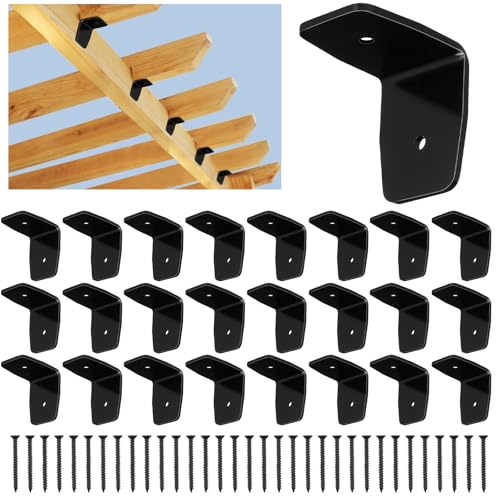
Comprehensive Package: our package includes 24 pcs 2" black rafter clips and compatible screws, making your assembly process smoother; No more additional purchases required, as we provide everything needed for efficient installation

Engineered for USA Climates – ORIGLE 4x4 post brackets feature heavy-duty, corrosion-resistant steel with a premium black powder coating, ideal for pergolas, deer stand brackets 4x4, and gazebo kits in high-wind or heavy snow regions.