How to Build a Metal-Roofed Pergola: A Complete Guide
You’ll build a metal-roofed pergola by starting with site evaluation and frost-line foundation work using Sonotubes and concrete footings. Next, you’ll anchor 6×6 posts with galvanized brackets, then assemble beams with reinforced connectors. Install rafters with appropriate hangers, position metal panels with corrosion-resistant screws at 12–24 inch intervals, and seal all edges with weatherproofing sealants. Finally, establish a maintenance schedule addressing thermal expansion, water infiltration, and corrosion. The complete process requires attention to each phase’s specific requirements.
Planning and Site Preparation
Before you break ground on your metal-roofed pergola, you’ll need to thoroughly assess your site’s conditions and constraints. Conduct a thorough site evaluation to identify sunlight patterns, prevailing winds, and drainage characteristics. Verify that your chosen location slopes away from the structure to prevent water pooling beneath the metal roofing system.
Check underground utilities before excavation begins. Measure available space and confirm level ground or plan grading accordingly. Evaluate shading considerations by observing how nearby structures and vegetation affect daily light exposure. Review local building codes for setback requirements, height restrictions, and foundation specifications. Verify frost line minimums in your region to guarantee proper post hole depth. Confirm zoning regulations and obtain necessary permits to ensure compliance with local requirements. Document all measurements and mark post locations using string lines and the 3-4-5 method for accurate layout. Ensure your pergola design complies with local building codes to maintain safety and structural integrity throughout the construction process.
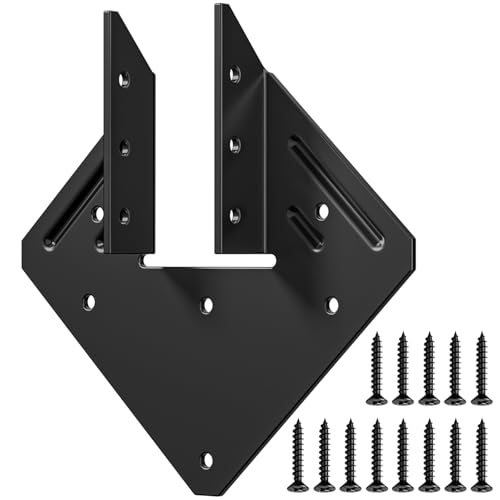
Premium 2.5mm Reinforced Steel Construction:Crafted from upgraded 2.5mm thick galvanized steel (thicker and stronger than standard 2mm market brackets), these pergola brackets deliver enhanced structural integrity and long-term durability. The extended 5.9-inch design provides greater support surface and improved weight distribution, ensuring a more stable and secure pergola structure for heavy-duty outdoor projects.

Durable Material : Roof riser brackets for patio cover are anti-rust,anti-corrosion, and water resistant. It can ensure you years of use.

Upgrage 3-Way Right Corner Brackets: Our Grehitk pergola brackets are extended 3-Way right angle corner bracket. It has enhanced the stability of the pergola, even in inclement weather. The 4x4 pergola brackets post features weather-proof performance and a stable frame, so you do not have to worry about the attack and damage to storms and wind.
Foundation and Post Installation
The foundation you’ll select will determine your pergola’s longevity and structural integrity, so you’ll want to match it to your soil conditions and local climate. For most installations, strip foundations or post footings work best—dig holes below the frost line, typically 24–48 inches deep, to prevent frost heave. Use Sonotubes to create uniform concrete footings, and compact crushed stone layers with vibrating plates before pouring. Lay PE film beneath to block moisture infiltration.
Pour concrete in two layers with steel mesh reinforcement between them for added strength. After 48–72 hours of curing, install post anchoring systems using galvanized steel brackets or adjustable metal bases. For 6×6 pergola posts, ensure your concrete footings are approximately 16 inches by 16 inches at the base for optimal load transfer and stability. Secure anchors tightly with impact guns or wrenches, and add angle iron brackets for lateral stability in high-wind conditions. Just as proper surface preparation is essential for lasting exterior finishes, ensuring your foundation is correctly prepared will prevent future movement and deterioration of your pergola structure.
Frame Assembly and Beam Installation
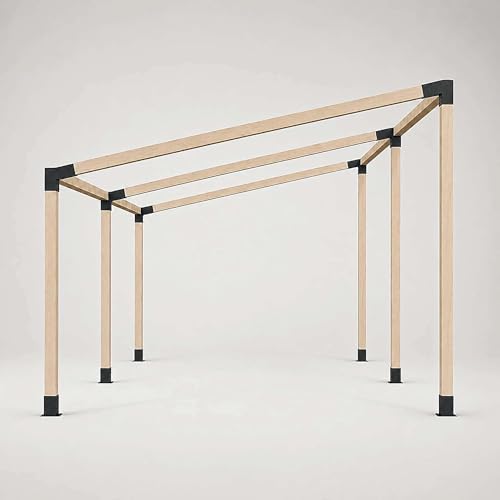
Once your foundation’s concrete has fully cured and your post anchors are secured, you’re ready to begin connecting the vertical posts to their brackets—the critical first step in raising your pergola’s frame. Slide each post fully into designated bracket channels, guaranteeing a snug fit without obstruction. Secure posts using provided screws following the manufacturer’s diagram precisely. Complete both frame ends, then align remaining posts with these anchors, sliding 3-arm brackets over post ends. Secure all frame connections firmly with screws. Before proceeding, verify that all posts are plumb and level to ensure your pergola’s structural integrity and visual alignment.
For beam alignment, position cross beams between posts and use bolts and screws for tight attachment. Lift beams with assistance to guarantee even placement. Attach beam-to-beam connectors with larger holes facing outward, running screws through connector bases for reinforced joints. Ensure proper temperature and humidity conditions during assembly to maintain structural integrity. This assembly methodology establishes your pergola’s structural foundation.

Premium 2.5mm Reinforced Steel Construction:Crafted from upgraded 2.5mm thick galvanized steel (thicker and stronger than standard 2mm market brackets), these pergola brackets deliver enhanced structural integrity and long-term durability. The extended 5.9-inch design provides greater support surface and improved weight distribution, ensuring a more stable and secure pergola structure for heavy-duty outdoor projects.

Material Of 4x4 Post Base: Made of Solid Steel, Black Powder Coated, Rustproof and Strong.

Sturdy & Heavy‑Duty Construction:These T post brackets (11" x 8", 4‑pack) are crafted from heavy‑duty carbon steel with a thickness of 3 mm, providing reliable support and connection for wooden shelves, pergolas, and other structural framing projects.
Rafter Installation and Roof Structure
As you shift from beam assembly to the vertical framework supporting your metal roof, you’ll need to mark center points on each rafter and establish precise spacing on the supporting beams. Measure outside-to-outside at post bases for accurate placement. Use rafter hangers with appropriate fasteners, sliding skirts over rafters with locking tabs facing downward. Install rafter fasteners—hex screws like 3/8″ x 1″—through pre-drilled holes, ensuring firm connections without overtightening. Maintain even rafter spacing per design specifications to support roof loads and panel alignment. Install inner purlin holders atop rafters to support metal roofing purlins, typically 1¾” square. Account for roof slope to prevent water pooling. Use lifting aids for precise positioning, and drill through hanger center holes before final fastening to accommodate electrical components.

Made to Last: The 2x4 joist hangers for wood is made of 18 gauge carbon steel and galvanized to prevent rust, ensuring long-term strength and stability. It performs reliably even in harsh climates, including tropical storm areas
Heavy-Duty Hurricane Straps: Heavy-duty hurricane strap brackets are more effective than regular hurricane straps because they not only secure the joist to the ceiling, but also provide a more stable positioning of the joist from left to right. Our hurricane brackets are made of 13-gauge steel, which makes them stronger and more durable! We also provide them with 120 screws.

The open design and ability to field-adjust the slope make the LRUZ ideal for both retrofit or new applications
Metal Roof Panel Installation
With your rafter structure and purlin supports in place, you’re ready to begin metal roof panel installation—the critical phase that transforms your pergola’s framework into a functional weatherproof assembly. Start with precise panel cutting, using aviation snips to achieve clean, straight edges without jagged sections that compromise water runoff. Guarantee 1–1.5 inches of overhang at the eave for proper drainage.
Next, focus on panel alignment by snapping a chalk reference line perpendicular to the eave. Position your first panel square to establish consistent spacing throughout installation. Nest shorter rib legs over longer ribs according to manufacturer specifications, maintaining uniform gaps to prevent misalignment.
Fasten panels using corrosion-resistant #12 or #14 screws with rubber washers, spacing them 12–24 inches apart in flat areas only. Avoid overtightening to prevent washer damage or panel distortion. For maximum weather protection, ensure that roof edges are sealed to prevent water infiltration and extend the life of your metal-roofed pergola. After completing installation, clean your tools immediately to maintain their condition and ensure they’re ready for future projects.

ANTI-CORROSION COATING: Featuring a corrosion-resistant rustpert coating that withstands 1000-hour salt spray testing, these durable metal roofing screws excel in extreme weather conditions while maintaining long-lasting rust protection for reliable indoor/outdoor use

ANTI-CORROSION COATING: Featuring a corrosion-resistant rustpert coating that withstands 1000-hour salt spray testing, these durable metal roofing screws excel in extreme weather conditions while maintaining long-lasting rust protection for reliable indoor/outdoor use

ANTI-CORROSION COATING: Featuring a corrosion-resistant ruspert coating that withstands 1000-hour salt spray testing, these durable metal roofing screws excel in extreme weather conditions while maintaining long-lasting rust protection for reliable indoor/outdoor use
Finishing and Weatherproofing
Your metal-roofed pergola’s durability depends entirely on meticulous finishing and weatherproofing—the final phase that seals joints, protects fasteners, and establishes a complete moisture barrier. Begin with flashing installation at roof edges, ridges, and penetrations using galvanized or painted metal compatible with your panels. Secure flashing with appropriate fasteners without overtightening. Next, apply roofing underlayment beneath panels to provide secondary moisture protection and condensation resistance. Overlap sheets per manufacturer specifications. For sealant application, use high-quality roofing-specific sealants at panel overlaps, rivets, screw heads, and flashing joints. Apply smoothly with caulking tools, ensuring no gaps. Finally, apply protective coatings on cut edges to prevent rust and corrosion, similar to how rust-inhibiting primers extend the lifespan of metal railings in outdoor environments. Just as proper moisture barriers protect outdoor cushions during storage, maintaining your pergola’s weatherproofing integrity through regular inspections ensures long-term protection. Schedule periodic inspections to replace deteriorated sealant and maintain weatherproofing integrity.
Maintenance and Long-Term Care
Once you’ve completed the weatherproofing phase, maintaining your metal-roofed pergola becomes essential to preserving its structural integrity and aesthetic appeal for decades. Establish a cleaning schedule that prioritizes spring and fall inspections, when seasonal shifts expose winter damage and weather-related wear. Clean metal surfaces with mild detergent and soft brushes, avoiding high-pressure washers that compromise protective coatings. Inspect fasteners, seals, and mechanical components quarterly for tightness and corrosion. Remove debris from gutters and louvers biannually to prevent water pooling and blockage. Trim surrounding vegetation to minimize moisture retention and facilitate airflow. Address scratches promptly with color-matched repair kits to prevent corrosion initiation. Use protective covers during adverse weather to shield your pergola from extreme conditions and extend its lifespan. Select covers specifically designed to shield against UV rays, dirt, and rain while allowing adequate airflow to prevent moisture accumulation. This systematic approach maintains your pergola’s weather resistance and structural durability long-term.
Troubleshooting Common Issues
Even with diligent maintenance, metal-roofed pergolas can develop problems that undermine their performance and longevity. You’ll encounter four primary issues: structural instability from loose fasteners or improper anchoring, water infiltration through gaps at joints and seams, corrosion issues accelerated by salt exposure and worn protective finishes, and thermal expansion causing stress on connections.
Address structural instability by inspecting posts for wobbling and retightening all fasteners quarterly. Combat water infiltration by sealing panel edges and clearing drainage systems. Prevent corrosion by applying protective coatings and monitoring for underside moisture accumulation. Like deck protection strategies, using UV inhibitors in your protective coatings helps prevent sun damage and extends the lifespan of your pergola’s finish. Manage thermal expansion by ensuring your fastener system allows panel movement without restriction.
Early detection prevents costly damage. Schedule inspections after severe weather and seasonally to catch developing problems before they compromise your pergola’s integrity.