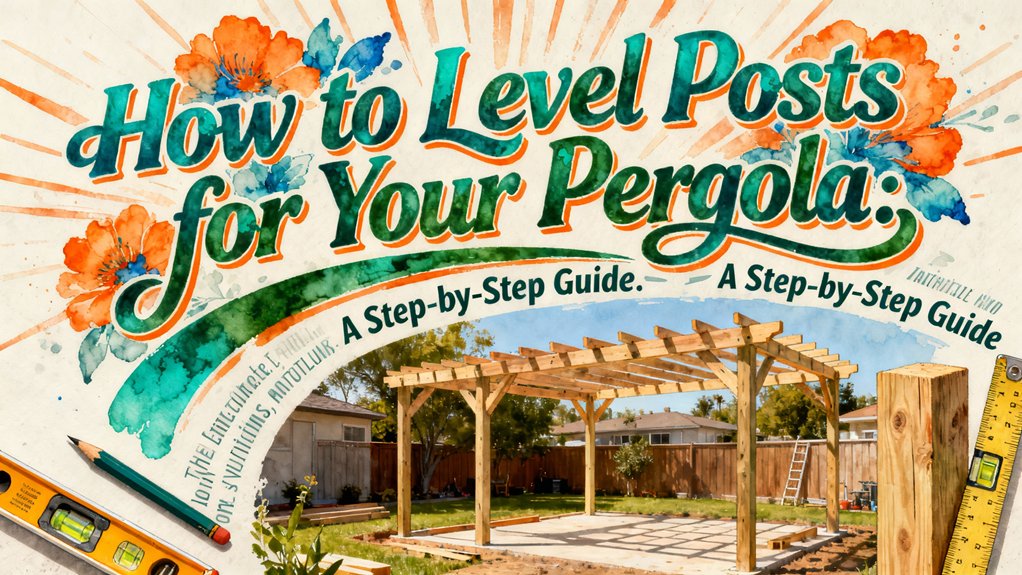
How to Level Posts for Your Pergola: A Step-by-Step Guide
You’ll level your pergola posts by first clearing the site and confirming local frost line requirements. Dig holes 30 inches deep, adding 6–8 inches of compacted stone for drainage. Install posts with concrete footings, using spirit or laser levels to verify plumb. Brace each post temporarily, then align tops horizontally with a long level. After installation, monitor for settlement signs like gaps or leaning. If posts shift, use hydraulic jacks to lift and readjust footings. Regular inspections help you catch misalignment early and maintain structural integrity throughout your pergola’s lifespan.
Planning and Preparation
Before you install pergola posts, you’ll need to assess your site thoroughly and prepare it for construction. Start by clearing vegetation, rocks, and debris to create a workable surface. Conduct a thorough site evaluation by measuring height differences from a consistent reference point—like a door sill—across all post locations. This elevation assessment helps you identify slopes and uneven spots requiring adjustment.
Next, confirm local building codes, permits, and frost line depth requirements to guarantee structural compliance and safety. Consult your local building department for specific guidance on permit requirements and structural specifications applicable to your area. Plan drainage solutions by incorporating gravel layers under footings to prevent water accumulation. Mark post locations using measuring tape and string lines for precise alignment. Pound stakes at corners and midpoints to visualize your pergola’s perimeter. Double-check diagonal measurements to ensure posts will form true rectangles or squares before excavation begins.
Tools and Materials You’ll Need
You’ll need five essential categories of tools and materials to successfully level your pergola posts. Start with leveling equipment: post levels, spirit levels, and optionally a laser level for precision. Gather support materials including 2×4 braces, grade stakes, deck screws, and mason’s twine for alignment. Your material selection should include fasteners like 6-inch lag screws and post bases for secure anchoring. Stock concrete supplies—ready-mix concrete, paver base, and gravel—for proper drainage and stability. Finally, assemble safety items: glasses, gloves, hammer, and an extension cord with RCD protection. For deck-attached pergolas, ensure your lag bolts are at least 2.5 inches long to securely attach posts to deck joists and resist wind loads. When attaching the ledger board that supports your pergola structure, use heavy-duty galvanized screws or lag bolts anchored into the house’s structural framing for maximum stability. Proper post leveling depends on having appropriate equipment before starting. Thoughtful material selection guarantees your installation meets structural standards and longevity requirements.

【Post-sale reminder】: All users purchasing "weiddw" products enjoy a 12-month free warranty.

This level has a magnetic strip and a rubber strap for convenient hands-free installation of posts, railings, pipes, and more

【Post-sale reminder】: All users purchasing "weiddw" products enjoy a 12-month free warranty.
Preparing the Footings
With your tools and materials assembled, the next phase involves establishing solid footings that’ll support your pergola’s structural integrity. You’ll dig holes to a minimum footing depth of 30 inches, adjusting based on your local frost line and soil composition. Make each hole’s diameter 2–3 times your post width for ideal stability. Add 6–8 inches of compacted crushed stone at the bottom, which serves as your primary drainage solution. This gravel layer prevents direct concrete-to-soil contact, reducing moisture absorption. Insert 1/2-inch rebar vertically into each hole, maintaining 2 inches of clearance from the hole’s edge. Pour concrete in layers, removing air pockets methodically. Position footing tops 3 inches above ground level, then level all surfaces uniformly using a straight board. When concrete has fully cured, use a pry bar to carefully check for any settling or movement before proceeding with post installation. Securely anchor your posts to the footings using approved hardware such as post anchors or saddles to ensure proper load transfer and prevent wobbling or structural failure.
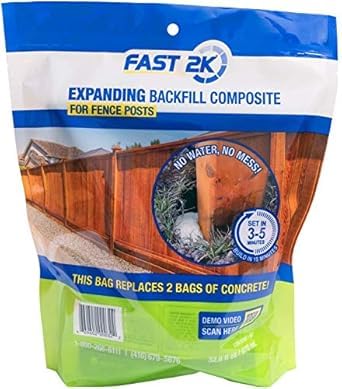
SAVE YOUR BACK: Lightweight technology replaces 80lbs of concrete with a 2.5lb bag
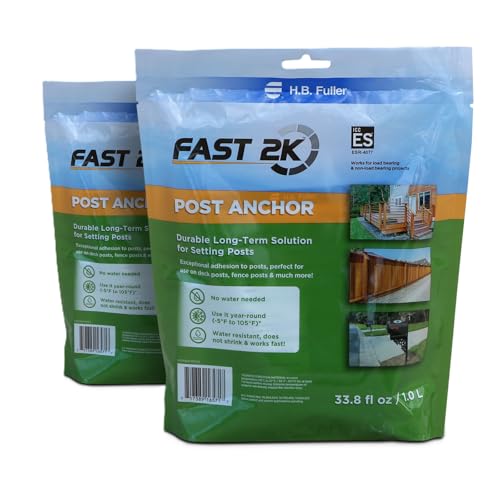
SAVE YOUR BACK: Lightweight technology replaces 80lbs of concrete with a 2.5lb bag
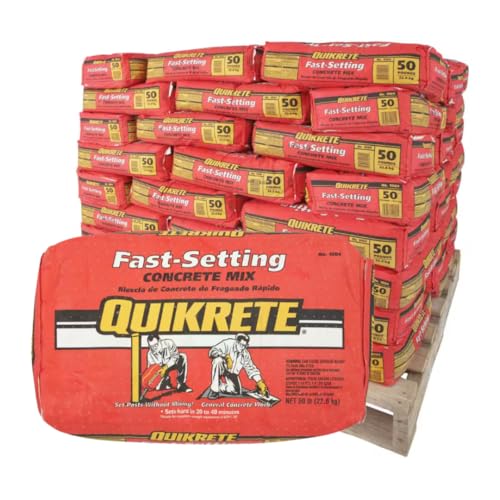
ULTRA-FAST SETTING TIME: Specially formulated to set in just 20 to 40 minutes, allowing you to complete projects faster without the long wait times of standard mixes.
Securing Posts to Ground
Several proven methods can anchor your pergola posts securely to the ground, each offering distinct advantages depending on your site conditions and permanence requirements. Concrete footings provide permanent stability in diverse weather, particularly when dug below the frost line with flared designs for freezing climates. Ground screws offer easier installation without excavation, ideal for temporary setups or uneven terrain. Adjustable post mounting hardware elevates posts slightly above concrete surfaces, preventing water accumulation and rot. For non-invasive solutions, anchor straps with heavy-duty weights or sandbags stabilize posts without ground penetration. Select footing types based on your climate, wind exposure, and installation permanence. Reinforced concrete with steel rebar or mesh enhances the tensile strength and stability of your footings for long-term durability. Use corrosion-resistant fasteners and apply peel-and-stick roofing membrane where posts contact concrete to protect wood from moisture damage, similar to how proper surface preparation prevents deck deterioration. Post anchoring success depends on matching your method to specific site requirements.

Not recommended for installation in rocky or sandy soil conditions, as these environments may reduce stability and secure anchoring needed for optimal performance

Thickened Hard Steel: Made from thickened, solid hard steel, the added thickness significantly increases its hardness, making it sturdy, durable, and resistant to deformation.

💪 Ultra-Stable 4-Anchor Design: Exclusive LADECH innovation — each post base features 4 long ground anchors (16") at every corner for superior stability and anti-tilt performance. Stronger than any single-spike design on the market.
Levelling and Aligning Posts
Once you’ve secured your footing bases, leveling and aligning your posts becomes the critical next step that determines your pergola’s structural integrity and appearance. Start by installing temporary bracing on each post to maintain stability during adjustments. Use a spirit level or laser level to verify vertical plumb—ensuring posts stand perfectly straight. Check that all post tops align horizontally using a long level, making adjustments with shims or footing modifications as needed. For post alignment, run string lines between posts to maintain consistent spacing and straightness. Ensure posts remain plumb and properly braced throughout the installation process to prevent shifting before beam attachment. Consult with a local building authority in your area to verify that your post leveling and alignment meets all regulatory requirements before proceeding. Measure distances carefully and verify alignment at multiple heights. Before attaching beams, recheck that all posts remain plumb and properly positioned along your string lines.

★ DUAL MODES & SELF-LEVELING ★ The cross line laser with slide switch enable you to set 2 modes, self-leveling mode and manual mode. When working in self-leveling mode, the range of leveling and compensation is 4°± 1°and the laser level will automatically level for horizontal/vertical/cross line, otherwise the laser will flash to indicate thr out-of-level condition. In manual mode, the self-leveling function is deactivated and the cross is locked to use the device at any angle.

Size & Comaptibility: With two extending poles - 8-inch and 12-inch. These two extending poles are only compatible with Huepar12 Ft./3.7M Professional Laser Level Pole LP36A

【MULTIFUNCTION LASER LEVEL】Laser level tool cool gadgets for men Works For Indoor Designed for any situation where accurate measurements are needed, such as hang shelves, cabinets, tiles and picture frames with accuracy. All The Job That Requires A Straight Line Or Accurate Measurement.
Troubleshooting Common Issues
Even after you’ve carefully leveled and aligned your posts, issues can still emerge during or after installation. Common installation mistakes often involve inadequate foundation depth—posts must extend at least one-third their length below grade, deeper if you’re in frost-prone regions. Shallow footings cause shifting and tilting over time.
Watch for settling signs: visible gaps, tilting, or sinking. Poor soil compaction and drainage frequently trigger these problems, similar to how moisture content affects material integrity in outdoor construction. Post stabilization techniques include reinforced concrete footings with gravel bases and additional anchoring in movement-prone areas. Consider integrating adjustable shading elements like retractable canopies or shade sails, as heavier overhead structures may require even more robust foundational support.
Inspect connections regularly. Loose bolts, weak fasteners, or improper attachment to existing structures compromise stability. Address sagging beams immediately—they indicate insufficient support or poor sizing. Re-level settled posts by lifting and adjusting footings as needed, ensuring long-term structural integrity.