
How to Cut Rafter Tails for a Beautiful Pergola Design
You’ll transform your pergola by selecting a rafter tail style—straight, cove, slant, bullnose, or scroll—that matches your lumber dimensions. Create accurate templates using free PDFs, then secure them to your boards with double-sided tape or brads. Use a jigsaw with medium-TPI blades for precise cuts, following your template carefully. Refine edges with a router and appropriate bits for decorative profiles. Install rafters at pre-marked points with pre-drilled fasteners, ensuring proper alignment. Master these techniques and you’ll achieve professional-grade finishing details.
Design Selection and Planning Your Rafter Tail Pattern
Before you cut a single board, you’ll need to select a rafter tail design that matches both your pergola’s aesthetic and your lumber dimensions. You’ll find substantial template variety available through free downloadable PDFs, featuring classic, stepped, arched, and double curve options. Each design works best with specific board sizes—2×4 through 2×14 lumber have corresponding templates. Consider your rafter’s width and thickness carefully; templates must correspond with these dimensions for proper fit. If you’re working with non-standard lumber, scaling instructions let you adjust designs accordingly. Plan for design symmetry across all rafters by marking your board before tracing. This preparation guarantees uniform, visually appealing results. Custom designs are also available from some providers if you want unique patterns beyond standard options. For outdoor pergolas exposed to the elements, you may also want to plan regular maintenance using gentle cleaning techniques to preserve your finished rafter tails, and consider applying UV blockers and mildew resistance protective coatings to ensure long-term durability against weather damage.
Understanding Popular Rafter Tail Styles
Once you’ve selected your design template and marked your boards, you’ll want to understand how different rafter tail aesthetics function both visually and structurally. Five primary styles dominate pergola design: straight tails deliver clean minimalism, cove tails add subtle curves, slant tails create dynamic angles, bullnose tails soften edges with rounded profiles, and scroll tails introduce ornamental detail.
Your material considerations greatly impact execution and longevity. Western Red Cedar provides authentic warmth and natural grain character but requires regular maintenance. PVC alternatives offer superior durability and low-maintenance performance, though some designers prefer wood’s tactile authenticity. If you’re considering wood materials, avoid options like Maple that lack natural weather resistance and demand extensive protective treatments for outdoor durability.
Consider how shadow lines from cove and slant profiles enhance dimension, while scroll details demand precision cutting. Match your chosen style to your pergola’s architectural context—contemporary designs suit straight cuts, while cottage aesthetics favor bullnose profiles. Well-designed rafter tails also contribute to extending your outdoor living space by creating visual continuity with the rest of your landscape design.
Preparing and Assembling Your Template
With your rafter tail style selected, you’ll need to create an accurate template that captures your design at the correct scale. Your template materials should match your rafter board’s width to maintain proper proportions. Scrap plywood or OSB works effectively as your base. If you’re using a printable pattern, assemble multi-page PDFs carefully to prevent scaling errors. Check that one-inch markings from the top edge align correctly with your actual rafter dimensions.
Apply measurement techniques by verifying template scale matches your lumber size before proceeding. Hand sketch custom designs directly on scrap board if preferred. Use sharp jigsaw blades to cut clean edges, and make relief cuts during the process for easier handling. To prevent damage to your template during storage, keep it clean and dry when not in use, similar to how waterproof tarps should be maintained for long-lasting protection. Just as installing polycarbonate roofing panels requires precise measurements and careful planning, your template’s precision directly impacts your final rafter tail appearance.

What You Will Get: You will receive 6 pieces of router templates, the guide tools have different shapes, such as straight handle and curved handle, sufficient quantity, rich styles, easy to meet your various needs.

Carry Your Needs: You will get 12 pcs basswood sheets, each wood dimensions about 12 x 8 inches, and 1/10 inch in thickness., which are enough for your DIY projects.

Carry Your Needs: You will get 18 pcs basswood sheets, each wood dimensions about 6 x 6 inches, and 1/10 inches in thickness., which are enough for your DIY projects.
Printing and Combining Multi-Page Templates
Your template’s accuracy depends on proper printing and assembly of multi-page designs. Convert your rafter tail design to PDF format before template printing to guarantee consistency across pages. Use your printer’s “Fit to” or “Poster” mode settings to split the oversized pattern across multiple pages with overlap margins for easier alignment.
Preview your layout in software like Adobe Acrobat to confirm pagination before printing. When you’re ready for multi-page assembly, trim excess margins carefully, keeping only the unprinted edges and one side of overlapping sections. Align pages precisely using guides or straightedges to avoid cumulative errors. Attach pages to poster board or foam core backing with spray adhesive or double-sided tape, overlapping deliberately to maintain pattern continuity without gaps.
Securing Templates to Your Workpiece
Several fastening methods‘ll keep your template stable during routing, each suited to different workpiece sizes and cutting demands. For lightweight cuts, brads offer speed and adequate grip. Screws provide stronger fastener choices for heavier routing work, though you must position them outside the bit’s path. Double-sided woodturner’s tape delivers tremendous holding power through pressure-sensitive bonding—apply thin strips rather than full coverage to prevent flexing. Toggle clamps work exceptionally well for batch production, offering quick operation and reliable security. For production runs requiring the cleanest results, hidden fastening systems ensure no visible fastener marks on your template surface. Regardless of your template attachment method, guarantee fasteners stay clear of the router’s cutting path. Position your template so the guide bearing contacts it before the bit touches your workpiece, maintaining safety and precision throughout the operation. Just as stainless steel fasteners protect outdoor woodworking projects from corrosion, selecting the appropriate fastening method protects your routing template from shifting during the cutting process.

LONG-LASTING CORROSION RESISTANCE: Made from 304 (18-8) stainless steel, our wood screws help resist rust for dependable indoor use and demanding outdoor applications.

EXCEPTIONAL STRENGTH & DURABILITY: Bxbdcha Brand angle brackets are crafted from heavy duty stainless steel,ensuring super strength and durability.Thus,Corner braces for wood can be for outdoor projects.These sturdy metal brackets for wood feature a smooth surface without sharp edges,keeping your fingers safe.Their robust construction makes them ideal corner connectors for wood and cabinet brackets,perfect for reinforcing loft beds or revitalizing old cabinets.Choose durable 90 degree brackets for DIY

【Product Dimensions】 You will receive 12pcs brackets, 48pcs screws, and a cross-head screwdriver. Size: 2.36’’(60mm) x 1.49’’(38mm) ,with 4 holes, 0.05’’ thick, providing strong support for your furniture.
Essential Tools and Equipment for Cutting
Once you’ve secured your template, you’ll need the right tools to execute clean, accurate cuts on your rafter tails. Select quality wood that’s free from knots and warping—this guarantees smoother cuts and better results. Gather a miter saw for angled cuts and a jigsaw for curved designs. Add a circular saw with a Speed Square guide for precision work. You’ll also need a router with flush trim bits to refine edges, sanders for cleanup, and chisels for detail work.
Include safety equipment: eye protection, dust masks, and hearing protection when operating power tools. Clamps, workbenches, and straightedges provide stable work surfaces. Brad point drill bits create accurate pilot holes, while marking tools guarantee precision from start to finish. Before beginning installation, verify that your load-bearing wall can support the pergola structure and its attachment points. After completing your cuts, consider applying a protective finish—proper drying time between coats ensures even absorption and prevents peeling on your finished pergola.

POWERFUL 15 AMP MOTOR - Delivers 4,800 RPM for quick, detailed cuts

POWERFUL AND PRECISE: This 10-inch single bevel compound miter saw features a 15-Amp motor delivering high power for effortless cuts. The power saw generates a no-load speed up to 5,000 RPM, ensuring precise cuts for all your woodworking projects.

Making Accurate Jigsaw Cuts
The jigsaw’s versatility makes it the ideal tool for cutting rafter tails, but success depends on selecting the right blade and mastering fundamental cutting techniques. Choose medium TPI (10-20) blades for clean cuts on standard wood, or high TPI (20+) blades for dense hardwood requiring splinter-free results.
Optimize your jigsaw settings by adjusting orbital action: use faster settings for rough cuts through thick material, but switch to zero or minimal orbital for precision work. Mark your cut line clearly and apply painter’s tape to reduce splintering. Secure a straightedge or guide fence for straight cuts, keeping the jigsaw shoe firmly pressed against the workpiece throughout.
Let the blade do the work—forcing causes deflection and inaccuracy.

POINTED TEETH REDUCE SPLINTERING ON BOTH SIDES OF THE WORKPIECE

Includes two T144DP precision for wood, two T101B clean for wood, two T101BR clean for wood (reverse tooth to minimize top splintering), two T101AO clean for wood, one T308B Xtra-clean for wood and one T119BO basic for wood

For scroll or curved cuts in laminate flooring and other abrasive materials
Refining Edges With Router Operations
After you’ve cut your rafter tails with the jigsaw, you’ll refine their edges with router operations to achieve the decorative profiles that define your pergola’s visual character. Start with router bit selection by choosing edge-forming bits like round-over, chamfer, or ogee profiles with self-guiding bearings. Secure your workpiece firmly and fit an elongated false fence to your router for stability during cuts. Feed the router against bit rotation—counterclockwise for outside edges, clockwise for inside edges—to maintain control. Make multiple shallow passes rather than deep cuts to improve edge finish quality. Test your setup on scrap wood first, then route corners and ends initially to minimize chip-out. Sharp bits and consistent speed prevent tear-out and burning, similar to how thorough cleaning prepares surfaces for optimal adhesion and finish quality. Like the treated wood recommended for outdoor fence construction, using sharp, well-maintained router bits ensures your pergola’s decorative elements remain beautiful and protected from deterioration over time.

Superior Material & Safety: FLYTUO 1/2Inch Shank 3 pcs Architectural Molding Router Bits are made of quality tungsten alloy steel bodies with anti-kickback design, for a safer & sharper & longer lasting edge

This Classical Ogee Multi Radius router bit has a cutting depth of 9/16" and a cutting height of 5/8". The multi radius design lends a timeless classic look to your furniture. The radiuses are 3/16" and 3/8" for the upper and lower radiuses respectively. The shank is 1/2".
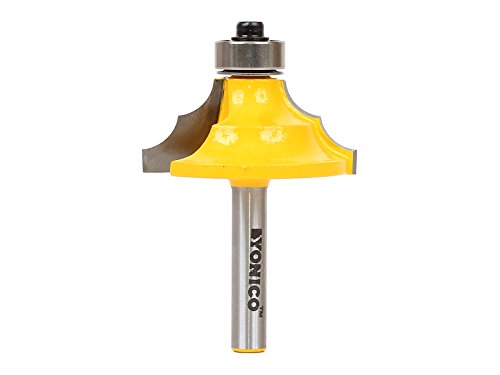
Edge tables, moldings and frames in a beautiful double round over design. Two flute carbide cutters with ball bearing guide. 1/4" Shank
Hand-Cutting Methods for Custom Designs
While power tools provide efficiency for standard cuts, hand-cutting methods offer you the precision and artistic control necessary for truly custom rafter tail designs. Hand cutting techniques involve using hand saws and chisels for detailed carving work that power tools can’t match. Your custom design strategies should include creating cardboard templates first, then testing them on scrap wood before committing to your final rafters. Clamp your template securely and trace the design with a sharp pencil. Use relief marks to guide your cuts along curves. Make slow, deliberate passes with your hand saw, starting at the edge and working inward. This methodical approach minimizes tear-out and guarantees accuracy. Follow up with chisels for fine detailing, then sand smooth for a professional finish. After completing your custom cuts, allow the wood to fully air-dry before assembly to prevent warping and ensure UV protection through weatherproofing of your finished design. Remember that secure bolting of structural elements is critical even for decorative rafter tails, as they must support the weight of your pergola roof system.
Installation and Final Assembly Process
Once you’ve completed all your hand-cutting work and finalized your rafter designs, you’re ready to begin the installation phase on your pergola’s main beams. Position your cut rafter tails onto the pre-marked layout points, guaranteeing half-lap notches align properly with the beams. Drive your fasteners through pre-drilled holes to secure each piece sequentially. Use a straight edge to verify final alignment.
For finishing touches, attach PVC mounting cleats to your structure using PVC adhesive. Insert rafter tails into these cleats and seat them firmly with a rubber mallet. Fasten self-drilling screws through guide holes on both the top and bottom faces. These installation techniques guarantee your rafter tails remain securely positioned while maintaining the clean aesthetic your pergola design requires. Ensure all vertical posts remain plumb during final assembly to maintain structural integrity and the proper support of your rafter tail installation. Before finalizing your assembly, inspect the pergola structure to ensure it’s level and sturdy enough to support the weight of your completed design.