Is Maple Wood a Good Choice for Outdoor Furniture?
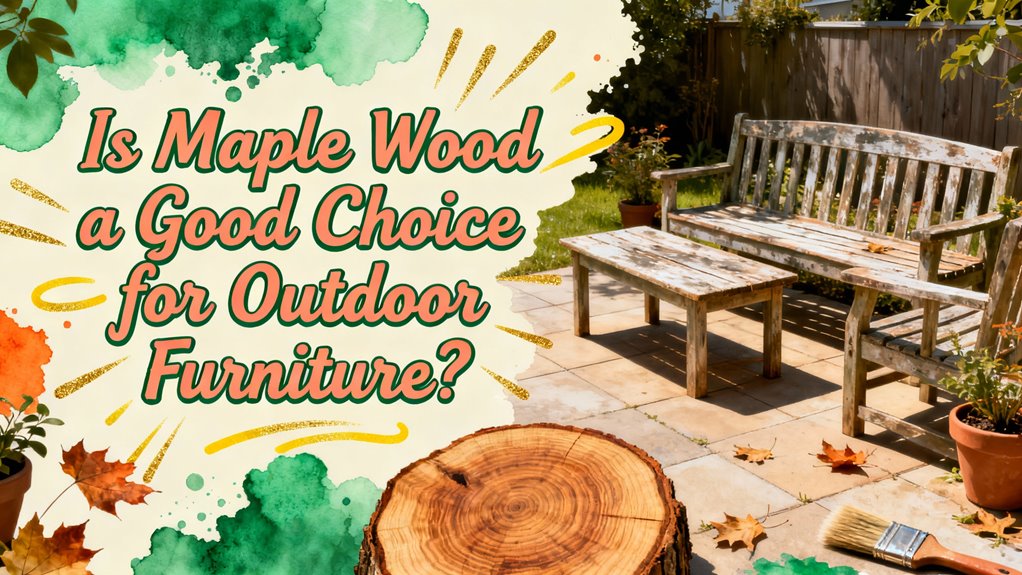
Maple wood isn’t ideal for outdoor furniture. You’ll encounter significant durability challenges because it lacks natural oils and rot resistance—untreated maple deteriorates within five years. Its poor moisture resistance causes swelling, cracking, and fungal growth without consistent sealing. While maple’s initial cost ($3–$8 per board foot) seems attractive, you’ll spend considerably more on frequent maintenance and refinishing. Premium hardwoods like teak outlast maple substantially, making them better long-term investments despite higher upfront expenses. Understanding the full maintenance demands and comparative performance reveals why alternatives deserve your consideration.
Durability and Lifespan of Maple Wood Outdoors
When you’re considering maple wood for outdoor furniture, you’ll quickly realize that it’s fundamentally unsuited for exterior applications. Maple longevity factors are inherently limiting because the wood lacks natural oils and rot resistance that protect superior outdoor woods. You’ll find that untreated maple deteriorates within five years, while even sealed specimens rarely exceed a decade. Hard maple’s 1450 lbf Janka rating provides indoor strength but offers no outdoor protection. You’re dealing with wood that cracks readily under temperature fluctuations and moisture exposure. For maple outdoor applications, maintenance becomes relentless—requiring annual sealing and frequent refinishing. Compare this to teak or ipe, which withstand 20–50 years with minimal upkeep. You’d invest substantially more effort for drastically inferior longevity.

【Premium Acacia Wood Construction】Crafted from high-grade acacia wood, this set combines durability with exotic beauty. Naturally resistant to outdoor elements, acacia maintains its rich, sleek appearance without darkening over time. Its sturdy hardwood frame ensures long-lasting resilience against wear and tear, making it a timeless investment for your patio or garden.

⛱️【Premium Acacia Wood Construction】Crafted from high-grade acacia wood, this set combines durability with exotic beauty. Naturally resistant to outdoor elements, acacia maintains its rich, sleek appearance without darkening over time. Its sturdy hardwood frame ensures long-lasting resilience against wear and tear, making it a timeless investment for your patio or garden.
Natural Moisture and Weather Resistance
Maple’s natural moisture resistance falls considerably short of what outdoor furniture demands. Unlike teak or oak, maple lacks protective oils and resins that naturally repel water, making it highly susceptible to swelling, shrinkage, and cracking when exposed to rain and humidity. You’ll find that untreated maple absorbs moisture readily through its porous structure, encouraging fungal growth and decay.
To protect your maple outdoor furniture, you’ll need robust treatment options. Water-based polyurethane sealers provide durable, clear finishes that reduce moisture absorption and prevent surface damage. However, maintenance is critical—you must reapply protective coatings regularly to sustain resistance against weathering. Without consistent treatment, maple won’t withstand outdoor moisture exposure effectively.
How Maple Compares to Other Outdoor Wood Options
While protective coatings can help maple resist moisture damage, the wood’s inherent properties—or lack thereof—place it at a disadvantage compared to other outdoor wood species. You’ll find that tropical hardwoods like teak and ipe offer superior density and natural rot-resistance, making them more suitable for heavy-use environments. Cedar and redwood provide better weather resistance without requiring extensive finishing. However, you shouldn’t overlook maple’s advantages: it’s more affordable than these maple alternatives and hardwood options, widely available in North America, and dimensionally more stable than many softwoods. Like elm wood, maple’s susceptibility to rot in wet conditions requires careful consideration for outdoor applications. Maple’s high moisture absorption can cause warping and swelling when exposed to outdoor elements, similar to other woods not specifically engineered for exterior use. For moderate-use applications—benches, tables, and chairs—maple performs adequately with proper maintenance. Your choice ultimately depends on balancing durability requirements against budget constraints and intended usage patterns.

Modern and Ergonomic Design: The design of our patio furniture set is simple, stylish and Ergonomic. It is perfect to decorate your your yard, poolside, balcony, patio and indoor area. Provide great comfort for you while you are enjoying your leisure time

Durable and Long-Lasting: This metal patio furniture set is constructed from steel, offering a stable structure with excellent strength. This small patio furniture set frame features an external rust-proof coating that provides water resistance and corrosion protection, ensuring a long service life

Simple & Practical: Closed armrest and leg design makes the chair simple but modern and no need to worry about the rattan falling off when they are used after a long time.
Essential Maintenance Requirements for Outdoor Maple Furniture
Because maple lacks the inherent rot-resistance of tropical hardwoods like teak or ipe, you’ll need to establish a rigorous maintenance regimen to protect your investment and extend its outdoor lifespan. Implement cleaning techniques quarterly, using mild soap and soft brushes to remove debris, and employ white vinegar solutions for stubborn mildew. Dry surfaces immediately afterward to prevent moisture infiltration. Apply UV-resistant, weatherproof protective finishes every few years after light sanding to guarantee maximum adhesion. These sealants are essential, as maple readily absorbs water and develops mold without proper barriers. When applying finishes, use careful brush techniques to ensure even coverage without creating drips or runs that compromise the protective seal. Consider supplementing your maple furniture protection with waterproofing sprays designed for outdoor materials, which create an additional protective barrier against moisture and UV exposure. Additionally, you should lift rather than drag furniture, use coasters and felt pads, and inspect joints seasonally. Address damage promptly, preventing minor issues from escalating into costly repairs that compromise structural integrity.

WATER REPELLENT SPRAY: One Scotchgard Outdoor Sun & Water Shield Fabric Spray, 10.5 oz can, that repels water and protects against the sun's UVA/UVB rays

Wood Stain & Sealer in One: This wood stain eliminates the need for separate primer and top coat— it’s all built right in! It deeply penetrates to nourish wood from within while forming a sealed protective film on the surface, boosting hardness to resist everyday scuffs. Perfect for DIYers to restore a finish for wood with zero hassle.

FURNITURE PROTECTANT AND SPRAY: Furniture protectant creates a protective barrier on contact with simple spraying action; Removes light dust, dirt, salt spray, and grime
Aesthetic Appeal and Visual Considerations
Beyond its practical durability, outdoor maple furniture delivers striking visual appeal that makes it a compelling choice for homeowners seeking both functionality and aesthetic refinement.
Maple’s light, creamy-to-golden palette creates an airy foundation that visually enlarges spaces while supporting diverse décor schemes. You’ll appreciate the wood’s fine, uniform grain characteristics, which provide a sleek, polished appearance ideal for outdoor settings. Its smooth texture resists the cluttered visual effect of overly exotic woods, instead offering minimalist elegance.
The aesthetic versatility of maple proves exceptional. You can leave it unfinished for natural brightness, or stain it to resemble mahogany or cherry, achieving your desired visual effect. As maple ages outdoors, it develops a warm patina that enhances rather than detracts from its beauty. This adaptability guarantees your furniture maintains stylistic continuity whether your design leans modern, rustic, or classic.
Cost-Benefit Analysis for Outdoor Maple Furniture
Three critical factors determine whether maple furniture represents sound financial investment for outdoor use: initial material costs, ongoing maintenance expenses, and replacement frequency over time.
You’ll find maple competitively priced at $3–$8 per board foot, undercutting teak and ipe. However, this cost advantage evaporates quickly. You’ll need annual sealing, frequent refinishing, and protective treatments that accumulate substantially. Your investment longevity suffers dramatically—maple lasts 10–15 years with diligent care, versus 20–50 years for premium hardwoods.
When you calculate total cost comparison across decades, maple’s shorter lifespan mandates earlier replacement cycles. The lower upfront expense gets offset by higher maintenance labor and material costs combined with accelerated deterioration. For outdoor furniture, alternative hardwoods ultimately deliver superior long-term value despite higher initial investment.

Repels moisture as it enhances wood's natural beauty. Protect your outdoor furniture from mother nature and protect your investment.

LONG-LASTING PROTECTION - Outperforms any teak oil or sealer, even under harsh tropical sun and salt conditions; a reliable choice for all your fine woods

3-IN-1 FORMULA: WOOD STAIN, WOOD SEALER, & PROTECT IN ONE COAT: Stop layering multiple products. SENVEN’s advanced water-based formula combines rich, even pigment with a deep-penetrating sealer and durable wood protector. It revitalizes old wood with a natural matte finish while building a cellular-level barrier against water, UV rays, and saltwater spray—all in a single, time-saving application. No primer, no topcoat needed.
Environmental Impact and Long-Term Sustainability
While maple’s financial drawbacks for outdoor furniture are significant, its environmental profile presents a compelling counterargument to dismissing it entirely as a sustainable choice. You benefit from maple’s carbon sequestration capabilities—mature trees absorb substantial CO2 that remains locked within the wood throughout the furniture’s lifespan. As a renewable resource, maple grows rapidly across North America, regenerating faster than tropical hardwoods or oak species. You reduce transportation emissions by sourcing locally rather than importing overseas alternatives. Additionally, manufacturers utilize nearly every tree component through advanced sawmill technology, recycling sawdust and shavings into biomass energy and animal bedding. When you select maple from certified sustainable forests, you’re supporting responsible harvesting practices that minimize environmental impact while maintaining long-term forest productivity. Like outdoor structures such as pergolas, maple furniture requires local building codes compliance when integrated into permanent outdoor installations to ensure safety and structural integrity.